 Powered by

I submit that the United States is a lawyerly society and that China is an engineering state. These pathologies animate how they govern and what they achieve. They also animate the approach both countries take towards artificial intelligence.
The United States has the undisputed lead on AI models. Its frontier labs (including Anthropic, OpenAI, Google DeepMind, and others) lead their Chinese counterparts by six to nine months. It has roughly seven times as much compute capacity as China. American AI labs can make far more revenue. And with this revenue, they are able to attract many of the world’s talented AI engineers to work in America. That includes many researchers from China, who are drawn to the United States not only because of the higher salaries but also because they have access to much more compute while they surround themselves with talented researchers.
China’s strengths are manifest in physical construction as well as dogged pursuit. It is severely compute-constrained because of American controls on the exports of chips. But it is making up some of those deficiencies by other means.
Since 2020, China has added nearly 2,000 gigawatts of electrical generation capacity, against roughly 200 gigawatts in the United States. China has 39 nuclear power plants under construction, against zero in the United States. Chinese engineers are trying to optimize software (in algorithm design) and hardware (in chip fabrication) to overcome their constraint in chips. And for a while, Chinese engineers have been able to use distillation to stay not far behind American labs.
Both countries are playing to type. Silicon Valley remains a hotspot of innovation. America has created so much intellectual property in part because of all the lawyers. Entrepreneurs feel confident that lawyers will help them protect the value of their innovations as well as their future wealth. While the United States has a dozen companies worth over a trillion dollars by market value, China has zero.
It has none in part because the Communist Party is not terribly friendly toward would-be capitalists. Prominent tech entrepreneurs have been cowed since Beijing unleashed a regulatory storm against the likes of Jack Ma in 2020. (The Communist Party’s antipathy towards businesspeople in general extends, of course, much more deeply through its history.) But the engineering state has the ability to concentrate resources to achieve monumental tasks. That includes making sure that no data center is ever in want of electrical power, which is not something that the United States has been able to match.
Who has the better strategy going forward? The lawyerly society that encourages individual initiative, or the engineering state that can build big, fast?
I used to think that the engineering state is better positioned in the longer run to win the AI future. It faces a giant constraint: compute capacity. If it could ever solve this one constraint—either by raising the domestic capability to produce leading semiconductors or convincing the United States to relent on export controls—then it would enjoy almost every other advantage against the United States. China has electrical power, more researchers, and better joined-up efforts to integrate AI throughout its economy.
Beijing has also had an explicit focus on using AI to advance manufacturing. The state has avoided the talk of the labs in Silicon Valley, which have frightened the public with the idea that AI was going to disemploy many people at best and possibly kill many people at worst. According to a survey from HAI at Stanford, the share of Chinese people reporting that they’re optimistic about AI is 84 percent, more than double the share in the United States. Furthermore, certain Chinese researchers have a belief that the integration of AI models with robotics is the more effective means to achieve generalized intelligence capabilities than the American approach of focusing mostly on making better models. I don’t know if that’s true, but at least it’s a strategy that might have a shot at working.
But I’ve shifted my views over the past year. China’s strengths are formidable, but its weaknesses have grown daunting too.
First and foremost, the gap in compute capacity between the United States and China continues to widen. American labs are receiving the latest and greatest chips, while Chinese labs have to scramble, by hook or by crook, to rent or smuggle the chips that they need. They have to contend with the prohibitions laid down not only by the American government but by Beijing too, which intends for them to buy domestic chips. These domestic chips have improved tremendously over the past decade, but it will be at least another decade because they can come close to being competitive with the leading American offerings—and possibly far longer than that.
Beijing’s restrictions on Nvidia chips is only one of the struggles that Chinese labs face at home. Leaders of Chinese labs like DeepSeek, Qwen, and Kimi can’t ever forget that this all-powerful state can do to them what it has done to Jack Ma. They also have to contend with a limp economy characterized by high unemployment and weak consumption. Although Chinese exports of manufactured goods have surged this year, that is about all that has gone well in the economy. Since the start of the year, China’s main equity index has declined by 12 percent.

The economy in the United States is wavering too. It has suffered from tariffs, rising energy prices, and rising concerns around unemployment. But its equity market has still grown by around 10 percent since the start of the year. American entrepreneurs do not have as much to fear from the federal government, not as much as Chinese entrepreneurs are cowed by Beijing. And there’s still tremendous energy among American businesses to figure out new ways to apply AI.
But the United States should still learn a few lessons from the way that China has been pursuing AI. It’s clear from the midterm election results that Americans are displeased about data center construction. Candidates who harnessed anger against data centers won Senate or gubernatorial seats in states that included Texas and Ohio. American tech companies have failed to assure Americans that data centers would not raise their electricity bills. They’ve failed to make data centers unobtrusive (to say nothing of building them beautifully) or build them in a transparent process.
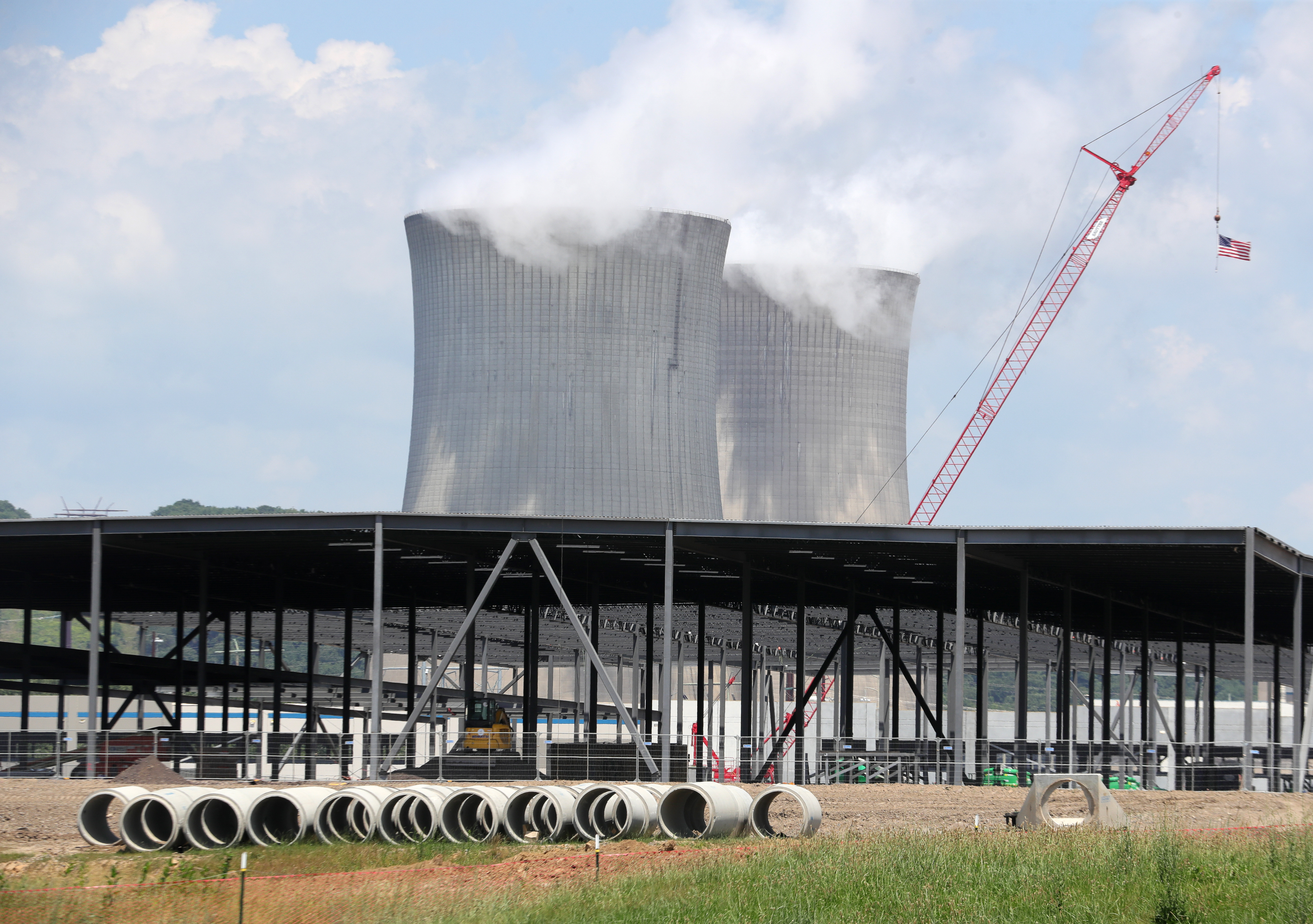
And they’ve failed to make the electorate believe that AI can produce amazing benefits in addition to apocalyptic harms.
So, it is up to AI labs to be more appealing. Thankfully, persuasion is a skill that lawyers ought to be good at. Let’s see if they can learn to make a stronger case.
Dan Wang is a research fellow at the Hoover Institution. He is the author of Breakneck: China’s Quest to Engineer the Future and a contributing writer at the New York Times. He is also the author of an annual letter.