 Powered by
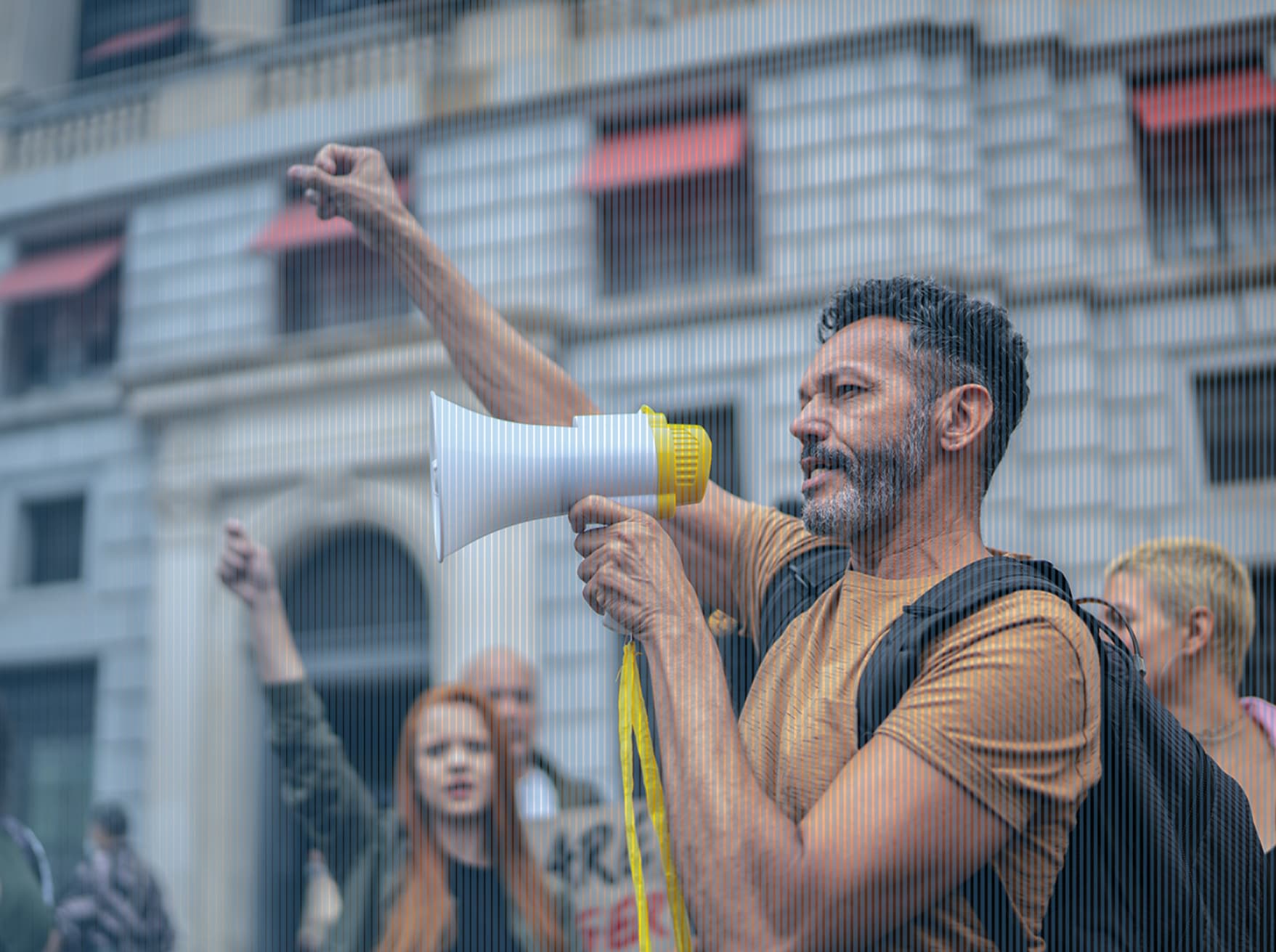
Periodically, employers hear demands that some employees be fired for offensive political statements, whether about Black Lives Matter, Charlie Kirk, Israel, trans rights, or whatever else. Can they do that?
The answer turns out to be complicated. Many people know that the First Amendment doesn’t apply to private employers. The first word of the First Amendment is “Congress”: “Congress shall make no law. . . .” When it was written, it applied only to the federal government. Since then, the Supreme Court has read the Fourteenth Amendment, which begins with “No state shall . . .” to apply free-speech principles to state and local governments. (Local governments are just subdivisions of states.) But the Bill of Rights doesn’t apply to private entities.
Yet statutes, of course, can apply to private entities. For instance, private employers generally can’t fire employees based on their race, sex, or religion—not because of the Equal Protection Clause (which applies only to the government) but because of state and federal statutes that apply equal protection principles to private entities, such as the Civil Rights Act of 1964. And while federal law generally doesn’t ban employment discrimination based on political activity, laws in many states do.
Here’s a map that should offer a rough sense of where various states stand on this.
For instance, in California, a law first enacted in 1915 bans private employers from trying to control their employees’ “political activity.” The California Supreme Court has held that this protects employees from being fired, or otherwise disciplined, for their speech on political matters, whether or not related to elections. Indeed, it’s actually a crime for California employers to fire employees based on their political activity, though practically the law appears to be enforced exclusively through civil lawsuits.

Thus, in a prominent recent case, actress Gina Carano sued Disney for firing her in 2021 based on Carano’s controversial public statements. (She had analogized what she saw as some people’s hatred of conservatives in 2020 and 2021 to people’s hatred of Jews in Nazi Germany.) After a federal judge rejected Disney’s attempt to get the case thrown out, Disney and Carano settled.
Or consider Colorado, which has a law that generally bans firing of employees for “any lawful activity off the premises of the employer during nonworking hours.” That covers things like drinking, smoking, possessing guns, and the like—but also speech, which is lawful activity. Thus, when an employee was fired in 2017 for a social media post supporting a local school’s having a “Rebels” mascot, and more broadly supporting display of the Confederate flag, a federal court let the employee’s case go forward. That case also settled (as most civil cases do).
Other states have more limited statutes: New York, Illinois, and Washington, for instance, ban firing only for election-related speech (whether the speech supports or opposes a candidate or a ballot measure). Other statutes, such as in Massachusetts and Arizona, protect only specific political activities, such as donating to candidates or signing petitions. Still others offer no protection at all. Some cities and counties, though, have their own laws that provide more protection than state law does: Seattle, Fort Lauderdale, and some Maryland counties are examples.
Interestingly, these laws stem from the oldest employment-discrimination laws in the country: long before employment laws banned discrimination based on race, sex, or religion, they banned threats of firing people based on how they voted, or discrimination based on how they voted. The first such laws were enacted in 1839; recall that at the time the secret ballot hadn’t yet been uniformly adopted, so a person’s vote was often publicly known.
Then, in 1868 came the first bans on private-employer discrimination based on “political opinion.” Other such laws, including ones that covered a broad range of political activity, came later in the 1800s and the 1900s. And such laws continue to be enacted, though slowly: Utah enacted such a law in 2015, and some cities and counties have enacted them recently as well. In a few jurisdictions, such laws apply to housing and public accommodations and not just employment.
Defending democracy
Are such laws a good idea? On one hand, many of the reasons we protect speech against legal punishment also apply to employer retaliation. Letting the government suppress political advocacy undermines democratic self-government: an election is hardly fair if one side’s supporters remain quiet because they’re worried about being jailed or fined for expressing their views. But many people would be even more deterred by the threat of being fired from their jobs than by the threat of a fine or even a misdemeanor conviction.
This is likely why nearly all states forbid discrimination based on how a person has voted: private economic power ought not be used to interfere, through threat of coercion against employees, with people’s votes. And American law has long recognized that for voting to be meaningful, the public also needs to freely discuss candidates and issues before voting on them as well as to freely speak about things that may influence representatives between elections.
The same is true if we’re worried that government suppression unduly interferes with the marketplace of ideas, or the search for truth, or self-expression. The threat of being fired has much the same effects. And indeed, sometimes, these laws protecting private employees might actually be useful to employers, precisely because they constrain the employers: if members of the public are demanding that an employer fire an employee for some unpopular political activity, the employer might be able to mollify the objectors but still keep a valued employee by pointing to the law that forces him not to fire the employee. This is much like how an employer facing public hostility because of an employee’s race, religion, sexual orientation, or gender identity can try to defuse that hostility by pointing out that it is legally forbidden from discriminating against employees based on those factors.
Some have argued that employers have a constitutional right to refuse to associate with people whose political beliefs they reject. But the constitutional right to association covers the right to choose whether to associate in expressive organizations (such as ideological advocacy groups or political parties) or in intimate groups (such as families or households)—not in commercial contexts such as ordinary employment.
And, of course, we see this in the courts’ acceptance of employment discrimination laws generally, including bans on employment discrimination based on religion or union membership or having filed certain kinds of complaints. Employers generally lack the constitutional right not to associate with, say, Catholics or atheists or Satanists or union members or whistleblowers. They likewise lack the constitutional right not to associate with Republicans or Democrats or even Communists or Nazis. (For more details on all this, see this article.)
Can the market solve the problem?
On the other hand, as a policy matter, perhaps antidiscrimination laws shouldn’t be extended more broadly. They do burden people’s ability to choose whom to associate with—even if there’s no constitutional right not to associate—but we generally enact them because there’s massive, societywide discrimination on certain grounds, such as race or sex, which justifies such interference with employer choice. Yet for rarer forms of discrimination, it may be enough to rely on the employment market, in which most employers will be reluctant to fire good employees, and most employees needn’t fear being fired, especially since they could easily find other jobs.
And perhaps this does help explain why relatively few states have banned discrimination based on, for instance, marital status, height, weight, off-duty smoking, having children, being a crime victim, and the like. There’s no need to restrict employer freedom via employment discrimination law—especially given how expensive employment litigation can be, and how it can chill legitimate employer actions—to deal with problems that are fairly rare, the argument would go. And maybe this should also apply to political discrimination, if one thinks such discrimination is rare enough.
This, I think, is likely the strongest combination of arguments against the private-employee speech protections I discuss here. The key questions, I suppose, are:
How often do employers discriminate—or expressly or implicitly threaten to discriminate—based on employee speech and political activity, especially in a time that is widely seen as more politically polarized than before, and a time in which social media has made it easier than ever to call for boycotts triggered by an employee’s unpopular political views?
How much does this chill the free speech we want to see for the sake of self-government, the search for truth, and self-expression?
I don’t have a confident answer to those questions. But whatever the law should be, these laws do exist in many jurisdictions. Employers and employees need to be aware of them.
Eugene Volokh is the Thomas M. Siebel Senior Fellow at the Hoover Institution, where he co-hosts the podcast Free Speech Unmuted and participates in Hoover’s Center for Revitalizing American Institutions. He is an emeritus professor at the UCLA School of Law, where he taught First Amendment law, copyright law, criminal law, tort law, and firearms regulation policy.