 Powered by
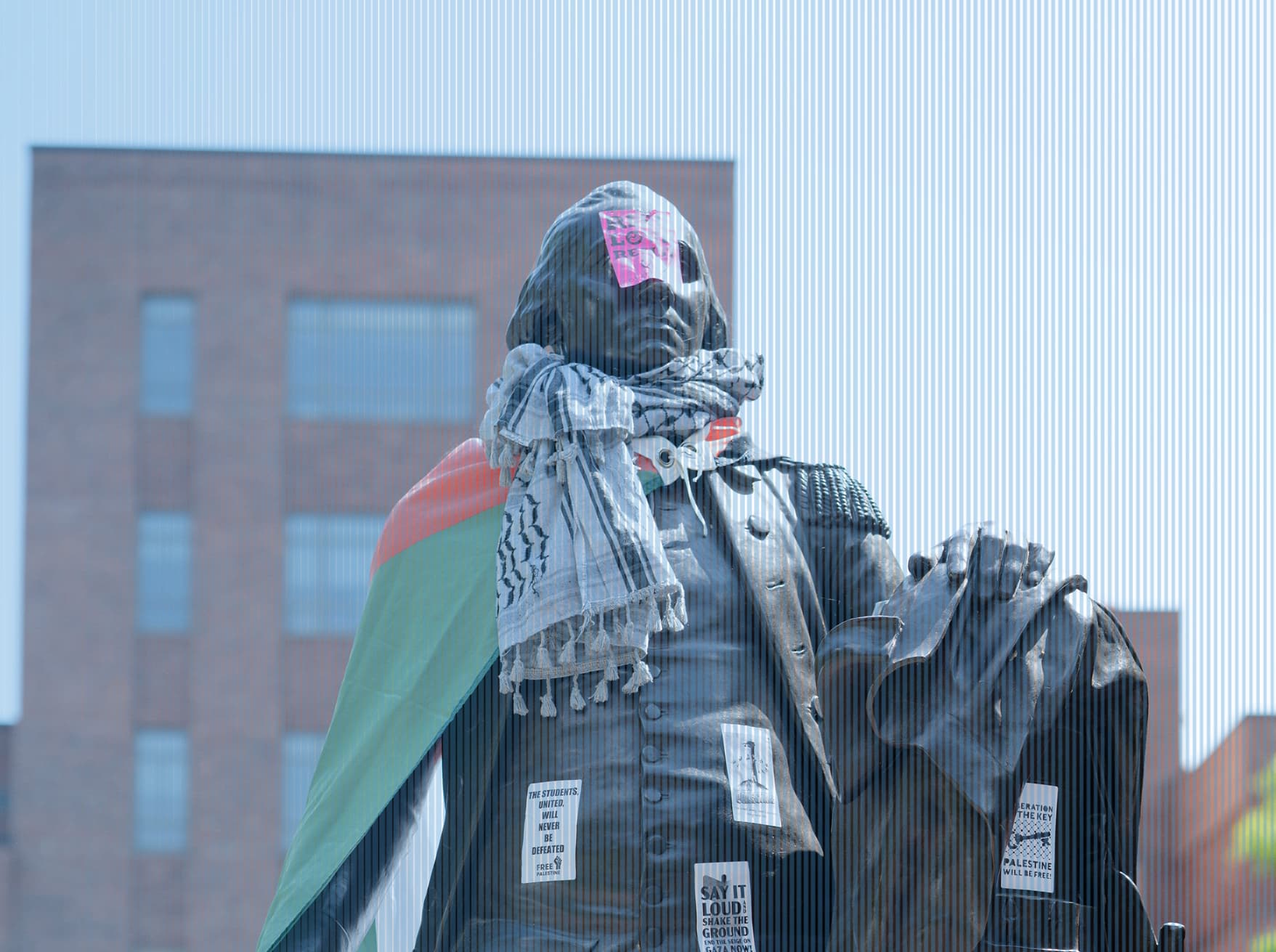
The Hamas attacks of October 7, 2023, had barely concluded when anti-Israel protests on American campuses began to erupt. Across the country, protesters utilized remarkably similar tactics, such as nearly identical tent encampments that sprouted up overnight. They also relied on stereotypical statements and slogans, accusing Israel of “genocide,” even before the Israeli counteroffensive had begun.
The speed with which the protests emerged indicates that they had been prepared, suspiciously well, in advance. The repetition of patterns from campus to campus indicates the likelihood of organized coordination. Then–director of national intelligence Avril Haines attributed the sudden protest surge to support from foreign powers, notably Iran: “Iran is becoming increasingly aggressive in their foreign influence efforts, seeking to stoke discord and undermine confidence in our democratic institutions. . . . Iranian government actors have sought to opportunistically take advantage of ongoing protests regarding the war in Gaza. . . . We have observed actors tied to Iran’s government posing as activists online, seeking to encourage protests, and even providing financial support to protesters.”
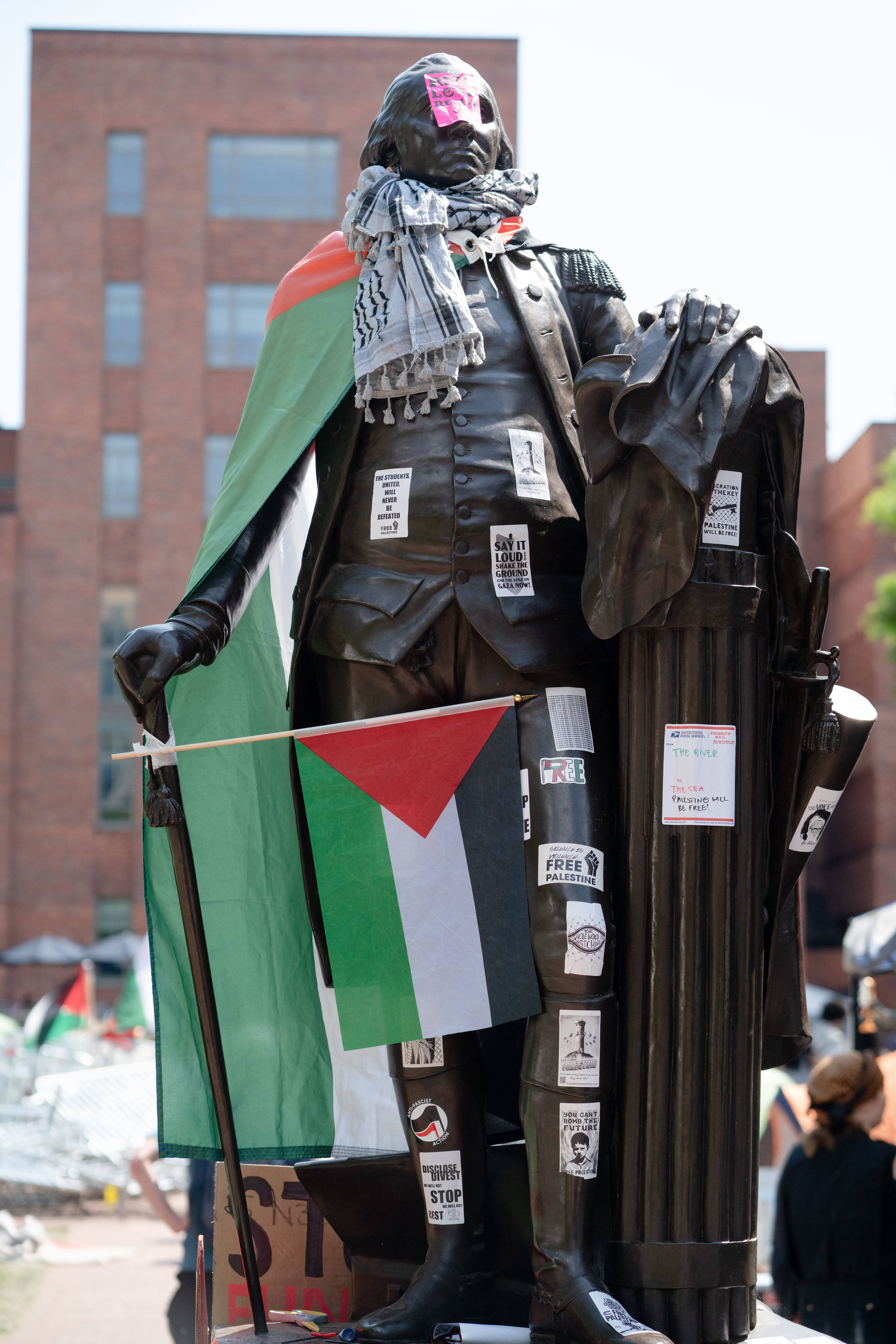
While the right to protest is unquestionable, efforts by foreign adversaries to agitate and cause dissension are a matter of national security. Similarly, activists crossing state lines in order to incite protesters to commit crimes is a matter for federal law enforcement.
Yet an analysis of the disruption on campuses during the year after the Hamas attacks—not only peaceful protests but also destruction of property, intimidation, and physical assaults, as well as the explosion of anti-Semitism—should not be restricted to these exogenous factors: foreign intrusion and outside agitators. It is vital also to ask about internal conditions: What made campus life so susceptible to the invitations to chaos? And which universities are especially vulnerable?
Profiles in protest
In response to the protests, multiple explanations have been proposed, but they are often based on arbitrary anecdotes or existing judgments. For example, the finger is often pointed at ideological faculty members, so-called “tenured radicals,” whose teachings—so it is claimed—direct students to protest. While there are no doubt some faculty members who notoriously celebrated the October 7 attacks and sided with student protesters, there is no firm evidence that students from their classes were the ones who populated the encampments.
Indeed, the hypothesis that the fault lies with the teachers is premised on a pedagogically questionable assumption that students take actions based on their instructors’ directions. Furthermore, we do not have reliable empirical evidence as to who participated in the demonstrations; there were of course no census-takers who went from tent to tent to determine who was sleeping inside. We simply do not have the data to support some kinds of conclusions.
Fortunately, however, there are useful data that can shed light on what happened and where. The Crowd Counting Consortium at Harvard and the University of Connecticut keeps track of protest events of all sorts across the country, and its data can be enhanced with information collected by the Department of Education. The information we have is however largely not about individual students, but we do know a lot about institutional characteristics. We can therefore make solid claims about the sorts of colleges and universities that housed the most and the most intense protests.
This information can help identify some of the vulnerabilities of American higher education and point to policies that might minimize the prospect for future disruptions of the sort we witnessed during these times of severe unrest.
One factor that stands out immediately is that Gaza-related protests took place above all at highly selective institutions. At the 55 most selective schools, with an average admissions rate of 10.5 percent, there were 19.56 protest events per 1,000 students. At the other end of the spectrum, at 226 schools with an average admissions rate of 83.1 percent of applicants, the corresponding number of protests per 1,000 students was 3.06. In short, the highly selective campus was six times as likely to see protests.
That result is corroborated by an analysis of SAT scores: high scores—typical of selective schools—map onto a greater frequency of protests. In addition, private universities were more than five times as likely to see protests as were public ones. Interestingly, institutions with religious affiliations were only half as likely to host protests as were secular ones.
Who can afford to protest?
It is clarifying to juxtapose those results that point toward highly selective private institutions with other data about the economic demographics of the student bodies, as indicated by the rate of Pell Grant recipients. Pell Grants are need-based federal grants for undergraduate education available to students from low-income households. They can be used at accredited institutions of higher education but also at some vocational schools; they have historically been particularly important for first-generation students.
Our research has shown that at institutions with a very high rate of Pell Grant recipients, defined as more than 45 percent, there were 2.41 protest events per 1,000 students. In contrast, where there were fewer than 25 percent Pell Grant recipients, there were 8.33 protest events per 1,000. Put bluntly, as the number of low-income students declines, the protest rate quadruples.
It is fair to conclude that the protest phenomenon was significantly an elite event.
One might surmise that Pell Grant recipients are, as low-income students, likely to be commuting from home and holding down a job to help support themselves. It is therefore also reasonable to assume that they have less time to devote to protest than do students with more resources.
Yet there is another relevant factor regarding the latter group. The highly selective institutions are also generally those with very high retention rates, that is, the schools where one is unlikely to fail and be expelled. Institutions with retention rates of greater than 90 percent saw four times as much protest as did institutions with low retention rates of less than 70 percent.
Of course, one could attribute high retention rates to the high selectivity: these institutions admit students with very strong track records of academic accomplishment. At the same time, however, high retention rates also mean that there is little risk of being asked to leave. That security of enrollment should be put in context of the growing recognition of grade inflation, especially at the “elite” highly selective institutions.
Significantly, a report from Harvard in October 2025 discovered that 60 percent of grades awarded to undergraduates are A’s. Two decades ago, the figure was only 25 percent. Harvard’s Office of Undergraduate Education lamented last year that this transformation is “damaging the academic culture of the College.” In fact, a previous report from February 2025 had declared that “many Harvard College students do not prioritize their courses and some view extensive extracurricular commitments as a more fulfilling, meaningful, and useful allocation of their time. . . . Most faculty view student curricular disengagement with alarm.”
Harvard is not all of American higher education, but the pattern indicated by its self-evaluations likely pertains to other highly selective institutions. This is relevant because, as we have seen, it is precisely those institutions with the greatest rate of protest activity.
To sum up the results: if grades are easy and “flunking out” highly unlikely, students may take their class obligations less seriously and turn their attention to “extracurricular commitments” such as protests. Meanwhile, in the very different world of Pell Grant recipients working their way through college, there is simply less time to spend at demonstrations. The devil makes work for idle hands.
A further note on the admissions practices of the highly selective institutions. It is not surprising that students might be valuing their extracurriculars more than their classes because that is precisely the message the admissions offices have been sending. Not that long ago, colleges were giving up on standardized test scores (a trend that has begun to be reversed, thankfully) and instead emphasizing “holistic” factors to give extra weight to the extracurriculars. Add to this the admissions offices’ selecting for students who are “passionate” about this or that goal. Selection for passions rather than, say, for thoughtfulness or logical thinking, produces irrational mobs.
Focusing on the work
There are certainly many other hypotheses about the protest wave—anxiety about student debt, a reaction after the pandemic shutdown, ideological bias in curricula—but the above analysis is enough to suggest two possible steps that might be taken to mitigate the potential for future disruptions.
The first involves college and university policies directly: higher education should push back against grade inflation. As long as a passing grade or even a high one is effectively guaranteed with minimal effort, students will have time on their hands and be available to serve as raw material for activists organizing demonstrations. Solving the grade inflation problem will not be easy, given the consumerist framework that has pervaded higher education, but it is necessary to address this challenge.
Second, student experience should be reorganized to resemble that of Pell Grant recipients. Everyone should have to be working a job, whether as part of a financial aid package or otherwise. Having to show up at work would at least compete with the temptation to participate in disruptive demonstrations and would certainly teach students basic workplace skills. This step, too, would yield a very different culture for college.
These two propositions—seriousness in grading and an employment requirement—would encourage students to think carefully about their time investments.
A third suggestion might complement this program: colleges and universities need to take their disciplinary codes seriously. Enforcing codes will require a ban on masks at demonstrations. Too often during the protests, one read about students who broke institutional rules or even committed criminal acts but faced few or no consequences. If institutions will not uphold their own rule of law, it should not be surprising if lawlessness wins out.
Leaders in higher education should learn from the chaos of the past years and take appropriate steps to prevent it from recurring.
Russell A. Berman is a senior fellow at the Hoover Institution and a co-chair of Hoover’s Working Group on the Middle East and the Islamic World. He also participates in Hoover’s Military History in Contemporary Conflict working group and its Global Policy and Strategy Initiative. Berman is the Walter A. Haas Professor in the Humanities at Stanford University. He is leading a project called University Activism and Campus Disruption in the Wake of October 7, 2023 with support from the Center for Revitalizing American Institutions.