 Powered by
The Islamic Republic of Iran (IRI) is the world’s most determined enemy of the state of Israel. Since its creation in 1979, the IRI has dedicated itself to the slogan of “Death to Israel!” as well as to its twin, “Death to America!” It refers to America as the Great Satan and to Israel as the Little Satan. When it comes to Israel, the IRI is no advocate of, say, the two-state solution or of Israel’s withdrawal from Gaza and Lebanon, measures that some states with diplomatic relations with Israel propose. Rather, it wants to destroy Israel root and branch. Various Iranian leaders have called Israel a cancerous tumor that needs to be destroyed. The Iranian president referred to Israel as a “one-bomb state,” meaning that Israel could be wiped out with a single nuclear weapon—a weapon that Iranian hard-liners increasingly threaten to build.
There is a tragic irony in the Iranian regime’s hatred of the world’s only Jewish state. Iranian relations with the Jewish people have had their ups and downs, including anti-Semitism, violence, and forced conversions. Yet overall, across more than 2,500 years of history, Iran has been relatively good to the Jews, and at times it has been an extraordinary friend.
Antiquity
Jews have a continuous history in Iran since circa 722 BCE, when the Assyrian king removed conquered Israelites to what is now northern and western Iran. Today, in 2026, the Iranian Jewish community is much diminished after waves of immigration in the late twentieth century, following first the creation of the state of Israel and then the establishment of the IRI. Estimates of the Jewish population of Iran vary. On one calculation, there were around 100,000 Jews in Iran before the 1979 revolution and the mass emigration that it inspired; there are about 15,000 Jews in Iran today. They trace their settlement in the same country back nearly three millennia. Some of the most famous names in the Hebrew Bible lived in Iran or under Iranian rule, including Daniel, Esther, Mordechai, Ezra, and Nehemiah.
The history of Jews and the Iranian state begins with Cyrus the Great (d. 530 BCE), founder of the first Iranian empire, Achaemenid Persia (550–330 BCE). Cyrus liberated the Jews from exile in Babylon, where they had been deported after the conquest of their country by the Neo-Babylonian empire. Cyrus allowed them to return to their homeland and rebuild the Temple and Jerusalem, both of which the Neo-Babylonians had destroyed. The Hebrew Bible calls Cyrus the Lord’s “anointed one.”
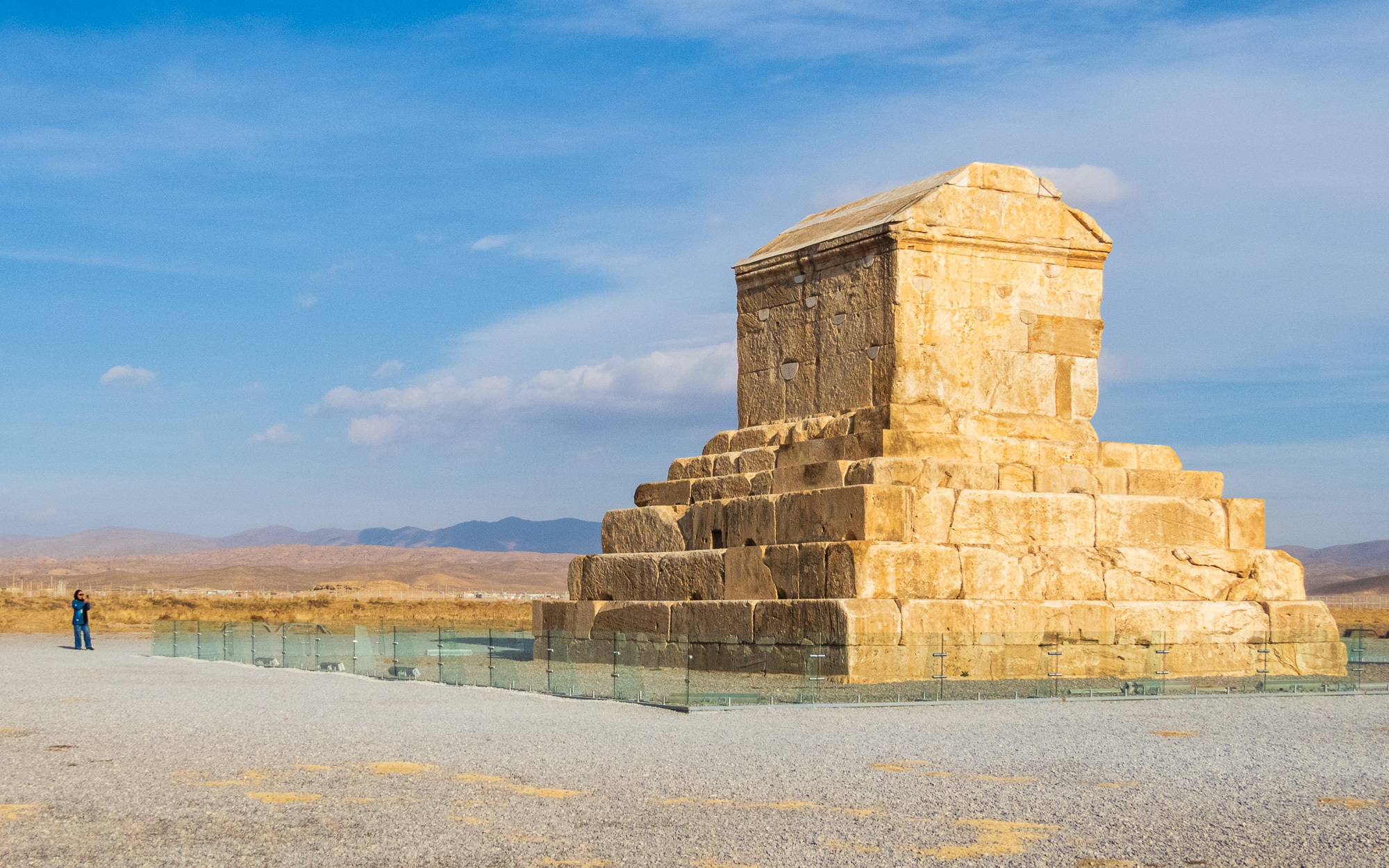
Former president Harry Truman referred to that history shortly after leaving office in 1953 when he addressed a group of theologians. Truman was introduced as the man who “helped create the state of Israel” by granting recognition to the new nation in 1948. Truman responded, “What do you mean, ‘helped to create’? I am Cyrus! I am Cyrus!”
For two centuries ancient Israel was a Persian province, known as Yahud (from “Judea”). Jews thrived there and in Iran and Mesopotamia (Iraq), although perhaps not without threat, if there is any historical truth in the biblical Book of Esther. During that period, a garrison of Jewish mercenary soldiers protected the southern border of another Persian province, Egypt. They lived on Elephantine Island in the Nile River, now within the modern city of Aswan, in service of the Iranian king almost two thousand miles away (around 3,000 kilometers). Numerous documents from fifth century BCE Elephantine survive, written in Aramaic, the standard language of business and bureaucracy in the Achaemenid Persian empire. They demonstrate the integration of Jews in the imperial Iranian state.
In 332 BCE, Alexander the Great conquered Yahud. Over the next several centuries, the former Persian province shifted back and forth between rule by different Greek kingdoms, eventually winning independence under the Maccabees in the late second century BCE. Meanwhile, Jewish communities thrived under a new Iranian imperial dynasty, the Parthians or Arsacids (247 BCE–224 CE). Jewish communities enjoyed near-autonomous status. Pilgrims, sages, and traders traveled between Parthian lands and Jerusalem.
The ancient dynasties that ruled Iran adhered to Zoroastrianism. Scholars debate whether Zoroastrianism was monotheistic or dualistic, but in either case it perhaps seemed less foreign to Jews, who were monotheists, than did the polytheism of Greece and Rome. There are fascinating but probably inconclusive signs of cross-fertilization between Jewish and Zoroastrian idea over the centuries.
Rome and the revolts
In 63 BCE, a dynastic struggle split the ruling family of Judea. One party invited in the Roman legions, which had conquered neighboring Syria and proceeded to make Judea a client state. Some Judeans preferred Parthia, and they looked eastward for help. About twenty-five years later, in 40 BCE, a Parthian army invaded Judea, evicted the pro-Roman ruler and placed a pro-Parthian king on the throne. Rome couldn’t tolerate this challenge to its rule. After a long struggle, the Romans reconquered Judea and installed a pro-Roman king, the infamous Herod (r.37–4 BCE).
Not long after Herod’s death, Rome annexed Judea. Most Jews probably accepted the new rulers, but some did not. Occasional outbursts of violence turned into a full-scale revolt in 66 CE, the first of three major Jewish rebellions against Rome. From the first, the rebels looked to Parthia for support. They were disappointed: the Parthian king declined to challenge Rome and even eventually offered to help it suppress the rebellion, a gesture that would have humiliated the Romans, had they accepted. The Parthian ruler might, however, have looked favorably on the action of Adiabene, a Parthian client state in what is today Iraqi Kurdistan. Adiabene sent a small number of soldiers, some of them high-ranking individuals, to fight for the rebels. Several decades earlier, the ruling family of Adiabene had converted to Judaism and maintained ties with Judea.
Rome eventually crushed the rebellion, making a ruin of Jerusalem and destroying the Temple, Judaism’s holiest site.
About a half-century later, in 116, Jewish rebels and the Parthians did collaborate militarily. The previous year, Rome invaded Parthian territory and conquered Armenia and Iraq, even reaching the Persian Gulf. Then an anti-Roman insurgency broke out, and the Jews of the Parthian Empire played a major role in it. In 116, another Jewish revolt broke out in Roman Egypt, Libya, and Cyprus. Rome was forced to withdraw a legion from Parthia and send it to Egypt to suppress the rebellion. With Jewish help, the anti-Roman forces prevailed in the east and forced Rome to withdraw to the pre-war borders. In the West, however, the revolt failed. Rome all but wiped out Jewish life in Egypt, Libya, and Cyprus.
Iran did not play a direct role in a third major Jewish revolt, the Bar Kokhba Revolt (132–136), this one in Judea again. But the shadow of Iran hung over the event. A Roman decision to rebuild the ruins of Jerusalem as a Roman colony and a pagan city precipitated the revolt. After its humiliation in Parthia, Rome’s decision demonstrated its intention to remain a power in the eastern Mediterranean—and in a country that had strong ties to Parthia. As far as we know, Parthia did not play a role in the revolt, but it could not have minded seeing Rome stuck in a military quagmire in Judea in which the price of victory was an enormous amount of Roman blood and treasure.
The Parthians were replaced by a new dynasty, the Sasanians (224–651). Aside from some moments of persecution of Jews and other religious minorities, the Sasanians treated their Jewish subjects well. Under their rule, Jewish scholarship flourished in southern Mesopotamia. Its greatest fruit was the Babylonian Talmud, a cornerstone of Judaism ever since. In 614, the Sasanians reconquered Judea, which the Romans had renamed Palestine. Some of the remaining Jewish population—much reduced by Rome—joined the Sasanians, who permitted the Jews to return to Jerusalem and even briefly to oversee the city. The Eastern Roman or Byzantine empire soon reconquered Palestine and punished Jews who had supported the Sasanians.
The coming of Islam
In the mid-seventh century (633–651), invading Islamic armies conquered Iran as well as Palestine and much of the Near East. Afterwards, Iranian Jews were second-class citizens. Like other religious minorities in Islamic lands, they were subject to special taxes and to various inequalities and humiliations. By modern lights that is unacceptable, but by the standards of the premodern era Iranian Jews lived fairly well and some even held powerful positions in the state. Conditions deteriorated after the establishment of the Safavid Dynasty in 1501, which lasted until 1736. The Safavids aimed to build a centralized Shiite state, and they often treated Jews and other minorities harshly. Anti-Semitism grew and most Iranian Jews lived in poverty.
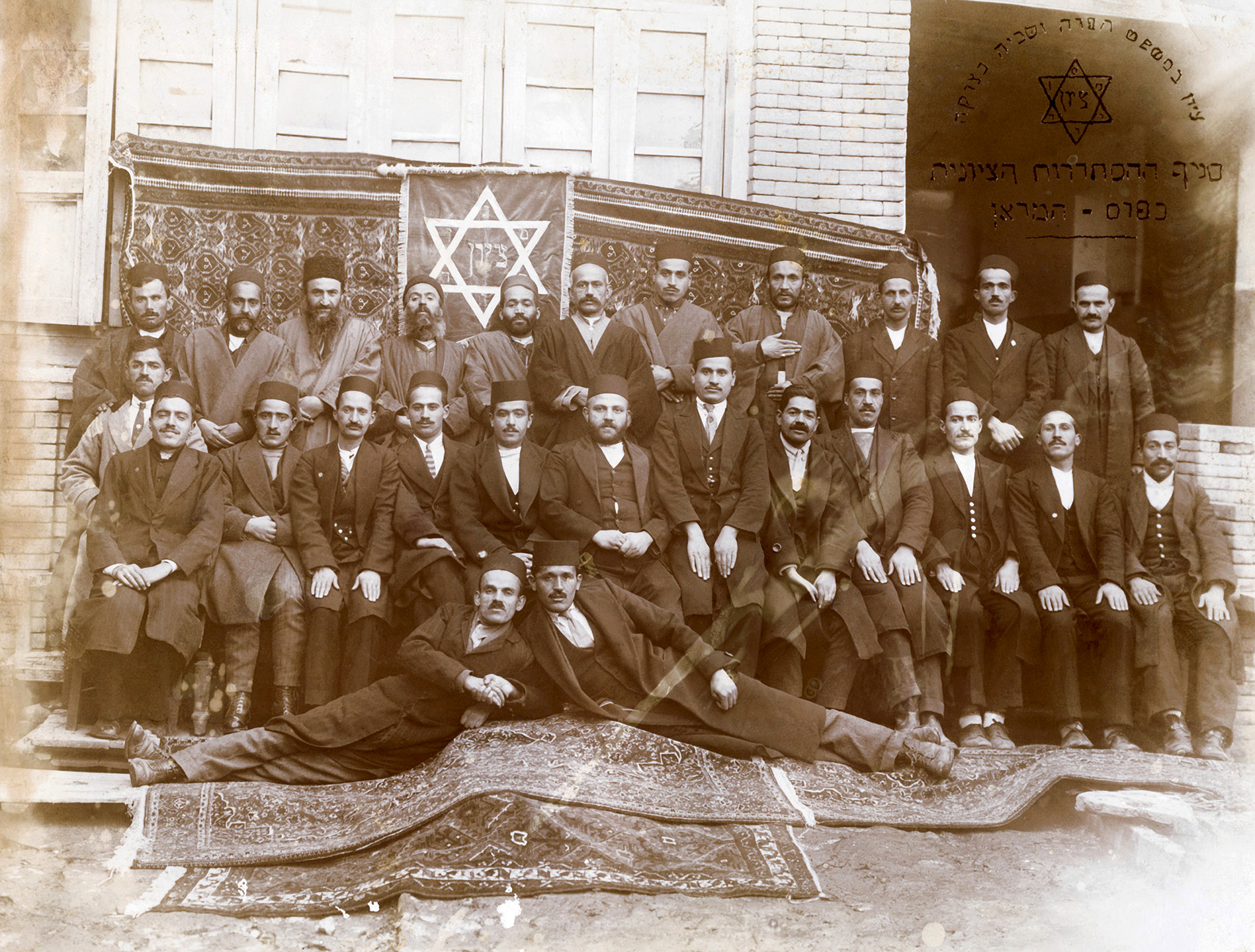
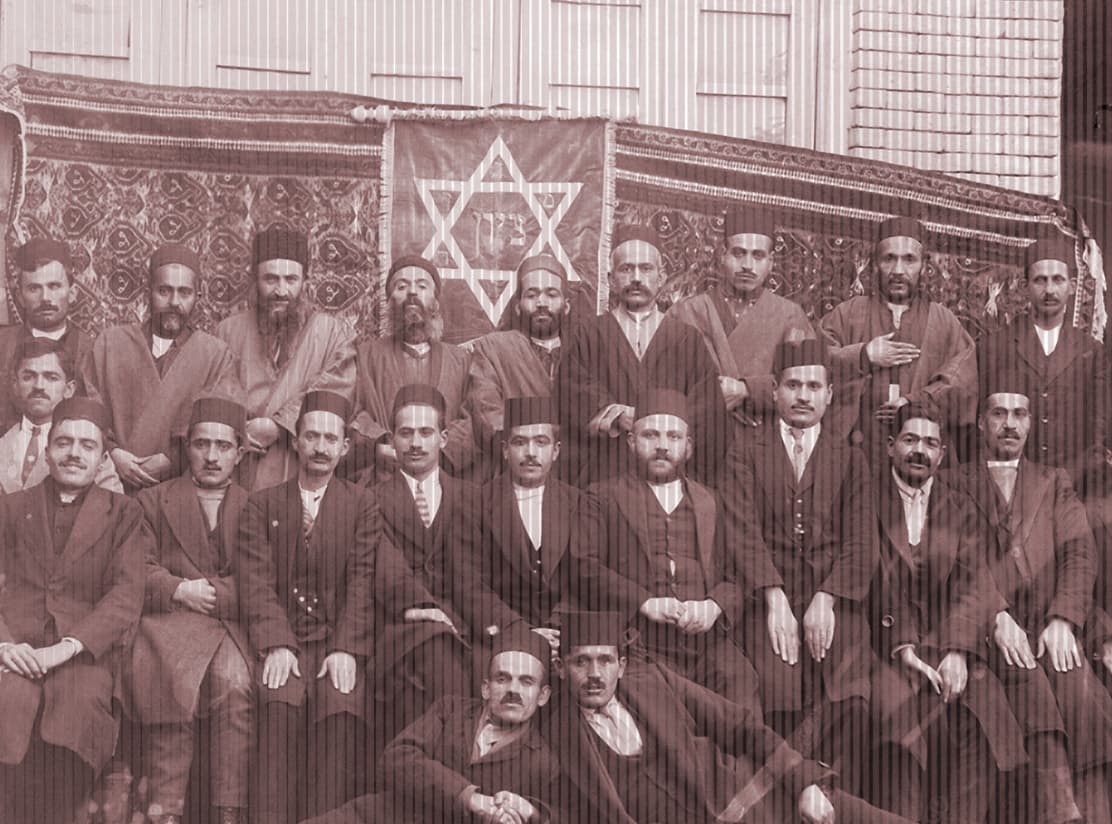
Conditions improved under the Safavids’ successors, the Qajars (1789–1925), but only relatively so. Among other humiliations, a Jew who converted to Islam was entitled to inherit all his Jewish relatives’ property. In a notorious incident of 1839, the Jews of the northern Iranian city of Mashhad, about 150 families, were forced to convert to Islam. Many nonetheless practiced their ancestral faith in secret. In the twentieth century, survivors were able to emerge as Jews.
Jewish life in Iran improved enormously under the Pahlavi dynasty, both under Mohammad-Reza Shah (r. 1941–1979) and, before him, his father, Reza Shah (r. 1925–1941), who founded the dynasty. Westernization and a certain degree of liberalization were the orders of the day, and religious minorities benefited. Reza Shah repealed discriminatory laws and Jews began to prosper and assimilate into Iranian society. But in the 1930s, Reza Shah drew close to Nazi Germany, in part as a counterweight against the British and the Soviets. The relationship stoked Iranian anti-Semitism. Then, Allied armies occupied Iran in 1941 and forced Reza Shah to abdicate. Yet it is also true that an Iranian diplomat in Paris, Abdol Hossein Sardari, the “Iranian Schindler,” saved an estimated 1,500 Jews (see Abbas Milani, The Persian Sphinx: Amir Abbas Hoveyda and the Riddle of the Iranian Revolution, Mage Publishers 2013, loc. 1160)—most, but not all, Iranian citizens—by claiming they were Iranians whose ancestors had converted to Judaism and so were biologically “Aryans.”

After Iranian independence was restored in 1945, Iranian Jewish life returned to an upward trajectory. The Jewish community prospered and some Jews played a leading role in Iran’s economy, society, and culture. In 1950, Iran became the second Muslim-majority country, after Turkey, to recognize the state of Israel. Not all Iranians appreciated Jews or accepted Israel, however.
The condition of Iranian Jewry was crushed by the revolution of 1979. The supreme leader, Ayatollah Ruhollah Khomeini, was both anti-Semitic and anti-Zionist. A series of incidents, including the execution by the revolutionary court of perhaps the leading figure among Iranian Jews, led to mass emigration. And the upshot is today’s world of hatred and war.
A flicker of hope
As this brief historical survey suggests, Iranian Jews have faced many challenges over the centuries. So, of course, did European Jews. Freedom came later to Iranian Jews than to their Western counterparts, but it did come. What stands out is the extraordinary amount of friendship and shared interests between Iran and the Jewish people dating back more than two millennia.
The revolution of 1979 marked a tragic return to darker days. Among the alarums of current battles, perhaps we can make out the sound of liberation in the distance. If a new regime comes to Iran, can friendly relations between Iran and Israel be restored? History is a fickle muse but one that offers grounds for hope.
Barry Strauss is Corliss Page Dean Senior Fellow at the Hoover Institution and Bryce and Edith M. Bowmar Professor of Humanistic Studies (Emeritus) at Cornell University. He is the author of Jews vs. Rome: Two Centuries of Rebellion against the World’s Greatest Empire (Simon and Schuster, 2025).