 Powered by
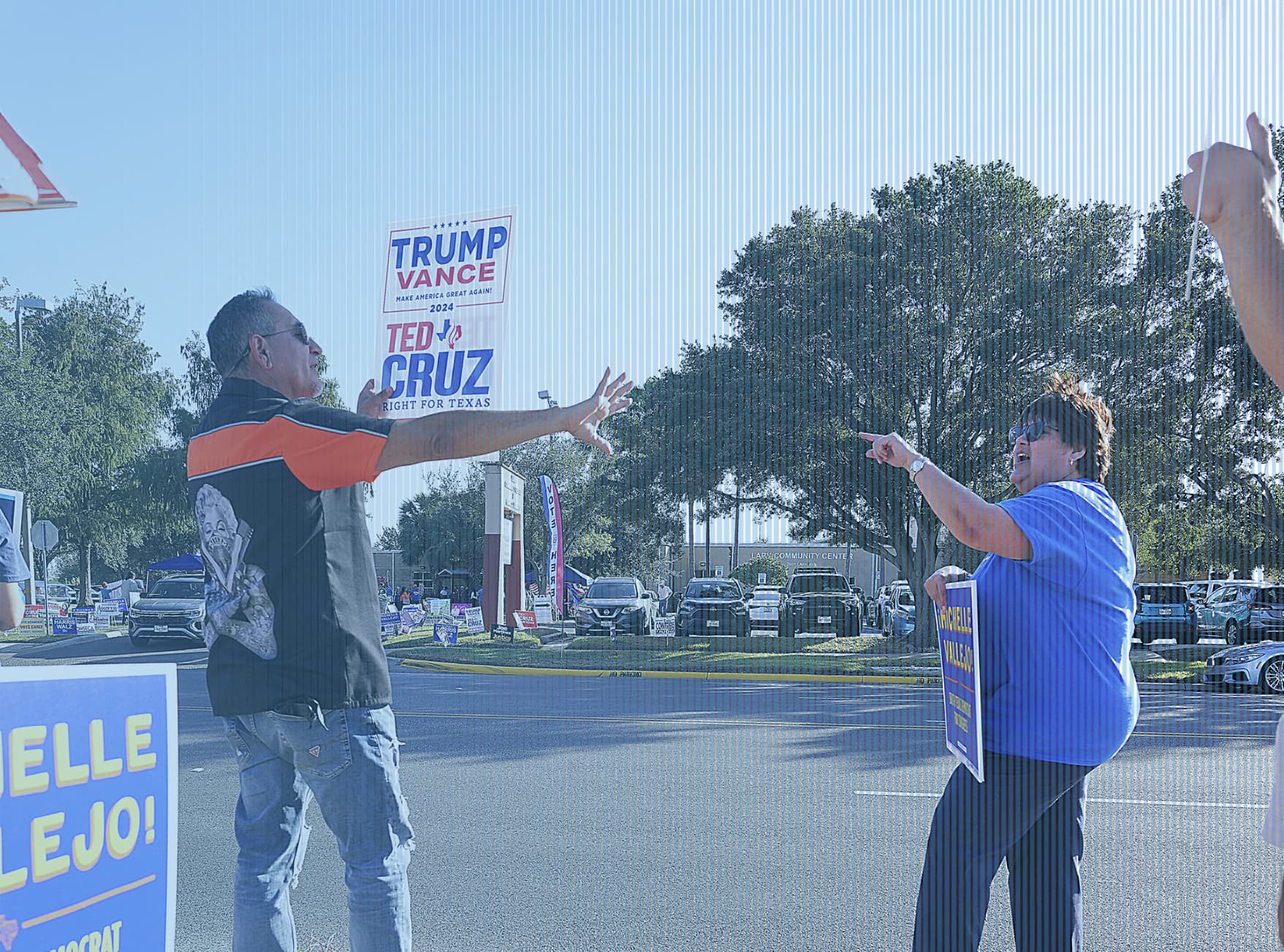
The partisan primary is a broken institution. Once said to be a democratizing tool, it has warped into a trust-busting destroyer of public confidence. It reduces meaningful citizen engagement, facilitates extremism, intensifies political polarization, and disrupts bipartisan governance. It weakens consensus-building institutions needed to preserve a strong US presence on the global commons.
This article is part of The Commons Dispatch, a channel produced in partnership with the Hoover Institution’s Economic and Security Commons initiative, which draws on America’s constitutional principles and reflects the Hoover Institution’s founding commitments: to advance freedom and to address the world’s shared challenges.
States should replace partisan with all-party primaries, sometimes called “top two” elections, in which each and every voter, regardless of party affiliation, can choose among the full list of candidates seeking a particular office, with the two receiving the most votes pairing off in the general election. Voters can choose a candidate of their own political party, or they can instead select an independent or a candidate from another party.
All-party primaries will not eliminate political polarization or remove every barrier to consensus building in the United States, but they have been shown to enhance voter participation and adoption of centrist policies, and to foster bipartisan governance.
The case against partisan primaries
The adverse effects of partisan elections are particularly apparent in elections to the US House and Senate, statewide offices, and state legislatures.
Reduced participation in effective elections. Only a small share of the eligible electorate casts ballots in the average partisan primary, just one-fourth the turnout rate in presidential elections. In midterm congressional elections, voter participation rates hovered between a low of 14 percent in 2014 and a high of 21 percent in 2022. Not even hotly contested partisan contests provoke large turnouts. In Louisiana’s bitterly fought 2026 Republican primary, only 14 percent of the electorate participated. Julia Letlow came in first by getting about 6 percent of registered voters, while John Fleming reached the runoff by gathering 4 percent. The incumbent, Senator Bill Cassidy, had a similar percentage but ran third.
Several factors conspire to limit voter participation in partisan primaries. Most important, those registered as a member of a different political party face both legal and psychological barriers to participation. (In thirteen states—Georgia, Hawaii, Michigan, Minnesota, Mississippi, Missouri, Montana, North Dakota, South Carolina, Texas, Vermont, Virginia, and Wisconsin—no barriers prevent people from voting in a primary other than the one for which they are registered.) Except in states with all-party primaries, there are usually legal barriers to voting in any other primary than the one for which one is registered, and in any case, most voters gravitate toward the partisan primary for which they are registered. That can exclude a large share of the active electorate from meaningful participation.
In Louisiana, 46 percent of all voters cast ballots in the 2026 Democratic primary, even though the winner has little chance against the Republican Julia Letlow in November. Many other primary features also contribute to low turnout. Election dates are scattered across much of the year, leaving voters confused as to just when the event in their jurisdiction is taking place. Media executives shift coverage to their newspapers’ back pages and the tail end of their TV broadcasts. Challengers cannot raise sufficient funds to launch major advertising campaigns. Many voters see little difference among the candidates in partisan elections and conclude it is not worth the time and effort to figure out which option is preferable.
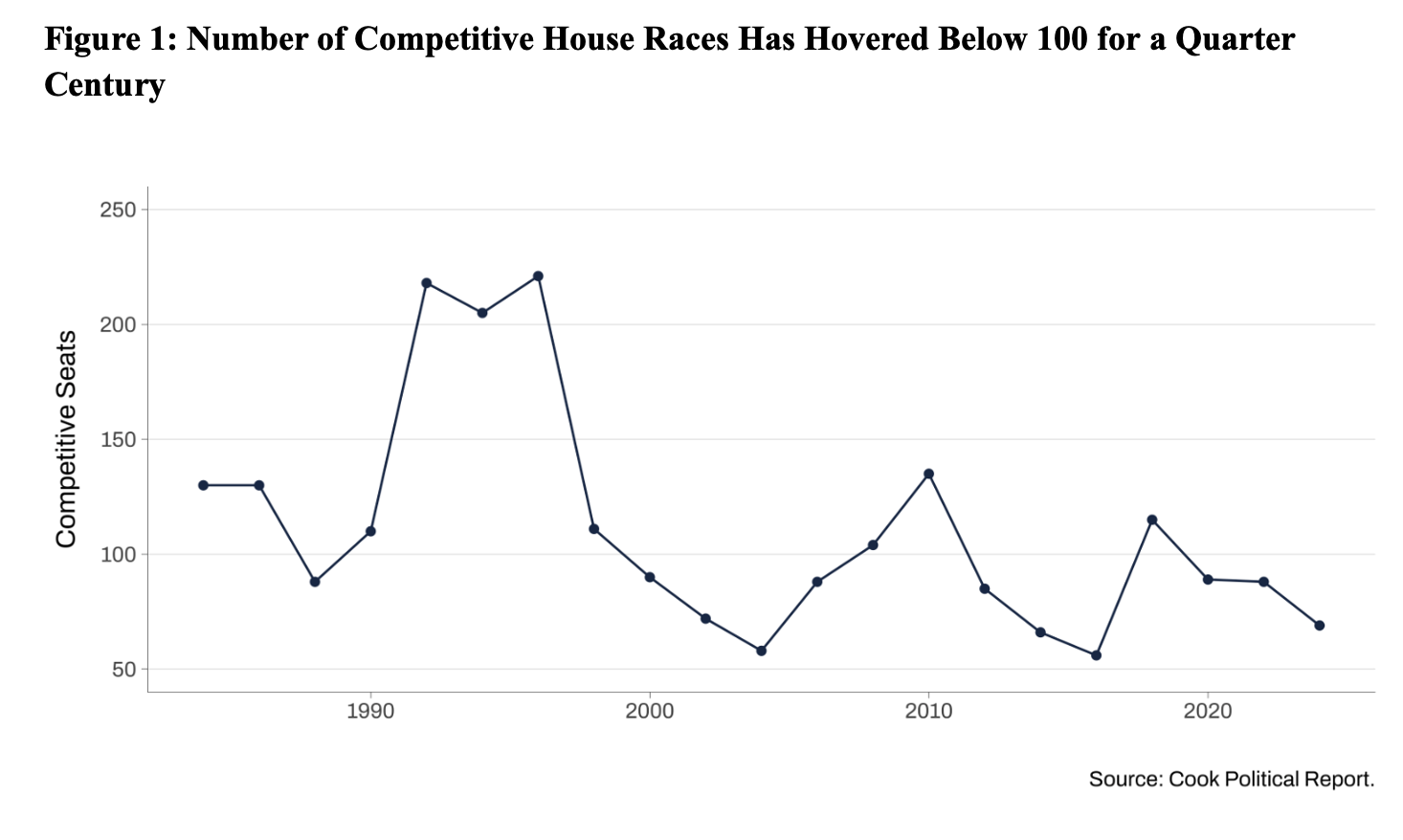
Yet these low-visibility, barely democratic primaries are determinative in an increasing number of congressional elections. According to the Cook Report, the number of competitive seats has dropped from more than 200 (out of 435) seats in the 1990s to under 100 seats over the most recent decade (see Figure 1). In 2026, more than 80 percent of the seats in the elections to the House of Representatives were considered “safe” as early as eighteen months before election day.
Domination by incumbents. Contributing to voter uninterest is the frequency with which incumbents are re-elected, often without competition. Over the past three-quarters of a century, incumbent members of Congress seeking re-election have won their primary contest 98 percent of the time. Unless they lose out in a redistricting plan or suffer a scandal, they turn their name recognition, fundraising capacity, and government-paid staff into an insuperable advantage no challenger can surmount.
Punishment of moderation. Still, there are times, especially in statewide senatorial and gubernatorial races, when primaries are bitterly contested. It is then that forces driving party polarization become especially visible. Activist ideologues press more moderate candidates to prove their ideological purity. Willingness to compromise earns a candidate the RINO/DINO label—Republican or Democrat in name only. Even regular party loyalists are pulled toward the edge—Republicans toward the hard right and Democrats toward the uber-progressive left.
Activists tend to hold more polarizing opinions than less engaged citizens. In addition, lower participation rates by independents and cross-party voters shift the balance toward the poles of the ideological spectrum.
In 2026, moderates are at risk of losing to purists who thrill the base but repel the broader electorate. Texas Republican Senator John Cornyn lost to MAGA enthusiast Ken Paxton, giving the Democratic candidate an unexpected chance of victory in what is ordinarily a deep-red state. Meanwhile, left-wing public health official Abdul El-Sayed is the leading candidate in a Democratic primary contest in Michigan, and Democrat oysterman Graham Platner forced a moderate Maine governor to remove herself from the contest. Democrats have a chance in both Texas and Michigan, but if progressives win, the outcome could advantage Republicans in November. Neither party is consistently putting its best foot forward if the goal is to capture control of the Senate.
Party polarization
Inside Congress, partisanship has reached an all-time high. In 85 percent of all roll call votes taken in 2025, 90 percent or more of all Democrats and 90 percent or more of all Republicans stood in opposition to one another. That is 10 percentage points higher than the previous record, set in 2023. The degree of party polarization is aggravated by intense pressure from party activists to toe the party line. Any sign of dissent may mean a senator or representative will face a well-funded opponent in the next primary.
Incumbents still have many advantages in congressional primary elections—only ten of them lost in 2022. Still, they find themselves under increasing pressure to remain faithful to their party. National funding sources are crucial to re-election campaigns, and ideological stance is replacing age and corruption as the primary reason incumbents face serious challenges. Says Elaine Kamarck of the Brookings Institution: “Ideological primary challengers” do better than “other types of challengers at raising money,” and interest groups “can make far more of a difference than is the case in a general election.”
Especially for senators, the risk of ideological opposition has intensified. Not only were Senators Cornyn and Cassidy defeated in low-turnout Republican primaries, but two others—Thom Tillis in North Carolina and Joni Ernst in Iowa—chose not to run for re-election, probably because they would have faced strong MAGA opponents. As Kamarck puts it: “The opportunity for repeated ‘capture’ of one or both political parties by ideological voters who move Members of Congress further from a functional middle is a real threat to the smooth functioning of American democracy.”
Unsavory origins: the white partisan primary
Myth has it that partisan primaries owe their origin to the country’s Progressive movement that prospered in the early decades of the twentieth century. Oregon brags it was the first to legislate primaries into being, and North Dakota claims credit for hosting the first presidential primary.
In reality, the partisan primary has a dubious, embarrassing past.
It owes its origin to the Jim Crow fever that re-segregated the South in the late nineteenth century. Beginning in South Carolina in 1892, partisan “white primaries,” as they were known, spread to Florida, Mississippi, Alabama, Texas, Louisiana, and elsewhere in the states of the Old Confederacy. They were necessarily partisan, as only private organizations, not states, could establish rules denying, in the words of the Constitution’s 15th Amendment, “the right of citizens . . . to vote . . . on account of race, color, or previous condition of servitude.” As private organizations, they had the privilege of excluding anyone they wished, courts said. Only in 1944 did the Supreme Court finally declare all-white partisan primaries in violation of the Constitution.
There is nothing noble about the origin of the partisan primary and no noble reason to keep it in place today.
How “top two” works—and why it helps
All-voter primaries, first enacted into law by the State of Washington and later adopted by California, tackle the distortions of the partisan primary at their roots. Instead of separate Republican and Democratic primaries, there is one primary ballot for everyone.
That change has several important effects:
Higher engagement and turnout. By inviting all voters to participate in one primary, instead of dividing them into two or more parties, it sharply increases the share of the electorate participating in a meaningful election. In addition, the overall level of citizen engagement shifts upward. A team of political scientists find that all-party elections in the mid-term elections of 2022 lifted voter turnout by 12 percentage points. “Independents uniquely benefit from the nonpartisan primary,” the authors report. Research specific to California shows similar effects: in 2022 turnout was ten percentage points higher than average rates for midterm elections prior to top two.
A path for moderates. With all registered voters invited to cast their ballots in the same election, candidates can pursue a middle-of-the-road strategy that reaches out to independents and voters from the moderate wings of both parties. In the 2026 election in California, the top two winners did exactly that. Democrat Congressman Xavier Becerra, by separating himself from progressives Tom Steyer and Katie Porter, has propelled himself into the general election. His opponent will be Steve Hilton, a loyal Trump-endorsed Republican but one more moderate than his primary opponent, Chad Bianco, the fire-brand sheriff of Riverside County. That Trump endorsed the less contentious of the two Republicans illustrates the moderating force of a top-two system.
Less polarization. All-party elections do not eliminate extremism, but they make purity tests riskier and broad appeal more valuable. Studies show that those elected under an all-party system, as compared to those chosen in partisan primaries, moderate their votes in the House of Representatives, a pattern also observed in Washington and California legislative chambers.
Who backs all-party elections—and who fears them
“Rarely do practitioners fight hard in favor or against an electoral system that has little impact on elections,” says one team of primary election scholars. If so, much can be learned by looking at who favors, and who opposes, election reform.
Supporters. In California, it was a middle-of-the-road Republican governor, Arnold Schwarzenegger, who persuaded voters to enact an initiative forcing the adoption of all-party primaries in congressional and state elections in 2010. At the time, the future Democratic minority leader, Chuck Schumer, said it would “undo tendencies toward default extremism.”
In Massachusetts, the Coalition for a Healthy Democracy has proposed an initiative that would bring all-party primaries to Massachusetts. The Bay State claims to be the sparkplug of the American Revolution, but it is remarkably undemocratic today. The state’s governor, attorney general, two US senators, nine members of Congress, and 84 percent of those elected to its legislature come from the same party. Its general elections are pre-determined, and, since 2014, more than half of all primary races have been uncontested. Massachusetts ranks last among all states on the competitive index compiled by the nonpartisan election watcher Ballotpedia.
One might think Massachusetts is so decidedly Democrat that it makes no difference whether Republicans could vote in a top-two primary. But Massachusetts gave Donald Trump 36 percent of its vote in 2024. In other words, the Bay State excludes more than a third of the electorate from political life.
Those supporting a “healthy democracy” include former governor Deval Patrick, former lieutenant governor Kerry Healey, former representative Joe Kennedy III, a state auditor hostile to corruption in the legislature, a former Democratic national committee member, and a Harvard professor, Danielle Allen, a former candidate for governor. To some, the list seems like a bunch of “has-beens,” but most are thoughtful, informed leaders unburdened by an immediate ax to grind.
Opponents. The Democratic State Committee, controlled by insiders and progressives, supported a lawsuit designed to keep the initiative from appearing on the Massachusetts ballot, even though the US Supreme Court, by a bipartisan 7-2 majority, affirmed the constitutionality of all-party primaries in 2008. The committee says the initiative violates the state’s constitution. But just this past week, the state supreme court rejected that argument, ensuring that the initiative will appear on the ballot once petition signatures have been approved.
Those who dislike the all-party primary call it a “jungle primary,” as if it is a sin for political elephants and donkeys to be placed in juxtaposition. Elaborating opposition arguments, Jamelle Bouie claims in Slate that “third parties are shut out of the process.” That generally happens to weak third parties regardless of the format, but in an all-party election a strong third-party or independent candidate could spring into the top-two circle. In June 2026, that happened in England’s all-party local elections when a rising populist party swept aside Labour and Conservative candidates to win a majority of council seats.
Bouie also worries that “in the event two candidates of the same party are chosen for the general election, there’s a strong chance that turnout will sharply decline“ in the subsequent general election. This claim is also problematic. A double victory by a single party is a black swan event, as California’s 2026 gubernatorial race—where a Republican and a Democrat ended up as the top two—once again illustrates. But even if two Democrats had won, the general election would have pitted a moderate against a left-wing progressive, giving all voters, not just those within a single party, a chance to resolve questions about the future of the state.
Moving forward
This is a call for state-by-state action across the country, not for a new federal law. The Constitution gives state governments the authority to determine the “times, places, and manner of holding elections for senators and representatives.” Although Congress has the constitutional authority to modify state laws affecting federal elections, any attempt to nationalize the issue would insert it into the contemporary political maelstrom. At the state level, bipartisan reform seems possible, as suggested by the Massachusetts initiative. To secure further adoptions, the informed public needs to be educated about the ways in which partisan primaries interfere with consensus-building and how all-party primaries can help to ameliorate polarization.
Implications for the global commons
Trust in government has fallen over the past fifty years, and the drop in confidence in Congress is especially dramatic, reaching an all-time low well below that of the two other branches of the federal government. As polarization intensifies, important bipartisan institutions, such as independent-minded congressional committees and cloture rules that require Senate super-majorities, are under pressure and may soon be eliminated. Divided government and narrow partisan majorities in both chambers perpetuate partisan strategizing at the cost of the nation’s well-being and its ability to position itself abroad. The bipartisan consensus that sustains an independent Supreme Court is at risk.
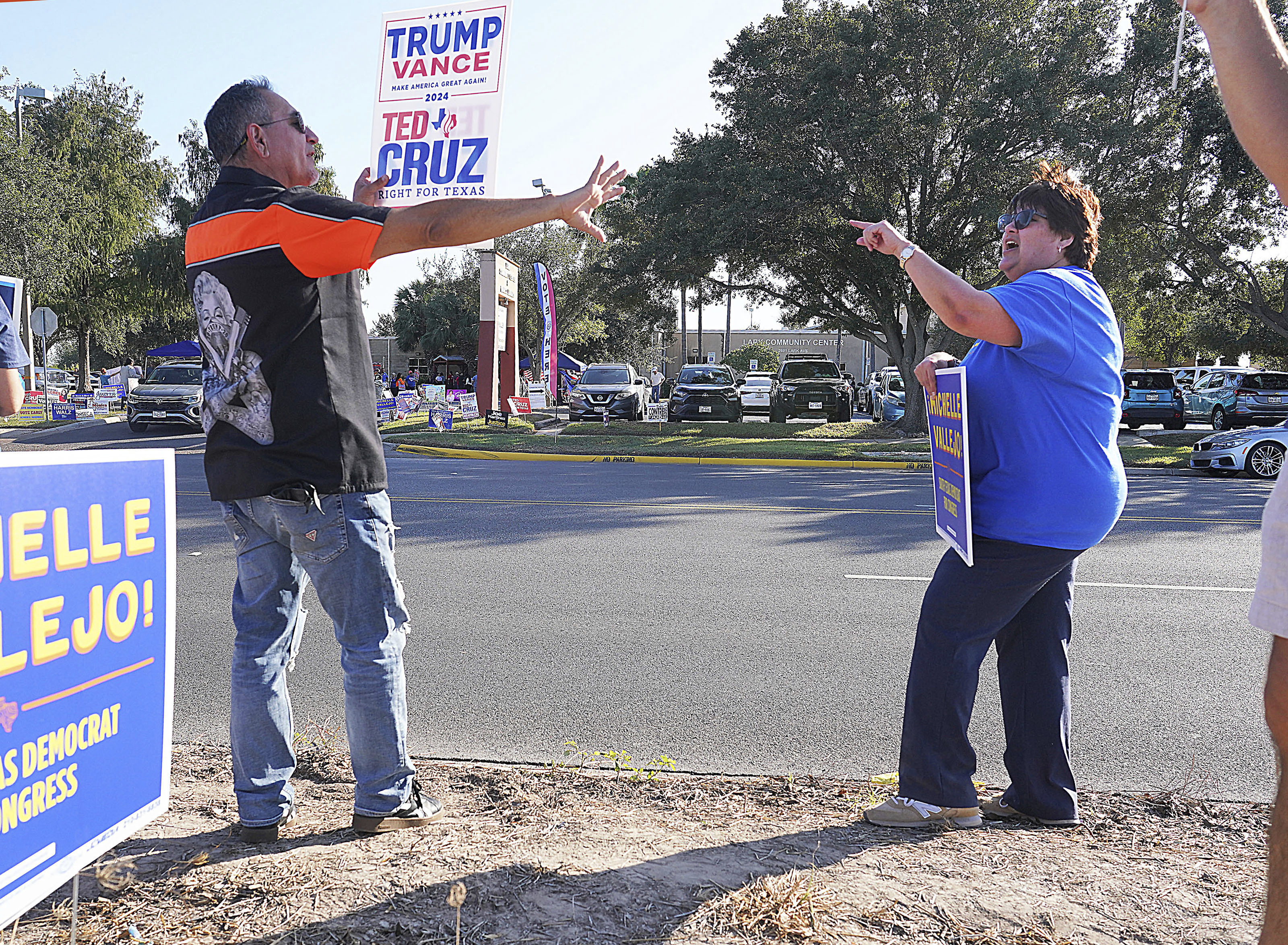
Partisanship on Capitol Hill is raising huge barriers to the passage of any budget, much less a balanced one. The federal government’s entitlement, health, education, immigration, environmental, and energy policies need close committee scrutiny and revision along lines acceptable to those in both parties more interested in governance than grandstanding. The power of the executive and the courts expands into the constitutional space Congress once occupied.
An all-party primary system would not immediately end interparty bickering or solve every structural problem the country faces, but it would accomplish three objectives:
The number of voters participating in key elections would increase substantially;
Middle-of-the-road candidates could draw support from the full range of the political spectrum; and
Extreme factions that intensify political polarization would find fewer opportunities to force their views on their party’s candidates.
All-party primaries work for democracy—and for those who seek to govern responsibly.
Paul E. Peterson is a senior fellow at the Hoover Institution and a member of the Hoover Education Success Initiative, which focuses on the improvement of education policy and provides public education solutions for state education and policy leaders. He is also Henry Lee Shattuck Professor of Government at Harvard University, where he directs the Program on Education Policy and Governance. He also writes on Substack at The Modern Federalist.