 Powered by
For nearly two decades, the dominant climate narrative insisted that rapid, economy-wide emissions reductions were both necessary and achievable. Decarbonization was framed as a question of political will rather than structural constraint. Over the past year, however, that consensus has quietly unraveled. Mitigation has slipped from the center of political debate, climate ambition has flagged, and governments are recalibrating around a more sober understanding of what is possible—or even what is desirable.
This shift is not the product of a single election or ideological swing. It reflects a deeper recognition that the “climate threat” is not existential in the way it was once portrayed, and that a mitigation-first strategy was fundamentally misaligned with economic realities, geopolitical incentives, and public tolerance. Evidence of retreat is now visible across every major pillar of climate policy.
Cooler heads prevail
Governments that once championed aggressive emissions rules are now delaying or scaling back. Europe has softened its combustion-engine phaseout, and the United States has moderated proposed vehicle standards. These reversals are not symbolic; they reflect the political and economic strain of sustaining high-cost regulatory pathways. Only about 4 percent of roughly 1,500 mitigation policies across dozens of countries have produced any measurable effect on emissions.
Industrial exposure tells a similar story. Energy-intensive manufacturing in Europe has contracted sharply under the weight of high energy prices and regulatory burdens. The political backlash was predictable: no democratic government can sustain policies that accelerate deindustrialization without delivering visible climate benefits.
Climate finance has also faltered. The gap between pledged and delivered funding continues to widen. Trillions in promised capital have not materialized, institutional alliances have dissolved, and the global South increasingly views climate finance as about money rather than mitigation.
Meanwhile, global emissions continue to rise. Coal and oil consumption are at record highs, natural gas is nearly so, and the world is not decarbonizing so much as deepening its reliance on fossil fuels. Grid performance in the United States and the European Union is deteriorating as well, with rising electricity prices and more frequent reliability events exposing the limits of a wind/solar/battery strategy and underscoring the need for firm generation.
The electric vehicle market, once the flagship of the transition, while continuing robustly in China for energy security reasons, has stalled in Europe and the United States. Production plans are being revised at enormous cost, and consumer resistance—rooted in price, charging constraints, and range anxiety—has proven far more durable than policymakers expected.
China’s trajectory further complicates the picture. While it is deploying renewables at unprecedented scale, it is simultaneously expanding coal capacity. Its priorities—industrial competitiveness, energy security, and geopolitical leverage—do not align with Western mitigation timelines and, in practice, undermine them.
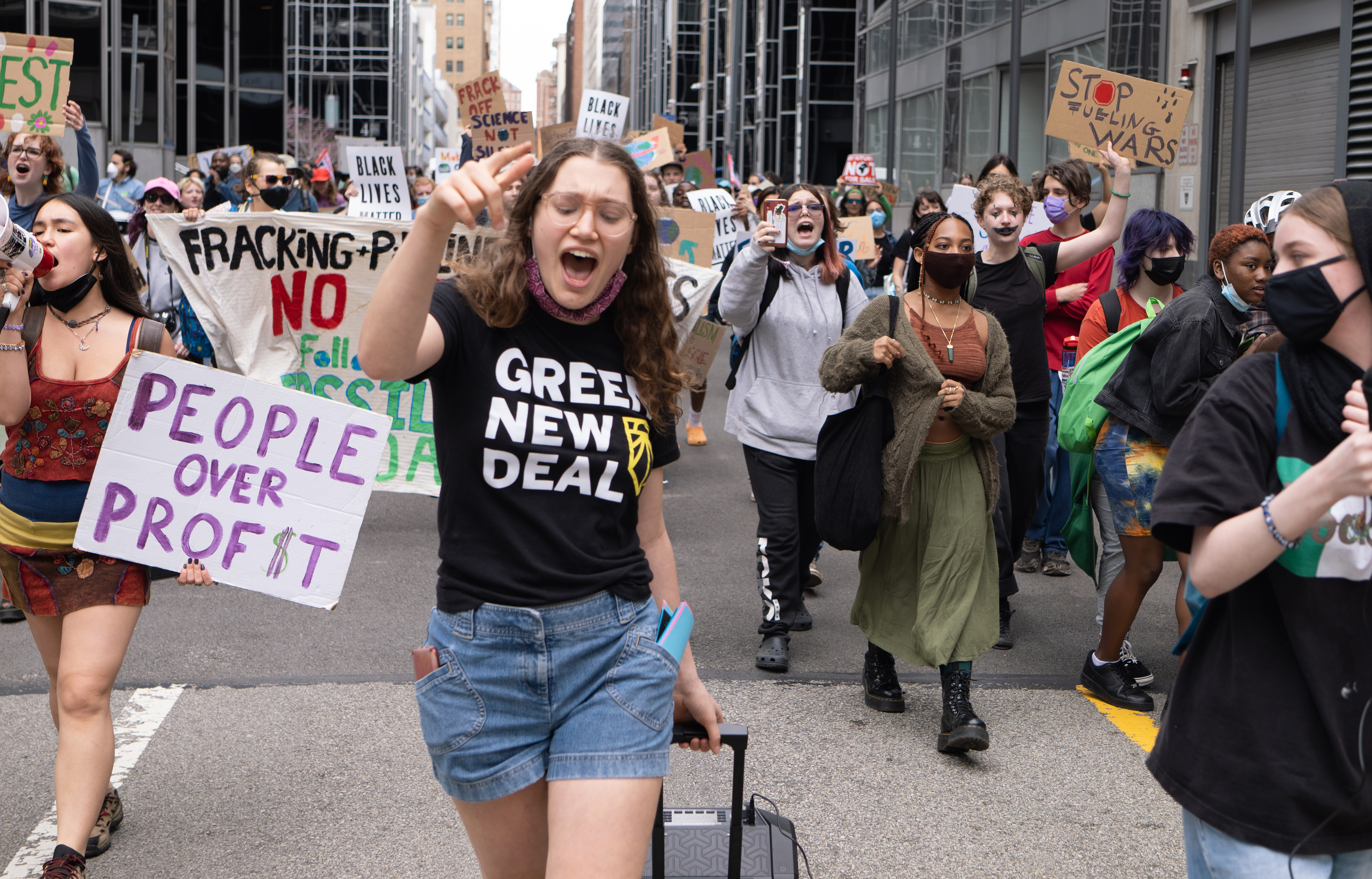
Even the cultural climate is shifting. Broadcast media have largely stopped attributing every extreme weather event to climate change, and institutions such as the Council on Foreign Relations and the New York Times, long aligned with alarm-forward messaging, now carry more tempered analyses. Taken together, these trends signal not a temporary pause but a structural inflection point.
The two pillars of realism
A new climate realism is taking shape—one that reframes rather than denies climate risk. It rests on energy realism, a recognition of what it actually takes to reduce emissions at scale; and science realism, a more nuanced understanding of the magnitude and nature of climate risk.
Energy realism is arriving first because the gap between aspiration and outcome has become impossible to ignore. The costs and disruptions of rapid energy transitions are immediate and politically salient. Households and firms feel them directly, and the resulting skepticism spreads quickly and organically.
Science realism is slower to take hold. Climate change has an emotional hold on many and it is more abstract, harder to communicate, and embedded in probabilistic projections that carry uncertainty. Yet science realism is essential for calibrating policy ambition and avoiding both complacency and overreach.
Energy realism
A realistic view of energy begins with the fundamentals. Modern energy systems must be reliable, affordable, and clean—the classic energy trilemma—and policies that over-prioritize emissions reductions inevitably compromise reliability and affordability. Global energy demand continues to rise, driven by development, electrification, and the explosive growth of data centers. Fossil fuels still supply more than 80 percent of global energy, and replacing them requires not only new technologies but also new infrastructure, supply chains, and political coalitions.
The capital intensity of full-scale decarbonization is unprecedented. Even wealthy countries struggle to mobilize the required investment; emerging economies face even steeper barriers. Households resist higher costs, and developing countries resist slower growth—these are rational responses to incentives, not moral failures. Consumer behavior has also proven remarkably sticky. Preferences for large vehicles, cheap travel, and reliable power remain strong, and climate policy repeatedly underestimated the durability of these preferences.
Science realism
A realistic view of climate science has always been available to anyone willing to examine the underlying data and research literature. Yet public perception has been shaped largely by UN and government assessment summaries, abetted by media and politicians, which have tended to emphasize worst-case interpretations.
A more balanced reading of the evidence would note that the present climate is hardly “broken”: long-term trends have not shown detectable increases in most categories of extreme weather. It would also recognize that humanity’s adaptive capacity is extraordinary. The greatest improvements in global welfare in all human history have occurred since 1900, even as (or perhaps because) the planet has warmed by roughly 1.3°C. Over the same period, the global death rate from extreme weather has fallen dramatically, reflecting rising resilience rather than rising vulnerability. Meanwhile, extreme warming scenarios have been progressively revised downward as projected emissions decline and climate models become less sensitive. Many economic assessments likewise project only modest impacts from plausible levels of warming over the coming century.
None of this eliminates risk, but it does undercut the plausibility of the catastrophic narratives that once drove political urgency. As scientific realism matures, it will help anchor climate strategy in evidence rather than fear.
The price of delusion
The end of the mitigation‑first era carries consequences that will take years to unwind. The past two decades produced vast economic and social distortions: trillions in misallocated capital, regulatory turbulence, industrial dislocation, and new dependencies on geopolitical rivals for critical minerals and manufactured goods.
The psychological imprint has been equally significant. Younger generations were told that catastrophe was imminent and that salvation depended on personal sacrifice. When the promised transformation failed to materialize, disillusionment followed, particularly in the West.

Scientific and institutional costs were substantial as well. The careers of “deniers” were derailed, reputations damaged, and research agendas distorted by political urgency. The boundary between science and advocacy blurred, and dissenting voices—including highly credentialed technical experts—were often marginalized. These dynamics arose not from malice but from a system that rewarded consensus, urgency, and narrative simplicity over uncertainty, complexity, and debate.
If climate realism is here to stay—and the evidence suggests it is—the task now is to learn from the interlude of fantasy rather than repeat it.
A pivot to adaptation and innovation
The obstacles to rapid mitigation were foreseeable decades ago, and so was the optimal path forward: a pivot to adaptation and innovation. Adaptation offers immediate, local benefits and does not require global coordination. Investments in resilient infrastructure, water systems, agriculture, and coastal protection are politically durable and economically rational.
Innovation offers a complementary long‑term strategy. Advances in nuclear energy, geothermal systems, carbon removal, and new materials can deliver emissions reductions without requiring mass behavioral change. This pathway is slower than activists hoped, but far more aligned with economic and political reality.
Climate science and energy systems are complex and nuanced, and they must be portrayed accurately to decision makers and the public. Technical voices—engineers, modelers, system planners, and energy economists—understood the constraints most clearly yet were often sidelined. They must be restored to the center of climate policy.
Research funding should also shift toward areas with durable value: high‑quality climate monitoring and observational systems; low‑emissions technologies that can scale without subsidies or mandates; and adaptation strategies that deliver immediate, local benefits. Premature deployment, driven by aspirational political timelines rather than technological readiness, proved costly and counterproductive. Innovation, not forced adoption, is the more reliable engine of long‑term progress.
The scientific community also needs a period of self‑examination—not for retribution but for integrity. A “truth and reconciliation” exercise, the inverse of the “Exxon knew” narrative, would ask difficult but necessary questions: Why were legitimate uncertainties minimized? Why were dissenting scientists dismissed or stigmatized? How did advocacy become entangled with research? What institutional incentives discouraged candor? The goal would be not to assign blame but to rebuild trust, clarify norms, and ensure that future scientific debates remain open, pluralistic, and grounded in evidence rather than political necessity.
The realistic future
Climate action has not ended; it has matured. The world is moving toward a strategy informed by an accurate perception of climate risk and grounded in economic realism, technological pragmatism, and political feasibility. Mitigation will perhaps continue, but as a long‑term innovation challenge rather than a short‑term regulatory crusade. Adaptation will rise in prominence. And climate policy will increasingly reflect the world as it is—complex, energy‑hungry, and constrained—rather than the world imagined by early‑2000s climate activism.
Steven E. Koonin is the Edward Teller Senior Fellow at the Hoover Institution. He contributes to Hoover’s Tennenbaum Program for Fact-Based Policy and the Stanford Emerging Technology Review and participates in the George P. Shultz Energy Policy Working Group. He is the author of Unsettled: What Climate Science Tells Us, What It Doesn’t, and Why It Matters.