 Powered by

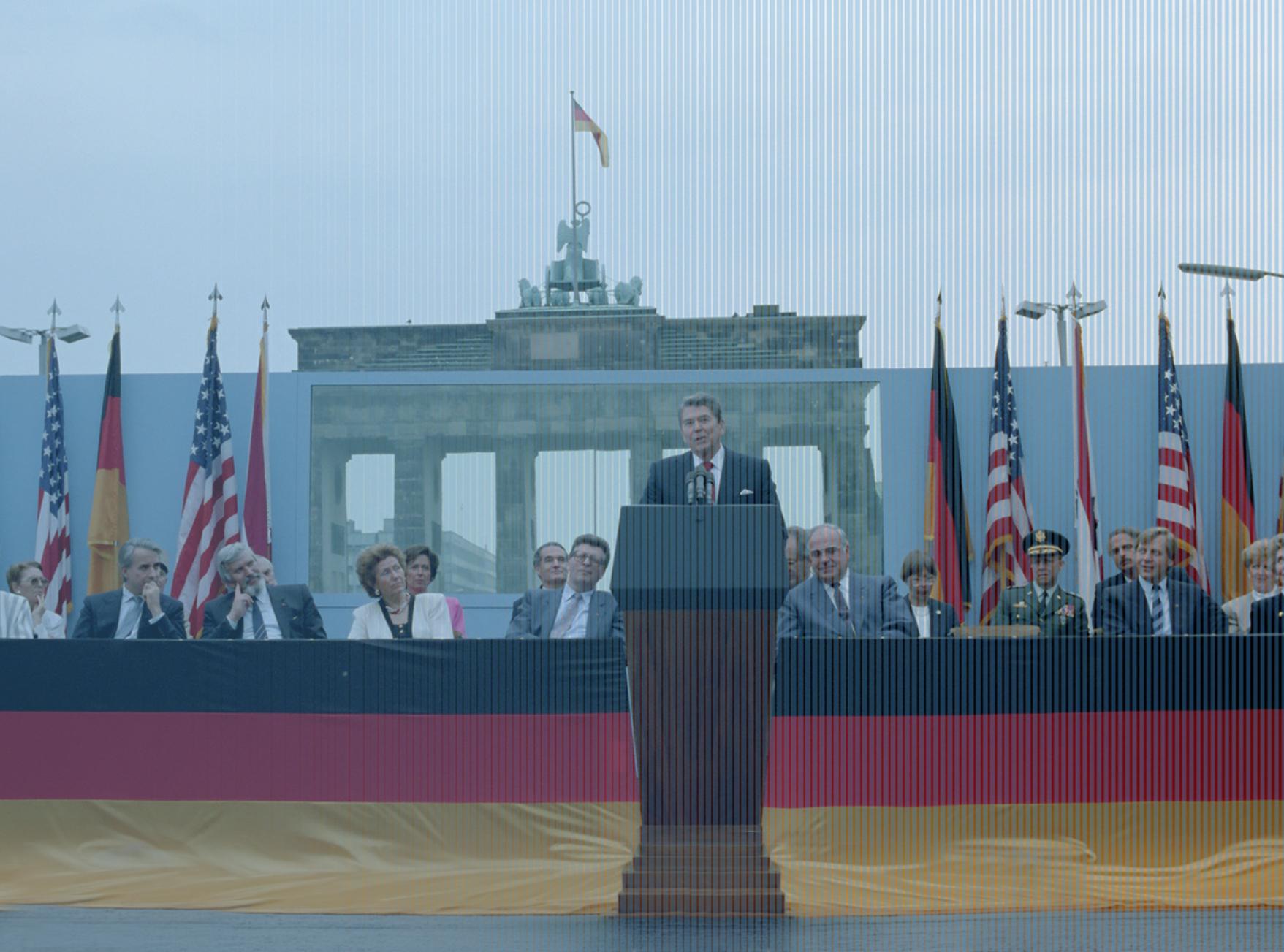
In this essay, my esteemed colleague and President Reagan’s former speechwriter, Peter Robinson, tells the story behind the iconic Berlin Wall Address and its legacy thirty-nine years later. To read my reflections on twenty-first-century lessons derived from this speech, click here. –H.R. McMaster
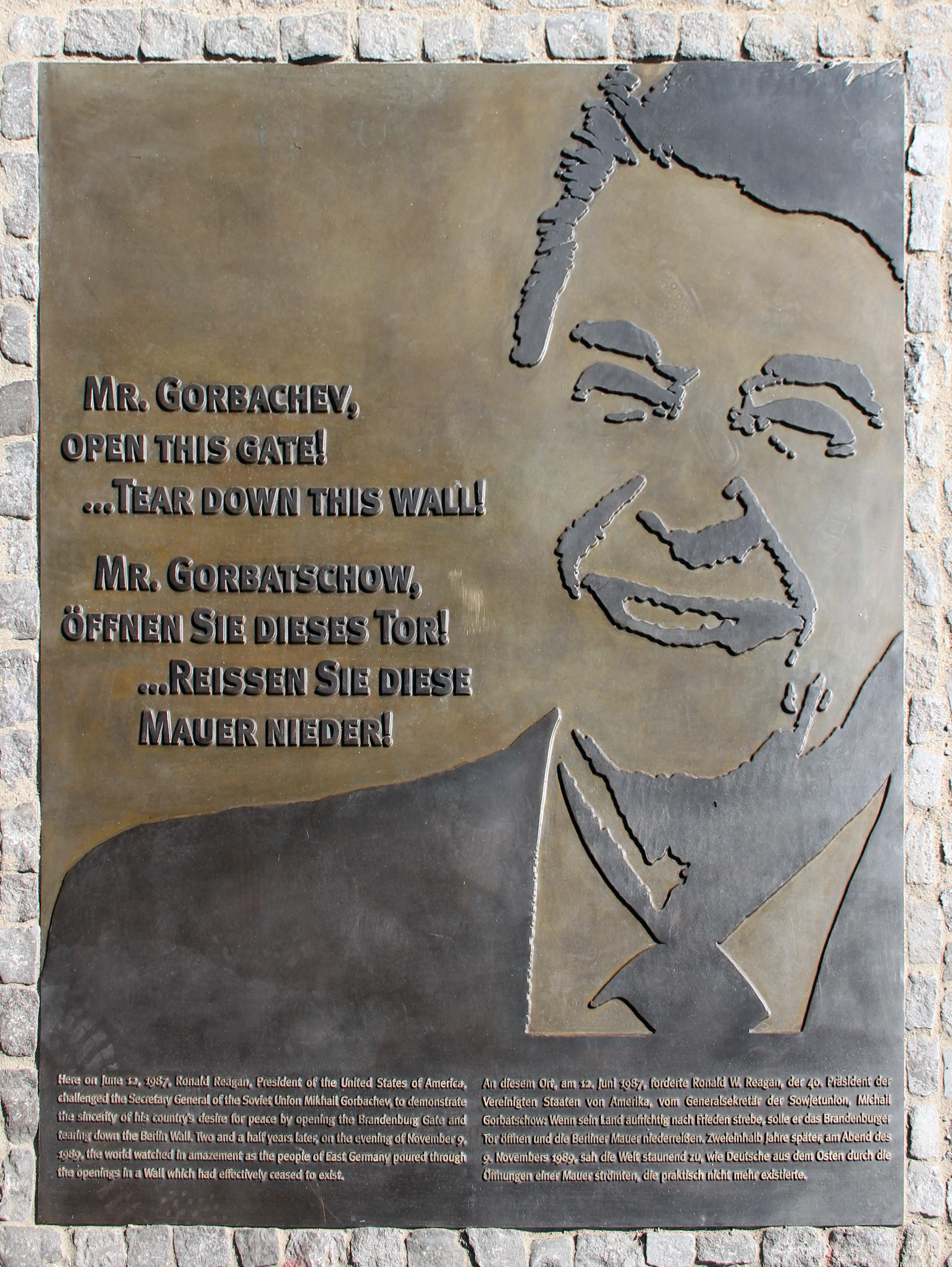
General Secretary Gorbachev, if you seek peace, if you seek prosperity for the Soviet Union and Eastern Europe, if you seek liberalization, come here to this gate.
Mr. Gorbachev, open this gate!
Mr. Gorbachev, tear down this wall!
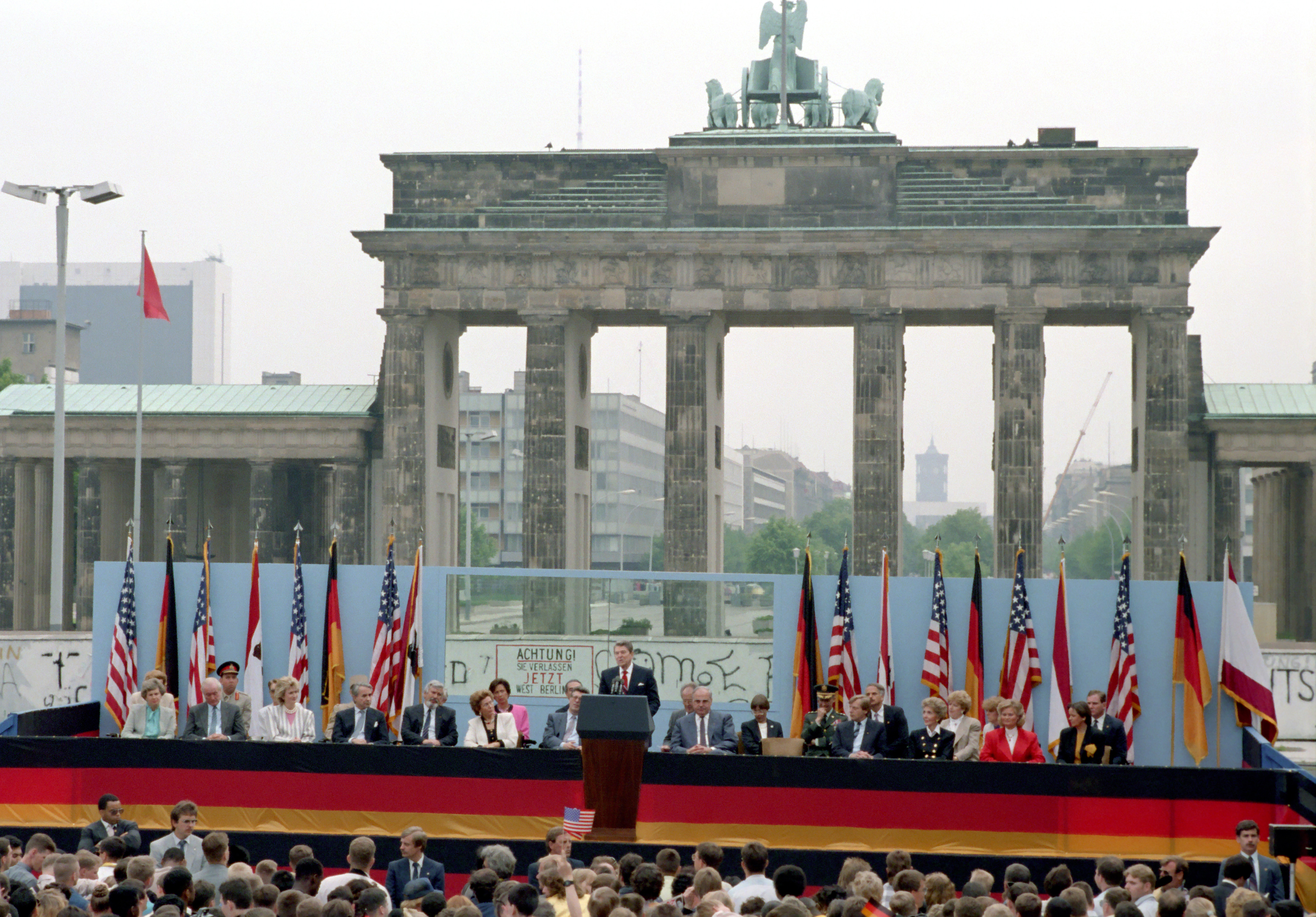
—President Ronald Reagan at the Berlin Wall, the Brandenburg Gate rising behind him, June 12, 1987
The Berlin Wall Address makes for a good story. It was the speech that almost wasn’t. It also raises a question. The question has been bothering me for almost forty years now.
The story begins with a White House speechwriter, twenty-nine-year-old me. Two months before President Reagan was to deliver the speech, I spent a day in Berlin to gather material.
First, I visited the place where the president would speak. On one side of the Berlin Wall lay West Berlin, modern, bustling, alive with lights and traffic and pedestrians crowding the sidewalks. On the other side lay East Berlin, colorless and decrepit. Soldiers outnumbered pedestrians. In ten minutes observing the city from the observation platform, I counted just two automobiles. What could I write that would prove equal to the setting?
When I visited the ranking American diplomat in West Berlin, my problem grew worse. Instead of suggesting what the president should say, the diplomat gave me a talking-to about what the president shouldn’t. No Commie-bashing. Don’t let him sound like an anti-Soviet cowboy. “And don’t mention the wall. They’ve all gotten used to it.”
Only at the last event of the day, a dinner party with perhaps a dozen West Berliners, did I find material worth putting in my notebook. I explained what the diplomat had told me. “Is it true?” I asked. “Have you gotten used to the wall?”
At first the West Berliners glanced at each other uneasily. Then one man raised an arm and pointed. “My sister lives twenty miles in that direction,” he said. “I haven’t seen her in more than two decades. Do you think I can get used to that?” Another man spoke. Each morning on his way to work, he explained, he walked past a guard tower. A soldier in the tower examined him with binoculars. “That soldier and I speak the same language and share the same history. But one of us is a zookeeper and the other is an animal, and I am never certain which is which.”
Our hostess broke in. A gracious woman, she had suddenly grown angry. “If this man Gorbachev is serious with his talk of glasnost and perestroika,” she said, “he can prove it. He can get rid of this wall.”
Back at the White House the speechwriter adapted that comment, making a call to tear down the Berlin Wall the central passage in the speech. The president approved it. “That wall has to come down,” he said during a meeting in the Oval Office. “That’s what I’d like to say.”
There were now three weeks until the president would deliver the address. My draft went out to staffing. The State Department and the National Security Council attempted to squelch it.
The assistant secretary of state for Eastern European affairs challenged the speech by telephone. A senior member of the National Security Council staff protested the speech in memoranda. The ranking American diplomat in Berlin objected to the speech by cable. Secretary of State George Shultz objected in person, taking his complaint to Chief of Staff Howard Baker, who objected to the speech himself. The speech was naïve. It would raise false hopes. It was clumsy. It was needlessly provocative. State and the NSC submitted their own alternate drafts—my journal records that there were no fewer than seven. In each, the call to tear down the wall was missing.
When the president and his party reached Italy, where the president would attend an economic summit in Venice before continuing to West Berlin, Secretary of State Shultz objected to the speech once again, this time to deputy chief of staff Kenneth Duberstein. “Shultz thought the line was too tough on Gorbachev,” Duberstein later told me. (Too junior to join the traveling party, I remained in Washington.) Duberstein sat the president down in the garden of the estate in which he was staying, briefed him on the objections to the speech, then handed him a copy of the speech, asking him to reread the central passage.
Reagan asked Duberstein’s advice. Duberstein replied that he thought the line about tearing down the wall sounded good. “But I told him, ‘You’re president, so you get to decide.’ And then,” Duberstein recalls, “he got that wonderful, knowing smile on his face, and he said, ‘Let’s leave it in.’ ”
The day the president flew to West Berlin, State and the NSC submitted yet another alternative draft. “They were still at it on the very morning of the speech,” Tony Dolan, the chief speechwriter, later explained. “I’ll never forget it.” Yet in the limousine on the way to the Berlin Wall, the president told Duberstein he was determined to deliver the controversial line. Reagan smiled. “The boys at State are going to kill me,” he said, “but it’s the right thing to do.”
A speechwriter searching for material in West Berlin. A fight over the draft he produced that raged for three weeks, producing dozens of memoranda, scores of telephone calls, and meeting after meeting among officials of the State Department, the National Security Council, the White House senior staff, and the speechwriting office. And at the end of this protracted, messy, ugly, irrational process—what? Ronald Reagan, standing before the Berlin Wall, calling on the general secretary of the Soviet Union to tear the structure down.
As I say, it makes for a good story.
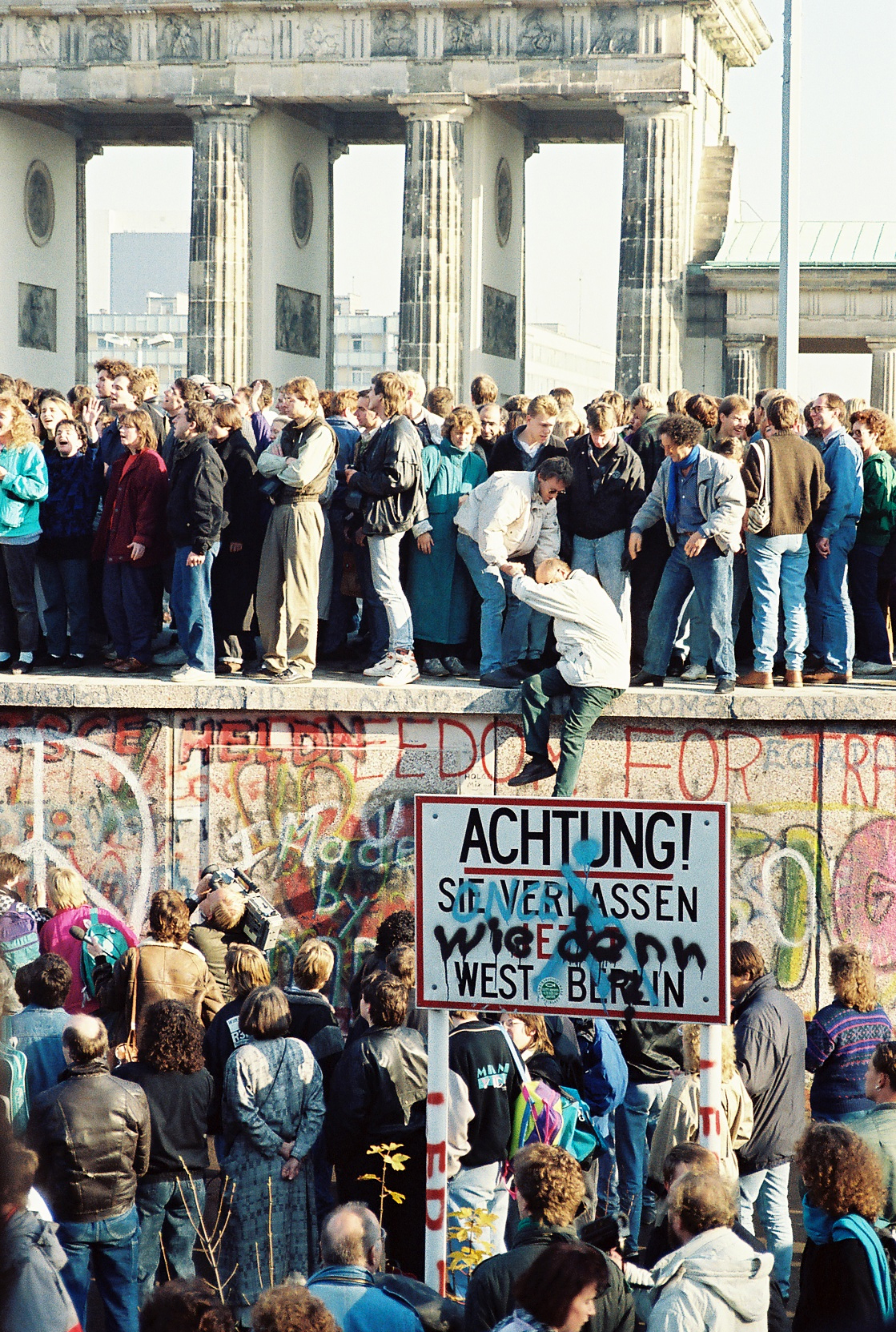
But did the Berlin Wall Address matter? Therewith the question that has been in the back of my mind all these years. Not quite two-and-a-half years after Reagan delivered the address, mass protests swept across East Germany. On the night of November 9, 1989, the East German politburo, meeting in emergency session, suddenly opened the checkpoints in the wall, permitting free passage between East and West Berlin for the first time since 1961, when the wall had gone up. By the next morning, hundreds of Berliners had taken to the structure with sledgehammers and chisels. Did the Berlin Wall Address contribute to the fall of the wall? If not as proximate cause, then at least as a remote or distal cause? Or did it instead represent a mere form of words?
Not long ago, I mentioned this question to Tom Weber. He responded more tartly than I’d expected. A young historian from Germany, Tom is now a visiting fellow at the Hoover Institution. Although I was asking the question in a vague, nostalgic manner, Tom insisted, it would strike any historian as perfectly straightforward. Many Eastern Europeans who had heard the speech in person or over the radio were still alive. Documents such as the files of the Stasi, the East German secret police, were now open. “If you really want to know whether the speech made any difference,” Tom insisted, “you could interview people and examine the written record.”
I’ve decided I would do just that. And I’ve talked Tom into joining me. As we work on a documentary to mark the fortieth anniversary of the speech this coming June, Tom is performing research that meets his standards, the standards of a trained historian. The Stasi did indeed assemble files on the Berlin Wall Address—such burgeoning files that the speech appears to have unnerved them. A number of former East German dissidents have agreed to sit for interviews, including Joachim Gauck. Although he would later be elected president of a reunited Germany, the position he held from 2012 to 2017, Gauck served as pastor of a Lutheran church in Rostock, a port city in East Germany, and an opponent of the Communist regime in 1987. “Ronald Reagan,” Gauck has stated, “said the right thing at the right time in the right place.”
Among the materials Tom Weber has already produced, one item in particular has struck me: the testimony of Larysa Buriak, a student in Kiev at the time of the Berlin Wall Address.
Although Soviet media reported the speech, Buriak explains in an email, the reports omitted any mention of the wall. News that Reagan had called on Gorbachev to tear down the structure circulated by word of mouth.
“Someone in my circle . . . explained what the president had actually said. . . . The appeal made a profound impression on me. I felt that we were on the eve of developments far more radical than the perestroika that Gorbachev had proclaimed. . . . I sensed that something entirely new and unknown was beginning. . . . I lived in hope.”
I lived in hope.
Tom Weber and I will have our work waiting for us when we visit Eastern Europe this spring. Interviews to conduct. Documents to examine. But for the first time, my question about the Berlin Wall Address has stopped bothering me. Did the address make any difference? It gave one student hope. I can live with that.
Peter Robinson is the Murdoch Distinguished Policy Fellow at the Hoover Institution, where he writes about business and politics and hosts Hoover’s video series program, Uncommon Knowledge with Peter Robinson.
This article is part of Liberty Amplified, a series produced in partnership with the Hoover Institution’s Human Security Project and the Hoover Institution Library & Archives featuring the voices of those who defy autocracy in pursuit of freedom.