 Powered by
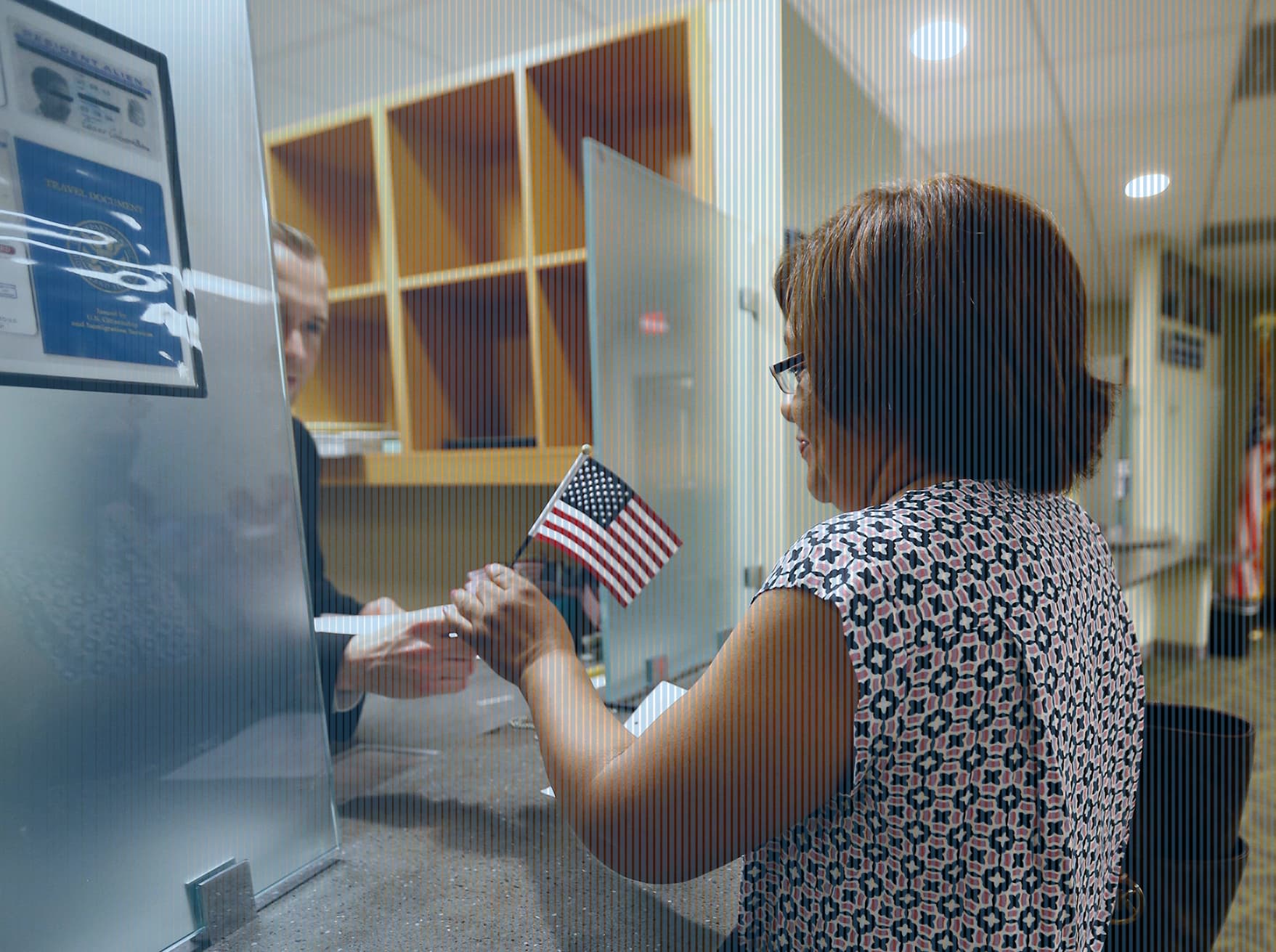
How much do you know about your own civic values and engagement? It’s likely you don’t often—perhaps ever—reflect on such matters. And what about your knowledge of civics, government, and American history? How might you fare on the test the government requires immigrants to pass before becoming US citizens?
Civic Profile, a new online tool, offers a unique opportunity to explore these topics for yourself in private and—if you like—to compare your results with a national sample of Americans and—if they’re game—with others in a classroom, team, organization, workplace or other cohort.
You can learn about it in this short introductory video. Civic Profile was developed over the past two years by our team in the Center for Revitalizing American Institutions at Stanford University’s Hoover Institution. By releasing it early in 2026, the year America celebrates its 250th birthday, we hope to encourage heightened civic awareness, understanding, and participation by equipping our fellow Americans with a short, friendly, no-cost means to check their own civic profiles.
It’s also a way for anyone so inclined to strengthen their own civic profile, because the characteristics it asks about aren’t set in stone. With a bit of effort, those characteristics can change. It’s possible to learn more civics and history, just as students do in school. But it’s also possible to deepen one’s engagement in one’s community and polity, even to adjust one’s civic values and priorities.
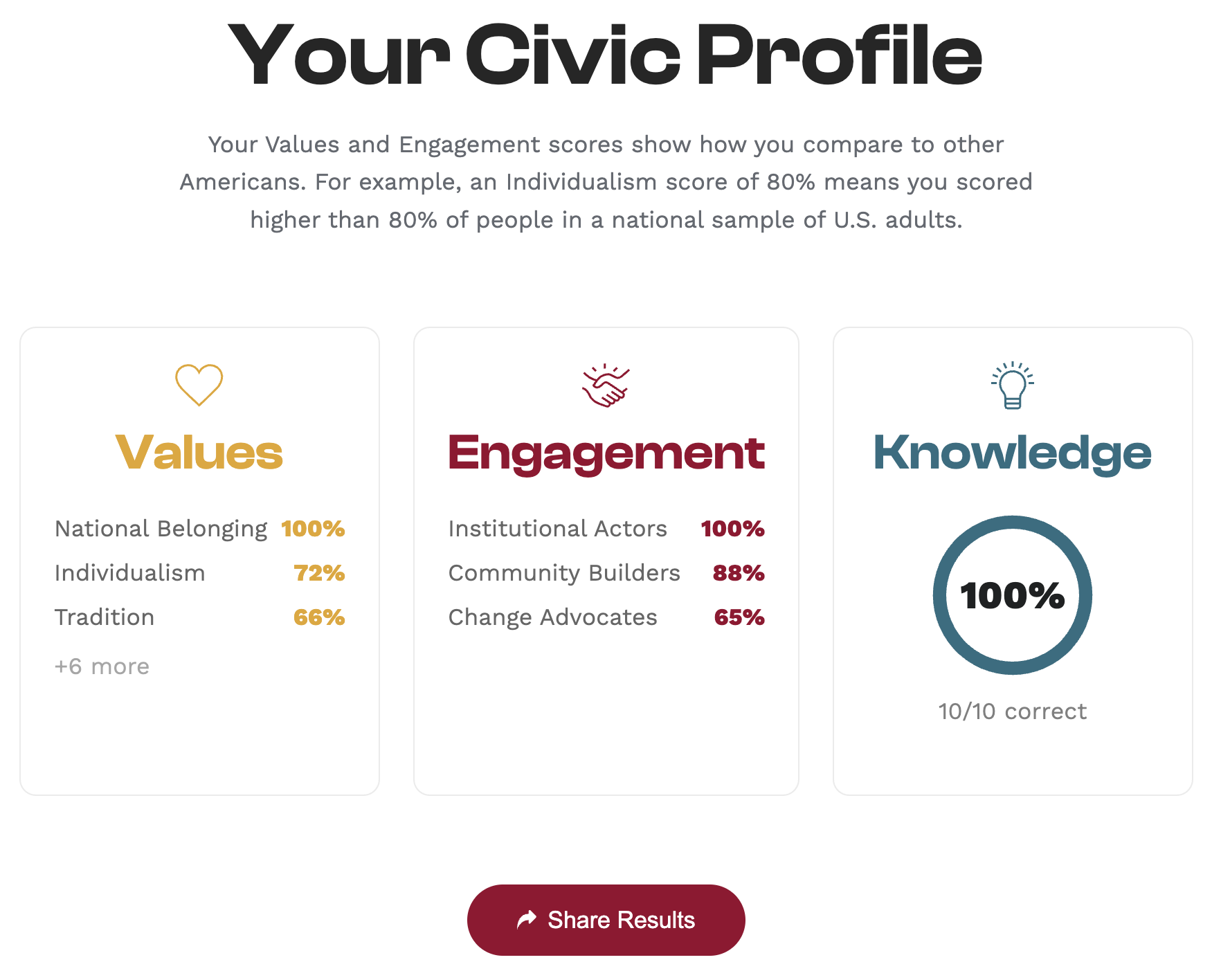
This versatile tool also makes it possible for educators—in high schools, colleges, and beyond—to engage their students in considering their own civic profiles, perhaps to determine whether they’re different at the end of a civics course from what they were at the beginning. This can give rise to fantastic discussions and learning opportunities as students exchange views about their own and each other’s civic values, actions, and understanding.
And that’s much of the reason we and our colleagues embarked on this project—which included much research, many advisers, three rounds of national surveys, and multiple revisions. Among the most important civic values in a democracy, including the one that Thomas Jefferson and his own colleagues launched in 1776, is the capacity to discuss, debate, and deliberate with others in an atmosphere of respect, thoughtful consideration of differing opinions, and a shared desire to solve problems.
It’s getting hard to find that atmosphere in today’s America. We talk constantly about civic decline, yet we lack a shared, constructive way to understand civic identity, capacity, and engagement. The Civic Profile is designed to help fill that gap.
We also lack a common language for civic identity. People hold very different—often unspoken—assumptions about what it means to be a “good citizen.” For some, it emphasizes voting and institutional trust. Others focus on protest, community service, or moral critique. Without a shared framework for considering these different forms of engagement, educating young people for citizenship often becomes directionless. The result? Little gets learned and less gets retained.
We also begin to treat enduring civic tensions as conflictual problems to be solved, rather than manageable tradeoffs among a multitude of worthy goals and actions.
The Civic Profile provides nonpartisan descriptive language for understanding how individuals relate to one another as well as to democratic institutions and civic responsibilities—and does so without prescribing a single “right” answer.
The polarization that’s been spreading across the land is not just about policy preferences or political party; it reflects deep differences in civic values, sources of authority, and perceptions of how to best engage with our government and each other over contested issues. Yet many people flatten these differences into left–right ideology, or worse, characterize opponents as having nefarious motivations. Instead, the Civic Profile captures multidimensional civic orientations. It helps educators, researchers, and institutions (as well as participating individuals) understand underlying values and ways of engagement that relate to why people disagree—not just that they disagree.
We’re educators, too, and we know that civic education needs better diagnostics. Approaches to civics courses in US schools and colleges often assume a deficit model, concluding that students simply need more knowledge, more engagement, and more exposure. Yet individuals arrive in those classrooms with their own distinct civic strengths, blind spots, and motivations.
The Civic Profile functions as a diagnostic tool, enabling more intentional civic learning, reflection, and growth—rather than one-size-fits-all interventions. This tool can serve individual instructors as well as entire schools, colleges, districts, even states.
It also has value for myriad workplaces, civil society organizations, and beyond. Institutions need insight into themselves and their teams: their civic knowledge, values, and preferred means of engagement. By illuminating patterns across these domains, the Civic Profile could help institutions and their leaders understand their communities better.
The Civic Profile is constructed such that only the person taking it has access to their responses or—if they grant permission—to their chosen group, whether that be family, friends, classmates, or an organization. Those of us who created the profile have no access to anyone’s data. At the same time, with the consent of a nationally representative sample of Americans, we have used the Civic Profile to create a fantastic body of data for analysts and researchers to study. Prior to the public launch, we piloted the profile in a research study that surveyed more than 2,000 respondents. This led to the national sample to which your own profile can be compared at civicprofile.org/research/. This sample (below) has also yielded exceptionally interesting information about the civic profile of the American people and the profiles—differing yet often surprisingly similar—of groups within that vast population.
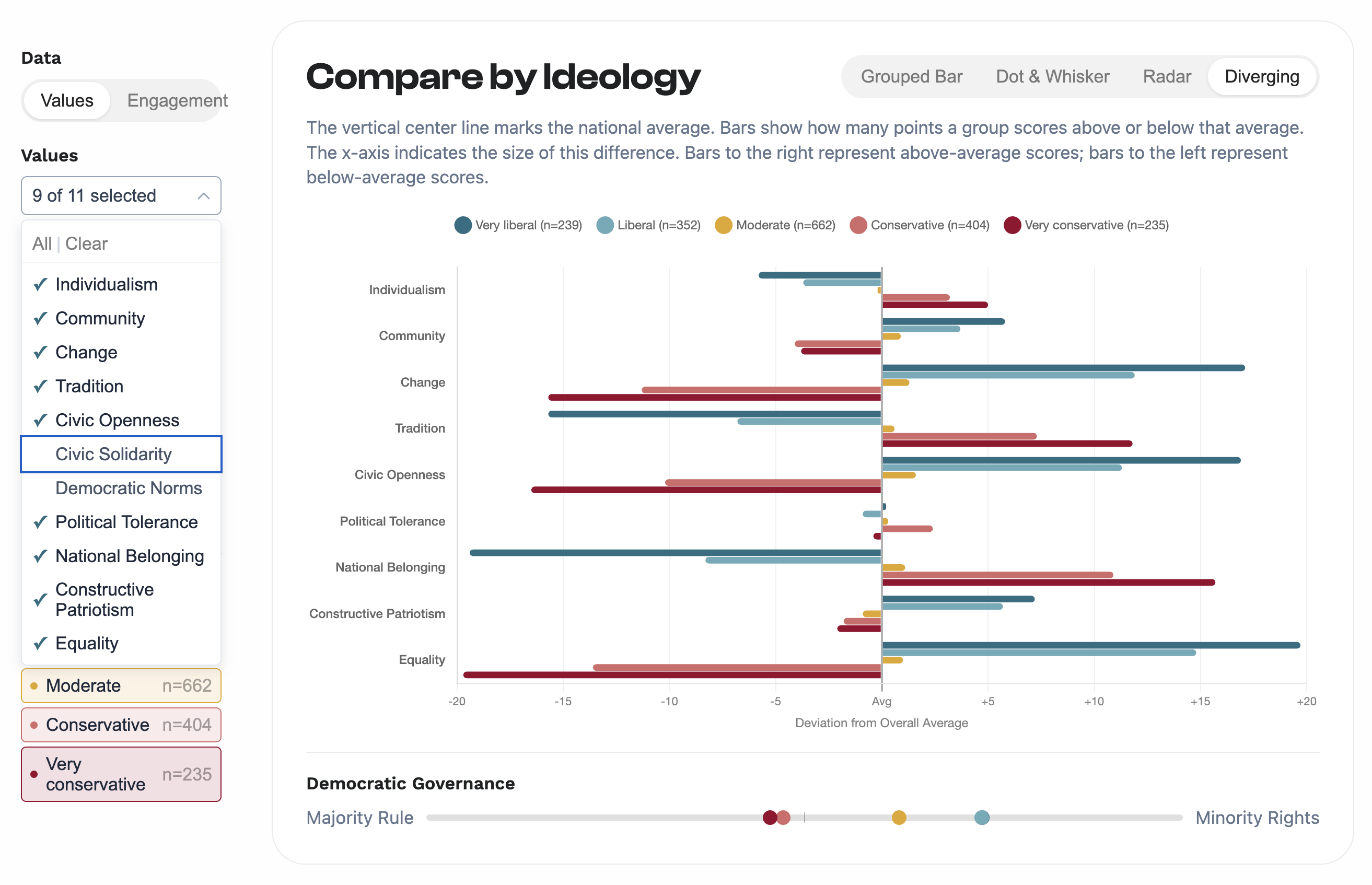
These data are begging for analysis. Moreover, over time they’ll be joined by even more valuable longitudinal data by which to examine changes in the values, civic engagements, and knowledge of our fellow Americans. We intend to continue on a regular basis to conduct similar studies of national samples of adults.
The Civic Profile itself will evolve over time, too. Its core will remain the same but as our capacity and resources permit, we expect to explore new values and engagement dimensions, as well as new knowledge questions. Perhaps there also will be revisions that serve younger audiences, those more comfortable in languages other than English, and individuals with special needs.
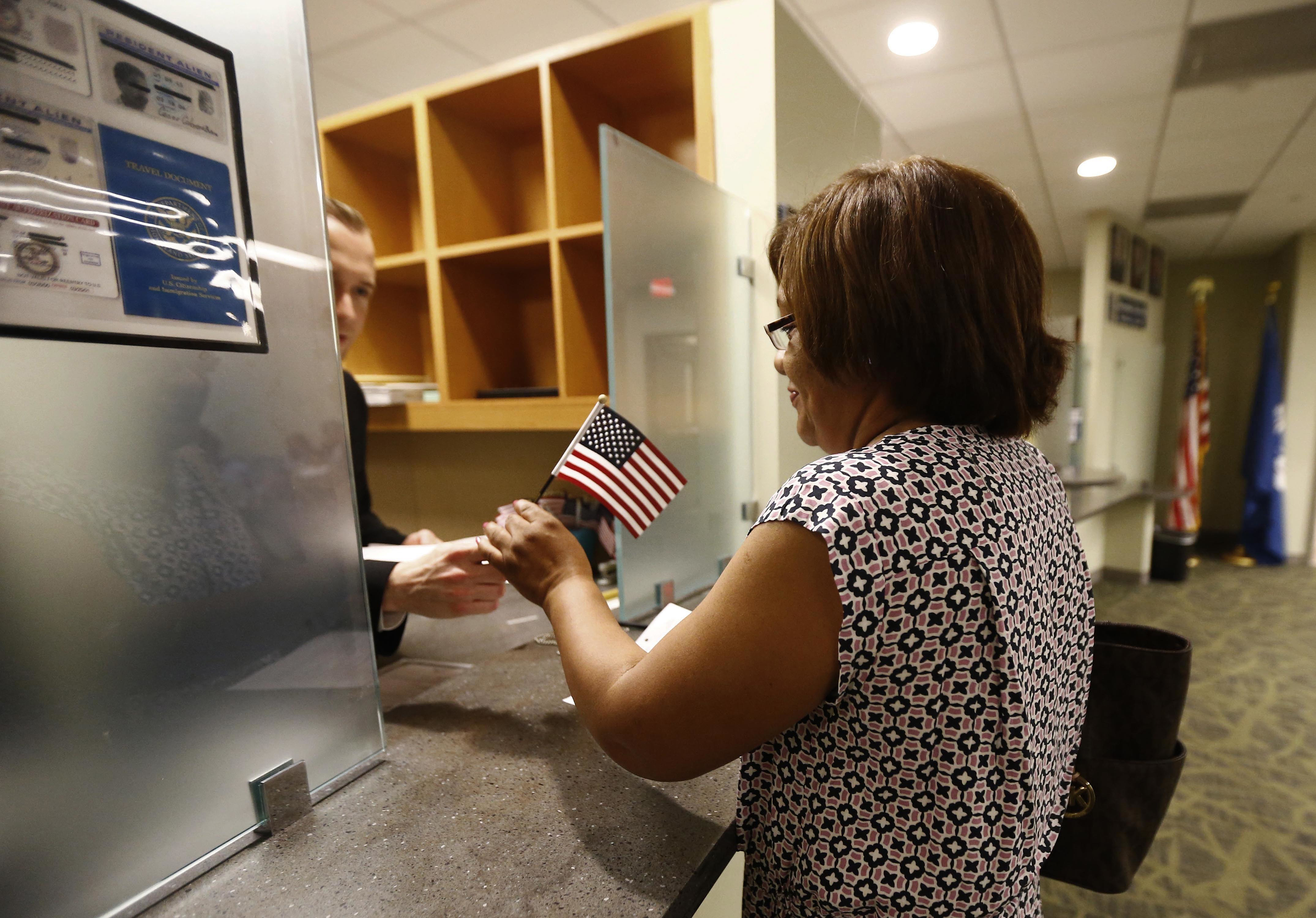
The foremost reason we and our colleagues created the Civic Profile is that democracy requires self-understanding as well as understanding our communities and our country. A healthy democracy depends not only on participation but also on citizens who understand their own civic instincts, commitments, and tensions—and who can recognize those of others.
The Civic Profile encourages self-reflection in ways that will help individuals see civic differences as topics worthy of discussion, not threats or enemies.
Brandice Canes-Wrone is a senior fellow at the Hoover Institution and a professor in the political science department at Stanford University. She is the founding director of the Hoover Institution’s Center for Revitalizing American Institutions.
Chester E. Finn Jr. is the Volker Senior Fellow (adjunct) at the Hoover Institution and president emeritus of the Thomas B. Fordham Institute. He is the chairman of Hoover’s Working Group on Civics and American Citizenship within the Center for Revitalizing American Institutions.