 Powered by

On February 20, the Supreme Court ruled that President Trump’s tariffs imposed under an emergency powers law were unlawful. After raging at the court, the president imposed a new set of global tariffs using a different statutory authority. I participated in the tariff litigation from the start and argued, both to the court and in this Substack, that those tariffs were unlawful.
The new 10 or 15 percent global tariffs, claiming authority from a 1974 law, are also unlawful. When courts look into this, I think they will find that this is not a close case.
In 1976, two years after that law was passed, the US government formally decided that the relevant statutory term, “balance of payments,” had become obsolete after the end of fixed exchange rates and the demise of the Bretton Woods system. The US government would therefore no longer report a “balance of payments” in its statistics. That may be one reason why the old 1974 authorities had never been used. There are better laws available to achieve more sustainable results.
Even though the 1974 law allows the tariffs to be imposed only temporarily, for a maximum of 150 days, the matter may be worth litigating for two reasons. First, the costs, almost all paid by Americans, would run at least into tens of billions of dollars. Second, a number of lawyers fear that the White House may attempt to “rinse and repeat” the temporary tariffs again and again. Sadly, given presidential behavior in some other settings, including the appointment of interim US attorneys, these are not idle fears.
Why the 1974 authorities (section 122) are obsolete
This point can be summarized reasonably briefly. The key aspect to stress is that the government itself formally came to this conclusion. That should be decisive for any court that considers the question.
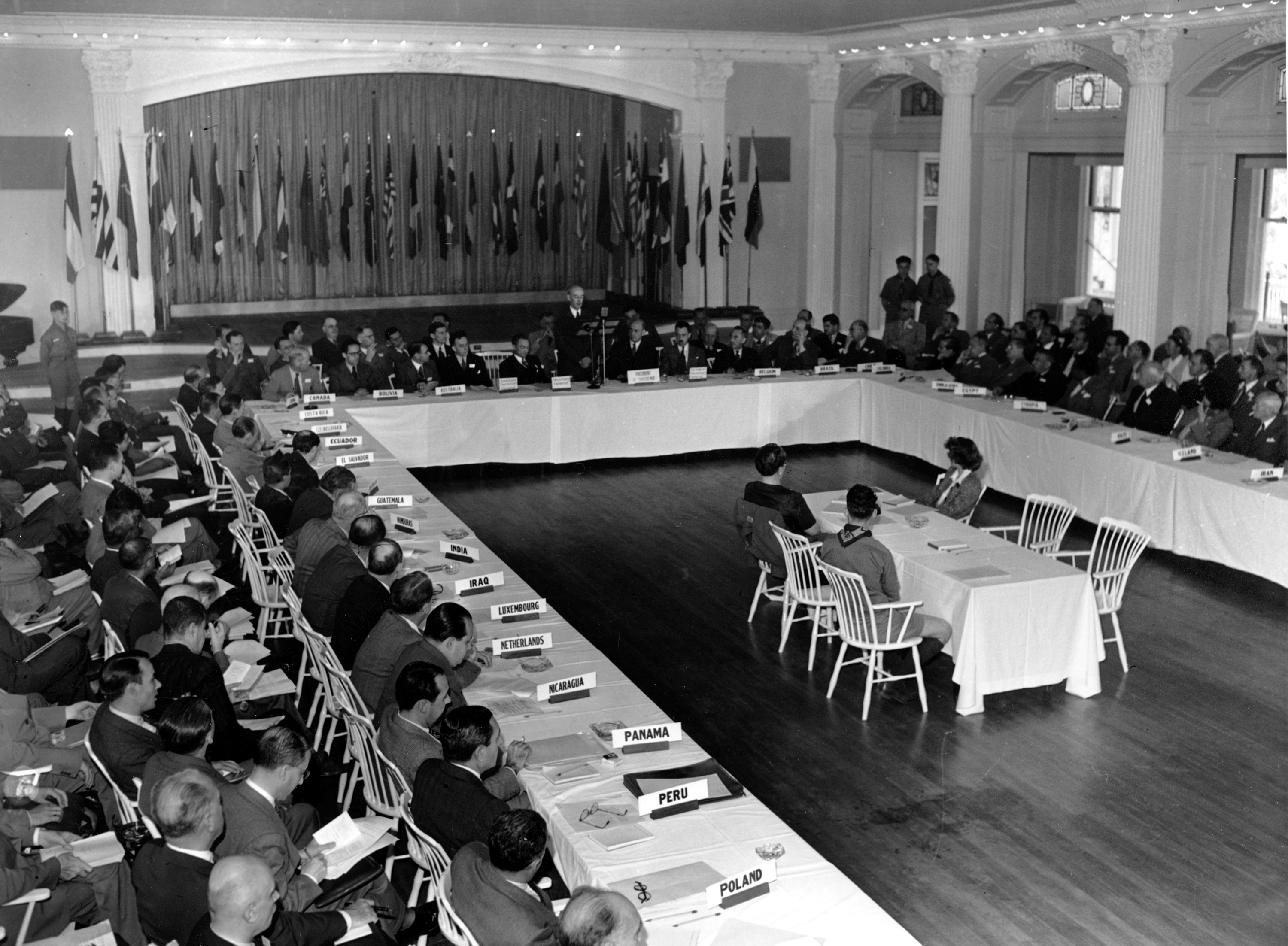
The landmark Trade Act of 1974 looked back at the dollar crisis of 1971 that had triggered President Nixon’s temporary import surcharge and his decision to end the Bretton Woods system of fixed exchange rates linking the dollar’s value to gold—a gold-dollar standard. The act gave future presidents the statutory power to do what Nixon did (Nixon had originally used trade laws, not emergency powers, to do this). It allowed an import surcharge of up to 15 percent under three circumstances:
To deal with large and serious US balance-of-payments deficits,
To prevent an imminent and significant depreciation of the dollar in foreign exchange markets, or
To cooperate with other countries in correcting an international balance-of-payments disequilibrium.
Back in the Bretton Woods era, a “balance of payments” problem was focused on liquidity, literally that more dollars were going out of the country than were coming in. This was believed to be caused by government expenditures (like military deployments) overseas, plus American private investment overseas being larger than foreign investment in the United States.

Under fixed exchange rates, a “balance of payments deficit” or a “dollar drain” meant that the United States would have to devalue the dollar (against gold, and in foreign exchange) or hike interest rates. Otherwise, US gold reserves, backing the dollar, could not be sustained. This was the character of the culminating crisis in 1971.
Back then, the “balance of trade” was a different concept, measured differently. A main concern throughout the Bretton Woods era was that the United States was suffering a “balance of payments” deficit even if it was running a trade surplus. By the early 1970s, the balance of trade had moved into deficit too, so that our trade situation was not even coming close to offsetting the “balance of payments” problem. All this is quite clear in the Senate report on the bill that would become the Trade Act of 1974 (S.Rep. 93-1298, 26 November 1974).
When the Bretton Woods system was suspended and then plainly ended, replaced by the new system of floating exchange rates, delinked to gold, and with relatively free movement of capital, it became apparent that there was no longer such a thing as a “balance of payments” issue for the United States. The term was no longer meaningful. Milton Friedman had indeed argued, as far back as 1953, that if the price-fixing of Bretton Woods disappeared, worries about a “balance of payments” would automatically vanish as well.
What instead emerged was the calculation of a current account deficit, strongly influenced by trade in goods and services. In the United States this is balanced by a capital account surplus, strongly influenced by foreigners using their dollars to buy Treasuries and other dollar-denominated securities and properties. The balance always nets out at zero. Terms like “current account deficit” therefore started coming into standard usage during the late 1970s and early 1980s. (By the way, countries that don’t print dollars may not have this situation in their dollar accounts.)
The Trade Act of 1974 was developed looking backward, as this system was transitioning from the old to the new. The “balance of payments” term used in the authorities reflected that.
The formal burial of “balance of payments”
As soon as President Trump invoked the section 122 authorities from 1974, very good economists and economic historians who study international finance, like Brad Setser and Phillip Magness, quickly remembered why “balance of payments” was no longer a meaningful term. The good news for the courts is that they don’t have to rely on the opinions of experts. The US government considered this issue shortly after the Trade Act of 1974 was passed.
During the 1960s, the government had worked on the problem of how to define the international financial conditions on which it would collect and report its data. As it became clear that the Bretton Woods system was gone for good, President Ford, through his Office of Management and Budget, convened a President’s Advisory Committee on the Presentation of Balance of Payments Statistics. That body worked on the problem through 1975. It issued its report in May 1976.
The advisory committee recommended that the US government, through the Commerce Department’s Bureau of Economic Analysis, should cease issuing reports on the “balance of payments.” Such a concept was no longer meaningful. “No new overall balance should be constructed to replace the balances being eliminated.” Instead, the government should shift to the kind of system used today, reporting on particular balances in kinds of trade along with balances in the “current account” and what is now known as the “capital account.”
The committee’s recommendations were promptly accepted by the president and the government and put into effect. Reporting to colleagues, the Michigan economist Robert Stern, who had literally written the book on The Balance of Payments: Theory and Economic Policy, wrote, “The new presentation makes life easier by recognizing that, in principle, there can be no imbalances of payments under floating exchange rates.”
“Balance of payments” as a problem for US legislation had ceased to exist. It was dead and formally buried. Understandably, the old section 122 authorities have never been used in the more than fifty years the Trade Act of 1974 has been on the books.
Now, in his desperation to find some thunderbolt he can hurl at the trading world, President Trump has exhumed a law created to address a problem in a system that disappeared long ago. In light of the US government’s determination in 1976, plus the Supreme Court’s strong re-emphasis on the need for Congress to provide clear statements of intent on major questions like these, it is hard to see how his new tariffs can survive a request for injunctive relief.
What should be done instead?
The president has other trade laws he can use that provide more practical and durable remedies.
First, neither the section 122 tariffs nor any others should be used as large-scale sources of tax revenue in the future, unless Congress passes a new law to go there.
Second, for reasons I explained in an earlier essay, the never-used tariffs enacted in section 338 of the Smoot-Hawley law of 1930 were themselves the re-enactment of tariffs adopted in 1921 looking toward US adoption of the “most favored nation” principle in its trade agreements. That fundamental choice, made by the pro-tariff Republican administrations just after the First World War, has now been repudiated by the Trump administration, which regards “most favored nation” or its recent successor, “normal trade relations” (NTR), as dead principles.
The new situation does create new dangers that other countries may reciprocate, no longer extend NTR treatment to the United States, and enact new trade regimes that discriminate against the United States. Those situations could create a situation in which these old section 338 authorities again become relevant, as the United States confronts the bewildering patchwork and arbitrage among criss-crossing trade agreements that experts were finding unworkable even back in 1919.
Third, an alternative approach might lean more on better established authorities to protect availability of goods vital to US national security (using section 232 of a 1962 law) or offset carefully documented “unfair trade practices” (using section 301 of the 1974 law, as amended later). The United States already has a series of 232 and 301 tariffs and investigations under way.
These tools can form part of a durable economic strategy that might not only be legal but also earn broad political support and appear lasting enough to influence longer-term business investment decisions in the United States and among our trading partners. The China case is obviously suitable for action under section 301. The Trump administration is already doing carve-outs in its section 232 sectoral tariffs to allow exemptions for partners in the free world who provide vital products or participate in critical supply chains. Ingredients that could form part of a broader and more coherent strategy are there.
Philip Zelikow is the Botha-Chan Senior Fellow at the Hoover Institution, where he co-leads the Hoover History Lab and participates in Hoover’s George P. Shultz Energy Policy Working Group, the Applied History Working Group, and the Global Policy and Strategy Initiative. For twenty-five years he held a chaired professorship in history at the University of Virginia, where he also directed the nation’s leading research center on the American presidency. Zelikow focuses on critical episodes in world history and the challenges of policy design and statecraft.