 Powered by

By 2025, eighty years after the end of World War II and some thirty-four years after the fall of the Soviet Union and the end of the Cold War, the parameters of a new, chaotic postwar world and America’s growing role in it have mostly been defined.
Just as the attack on Pearl Harbor on December 7, 1941, shocked the United States out of its isolationist, Depression-era mindset, so too recent wars in Ukraine and the Middle East, the bellicose rhetoric from Russia’s Vladimir Putin and Chinese strongman Xi Jinping, together with the rise of a global Chinese military, have finally dispelled any lingering notions of an America “leading from behind,” withdrawing from its international leadership, disarming, or turning inward to address solely domestic concerns.
Read Part 1 here.
Instead, suddenly the United States has been adjudicating cease-fires between Israel and Hamas, Rwanda and Congo, Pakistan and India, Cambodia and Thailand, Armenia and Azerbaijan, Serbia and Kosovo, Egypt and Ethiopia, while arming allies to thwart Russia and Iran. It is busy deterring China from Latin America, rushing to restore naval shipbuilding to American shores, and reaching out to previously straying allies in the Persian Gulf, South America, and the Pacific.

Most of the 1990s idealistic hopes of George H.W. Bush’s “new world order”—an America atop a world in perpetual peace—have long ago been dashed. The bitter aftermath of misadventures in Iraq and Afghanistan provided reminders of what not to do abroad, rather than warnings to do nothing at all. And now the supposed neo-isolationism of the MAGA movement has been superseded by President Trump’s Jacksonian “don’t tread on me” update of American muscular deterrence.
A radically changing and more dangerous world still requires an America unchanged in its past determination to help friends and deter its enemies abroad.
New faces, old threats
After 1990, America may have spent a brief decade as the global unipower and assumed a docile world would follow its lead. But soon after the turn of the millennium, it was abruptly challenged by both radical Islamist terrorism and an ascendant communist China. Nevertheless, as of 2025, the threat of Islamist terror seems to be no longer expansive or stealthily fueled by Gulf petrodollars. This once-existential dangers posed by ISIS and Al-Qaeda in the Middle East have shrunk into relative insignificance, certainly in comparison to the near-suicidal Western policies of open and unsecured borders.
Europe’s most populous and affluent nations naively jettisoned background checks on immigrants, all but giving up the goal of limited, legal immigration. Instead, they welcomed in millions of illegal immigrants from the illiberal Middle East—only to find that 10 to 15 percent of their populations had no intention of assimilating, rather nurturing a desire to Islamize Europe. In response, a slowly awakening Europe has begun to tighten immigration and clamp down on terrorist cadres.
More importantly, recent Middle Eastern wars have unexpectedly led to a radical weakening of theocratic Iran along with its terrorist appendages Hezbollah, Hamas, and the Houthis. All were more seriously undermined in 2023–25 than at any time in the past half-century. The Abraham Accords may yet create permanent nonaggression pacts between Israel and moderate Arab regimes, both sides united in their fear of recrudescent Islamists and Iran—and relieved to be pro-American and thus more secure.
As for the threat of a rising China, its communist government did not, as once predicted, fall domino-fashion alongside Soviet Russia’s satellites in Eastern Europe. Instead, it grew dominant in Asia by welding capitalist mercantilism to communist totalitarianism, while poaching technology from the West.
Conventional wisdom that Western investment, a new affluent Chinese consumer class, and millions of Westernized students would lead to a more transparent, if not democratic, China proved dangerously naïve, and remains so. Beijing has interpreted nearly thirty years of Western tolerance of its asymmetrical and exploitative trade practices as weakness to be taken advantage of—not magnanimity to be appreciated, much less reciprocated. The income from massive foreign exchange, quasi-market capitalism, and the appropriation of Western technology, along with its huge population, have now ensured that China is soon to become the world’s largest economy and perhaps in a decade the leading military.
Yet we are not in a Cold War—at least as we knew it in the past, when the world’s two dominant nuclear powers squared off. In fact, the current tensions with China are more insidious than overt, and thereby present far more complex strategic challenges than the containment of the Soviet Union. Communist Russia was a stagnant society, largely ostracized by the West and easily identified as a crude and existential threat. (Russia today remains intimidating merely as a huge exporter of oil, armed with six thousand nuclear weapons.) China for now is strategically a weaker nuclear power than the former Soviet Union, or indeed contemporary Russia, but demographically and economically it is far more powerful.
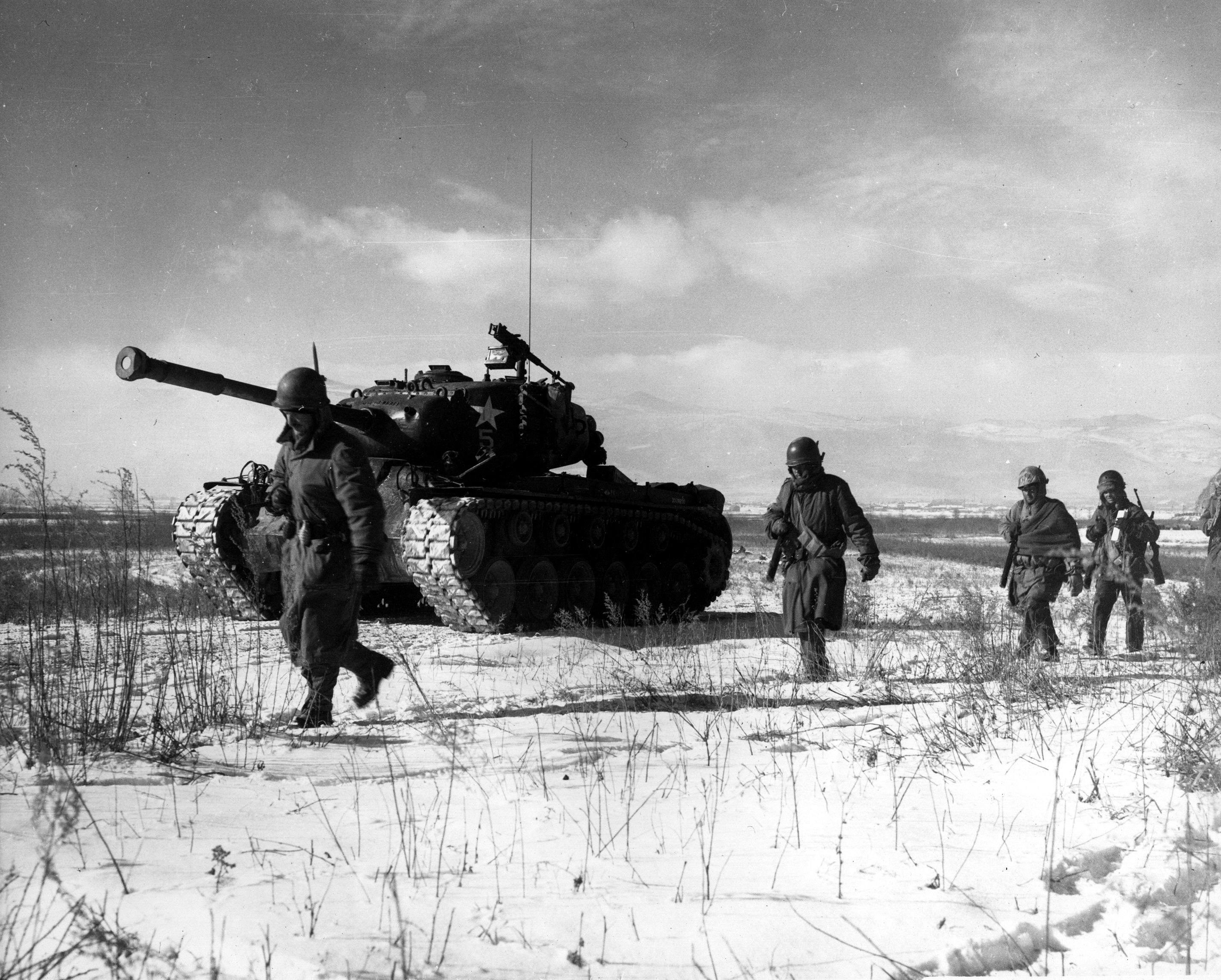
As of yet, there have been no real proxy wars between the United States and China, certainly nothing comparable to the superpower rivalries that played out in bloody fashion in Korea, Vietnam, and the Middle East. Instead, China’s threats are less transparent, but if anything, even more insidious. They range from efforts to compromise global chokepoints like the Panama Canal; to stonewalling about the Wuhan origins of a global plague that killed more than a million Americans; to sending hundreds of thousands of students—a sizable fraction of them spies—to US and European universities; to waging cyberwarfare against US corporations, government, and infrastructure; and to economic imperialism via Chinese “Belt and Road” investments in Asia, Africa, Latin America—and Europe as well.
Furthermore, unlike during the Cold War, exchange programs, travel, and tourism between the two rivals are mostly unrestricted, making it far more difficult to prevent espionage and technological theft. The Soviet Union was never allowed to buy farmland near US military bases, for instance, or use surrogate mass influencers inside the United States like TikTok, or control Western companies like GE Appliances or Motorola. The Soviets certainly did not run up the equivalent of a $300 million trade surplus with the United States.
Unlike the Soviet Union, China, although nominally communist, is not the emissary of a rival global ideology such as Marxism-Leninism or radical Islam. Instead, the international appeal of its Belt and Road mercantilism is deeply cynical: the offer of a usurious lender to a borrower who in the end will likely default. Its “soft power” consists of leveraging neutral nations and US allies by funding massive infrastructure projects, supplemented by a propaganda of victimization that reminds the West that Chinese have historically suffered racism within Western countries, and thus belong on the oppressed side of the binary of victimized and victimizer.
Beijing, however, has virtually enslaved over a million Muslim Uighurs. It routinely provokes the navies and air forces of the Philippines, Japan, and Taiwan. It cynically controls the rogue nation North Korea—its useful surrogate—making Pyongyang either keep quiet or rattle its nuclear saber as Beijing’s geostrategic agenda dictates.
In sum, China, like the Soviet Union before it, does not offer neutrals a preferable alternative to the West.
As a result, shared fears of China—and the renewed assurance that the United States remains loyal, strong, and committed to containing China in the Pacific—have strengthened ties between the United States and its Pacific friends in Australia, Japan, the Philippines, South Korea, and Taiwan. Those lands all are rearming and are serious about thwarting China’s expansionist aims.
The West awakens
Despite the previous American laxity in recognizing the threat of China, the past three and a half decades of the post–Cold War era were by no means entirely a story of American failure. For instance, after years of postwar squabbling and fractiousness, NATO is slowly growing stronger, with muscular new front-line members like Sweden and Finland. The partnership is rearming and is more united than in prior decades—largely because of the collective fear that followed the Russian invasion of Ukraine and the successful hectoring to rearm by an often-bullying Donald Trump.
The much-anticipated end of history did not replace the Cold War with an ecumenical world of liberal democracies.
Efforts to strong-arm the existing world into such an arrangement via American nation-building abroad largely ended in the chaos of Iraq and the humiliating skedaddle from Kabul in 2021. What remains for the future is a reassertion of American deterrence—one that offers the United States, together with its European and Asian allies, renewed confidence that Western powers can protect themselves and their interests abroad, and are beginning to do so successfully.
On the perhaps more worrisome internal side, Western nations are only belatedly wakening up to the fact that open borders are a virtual suicide pact. Tens of millions of immigrants who arrive illegally, and with little desire to assimilate and integrate into their hosts’ culture, increase internal tensions and fragment a nation into separate communities and interests.
More disturbing still, the debt-to-GDP ratio in the United States is nearing 125 percent and will soon, by most measurements, exceed the levels of massive borrowing during World War II. Europe’s debt is already 80 percent of GDP and climbing. Unsustainable social-welfare programs, entitlements, and interest on the debt are reaching crisis levels. But Western governments so far seem paralyzed, as if the medicine of budgetary restraint were seen to be worse than the disease of unsustainable national borrowing.
Nevertheless, America retains its influence abroad because, despite its debt and immigration challenges, the dollar remains the world’s currency. The American economy still outperforms those of its enemies and friends alike. The US military remains the world’s strongest, despite China’s efforts to surpass it.
The United States is the world’s largest producer of oil and natural gas—a reality unimaginable just twenty years ago. In terms of monetary value, the United States remains the global leader in food production. For all its recent stress tests, the American republic and its Constitution remain the oldest and most successful republican government in the world today. And despite the dangerous fact that interest on its debt now exceeds the defense budget, the United States is rearming—slowly, but also more wisely than in the recent past, as it seeks to return to the World War II idea that the sheer quantity of weapons is as important as their quality.
Most of the world acknowledges that the United States still leads in critical new technologies like space exploration, rocketry, artificial intelligence, lasers, robotics, genetic engineering, and sophisticated armaments. To the degree that China is nearing parity, it largely relies on America naively allowing its technology and research to be expropriated or copied.
Jacksonian America
Given all of this, what is the current grand strategy of the United States and its allies, and how are they implementing it?
The agendas of the MAGA movement and of the two Trump administrations have often been misinterpreted. Trumpism did not lead, as critics predicted, to isolationism and the abandonment of America’s allies and interests. As noted earlier, the NATO alliance is robust; China is ringed by American allies. All of them can become nuclear, if need be, given that the hurdle is neither scientific nor fiscal, but simply that they have no need to do so, as long as they feel safe under the American nuclear umbrella. Israel has never been stronger. Most moderate Arab nations are becoming as wary of China as they are of the Islamists. They concede that only the US Navy can protect their vulnerable oil-export lanes to Europe and Asia.
What has resulted from the Trump phenomenon is a sort of pre-emptive American deterrence that has led to occasional smackdowns of foreign threats—but without the ground interventions that led in the past to unpopular and costly “forever wars.”
The Trump administration, over its two terms, has racked up a long list of successful targeted strikes: the assassinations of the Iranian terrorist general Qasem Soleimani and the murderous ISIS founder Abu Bakr al-Baghdadi; the near-destruction of the Russian mercenary Wagner Group in Syria; air and naval attacks on the Houthis of Yemen; the bombing of key Iranian nuclear facilities; and lethal hits on maritime drug smuggling in the Caribbean. None of these interventions led to prolonged hostilities; all served as a reminder that aggression would be met by far more lethal retaliation, but only in ways that served US military interests.
The United States has three vital interests.
The first is to ensure the security and prosperity of the homeland. Secure borders and legal-only immigration have emerged as national security issues. Key too is civic unity in a nation that now has the highest percentage (16 percent) and number (53 million) of foreign-born in its history—a challenge that comes at a time when civic education has all but disappeared, and ethnic and racial tribalism and chauvinism have replaced the traditional melting pot. In the strictly military domain, missile defense of the North American continent is under way.
Second, the United States seeks to contain China, and to a lesser extent, Russia. Chinese expansionism threatens to put large swaths of the Pacific off limits to the US Navy, and thereby threatens the security of our Asian allies. Closer to home, the Trump administration has used the club of tariffs, along with careful use of the Navy, to ward off Chinese intrusions into Latin American and attempts to control the Panama Canal.
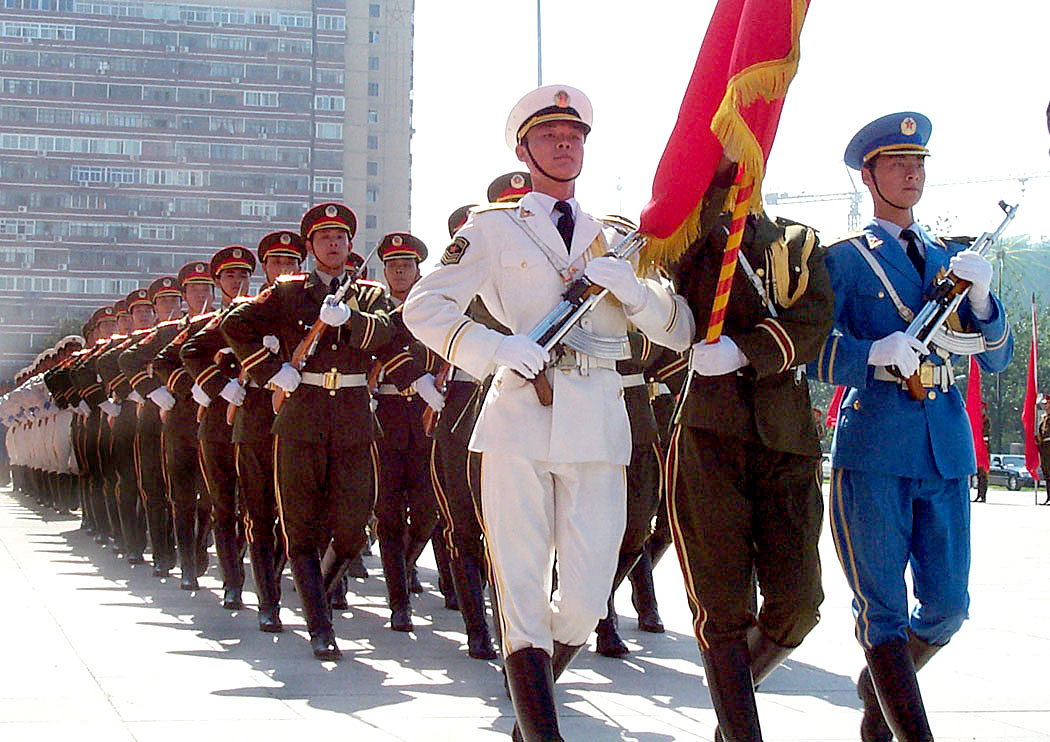
Chinese counterstrategy hinges on convincing resource-rich and geographically important nations that the United States is a setting-sun power, almost broke and wracked by internal political and racial divisions that result in social chaos. The Chinese implication is that America cannot be counted on to come to their aid in extremis. So far, most of America’s Cold War allies remain steadfast, even as China turns its attention to Africa and Latin America.
Russia is a vastly weakened power, but its efforts to reabsorb former Soviet republics are ultimately aimed at restoring its Cold War buffer against the West by forcing now-free and dynamic Eastern European countries back into their former submissive roles as client states of Moscow. So far, the United States and NATO have armed Ukraine sufficiently to bleed out Russia and slow its reacquisition of Ukraine—without prompting a strategic showdown with Moscow, which periodically threatens both tactical and strategic nuclear retaliation.
Third, the United States remains the guarantor of last resort of the free use of the world’s seaways, chokepoints, and airspace. This is an expensive task that ultimately requires burden-sharing with European and Asian allies. The American fleet is currently far too small for its global responsibilities. It still struggles to keep Iran from disrupting the Straits of Hormuz, to ensure that the Red Sea is safe from Houthi attacks and piracy, and to keep the Suez Canal free from pirates and nearby Islamist regimes. The Black Sea is now a war zone where US ships only on occasion show the flag. No one knows what would happen if large American naval deployments steamed regularly into the Taiwan Strait or systematically patrolled the South China Sea.
And so, how could one sum up American foreign policy now that both World War II and the Cold War are fading into history?
“Jacksonian” might be the best description: an America that will strike back at hostile powers and their agents in efforts to restore lost or questioned deterrence. But it will do so in a limited fashion that rules out Iraq- or Afghanistan-style ground interventions, in accordance with MAGA concerns about “forever wars” of the past.
It is one of the ironies of the post–Cold War Western order that European and Asian allies ostensibly resent the Trump administration’s “America First” rhetoric and tariff provocations—while they are privately relieved that a militarily and economically stronger America is far more likely to punish their shared enemies and help their mutual friends than in the recent past.
Victor Davis Hanson is the Martin and Illie Anderson Senior Fellow at the Hoover Institution. A scholar of classical antiquity and military history, Hanson is a bestselling author, penning more than two dozen books, including The Second World Wars: How the First Global Conflict Was Fought and Won.