 Powered by
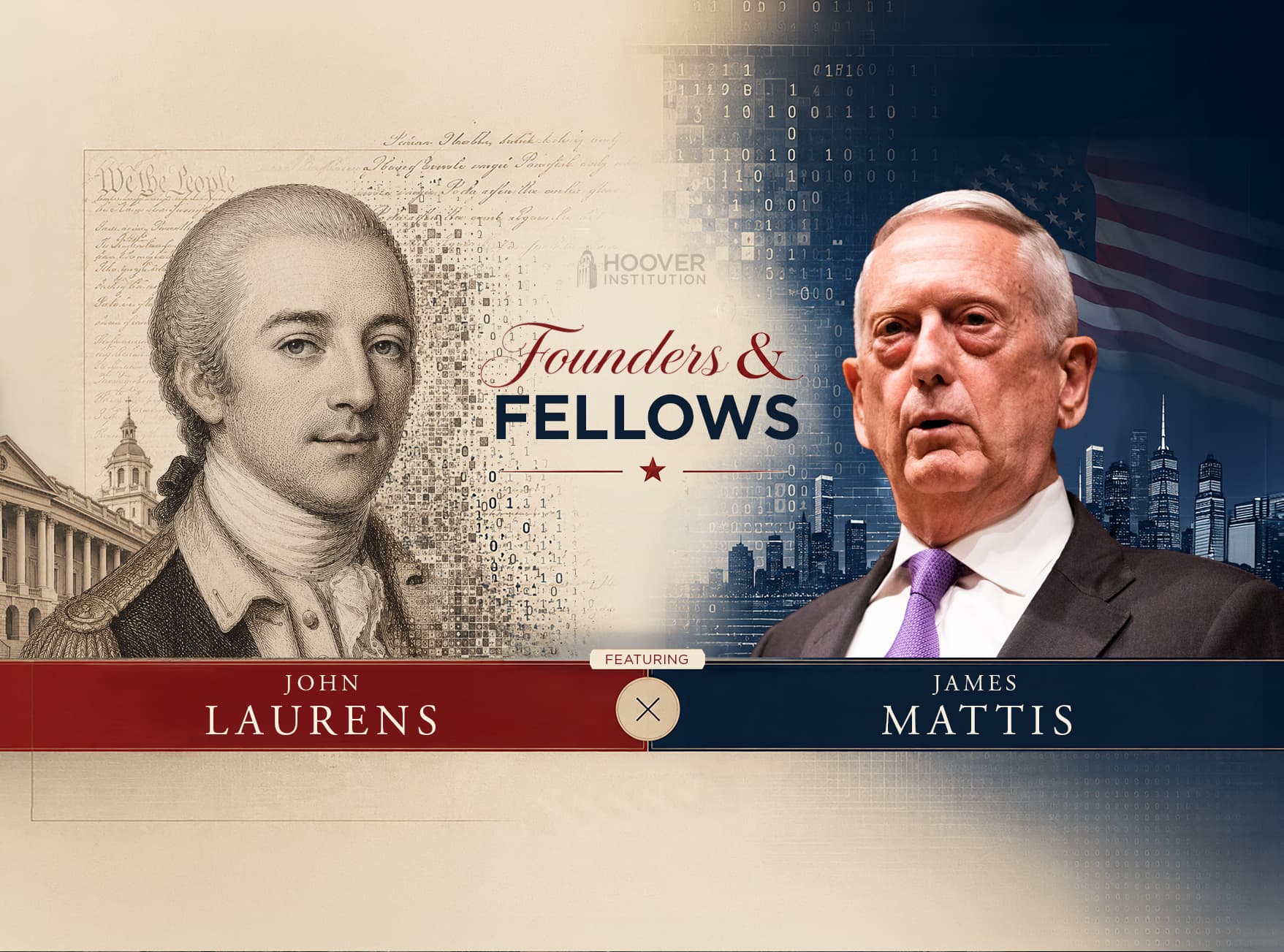
Eight times each week at the Richard Rodgers Theatre in New York City, the most well-known characters in the Broadway musical Hamilton take the stage: George Washington, Thomas Jefferson, James Madison, Aaron Burr, the Marquis de Lafayette, King George III, and of course Alexander Hamilton himself.
There is one other character who is prominent in the musical but much less so in history: John Laurens.
As we mark the 250th anniversary of the Declaration of Independence, we owe a debt not just to the well-known founders whose names are most familiar, but also to the less-celebrated patriots whose courage and sacrifice helped bring our American experiment into existence.
Among the most remarkable of these figures was Laurens, whose short life embodied the principles of liberty, equality, and selfless service.
Born in 1754 in Charleston, South Carolina, John Laurens was a child of privilege. His father, Henry Laurens, built his fortune as a merchant and slave trader and was among the wealthiest men in the colony of South Carolina. His firm, Austin and Laurens, imported and sold more than 68 shiploads of slaves largely from Sierra Leone, and conducted public auctions in Charles Town (known today as Charleston) totaling more than 8,000 slaves. In time, he owned eight rice plantations, 20,000 acres of land, and 298 slaves.
From ages 16 to 22, John was sent to Europe to attend prestigious schools. When the first shots were fired at Lexington and Concord in 1775 and the Declaration of Independence was signed in July 1776, he was far away studying law in London, in accordance with his father’s wishes.
In December 1776, John Laurens returned to the colonies to join the Continental Army and the fight for freedom. Against his father’s wishes, he volunteered to serve on George Washington’s staff. The fluency in French he had gained in Europe made Laurens an asset to Washington and created a bond with two of Washington’s closest aides-de-camp; the Marquis de Lafayette and Alexander Hamilton.
Unlike many officers of privileged background, Laurens repeatedly sought out danger on the battlefield. He fought at Brandywine, Germantown, and Monmouth, among several other fierce battles. After the Battle of Brandywine in September 1777, Lafayette wrote of Laurens, “It was not his fault that he was not killed or wounded—he did everything necessary to procure one or t’other.”
This son of a slave trader developed views on race that were remarkably progressive for his time and became one of the earliest prominent Southern advocates for the emancipation of slaves. He proposed to recruit enslaved African-Americans into the Continental Army and grant them freedom in return for military service. In 1779, he urged the South Carolina legislature to authorize a regiment of enslaved men who would earn emancipation through service to the cause of independence.
Laurens argued that it was hypocritical for Americans to fight for liberty while denying freedom to others. Although his plan was not approved, the proposal was one of the earliest efforts by an American leader to align the nation’s practices on race more closely with our founding principles.
Writing to his father in 1778, Laurens said this:
We Americans, at least in the Southern Colonies, cannot contend with a good grace for liberty until we shall have enfranchised our slaves.
Laurens also had significant diplomatic skills that were called upon at a crucial moment. By late 1780, the Revolution was on very shaky ground. The Continental government was nearly bankrupt, soldiers were routinely unpaid, food and clothing were in short supply, and the Army’s ability to continue the war was in grave doubt. The Continental Congress and George Washington decided to ask for help from our allies in France—but who should be sent on this crucial mission?
Congress selected John Laurens as the special envoy because of his intelligence, energy, personal connections, and reputation. At just twenty-six years old, he arrived in France in early 1781 carrying urgent requests from Congress and from George Washington.
Laurens said that American finances were collapsing and argued for France to help deliver a decisive victory rather than merely sustain a prolonged conflict.
His mission proved remarkably successful. Laurens secured approximately 6 million livres in French grants and loans (roughly $100 million in today’s terms), large quantities of weapons, uniforms, ammunition, and equipment, and assurances of support for continued French military cooperation, including the naval support that would soon prove crucial.
Laurens’s diplomatic mission illustrates an underappreciated truth about the Revolution: American independence was not won solely on battlefields. It required diplomacy, international alliances, and sustained foreign support. (Then and now—it is good to have allies.)
Had the mission to France failed, Washington’s army would likely have lacked the money, supplies, and allied support necessary to conduct the campaign that ultimately trapped the British at Yorktown. Laurens’s mission to France ranks among the most significant—and most underrated—diplomatic achievements of the Revolutionary era.
The help from France was crucial to the campaign that culminated in the Siege of Yorktown, which would become the defining military achievement of Laurens’s life.
On October 14, 1781, the Americans and French launched coordinated attacks against two key British defensive positions protecting Yorktown. These fortified earthworks—known as Redoubts 9 and 10—had to be captured before the allied siege lines could move close enough to force the British surrender.
George Washington selected Alexander Hamilton to command the American assault on Redoubt No. 10, and Laurens commanded one of the attacking battalions within the attacking force of approximately 400 light infantrymen. To preserve surprise, the attackers advanced at night with unloaded muskets and were ordered to rely primarily on bayonets. Under heavy British fire, Laurens’s battalion crossed felled trees arranged as obstacles by the British, climbed the earthworks, and stormed into the fortification. In fierce hand-to-hand combat, the redoubt was captured.
By taking the redoubts, the American and French forces extended their network of trenches that brought devastating artillery fire ever closer to the British defenses. This completed the noose around the army of General Charles Cornwallis, making the British position untenable. Five days later, on October 19, 1781, the British Army surrendered. Although fighting continued elsewhere, Yorktown effectively ended major combat operations in the American Revolution and convinced the British government that the war could not be won.
And what about the assistance from France that Laurens secured during his diplomatic mission? French military and financial support helped make the victory at Yorktown possible. The French Navy played a decisive role by defeating the British fleet at the Battle of the Chesapeake and sealing off Cornwallis’s army from reinforcement or escape by sea. Many military historians argue that Yorktown was won as much by sea as on land. Yorktown was not merely an American victory over Britain—it was an allied triumph made possible by French naval power, French financial assistance, and the diplomatic efforts of John Laurens who helped secure that vital support for the American cause.
Laurens viewed the Revolution as a moral cause rather than an opportunity for advancement. He repeatedly chose hazardous assignments, accepted difficult responsibilities, and subordinated his personal interests to the needs of the nation. His correspondence shows a man deeply committed to honor, duty, and virtue.
In one letter, he wrote:
I am determined to seek no exemption from danger.
This attitude, unfortunately, led to his death at age twenty-seven.
By August 1782, major fighting had largely subsided and the outcome of the war was no longer in doubt. The British defeat at Yorktown had occurred nearly a year earlier, and peace negotiations were under way. Many officers might reasonably have avoided unnecessary risks. Laurens did not.
While conducting a reconnaissance mission near the Combahee River in South Carolina on August 27, 1782, Laurens was killed in a skirmish with British forces. His death came after independence had effectively been secured, making him one of the last American officers to die in the Revolution and depriving the young republic of one of its most talented and principled leaders.
After Laurens’ death, Washington wrote that “in a word, he had not a fault that I ever could discover, unless intrepidity bordering upon rashness could come under that denomination; and to this he was excited by the purest motives.”
It is unfortunate that John Laurens is not as widely remembered as many other leaders of the Revolution. He died before he could participate in the Constitutional Convention in 1787, serve in national office, or leave behind the extensive writings that preserved the reputations of many founders. Yet his historical significance remains clear. Laurens represented the Revolution at its most idealistic. He believed that the Declaration’s promise of equality carried genuine obligations and sought to build a nation worthy of the principles it proclaimed.
As Americans mark 250 years since the signing of the Declaration of Independence, John Laurens deserves renewed recognition. His courage in battle, his underappreciated diplomatic success, and his insistence that the nation’s ideals should extend to enslaved African-Americans as well make him one of the most compelling figures of the Revolutionary era whose death deprived the new nation of considerable promise.
In Hamilton, during the song “The Story of Tonight,” the character of John Laurens joins Hamilton, Lafayette, and Hercules Mulligan in singing these lines during a celebration of the early days of the Revolution:
Raise a glass to the four of us
Tomorrow there’ll be more of us.
Indeed, the principles for which Laurens fought—liberty, equality, and republican self-government—outlived him, helped shape the nation he died defending, and continue to inspire Americans 250 years later.
General Jim Mattis (USMC, retired) is the Davies Family Distinguished Fellow at the Hoover Institution. He was the nation’s twenty-sixth secretary of defense. During his forty-three-year career in the Marine Corps, he served in multiple roles, including combat experience in Afghanistan and Iraq. He retired in 2013 from the leadership of US Central Forces Command (CENTCOM).