 Powered by

We are living through a time of world historic transition.
This has happened four other times during the past 250 years. These past transitions culminated in a catalytic historic episode covering some years. These catalytic episodes then reset many patterns of life, including how societies are organized and governed. Three of the four catalytic culminations included catastrophic wars around the world.
We are now in the fifth transition of this kind in modern world history. Its culmination, the fifth catalytic episode, may have already begun. That’s the moment we’re in.
This article is part of The Commons Dispatch, a channel produced in partnership with the Hoover Institution’s Economic and Security Commons initiative, which draws on America’s constitutional principles and reflects the Hoover Institution’s founding commitments: to advance freedom and to address the world’s shared challenges.
In such a moment, our first duty is to avoid or mitigate near-term catastrophe over, say, the next five years. The tail risks are significant—whether arising in finance, new technology, or conflicts in Europe and east Asia. The level of catastrophic risk is rising. I spend a lot of my time working on these near-term risks.
Meanwhile, at such times our second duty is to look ahead. We need to look through and beyond the turbulent transition of which Trumpism is a part. We need to envision what should come next, even if things get much worse. We should start shaping the choices that might get us there.
At Stanford’s Hoover Institution my colleagues and I have organized an ambitious effort to do this, which we call our “Commons” initiative. Our vision statement for that initiative is here.
As we look forward, we should recall the role that the American example has played in the four previous transitions over the past 250 years. It is quite a story. In all of world history there is no parallel to the role America has played as a laboratory of human progress.
First, Americans created the Revolutionary Republic of a New World.
They defied and broke up the most powerful empire in the world at that time. They broke from the prevailing pattern of hereditary rule and rank. They pioneered a large-scale economic model mostly of smallholders, craftsmen, and merchants. Though some American states depended on slavery, the revolutionary republic stressed liberty: liberty in belief, liberty in commerce, and liberty of opportunity. They modeled a federation of republics, a republic of republics, organized on a larger scale than any that had come before.
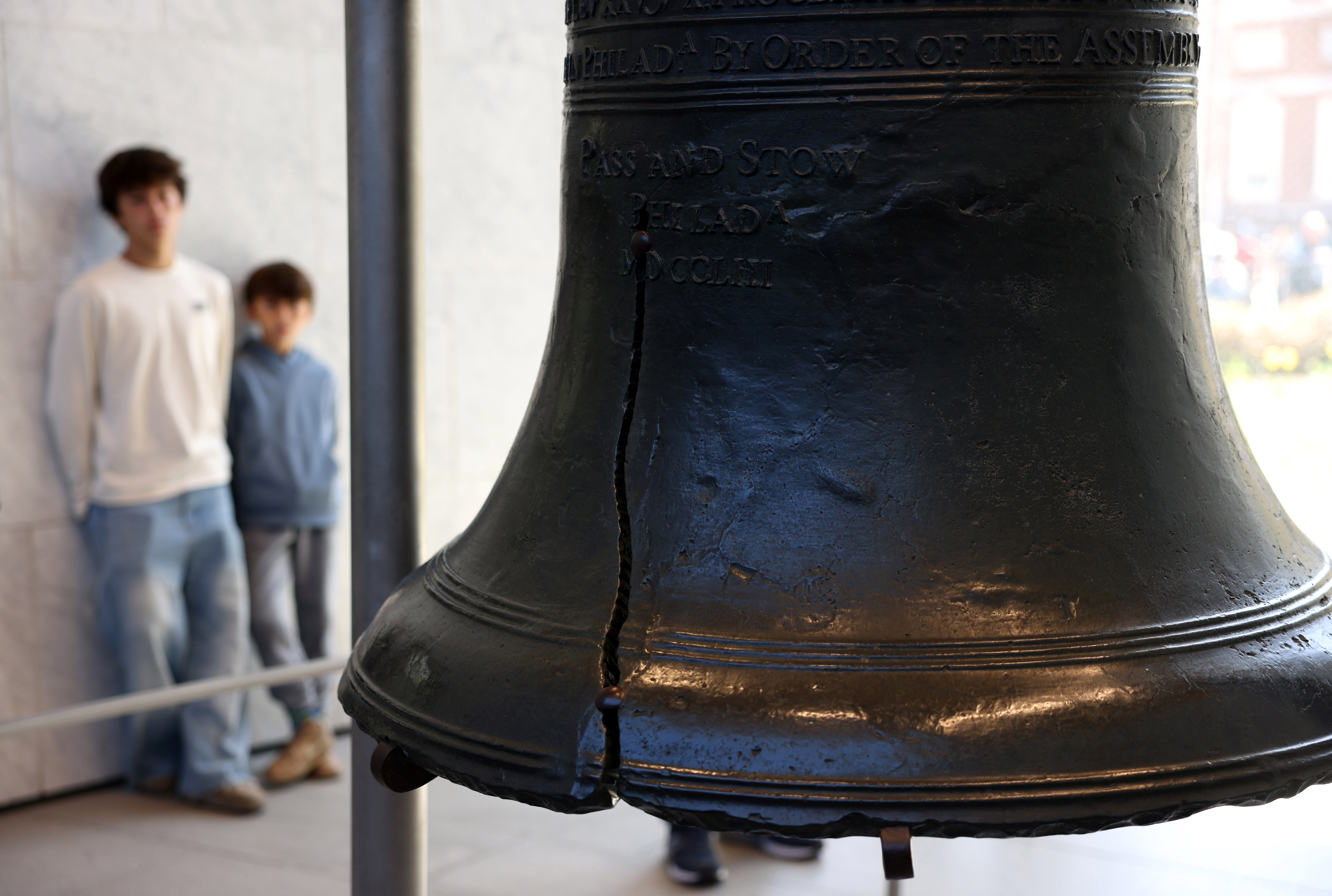
But the republic could not survive half-slave and half-free. So, it all came to ruin in 1860, one of the wrecks and wars around the world in that turbulent decade. Outsiders, especially in Europe, took an enormous interest in how the American breakup would turn out.
The Americans then offered a second example to that turbulent watching world. They reconstructed a National Union with a “new birth of freedom.”
They signaled that slavery and serfdom would finally pass out of human history. They reaffirmed constitutionalism, with its delimited powers, as the model for how to charter nations. The rebuilt union then expanded its farms, markets, and industry on a continental scale, embracing and exemplifying the second industrial revolution.
But the industrial age, the transition from farm to city life, and new struggles for power brought on new and more terrible conflicts within and between societies. America was torn by these struggles.
Yet, out of these wrenching conflicts, America became an example to the world for a third time. It became the free world’s colossus.
In the catalytic wars, especially between 1940 and 1950, and with considerable reluctance, America saved the world. It saved the world from, as Churchill put it, “the abyss of a new Dark Age, a Dark Age [that would have been] made more sinister and perhaps more protracted by the lights of perverted science.” America offered an alternative model to the communist Sparta that was the other great victor of the war.
And, after the war, Americans finally solved the problems of how to reconcile business and labor in the organization of industrial societies. They modeled how to expand public education at all levels. They occupied the commanding heights of science and engineering to help people live better lives and be an arsenal of democracy. At home they also finally began making their embittered, backward former slave states truly part of the modern nation, while doing the same for their undeveloped and agricultural Western states, which then became a frontier of progress.
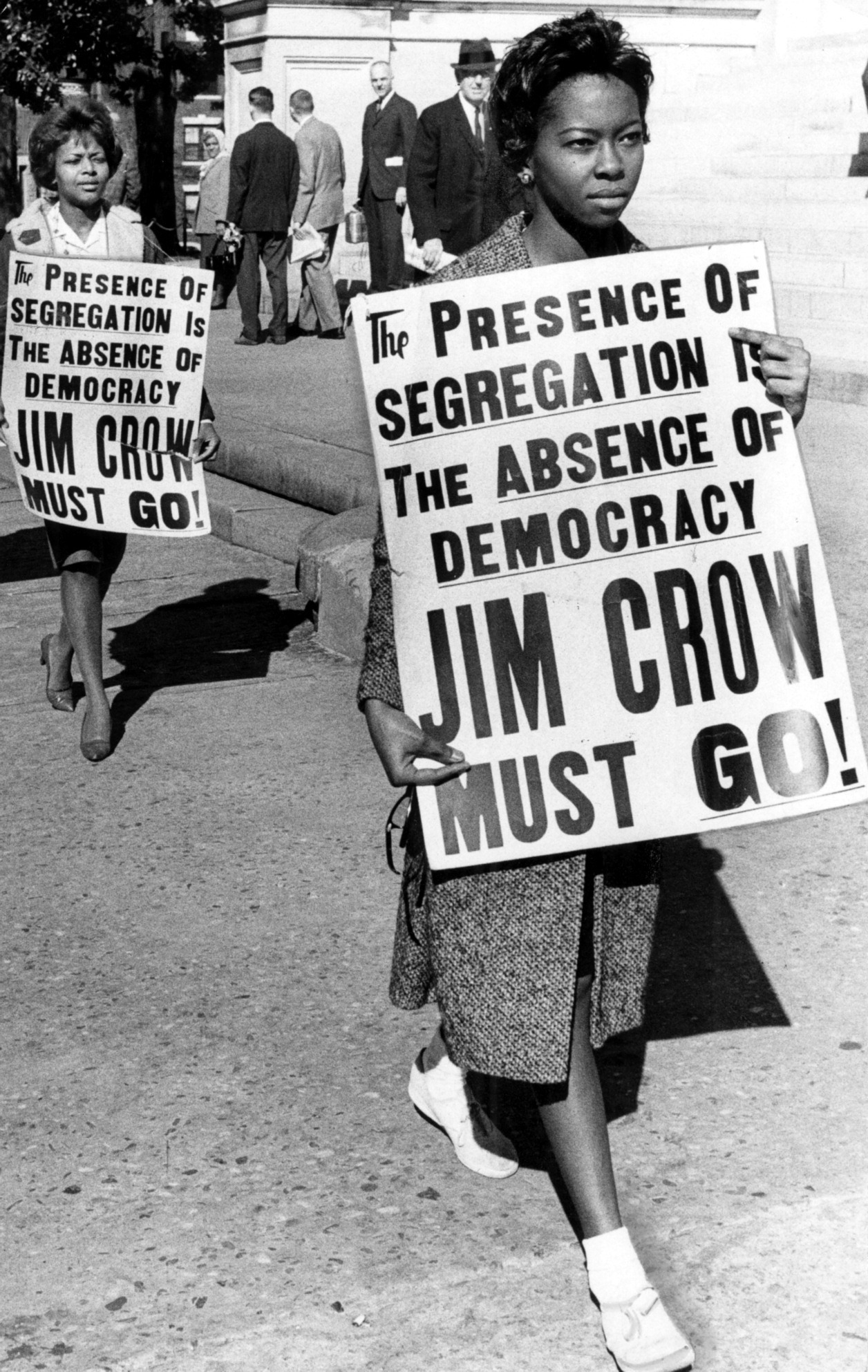
Yet, around the world, by the 1970s the Cold War managerial states seemed to reach their own point of exhaustion, mismanagement, economic breakdown, and rising social violence.
Then America helped set a fourth example. The Americans helped reboot freedom’s promise.
The advanced democracies made crucial choices, concentrated especially between 1978 and 1985. The catalytic culmination, concentrated between 1988 and 1992, then reset patterns of life around the world. The Americans and their partners aspired to create a global commonwealth, and they helped create the broadest period of peace, liberation, and economic development in the history of the world.
The Americans helped reaffirm the contrast and opposition of free, independent societies against socialist tyranny. The Americans broke out of stagflation, spurred by pressure from their allies. They helped lower barriers to liberate commerce and finance, echoed in Western Europe with the Single European Act, and echoed in East Asia in Japan, South Korea, Taiwan. Those effects inspired change in China and eastern Europe.
The Americans pioneered and led a worldwide Rights Revolution that reconciled individual liberties and changing community values in everyday life. That revolution fully reached fruition during the 1970s. Americans meanwhile pioneered the First Digital Revolution, distributing knowledge and capabilities across the world, and California became the new face of what was “cool.”
So, there were four remarkable examples. All engaged foreign sympathizers and partners. But meanwhile, there was a natural companion to the power of these four examples.
The past 250 years have also seen the rise of anti-Americanism. Instead of a discussion of “The American Example” I could have written a parallel kind of essay that borrowed the title of Philippe Roger’s bestseller from about twenty-five years ago and called, “The American Enemy.”
Roger’s book was a history—and a witty critique—of anti-Americanism en français. But anti-Americanism has become influential around the world, very much including inside the United States itself. It reached a peak during the 1970s. It then receded for a time. But now it has surged again to a new high tide, cresting on disgust with the current American president. As in the 1970s, today’s anti-Americanism is usually accompanied by an anti-Israel and anti-Jewish counter-melody.
Anti-Americanism has become a powerful global ideology. The anti-American ideology has a historical narrative, about violence, racism, empire, and domineering blundering. A recent essay by a historian and editor of the Atlantic examined current problems in teaching American history. He delicately called this ideology “post-Americanism.” That was a euphemism; America is still around. The anti-American ideology is well developed in Western academia, where the critical approach of what in the 1970s was called the “New Left” completed its long march through the institutions to become the new normal.
Anti-Americanism has a linked economic narrative, about exploitation, inequality, “neoliberalism,” and domineering capitalism. It has a cultural narrative too, about callow consumerism and rape of the environment, though the anti-Americans like some of the music.
As a historian, not as a patriot, I think the anti-American narrative is unbalanced and substantially wrong. The record has its full share of American blight and blunders, including in recent years. But on the major episodes and issues the anti-American narrative is selective and tendentious. It is too American-centric. It does not seriously analyze the alternative possibilities.
Oh well. But this pervasive narrative, and its pervasive falsehoods, does affect the way Americans see themselves. It affects the issue of whether there will be another “American example.” The anti-American narrative invites Americans to give up on themselves, to check out, awash in resentments.
After all, none of the past American examples were predetermined to succeed. Each was a struggle with plenty of contingency.
For example, in a complex chain of events that even the American president did not quite understand, America joined the first world war and then set high goals for its effort. Huge infusions of men and money determined the military outcome. Yet the American effort was a political and economic failure. At home, the six years after the war saw America go backward—backward economically, backward in business-labor relations, and backward in race relations. Abroad, America then began disengaging from Asia and Latin America. In Europe, America had already disengaged, leaving fragile and toxic arrangements where Europeans serviced their debts and gracefully architected cemeteries where the Americans buried their dead.
Americans can learn from their failures. But they can also learn from their successes. When people join to build something better, they imagine what they want to create. They imagine the people they want to become. They imagine the virtues they want to display.
Look back on the four examples of success. In each case, the winning Americans thought they had been on the side of liberty against tyranny.
In each case, Americans tried to blend power with justice, with decency.
In each case, when they set positive examples to others, Americans saw reflections of their better selves. When others saw Americans as saviors, Americans were inspired to be better people. Many tried to live up to that. Some died trying.
Americans liked to think that they were the good guys. In America’s war in Vietnam, the turning point did not come on the battlefield. The turning point came when Americans lost faith that they were still the good guys. That loss of faith broke the heart of support for the war. The first hearts and minds Americans always must win are their own.
In each case, the Americans did not think their examples were exclusive. Their models of liberty and opportunity were always open and available to others.
In each case, Americans seemed to be solving great problems of their age. Throughout history, the most influential ideology of all is the ideology of what works. In these four examples the Americans showed that liberty, opportunity, and the rule of law actually worked. They worked in practice. They worked in the everyday lives of ordinary people. In each case the Americans were modeling the future, bringing progress to great masses of people.
These lessons are guiding lights to the future, even if they do not guide the current president. We live in a time of world historic transition. The question now is, in this historic transition, will there be another American example?
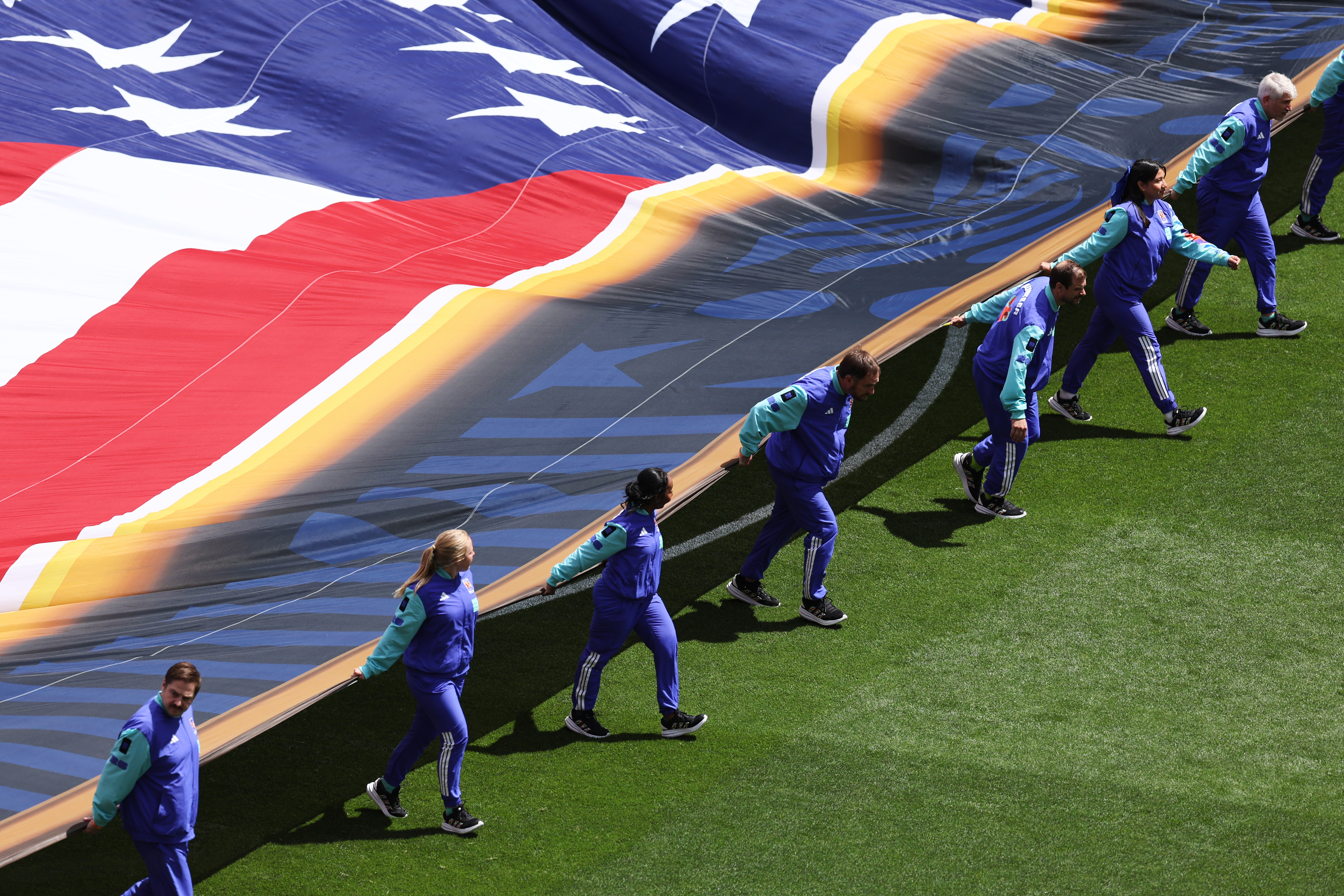
I don’t know. And if there is another example, what kind will it be? I don’t know that either.
The 1970s were another time of systemic change and heartsick pessimism: pessimism about democracy, pessimism about whether the free economic system still worked. The great and the good wrote a number of landmark reports. They assumed American decline.
They offered choices: on one side, catastrophe beckoned. On the other, there might—if we were lucky—be dismal coping.
Today these reports read like a photographic negative in comparison with what actually happened. As the reports were coming out, democracy was starting to revive. The communist tyrannies were about to enter their own terminal crisis. Lowering barriers, whether in finance or the Single European Act or in the rise of personal computing, unleashed human potential.
This time, rather than imagining dismal coping, we might try to envision astonishing possibilities. As a start, here are ten ideas.
1. The new technology should empower people, not diminish them. Will AI replace people or enhance them? Automation versus augmentation is the current phrase. Automation is easier. Augmentation produces the truly transformative results.
2. Those results should transform broken and unaffordable systems of everyday life. In health care, for example. In energy. In transportation. In cutting through suffocating burdens of regulation and licensing. In education and research. In biological engineering.
3. The great paradox of the new human empowerment is that radically decentralized and individualized work and services will be enabled by radically centralized systems. Americans will have to reconceive their governance to embrace both sides of this paradox.
Decentralized governance that invites competitive experiments is better at innovating. It is better at iterating quality service, close to and responding to users. Americans discovered that fact during the “Progressive Era” that so successfully adapted to the second industrial revolution.
4. The few companies that indispensably generate frontier AI will eventually become forms of privately owned utilities that also serve the public interest. The issue is not whether this will happen. The issue is when. Above all, the issue is how. There are a lot of different possible designs.
5. Americans should build partnerships in the world to do these things. The Chinese are trying to build a complete tech and applications stack of their own, from top to robot. The Americans cannot duplicate this on their own. They will need partnerships.
6. With their good partners, Americans should be able to produce and trade all the essential goods they need. They will have to pool strengths and adapt their trading system. What Americans should end up with is not what they have right now. And tyrannies that run closed societies are not good partners.
7. The Americans and their partners will have to reconceive the way they defend themselves. Imagine how we would do this if we had to start from a clean slate. Then leverage our existing force structure and our existing alliances and friendships to map a path.
8. Americans need to show that governments can actually get stuff done. Besides dropping bombs.
Americans used to be famous for being all about can-do. Now we’re famous for can’t do. We replaced our pragmatic spirit with crippling proceduralism, policy as talking points, attack dogs, identity politics, and culture wars.
Doing stuff requires competence. The Americans have gone through a long phase, in both parties, in which they have exhibited the depths of incompetence. My guess is that some Americans are wondering, “Can we try something else?” If the current incompetence produces catastrophe, they will do more than wonder.
9. Bad things will happen. When a big thing goes wrong, good governments figure out what happened, show people what went wrong, and fix it.
When Americans made disastrous mistakes—and we have made some doozies in the past twenty-five years—and no one properly investigated and no one showed what went wrong or held anyone accountable, people saw that. As they saw that pattern again and again, it made them angry. It made them hate the self-perpetuating elites and their unexamined facades of competence. It made them so angry they wanted to throw a brick through a window. And along came Donald Trump.
10. Americans should show that justice—and decency—have not gone out of style.
Back in the Second World War, a jaunty American song proclaimed, “We did it before and we can do it again.”
We did. We can.
Philip Zelikow is the Botha-Chan Senior Fellow at the Hoover Institution, where he co-leads the Hoover History Lab and participates in Hoover’s George P. Shultz Energy Policy Working Group, the Applied History Working Group, and the Global Policy and Strategy Initiative. For twenty-five years he held a chaired professorship in history at the University of Virginia, where he also directed the nation’s leading research center on the American presidency. Zelikow focuses on critical episodes in world history and the challenges of policy design and statecraft.