 Powered by
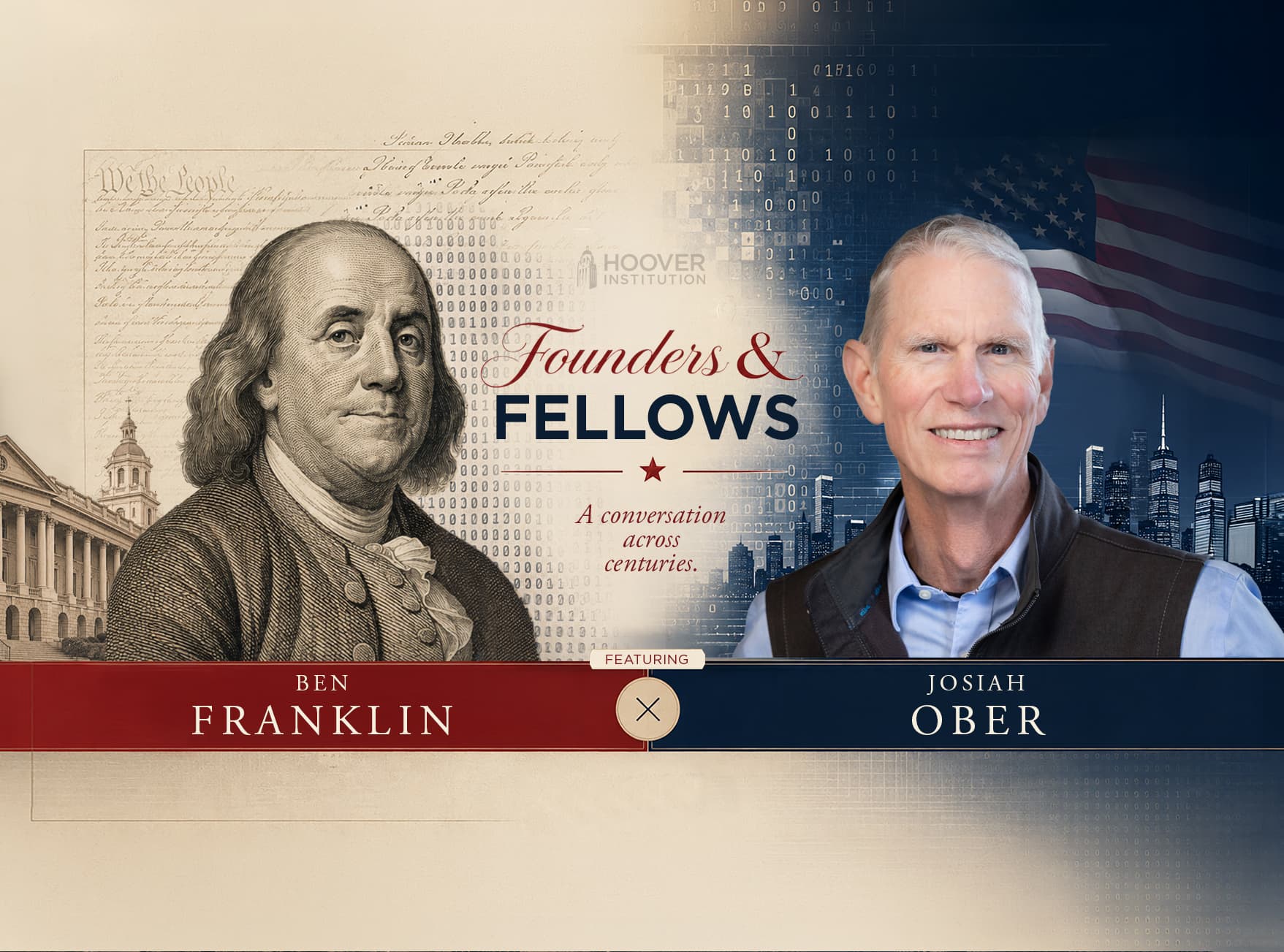
In September 1787, as America’s Constitutional Convention ended, Benjamin Franklin emerged from Independence Hall into the Philadelphia street. A local woman reportedly approached the eighty-one-year-old statesman, pressing him about the outcome of the closed-door deliberations: “Doctor, what do we have now? A republic or a monarchy?” Franklin supposedly replied tersely: “A republic—if you can keep it.”
At first glance, this famous exchange sounds like a stern grandparent, handing car keys to an irresponsible teenager: “OK, you can drive our new red-white-and-blue family car—but don’t crash it!” In this reading, Franklin and his fellow delegates were delivering a masterpiece of governmental design to American citizens and warning them not to mess it up.
But was this new Constitution really a masterpiece? Americans once answered with an unabashed “yes,” revering the Constitution as the ideal embodiment of democratic republicanism. More recently, however, the document has become a target of skepticism. Many now complain it was flawed from the beginning—in its vague language, authorship by slave-owning hypocrites, or elitist avoidance of majority rule. The detractors might agree on one thing: Franklin and his colleagues didn’t design a masterpiece. They produced a mess.
The reality of bargaining
A less familiar story from a day earlier reveals something crucial about how democratic agreements work. On the afternoon of September 17, a final draft of the Constitution lay before the delegates. Most saw it as an improvement over the failing Articles of Confederation, but the level of support in the hall remained unclear. Franklin came forward to present his considered opinion but was too frail to stand. His fellow Pennsylvanian James Wilson read Franklin’s speech aloud.
The tone was strikingly different from the confident warning Franklin reportedly delivered the next day. Franklin began by asserting his agreement “to this Constitution with all its faults, if they are such,” while conceding “there are several parts which I do not at present approve.” He then commented on human nature’s ego and irrationality—acknowledging it no less in himself than in others listening: “Most men think themselves in possession of all truth, and that wherever others differ from them it is for error.”
Such assumptions create disputes, Franklin suggested, which worsen when many gather for “joint wisdom” because they bring “their prejudices, their passions, their errors of opinion, their local interests, and their selfish views.” Despite all this, Franklin expressed astonishment at how close to perfection they had come: close, but not quite, because perfection isn’t attainable in human endeavor.
The speech concluded with Franklin’s approval, despite lingering doubts: “I consent because I am not sure that this is not the best. The opinions I have had of its errors, I sacrifice to the public good.”
Moral persons and legal property
Franklin’s comments about imperfection alluded to specific controversies the delegates knew all too well. They had hammered out agreements about branches of government, financial authority, and voting rights. But the key imperfection was, of course, the failure to address slavery.
In Federalist no. 42, James Madison deplored the “barbarism” of the “unnatural traffic” in “unfortunate Africans” and regretted that the Constitution postponed any consideration of ending it until 1808. But in stating that “it is not difficult” to account for the delay, he implicitly acknowledged the necessity of getting Southern states on board. Then, in Federalist no. 54, Madison offered a lawyerly defense of the compromise: While slaves were regarded as “moral persons,” they were also legal property. He acknowledged that natural rights to liberty and equality had wrongly “been taken away” from enslaved persons, while simultaneously subordinating natural rights to manmade laws. Madison continued: “Government is instituted no less for protection of the property, than of the persons of individuals.”
South Carolina delegate Charles Pinckney emphasized property rights in justifying his support at his state’s ratification convention: “Considering all circumstances, we have made the best terms for the security of this species of property it was in our power to make.” The “power” Pinckney alluded to was the Southern states’ ability to kill the entire deal. If the Carolinas and Georgia joined Rhode Island in opposition, the nine-state supermajority needed for ratification would be out of reach. The compromise was explicit—even as Pinckney employed delicate euphemisms about enslaved persons.
The alternative
Was there an alternative? Perhaps, but not a good one. Some delegates weren’t sure a single union was necessary. Pierce Butler of South Carolina drafted a proposal (mentioned in his preserved notes, but evidently it never made it to the floor) suggesting “the Security of equal liberty and general welfare will be best preserved by forming the states into three Republiks distinct in their Governments but United by a Common League.”
Had Butler’s proposal been proposed and passed, instead of one United States, there would have been three independent countries with different legal systems. That would have taken hard problems off the table. But it would have fatally compromised national security: foreign rivals could have played the three relatively small mini-republics against one another; the three little republics would have been no match for the great powers of Europe and our world would have had a very different history.
A working constitution for a viable republic
Franklin and his colleagues recognized the agreement as an imperfect but working bargain for a viable republic. The search for a “more perfect union”—to invoke the Constitution’s famous preface—would continue. The founding document launched a framework of self-governance that would have to keep evolving if it were to survive.
Franklin’s warning—“if you can keep it”—wasn’t just about avoiding catastrophe. It was about recognizing that sustaining a republic requires ongoing work: balancing competing interests, integrating expertise without elite capture, maintaining constitutional commitments while allowing necessary change, and educating citizens not as subjects but as co-governors. That work means seeking the best available alternative, doing that over and again, and refusing to sacrifice the security of the country on the altar of perfection.
The Constitution’s imperfections, particularly regarding slavery, were not addressed quickly enough. The result was a terrible Civil War and its grim aftermath in the Jim Crow era. But Franklin’s recognition that human endeavor cannot achieve perfection, combined with his insistence on conscientiously seeking, and then approving, the best available agreement, captures something essential about governance: as Franklin reminded his colleagues on that afternoon in Philadelphia, it’s not about creating ideal institutions but about establishing a framework that allows imperfect humans to govern themselves while continuously striving for improvement.
Adapted from The Civic Bargain: How Democracy Survives, by Brook Manville and Josiah Ober (Princeton University Press, 2023).
Josiah Ober is a senior fellow at the Hoover Institution and participates in Hoover’s Working Group on Civics and American Citizenship and Foundations of Economic Prosperity Working Group. He is also the Markos & Eleni Kounalakis Chair in Honor of Constantine Mitsotakis in the School of Humanities and Sciences, professor of political science and classics, and professor of philosophy (by courtesy) at Stanford University. He is the founder and currently the faculty director of the Stanford Civics Initiative, a joint project of Stanford’s School of Humanities and Sciences and Hoover’s Center for Revitalizing American Institutions.
Brook Manville, a historian, writes and advises about democracy, strategy, and organizational topics. He publishes The Civic Bargain, a Substack.