 Powered by
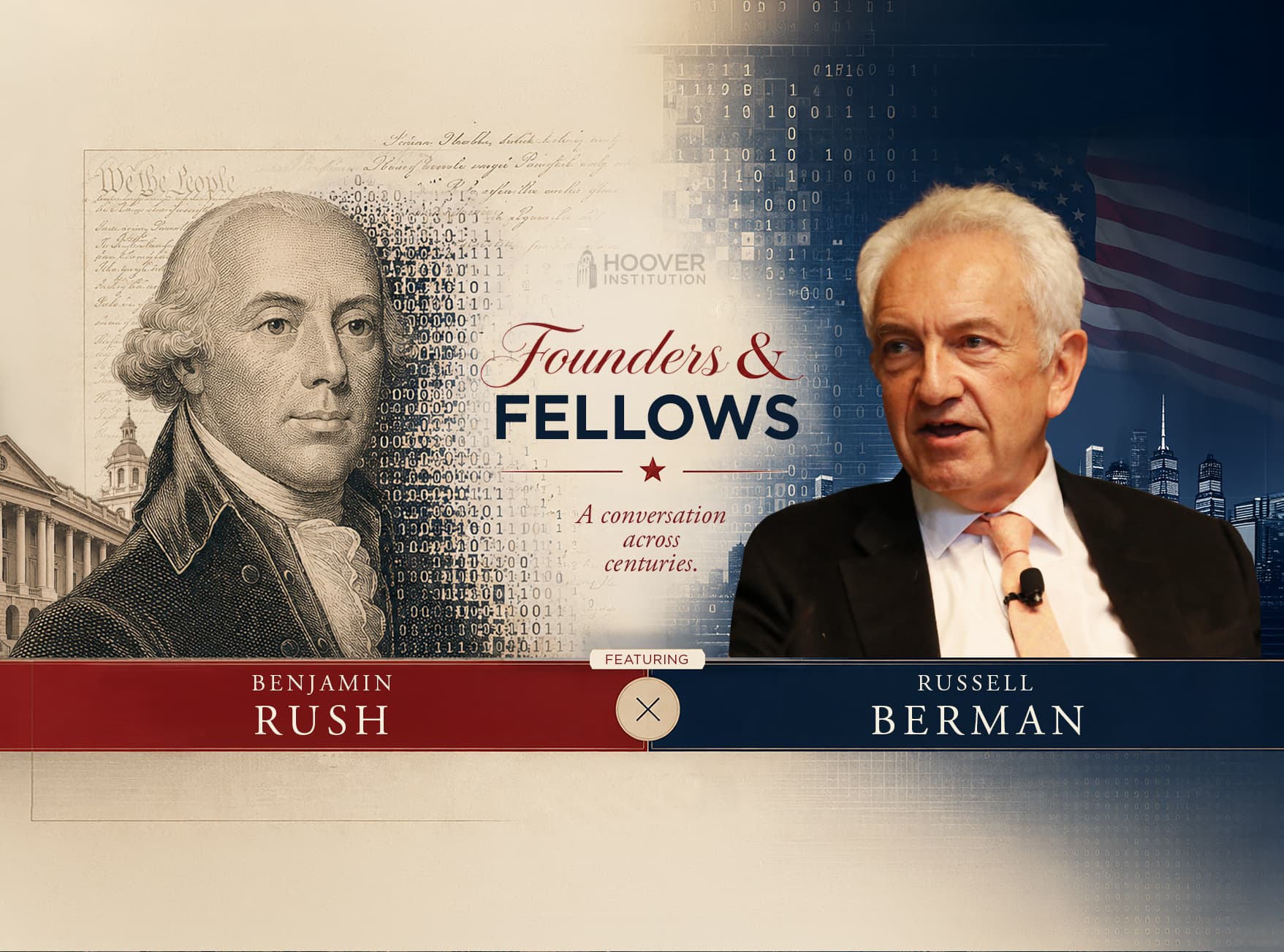
When Benjamin Rush signed the Declaration of Independence, he was only thirty years old, much younger than Benjamin Franklin, Samuel Adams, or George Washington. Although not the youngest signer—that distinction belongs to the twenty-six-year-old Edward Rutledge—Rush was already a prominent physician and an emerging leader of the revolutionary movement.
Born near Philadelphia in 1746, Rush lost his father at a young age, and his mother raised him with a strong emphasis on education. He graduated from the College of New Jersey (later Princeton University) at the age of fourteen. He subsequently traveled to Edinburgh to study medicine, where he engaged with the ideas of the Scottish Enlightenment and entered a wider network of European intellectual life. Returning to Pennsylvania in 1769, he quickly became one of the most prominent physicians in the colonies as well as a prolific pamphleteer promoting the cause of liberty.
In 1773—the same year as the Boston Tea Party—Rush published his famous “Address to the Inhabitants of the British Settlements in America upon Slave-Keeping.” As opposition to British rule grew more radical and plans for self-government matured, Rush challenged the revolutionary movement to recognize that its demand for liberty was incompatible with the institution of slavery. His argument drew on both Enlightenment theories of natural rights and the Christian traditions that shaped colonial Pennsylvania. Among the proponents of those traditions were the Quakers and the German Pietists. Indeed, the first public protest against slavery in North America, the 1688 Germantown Petition Against Slavery, was drafted principally by Francis Daniel Pastorius, founder of Germantown and the leading figure among Pennsylvania’s earliest German immigrants.
Rush served as a delegate to the Second Continental Congress and as surgeon general of the Continental Army. His participation in the Revolutionary War was not without controversy, however, as he criticized Washington’s leadership and became associated with efforts to remove him from command. After independence, Rush continued his career as a physician while advocating women’s education, prison reform, and a medical approach to mental illness; he is often regarded as the father of American psychiatry.
Unlike many founders who emphasized constitutional design, Rush became preoccupied with the cultural foundations of republican self-government. The Declaration of Independence had asserted that governments derive “their just powers from the consent of the governed.” Rush posed a further question. If a republic depends on the consent of its citizens, what sort of citizens are capable of governing themselves? For Rush, the answer involved education. He understood education not merely as the transmission of knowledge but, more importantly, as the formation of character, a subject on which he wrote repeatedly and passionately.
It is this Benjamin Rush—the advocate of education for a society dedicated to liberty—who is of particular interest today, especially within the university. Rush grappled with questions about the nature and necessity of civic education. In the midst of our crisis of higher education, today’s Americans are wrestling with similar questions as we approach the 250th anniversary of the Declaration of Independence.
In 1786, amid the controversies surrounding the Articles of Confederation and on the eve of the Constitutional Convention, Rush published his influential essay “Thoughts upon the Mode of Education Proper in a Republic.” There he argued that “the form of government we have assumed, has created a new class of duties to every American.” The success of the American experiment, he believed, would depend not only on a constitution and laws but also on the education of citizens capable of sustaining republican government.
Rush begins by arguing against the habit of affluent colonists to send their sons abroad for education. Instead, he emphasizes a love of country that can develop most fully through growing up and being educated at home. “The principle of patriotism stands in need of the reinforcement of prejudice,” he writes, “and it is well known that our strongest prejudices in favour of our country are formed in the first one and twenty years of our lives.”
He further advocates “one general, and uniform system of education” that would “render the mass of the people more homogenous.” Educational uniformity could help overcome the diversity of origins in a young republic “whose citizens are composed of the natives of so many different kingdoms of Europe.” Love of country and a shared civic identity were twin goals.
Rush also believed that republican government depended on virtue, and that virtue depended on religion. “Without [religion] there can be no virtue,” he wrote, “and without virtue there can be no liberty, and liberty is the object and life of all republican governments.” Rather than an irreligious education, he would prefer instruction in “the opinions of Confucius or Mahomed,” yet he had no doubt about the special status of Christianity. “A Christian . . . cannot fail of being a republican, for every precept of the Gospel inculcates those degrees of humility, self-denial, and brotherly kindness, which are directly opposed to the pride of monarchy and the pageantry of a court.”
There are, of course, many historical examples of Christians who supported monarchy or other non-republican forms of government. Yet for Rush, religion mattered less as a matter of private belief than as a public source of the virtues on which republican self-government depended.
A third component of education involved teaching republican principles and obligations. Citizens need to understand not only their rights but also their responsibilities. The citizen, Rush argued, “must watch for the state, as if its liberties depended upon his vigilance alone.” While acknowledging obligations to family and to humanity at large, he insisted on the special claims that a political community has on its members. “He must be taught to love his fellow creatures in every part of the world,” Rush wrote, “but he must cherish with a more intense and peculiar affection, the citizens of Pennsylvania and the United States.”
Reading Rush today sheds light on some of the central challenges facing higher education. Few contemporary colleges would identify patriotism as an educational objective. Indeed, universities more often emphasize critical examination of the national past than cultivation of national attachment. Moreover, institutions of higher education have become increasingly dependent on international enrollments and global networks, making Rush’s vision of education as preparation for citizenship in a particular republic appear remote.
His insistence on religious instruction, Bible reading, and Christianity is even further removed from the assumptions of most contemporary universities. Yet for Rush, religion in education served fundamentally as a vehicle of character formation. However one understands higher education today—as career preparation, social mobility, intellectual inquiry, or preservation of scholarly disciplines—there is little systematic attention to the formation of character as a central institutional purpose. That agenda has been lost through the secularization of education.
To recover Rush’s vision today would require rethinking some of the most basic assumptions of modern higher education. He tried to join civic attachment, religious formation, and moral character in a single project. Whether one finds that vision attractive or troubling, it highlights how far contemporary universities have moved from the concerns that occupied one of the founding generation’s most influential educational thinkers. Understanding that distance can tell us much about the history of the republic—and about the possibilities for educational reform in the future.
Russell A. Berman is a senior fellow at the Hoover Institution and chair of Hoover’s Working Group on the Middle East and the Islamic World. He also participates in Hoover’s Military History in Contemporary Conflict working group and its Global Policy and Strategy Initiative. Berman is the Walter A. Haas Professor in the Humanities at Stanford University.