 Powered by

This article is part of Liberty Amplified, a series produced in partnership with the Hoover Institution’s Human Security Project, featuring voices that challenge authoritarianism in pursuit of freedom. Human rights activist Rosa María Payá joined H.R. McMaster on his podcast, Today’s Battlegrounds, for a discussion about Cuba as an active battleground for democracy. Their conversation can be viewed here.
From childhood, Rosa María Payá could identify the cars of state security that followed her family everywhere, from church to their home, a constant reminder that they were watched. Trained in the methods of East Germany’s Stasi and the Soviet KGB, Cuban state security is sophisticated in psychological torture. It cultivates fear, paranoia, and distrust, designed to undermine any effort at building civil society.
Payá’s father, Oswaldo, was a prominent opposition leader on the island and founded both the Christian Liberation Movement (a non-denominational political movement guided by Christian values) in 1988 and the Varela Project (a citizen initiative that collected over 20,000 signatures in support of democratic reforms to the Cuban constitution) in 1996.
In July 2012, Oswaldo Payá was driving across Cuba to a meeting of pro-democracy organizers. He used his typical mode of transportation, a rental car driven by tourists who came to support his work. They departed before the sun rose to slip past state security undetected. They never reached their destination: a car rammed them, killing Oswaldo and another passenger. The Inter-American Commission on Human Rights has since acknowledged that Oswaldo Payá’s death was an act of violence by the state.
Today’s battleground
Rosa María Payá continues her father’s fight against a regime that is enduring its worst economic crisis since the fall of the Soviet Union in the 1990s. The country’s economy began to falter during the COVID-19 pandemic, with the collapse of the tourism industry, and has not recovered since. Blackouts, food shortages, and a crumbling health care system are the new normal. As Rosa María Payá describes, this is not a humanitarian crisis; it is a “humanitarian catastrophe.”
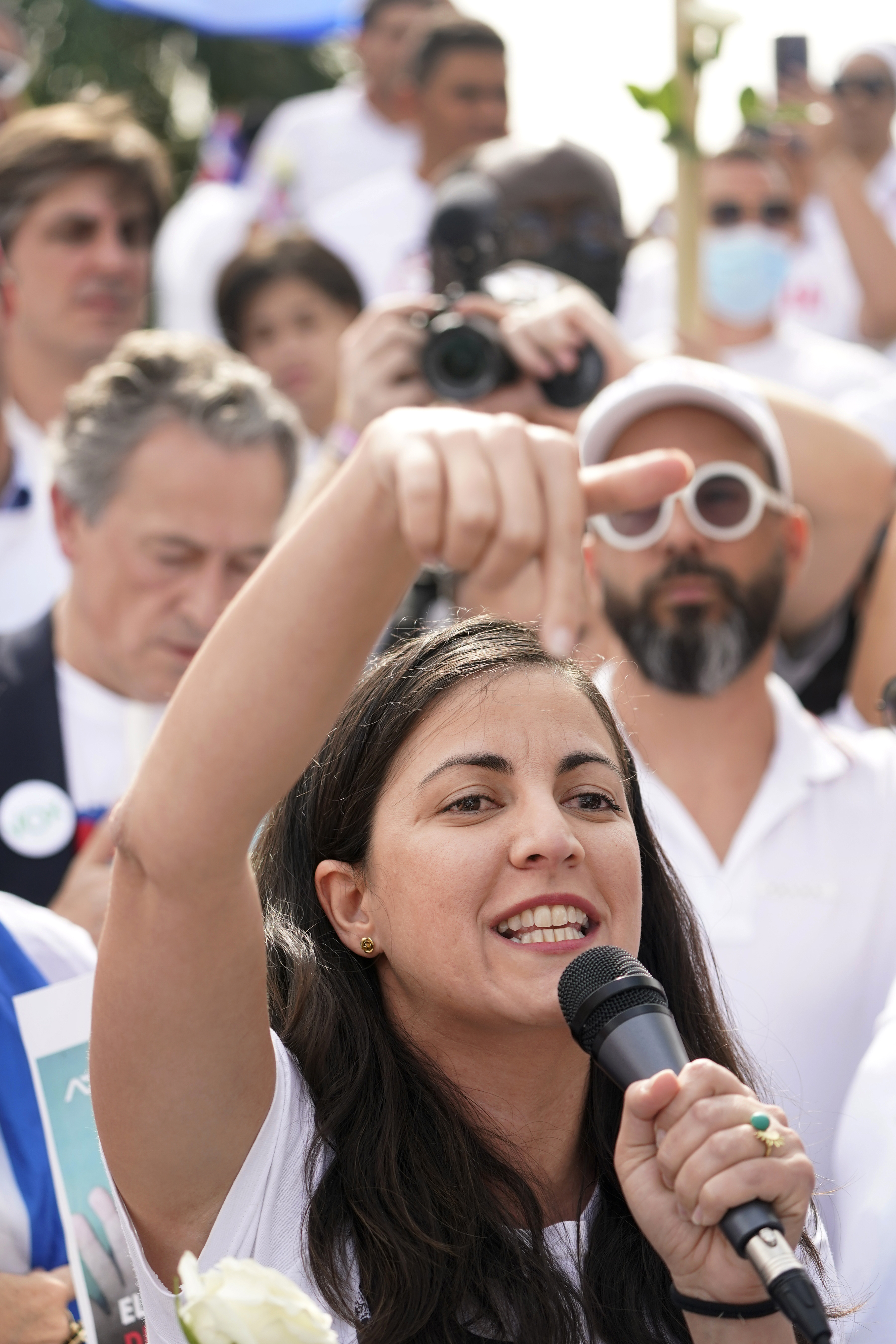
Cuba is part of a larger network of authoritarian regimes working against democratic stability in Latin America and the Caribbean. “When we talk about the Cuban regime, we are talking about the head of the authoritarian octopus in our hemisphere,” said Payá. Most recently, the regime lost a key partner, Venezuela, with the US capture of Nicolás Maduro.
Payá believes this time of vulnerability for the regime presents a window of opportunity. She proposes three steps:
A maximum pressure campaign by Western democracies against the Cuban regime.
Recognition of a viable democratic alternative.
Direct support of Cubans advocating for freedom.
How would these steps be carried out?
Maximum pressure
Since the Cuban Missile Crisis in 1962, the United States has maintained a trade embargo against Cuba, preventing agriculture, energy, and arms from passing between the countries. Despite this continuity over decades, US-Cuba relations have shifted dramatically depending on the administration.
For example, President Obama normalized relations with Cuba in 2014 by opening an embassy and easing travel restrictions. However, President Trump reversed this in his first term by redesignating Cuba a state sponsor of terrorism.
Payá’s perspective is that a maximum pressure campaign can choke the regime by cutting off its cash flow. This perspective is backed by scholars such as Hoover senior fellow Stephen Kotkin, who asserts that cash flow is the lifeblood of any authoritarian state.
The alternative to a maximum pressure campaign is economic rapprochement with Cuba in hopes that a rising mercantile class could eventually oppose the regime and spearhead a transition. Obama’s normalization policy was designed around this alternative perspective, but the regime’s survival supports Payá’s continued advocacy for maximum pressure.
In January 2026, Trump launched such a campaign against the regime by imposing tariffs on goods from any country that directly or indirectly provides oil to Cuba. The campaign escalated with an executive order in May 2026, which freezes the assets of individuals in Cuba’s defense, energy, mining, security, or financial services sectors.
However, this policy is not without controversy. In February 2026, the United Nations human rights chief, Volker Türk, criticized the campaign, arguing that deteriorating conditions on the island threaten human rights.
Payá’s response?
“There is a conception that this catastrophe is something new for the Cuban people. That’s basically wrong. The humanitarian crisis in Cuba has been there for decades. . . . The only way to overcome this crisis is to get rid of the dictatorship,” said Payá.
Payá believes the regime has been and will continue to be the source of suffering on the island, and its survival only prolongs the status quo. Addressing the humanitarian conditions without addressing the root cause of the crisis, the regime, is like putting a band-aid over a bullet wound.
Recognition of a democratic alternative
Payá calls upon Cuban civil society to organize around a transition plan that puts Cubans in charge of their democratic destiny once the regime falls.
Payá is organizing civil society through her nonprofit, Cuba Decide, which proposes a binding plebiscite that would allow Cubans to vote freely for the first time in six decades to choose their system of government. Such a proposal is reminiscent of the 1988 Chilean Plebiscite that successfully ended the military dictatorship of Augusto Pinochet and led to the restoration of democracy.
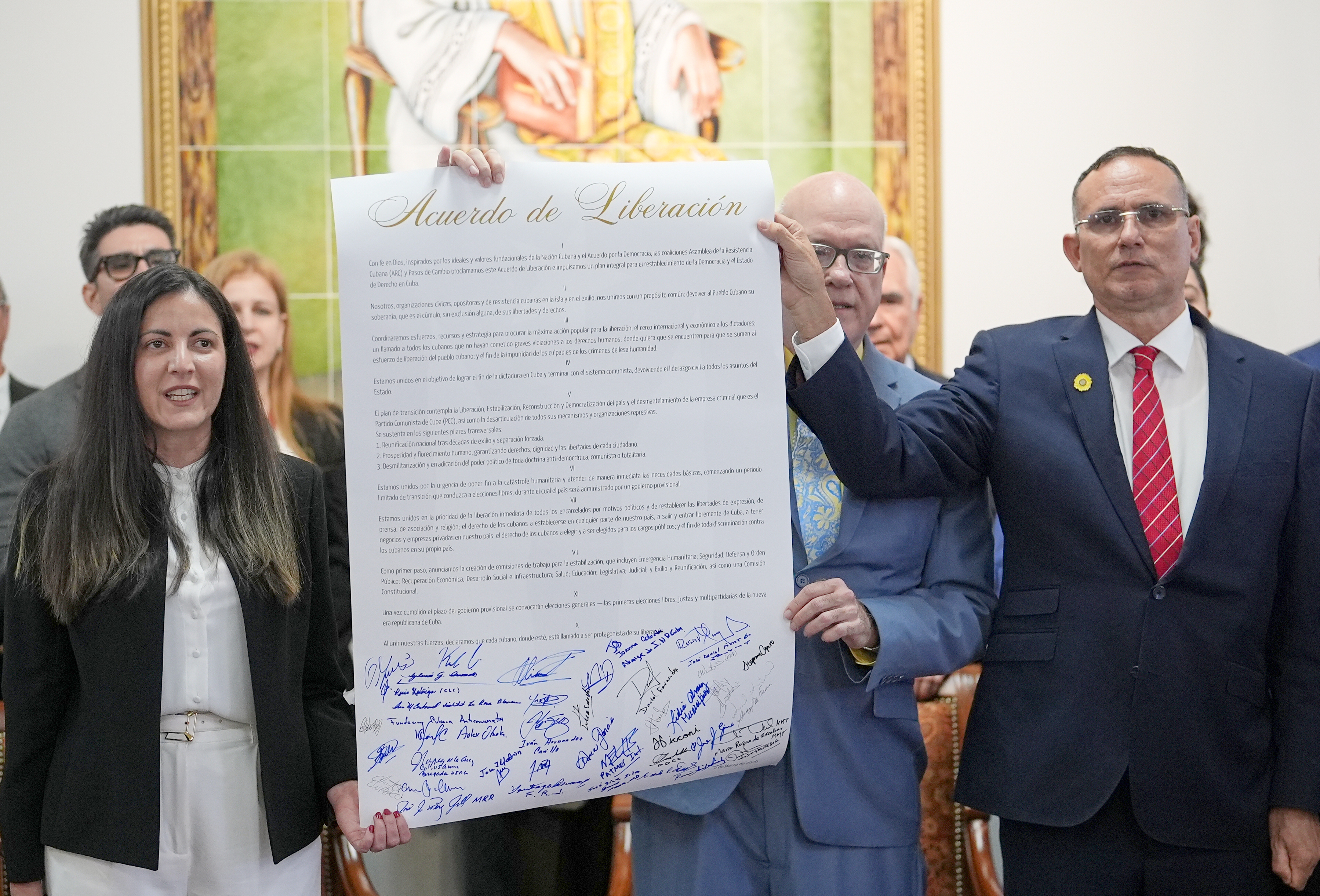
Efforts to organize Cuban civil society are ongoing. In March 2026, Payá led a gathering in Miami to present and sign a “Freedom Accord,” which includes a ten-step transition plan to restore democracy. The document calls for grass-roots mobilization on the island, increased international pressure to dismantle the regime, and—most important, in line with the Central Demand of Cuba Decide—the establishment of free, fair, and multiparty elections. The document is particularly significant because its signatories comprise a coalition of Cuban opposition leaders on and off the island.
Payá’s logic is this: organizing and articulating a democratic alternative shatters the illusion that there is widespread support for the regime domestically and communicates to Western governments that there is a vibrant civil society prepared to lead a democratic transition.
Direct support of Cuban freedom seekers
Lastly, Payá calls upon Cubans and the international community more broadly to support Cubans leading this work both on and off the island.
There has been an ongoing exodus from Cuba at a rate that is typically observed only in countries with armed conflict. Researchers at Columbia University estimate that the Cuban population at the end of 2024 was around eight million, which represents a 24 percent population decline from 2021 to 2024. The result is around three million Cubans residing abroad, meaning there is a significant diaspora network that can be mobilized in support of change.
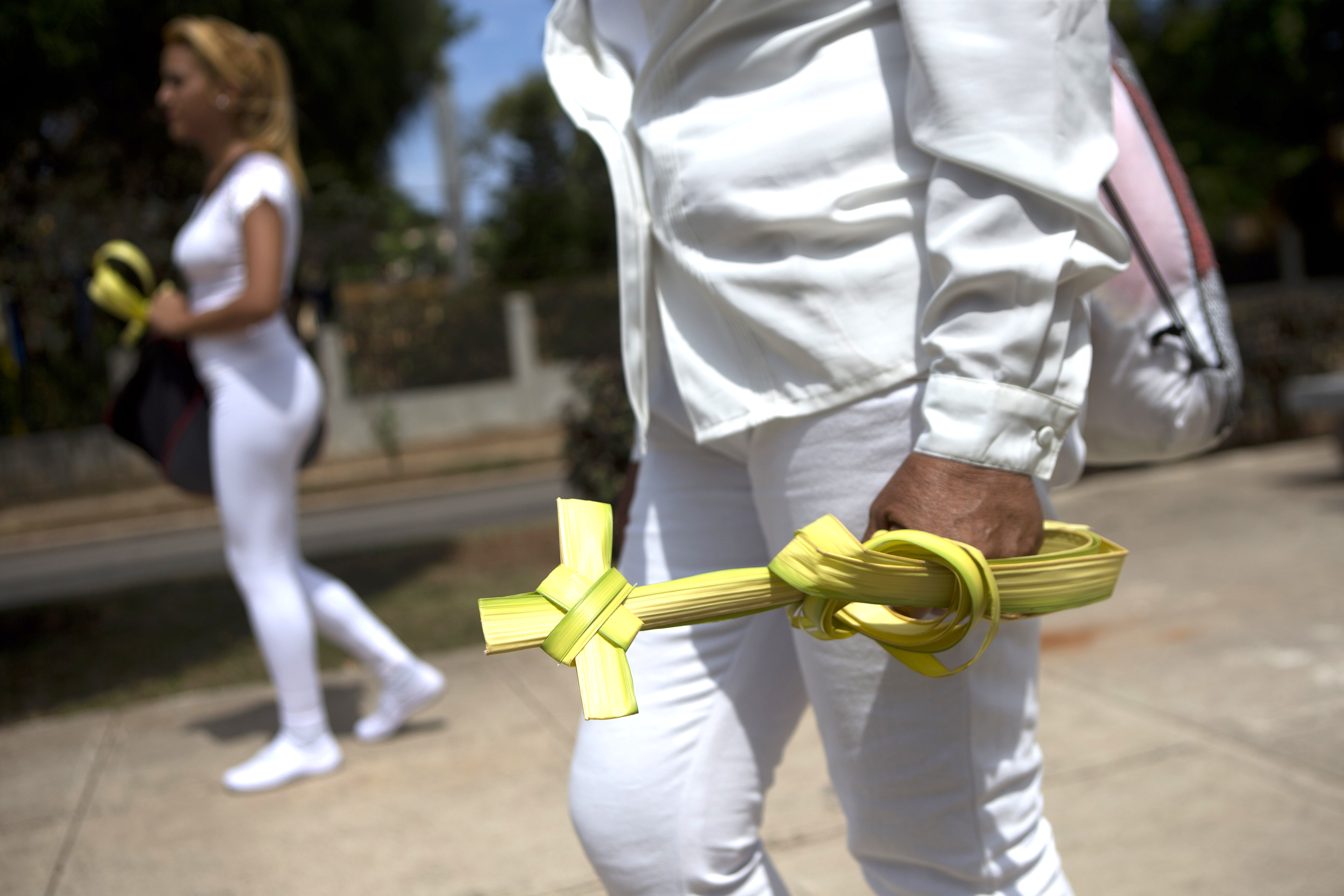
Direct support for Cubans can look like creating pathways for asylum that allow dissidents to safely continue their work elsewhere or directly funding Cuban civil society organizations both on and off the island.
For example, the National Endowment for Democracy, a US grant-making organization, funds Cubanet, an NGO in Miami that runs a website with up-to-date information on Cuba. Cubanet works with a network of freelance reporters on the island to cover daily events and the work of activists to support the democratic value of a free press. “The regime is afraid of any independent freedom of expression,” said Payá.
Payá’s logic: these investments are critical to bolstering Cuban civil society, which directly opposes and delegitimizes the regime.
Payá’s overarching perspective
Payá’s message is urgent and clear.
“We will see change. We will be part of generating that change in the next twelve months. . . . But not all the elements depend on us. What we can promise is that we will be pushing with all that we have to lead that change in the direction of freedom and democracy,” said Payá.
Her call to action is specifically targeted at Western democracies, a key part of her proposal. “Relevant for the world today is that the rest of the Western democracies join the US in this effort. And finally, after almost seventy years, decide to take sides with the Cuban people,” said Payá.
Rosa María Payá is a human rights activist, a fellow in Latin American studies at the Victims of Communism Memorial Foundation, and an elected commissioner to the Inter-American Commission on Human Rights (IACHR). She is the subject of the Peabody Award–winning documentary Night Is Not Eternal.
Carolyn Kennedy received a BA in international relations from Stanford University and is a member of the Human Security Project.
Liberty Amplified features the voices of those who defy autocracy in pursuit of freedom. It is part of the Hoover Institution’s Human Security Project (HSP) led by Lt. Gen. (Ret.) H. R. McMaster, senior fellow at the Hoover Institution and former national security adviser. The project carries out research into how authoritarian regimes sustain power and how pro-democracy groups and their allies can challenge them to advance liberty. HSP is an educational resource and tool for activists both outside and within those countries.