
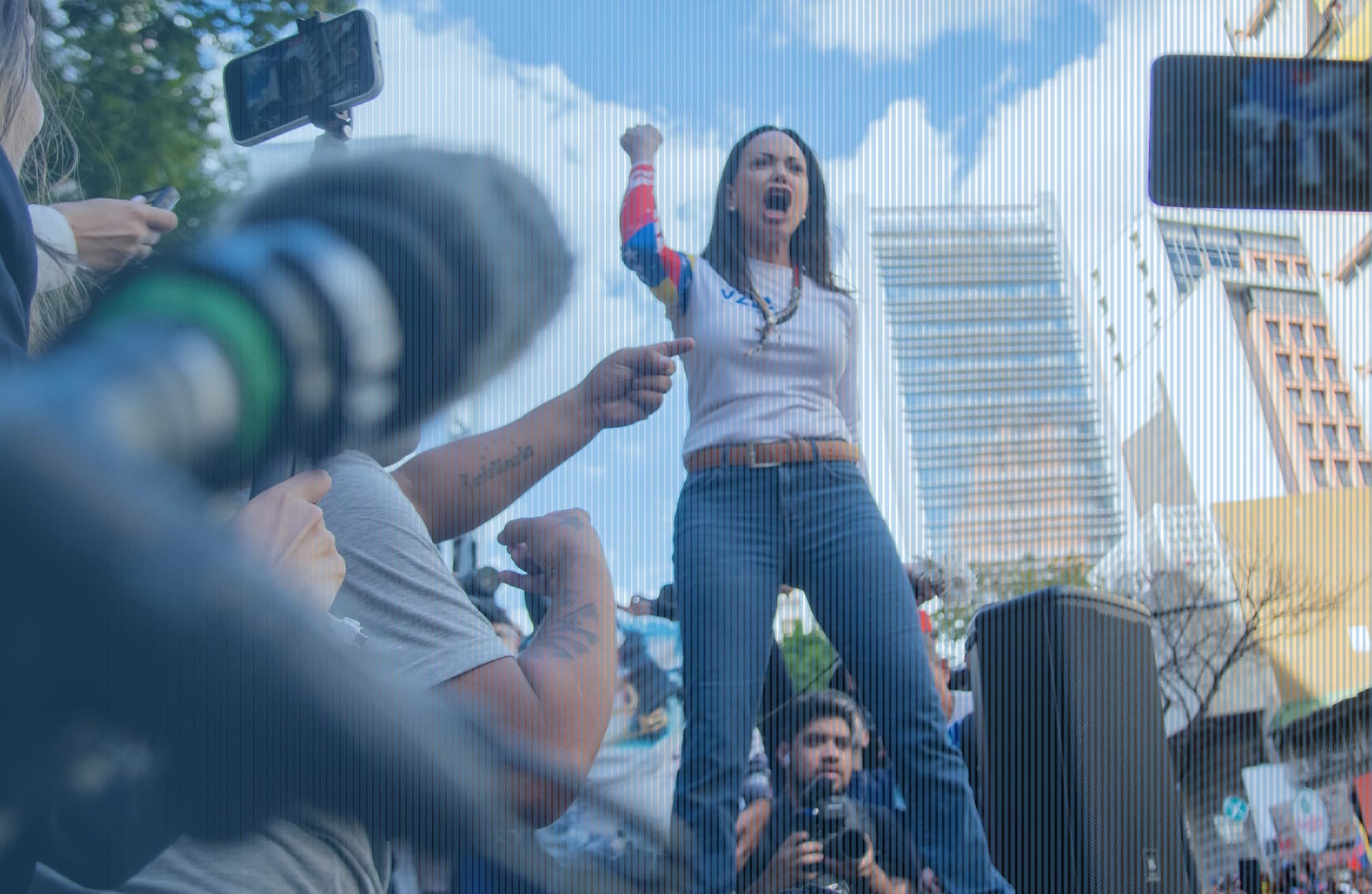
This article is part of Liberty Amplified, a recurring Freedom Frequency series produced in partnership with the Hoover Institution’s Human Security Project, featuring voices that challenge authoritarianism in pursuit of freedom.
The Venezuelan democratic experiment that started in 1958 was imperfect, often frustrating, and frequently noisy. But it was real. Parties alternated in power, courts could constrain presidents, journalists challenged ministers, and even during moments of unrest, there remained a shared belief that political conflict belonged in ballot boxes, not battlefields.
But South America’s oldest democracy, by 1998, was dismantled through what has now become a textbook case of democratic backsliding—one that culminated in full autocratic consolidation.
Hugo Chávez rose to power promising to deepen democracy. Instead, he hollowed it out. A new constitution concentrated authority in the presidency; courts were purged and repopulated with loyalists; the oil industry became a political arm of the state; adversaries were demonized and prosecuted; and dissent was slowly redefined as treason. By the time Nicolás Maduro inherited power, the scaffolding of authoritarianism was already in place.
Under Maduro, the façade collapsed completely. More than 53,000 citizens have been detained for political reasons; thousands of extrajudicial killings have been documented by international bodies (an estimated 16,000); media outlets have been silenced; opposition leaders exiled, imprisoned, or killed; and elections hollowed of meaning. The regime’s refusal to acknowledge the opposition’s overwhelming victory in the July 2024 presidential election was not a deviation but the culmination of a twenty-five-year authoritarian project.
But the Venezuelan people did something extraordinary. And the world should pay attention.
What María Corina Machado achieved
When the democratic opposition organized open primaries in 2023, many predicted failure. Years of repression had fractured the opposition; millions had emigrated; and hopelessness had settled over the middle class like a permanent fog. Yet almost three million Venezuelans participated, and María Corina Machado—who this year has been recognized with the Nobel Peace Prize—won more than 90 percent of the vote.
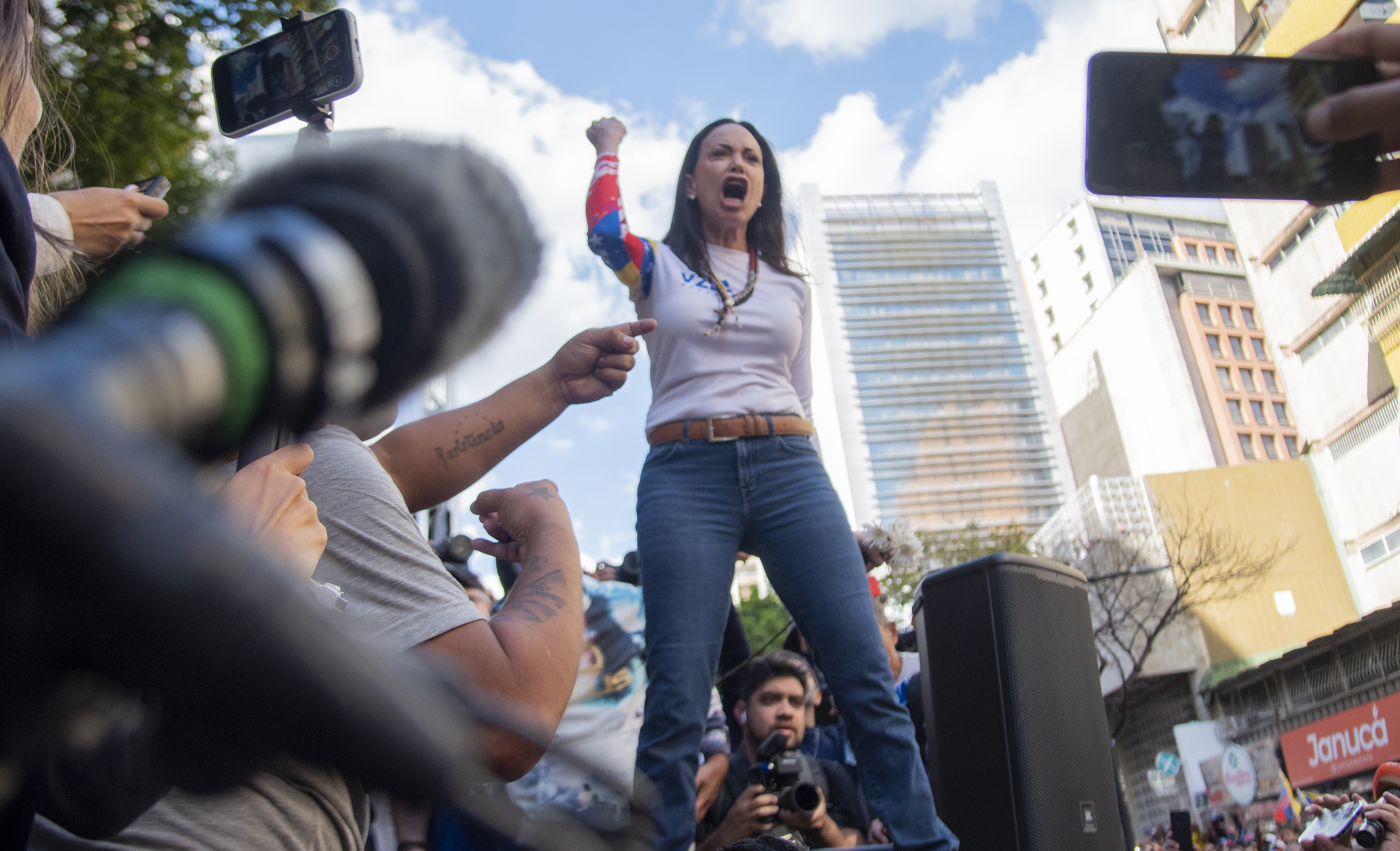
Her victory was not merely electoral. It was psychological. It revived a democratic enthusiasm that Venezuelans hold deeply, an expression of a political culture that, despite years of repression, remains woven into the very fabric of the nation. Machado’s clarity, consistency, and moral courage allowed her to channel widespread outrage and pain into disciplined organization.
Disqualified by the regime, she did not retreat. Instead, she orchestrated an unprecedented movement of citizen mobilization: almost one million volunteers, organized into small units called comanditos, trained to protect the vote, transmit official tallies, and display them online. This effort, built painstakingly over months, allowed the opposition to compile overwhelming evidence that Edmundo González Urrutia, the unity candidate she supported, won the July 2024 election 70 percent to 30 percent under repressive circumstances and despite the exclusion of nine million Venezuelans abroad from participating.
Some estimates indicate that absent coercive voting practices and with full participation of Venezuelans abroad, the real margin would have approached a staggering 90 percent for the opposition and barely 10 percent for the regime. These numbers speak of a consistent truth: the overwhelming majority of Venezuelans support political change.
The regime tried to hide the truth. But in a remarkable display of civic discipline and organization, Venezuelans proved, arithmetically and incontrovertibly through tally records, that Maduro had lost by a landslide.
The collapse Chavismo caused
Venezuela’s tragedy is not only political. It is economic, social, and human. In a decade, the country lost more than 75 percent of its GDP, one of the largest collapses anywhere in the world outside war. Hyperinflation devoured wages and annihilated savings. Public services deteriorated into dysfunction. Oil production—once among the highest globally—fell to levels not seen since the 1940s.
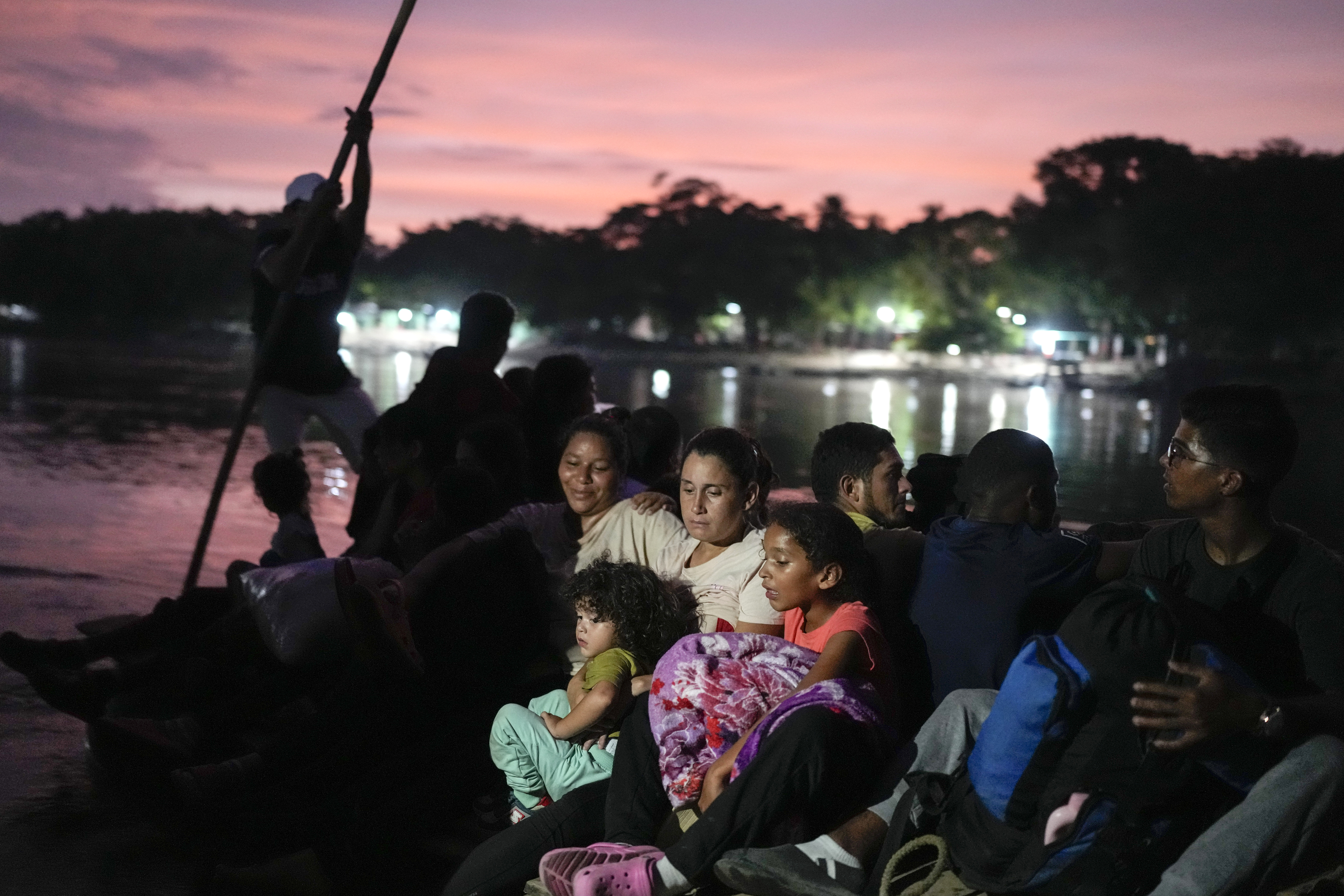
The result has been the largest displacement crisis in the history of the Western Hemisphere: nearly nine million Venezuelans forced to leave their homes, walking across borders, scattering across the Americas, remaking entire cities from Santiago to Miami.
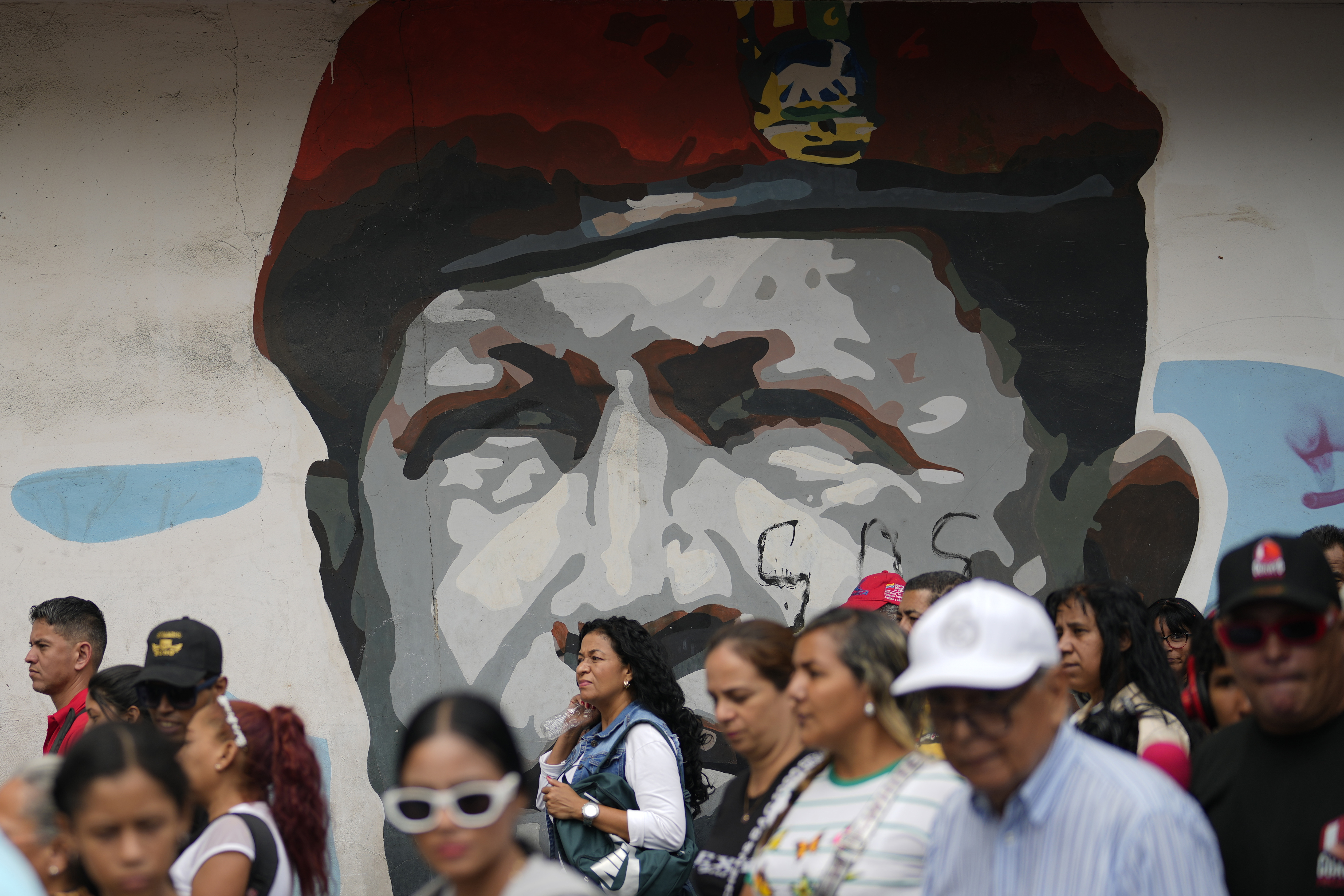
This devastation was not caused by sanctions or by chance. Most of the collapse had already unfolded before the first significant sanctions were imposed. It was the result of deliberate policy choices: expropriations, price and capital controls, the destruction of property rights, the politicization of state enterprises, the militarization of the economy, and unchecked corruption.
The legacy of “Chavismo” is a ruined state, a shattered economy, and a population scattered across the globe.
Maduro’s regime threatens the region
Maduro’s Venezuela is not merely a humanitarian catastrophe. It is a geopolitical one.
Venezuela has become a hub for America’s adversaries. Russia, China, and Iran have secured intelligence, military, energy, and logistical footholds in the country, giving authoritarian powers access to the Caribbean and northern South America. Iranian operatives have used Venezuelan territory for drone production and strategic projection. Russian advisers help sustain the security apparatus that keeps Maduro in power. Chinese loans and technology bind Venezuela economically and digitally to Beijing.
Meanwhile, the regime exports instability throughout the hemisphere. Millions of migrants have strained the capacity of Colombia, Peru, Ecuador, Chile, Panama, and the United States. Armed groups—FARC dissidents, ELN guerrillas, and transnational criminal organizations—operate with impunity inside Venezuelan territory under regime protection. The state has become both incubator and accomplice to illicit networks.
A failed petrostate governed by an authoritarian elite allied with global rivals is not merely unfortunate. It is a security threat for the region and for the United States.
Why civil war is unlikely
Some observers warn that removing Maduro risks plunging Venezuela into civil war. But this misunderstands the country’s social composition and historical experience.
Despite having many elements associated in social sciences to the likelihood of civil conflict (weak state, rough terrain, low income, and the presence of a very diverse group of armed actors), Venezuela lacks deep identity divisions and has no tradition of sustained insurgency. Were Venezuelans inclined toward war, the country would already have descended into civil conflict after losing two-thirds of its economy; instead, its people channel their grievances into migration, not armed rebellion.
Let’s break this down.
It is not an ethnically or religiously fragmented society. Unlike Iraq, Syria, or Libya, Venezuela has no deep communal cleavages, no competing sects or tribes, no history of militias organized along identity lines. Its political conflicts have always been ideological, not tribal.
Venezuela possesses a strong national identity. Despite economic collapse and mass displacement, Venezuelans continue to share a cohesive sense of nationhood. This identity is centripetal: it pulls citizens toward a shared political space rather than splintering them into factions.
Venezuela has no tradition of sustained civil insurgency. The guerrilla conflicts of the 1960s were short-lived and unpopular. The armed groups currently operating in the country are, overwhelmingly, Colombian imports, dependent on state protection, not on Venezuelan popular support. Remove the regime’s umbrella, and their operational freedom collapses.
The Venezuelan armed forces are demoralized and there is consistent evidence that the majority of soldiers don’t support Maduro. Generals at the top are a coalition of opportunists held together by patronage networks and coercive incentives. Once credible guarantees exist, many officers will defect rather than die for a project they neither designed nor believe in.
In short: a democratic transition in Venezuela is unlikely to produce civil war because the social, historical, and institutional foundations for such a conflict simply do not exist, which is not to say that a transition would be smooth or absolutely bloodless.
A warning for the world
The Venezuelan story offers a warning and a hope.
The warning is that democracies today rarely collapse in explosions. They erode slowly. Institutions rot from within. Parties decay. Disillusion grows. Citizens stop believing that democracy can deliver. Into that vacuum steps the charismatic “outsider,” the strongman who promises to fix everything by breaking the very institutions that protect freedom.
That was Venezuela’s path. And other democracies today would do well to study it closely.
But there is also hope.
Venezuela now faces a rare and favorable alignment of domestic and international forces. Abroad, the regime’s traditional patrons (Russia, Iran, and China) are distracted, economically constrained, or strategically indifferent to investing further in Maduro’s survival. For the first time in decades, the United States has an administration willing to challenge conventional wisdom and reconsider long-standing assumptions about regional security. At home, the democratic opposition has unified behind a single, legitimate leadership that commands overwhelming national support, even for the difficult costs of decisive international action. That combination of factors will not happen again in a long time.
A passive approach carries far greater long-term risks than confronting Venezuela’s crisis now, and the United States is already too deep into its pressure campaign to simply walk away without achieving its objective: the end of Maduro’s dictatorship. The domestic and international audience costs of retreat would be enormous. For both Venezuelans and the United States, at this point, the only way out is through.
Rómulo Perez (a pseudonym) works with the Hoover Institution’s Human Security Project, which pursues research into how authoritarian regimes sustain power and how those systems can be challenged to advance liberty.
Liberty Amplified features the voices of those who defy autocracy in pursuit of freedom as part of the Hoover Institution’s Human Security Project (HSP). Led by Lt. Gen. (Ret.) H.R. McMaster, senior fellow at the Hoover Institution and 26th assistant to the president for National Security Affairs, (HSP) pursues research, generates actionable insights, strategies, and tools for understanding how authoritarian regimes sustain power and how pro-democracy groups and like-minded allies can challenge those systems to advance liberty. HSP serves as an educational resource and tool for activists in-country and those externally, promoting freedom and democracy.
 Powered by