 Powered by
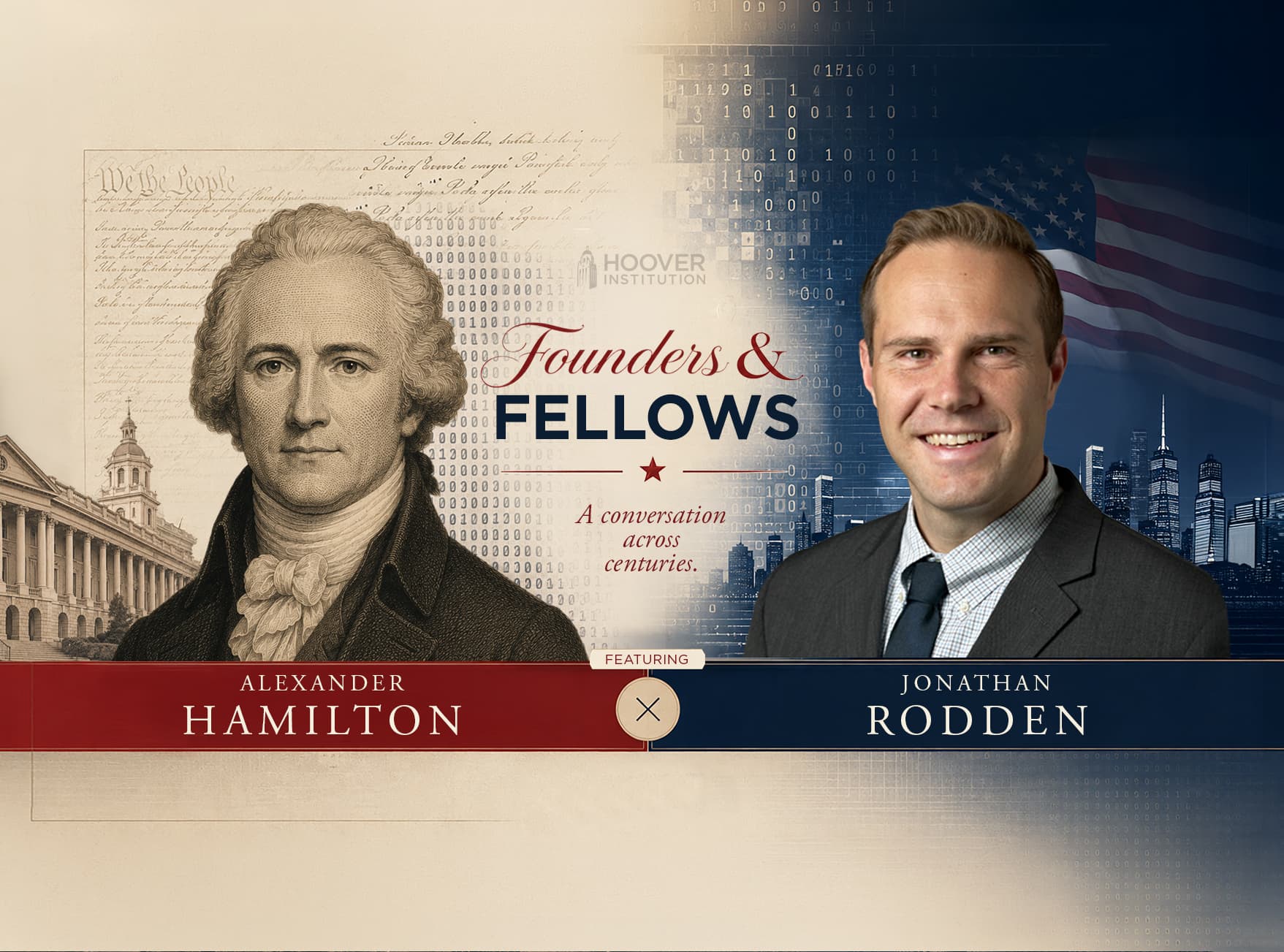
Alexander Hamilton is often portrayed as a driven outsider, a visionary modernist, or a contemptuous, uncompromising agitator prone to devastating but fascinating lapses in judgment—a flawed hero worthy of celebration in song and rhyme.
However, I have come to appreciate Hamilton as something different: 1) an analytical, data-driven scholar of comparative political economy, and 2) a practitioner of principled compromise and forbearance. These contributions are worthy of renewed attention today.
I first came to know Hamilton by reading The Federalist Papers and then moving on to his other speeches and writings about federalism. Hamilton focused on a basic question about institutions and policy: how should administrative and fiscal powers be divided between the central and lower-level governments in a federation?
To answer the question, he relied less on the abstract principles of moral philosophy that guided his contemporaries and more on the analysis of comparative data. He drew inferences from the experiences of the Achaean and Lycian Leagues, the Swiss Confederation, Dutch Republic, Holy Roman Empire, and other leagues and federations. He tried to identify the factors that led some to succeed and others to fail, extracting lessons about the dangers of factionalism, demagogues, and above all, weak and non-credible central governments.
Hamilton used a similar approach to develop his economic ideas, which he set forth in his reports on Public Credit, the National Bank, and Manufactures. His writings about manufacturing, the division of labor, domestic demand, the value of skilled immigrants, and the importance of public credit were rigorous and innovative, and we are still arguing about his notions of industrial policy and protection for infant industries.
Hamilton did not think of politics, economics, and international affairs as separate realms of inquiry. For instance, he viewed commerce as the foundation of the tax base for a strong state that could defend its citizens against outside threats. His approach was rooted in a way of thinking that is clearly identifiable as a precursor to modern political economy. He identified the economic interests of relevant actors and explored how they shaped the formation of political coalitions. He focused not only on the technical efficiency of policies and institutions in the vein of a welfare economist, but also on the extent to which incentives might be properly aligned to generate stability.
A classic example is his argument that by assuming the debts of the states and undertaking new borrowing, the nascent federal government could bind the creditor class to itself and give them a material stake in its survival.
Hamilton’s attention to the interests and strategies of his contemporaries made him an effective negotiator that allowed him to get some, though nowhere near all, of what he wanted in the design of institutions and policies. He often accepted arrangements that he viewed as deeply flawed but 1) better than the status quo, and 2) amenable to improvement in the future. Perhaps the best example is the Constitution itself, which Hamilton characterized as far too decentralized and deferential to the interests of the states. Rather than opposing it, he became a vigorous defender, later ushering in an expansion of federal power via his interpretation of the “necessary and proper” clause, which was eventually accepted by the Supreme Court in McCulloch v. Maryland.
Hamilton presided over one of the most famous bargains in American political history, agreeing to support moving the national capital to the Potomac in exchange for votes to pass his plan to fund the federal government and assume the Revolutionary War debts of the states. He supported an unpopular policy of forbearance toward Great Britain during the Washington administration because he believed war would be too costly. He was able to suppress his enormous personal hostility toward Thomas Jefferson and support him as the better of what he saw as two bad options in the presidential election of 1800.
Hamilton believed passionately in his ideas about institutions and policy and had great confidence in them, but he was able to exhibit impressive strategic restraint and compromise in service of his larger goals of national power, financial stability, and strong republican institutions.
Hamilton’s rational, data-driven analytical approach and his penchant for compromise, coalition-building, and strategic forbearance on matters of statecraft can be easily overshadowed by his tempestuous interpersonal style and utter inability to compromise on matters of honor and reputation. For any academic who has ever attended a faculty meeting, this combination of characteristics is familiar.
But now that we have celebrated the 250th anniversary of the Declaration of Independence, we would do well to focus not on Hamilton’s tumultuous personal life, but on his data-driven analytical style and his ability to compromise and forbear in service of his core beliefs.
First, let us be sober and open-minded about what works and what does not. Let us learn not only from 250 years of data on the American experiment, but also from the much larger global and historical dataset. When we identify institutions and policies that are not working, let us consider bold changes, as did Hamilton and his contemporaries when faced with the weaknesses of the Articles of Confederation.
Second, let us also understand that even when we are confident and passionate about our ideas, we must sometimes form coalitions with bitter enemies when cherished principles are at stake. Hamilton demonstrated that even in a period of polarization and strong emotion, when much is at stake and levels of trust are low, rigorous analysis and principled compromise are still possible. If we wish to preserve a republican form of government, we must sometimes accept second-best compromises, embrace partial victories, and then get back to work.
Jonathan Rodden is a senior fellow at the Hoover Institution, a senior fellow at the Stanford Institute for Economic Policy Research (SIEPR), and a professor of political science in the School of Humanities and Sciences at Stanford University. Rodden’s research focuses on the comparative political economy of institutions. His most recent book is Why Cities Lose: The Deep Roots of the Urban-Rural Political Divide (Basic Books, 2019).