 Powered by
This article is part of Liberty Amplified, a recurring series produced in partnership with the Hoover Institution’s Human Security Project, featuring voices that challenge authoritarianism in pursuit of freedom.
In 1948, during the Berlin Airlift, American pilot Gail Halvorsen began dropping small parachutes of candy to children trapped behind the Soviet blockade. The chocolate kept their hope alive. The children called him the “Candy Bomber.” He called it a reminder that someone, somewhere, still saw them.
When people are disconnected, hope alone cannot reconnect them. They need tools. A knapsack carries necessities—food, bedding, even a book—the small provisions that sustain endurance. Halvorsen’s parachutes once carried chocolate and reassurance. Today, a group of technologists are delivering digital knapsacks, reconnecting the disconnected one satellite at a time.
Founded in 2012 by Mehdi Yahyanejad, NetFreedom Pioneers (NFP) is a Los Angeles–based nonprofit working toward a fully connected world where access to information is not determined by censorship or geography. To restore connectivity, NFP developed two systems: Toosheh (“knapsack” in Persian) Datacasting Technology and the Knapsack Content Station. Together they function much like Halvorsen’s parachutes, providing both the connection and the tools to overcome digital blockades. As Evan Firoozi, NFP’s executive director, explains, “when you have more tools in your shed, you can break more locks.”
Technological resistance
In Iran, information and communication technologies have long served as tools for resistance. During the 2009 Green Movement, early social media platforms helped mobilize dissent. Images such as the killing of Neda Agha-Soltan became enduring symbols. More than a decade later, in 2022, similar images reappeared after the killing of Mahsa Amini by the Islamic Republic’s “Morality Police,” giving rise to the Woman Life Freedom Movement.
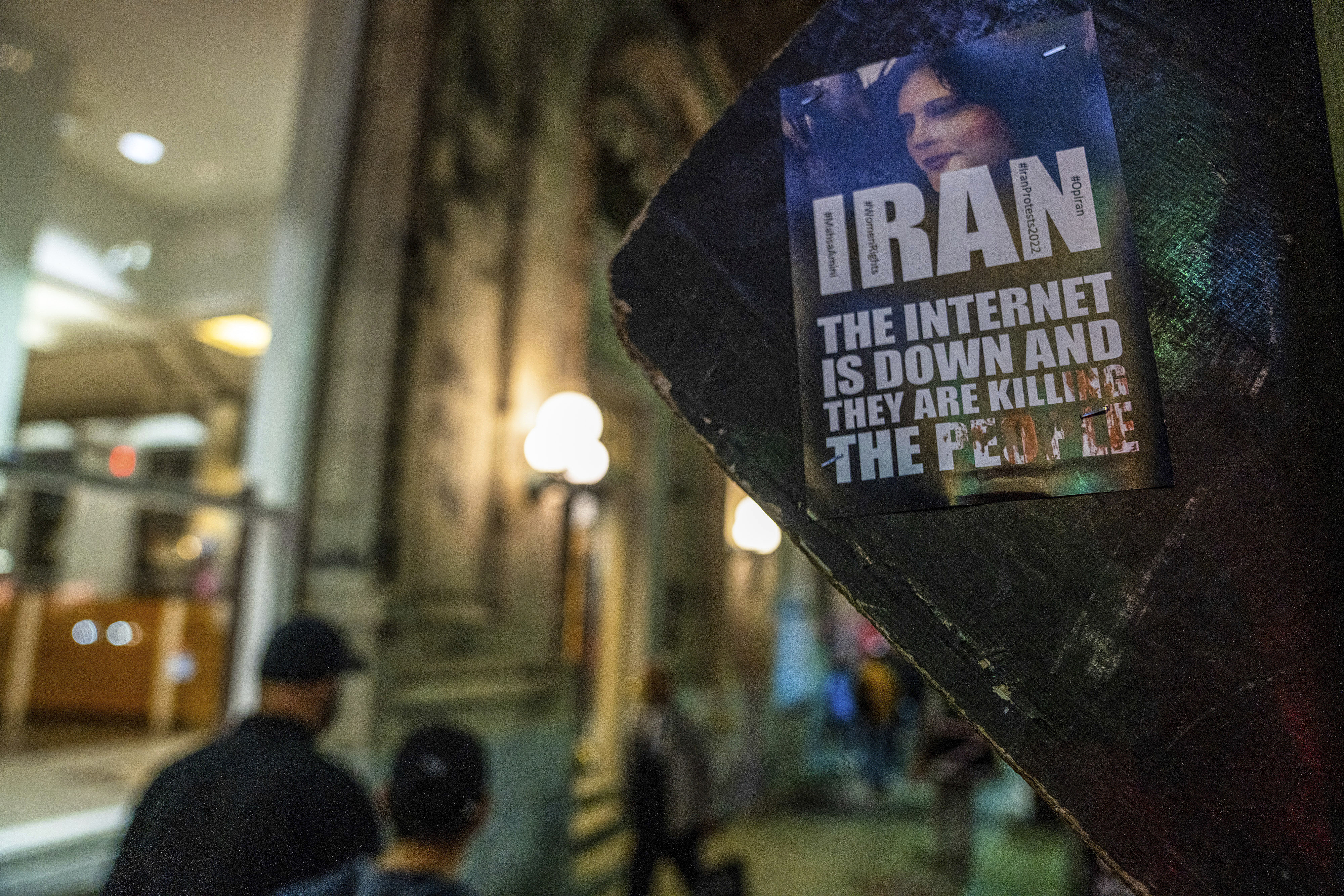
The same technologies have also become targets for regime repression. The Islamic Republic, as political scientists Larry Diamond and Marc Plattner observe, has long maintained power through its control of coercive instruments and its willingness to use them with murderous resolve. Previous Liberty Amplified author Mobina Riazi reveals how such coercion extends into today’s digital political economy in Iran. On Instagram, the Cyber Morality Police (FATA) continue to target women-owned businesses that depend on social media for their livelihood. Still, she concludes, in Iran “fear has increasingly become fuel for the fearless.”
Today, the fearlessness of Iranians persists as the regime’s murderous resolve intensifies. Following a severe devaluation of Iran’s currency, the Bazaaris—Iran’s traditional merchant class—took to the streets on December 28, 2025. Within days, protests spread across all thirty-one provinces. On January 8, authorities imposed an internet blackout and launched an unrelenting crackdown. Since the blackout, graphic videos and testimonies have surfaced, revealing not merely the suppression of protest but also an indiscriminate massacre of protesters. Thousands died.
Although the regime gradually resumed connectivity after the January massacre, the onset of US and Israeli military attacks this past weekend again led the Islamic Republic to impose a near-total internet blackout. Within hours of the attacks, the foreign minister, Abbas Araghchi, insisted that “everything is under control” and assured viewers that “all high-ranking officials are alive.” Araghchi’s claim reveals a regime attempting to sustain itself through the illusion of control—an illusion better described as “delusion” as its security apparatus crumbles and the office of the supreme leader is now vacant.
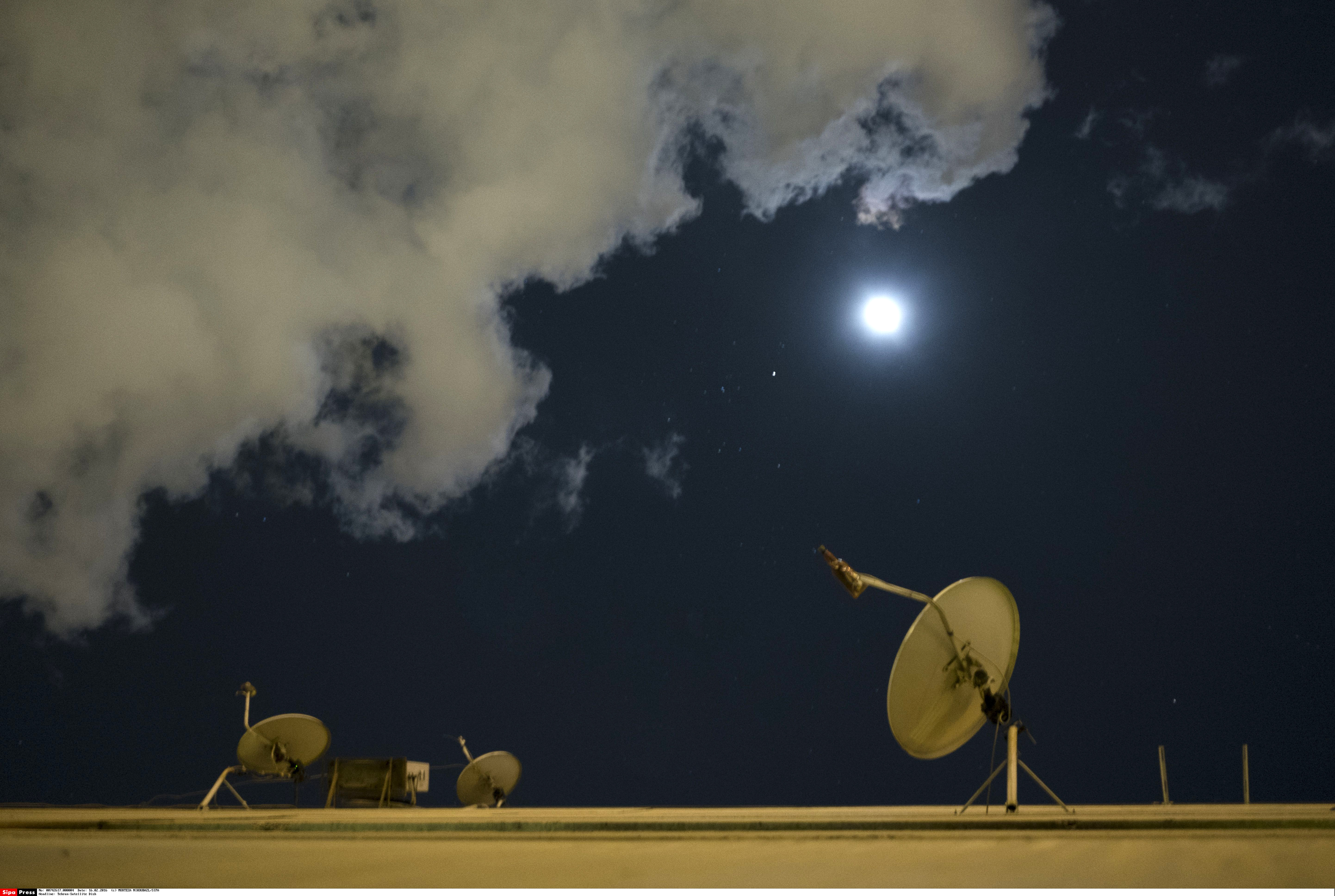
Despite the wartime blackout, televisions remain functional in many Iranian homes where electricity still flows. Satellite dishes—outlawed in 1994 but widely used—remain one of the few infrastructures the state cannot control. NFP’s Toosheh Datacasting Technology was built around that reality.
Piggybacking onto a satellite dish
“We saw a need,” Evan Firoozi recalled. “So, we thought, how can we use the same technology that everyday people are using to deliver data to them? Through that idea, the whole structure of Toosheh came into existence.”
Toosheh builds on what many Iranians already have: free-to-air satellite dishes. NFP’s team gathers useful materials—entertainment, books, tutorials, news, virtual private networks (VPNs), and software updates—and packages them into a digital “knapsack.” Instead of uploading the files online, they are encoded into ordinary satellite TV broadcasts. Anyone with a standard satellite receiver, a USB drive, and the Toosheh application can record the broadcast, extract the files, and access the content offline.
“It works all the time,” Emilia James, director of programs at NFP, explained. “It works during internet shutdowns. . . . We’re talking about satellite TV and mobile devices, things people already have in their households.” And because the signal only sends data outward, without requiring users to transmit anything back, it is untraceable. “We have millions of users,” Firoozi said. “You can’t prosecute millions of people.”
Unlike circumvention tools that require new hardware or an internet connection, Toosheh is inexpensive. No subscription fees. No smuggled hardware. A small technological innovation, built within existing infrastructure, reaching millions at a fraction of the cost.
Knapsacks of opportunity
Even when the internet is not shut down in Iran, Toosheh content deliveries transform the idea of freedom into reality. One user, a traveling teacher carrying Toosheh content into rural villages, recalled showing students videos of women competing in the Olympics. It was “the very first time they saw a female competing on the world stage . . . showing these girls what they can achieve, where they can go, and that the world doesn’t end around their village.”
Another described a formal pre-marriage visit (khastegari in Persian) where he was told he could marry only if he could afford the wedding. He had no job, but he had been learning photography through Toosheh tutorials. Practice became livelihood: “He opened a photo booth and a print shop in his town . . . and through that he was able to rent a place and have a wedding.” There are a lot of similar stories, Firoozi added.
During blackouts, NFP’s content shifts toward tools that help users stay connected to the internet. In January, anti-filters sent through Toosheh helped hundreds of thousands connect.
At a distant school, wider horizons
While NFP circumvents digital censorship with Toosheh, elsewhere it confronts the absence of connection itself. In Oaxaca, Mexico, NFP installed its Knapsack Content Station at a rural school where connectivity was unreliable and expensive. The station included a satellite dish and receiver that acts as a local hotspot, delivering content with Toosheh, and allowing students to access Wikipedia, Khan Academy, and other educational materials offline.
Lessons that once depended on scarce textbooks can now be updated regularly, and students explore subjects their classrooms had never been equipped to teach.
One teacher explained that with access to the material, students gain “a cultural, scientific, humanitarian, and updated formation for better understanding their environment.” Another added that the station “strengthens the process of education” and helps “transform the reality in which the students live.”
Knapsacks of hope
The Candy Bomber did not end the Cold War. He reminded a besieged city that it was still connected to humanity through Hershey’s chocolate bars landing from the sky. In the twenty-first century, the Hershey’s hanging from a parachute is often digital.

From censored cities to disconnected classrooms, NFP is bridging the digital divide by delivering connection through Toosheh Datacasting Technology and the Knapsack Content Station—each designed to empower connection beyond barriers. It calls on us to support nonprofit organizations like NetFreedom Pioneers, whose knapsacks of hope are connecting the disconnected and empowering them, as Firoozi puts it, “to find their way.”
In the words of twentieth-century Iranian poet Parvin Etesami:
In this sanguine sign, two hundred seas are hidden;
from the shore, the ship of victory is already visible.
As internet freedom declines globally, autocracies increasingly depend on the illusion of control—both physical and digital. In Iran, the massacres of this past January and the war now unfolding reveal that the Islamic Republic’s illusion of control has not merely collapsed; it has been buried beneath the Iranian people’s struggle for human rights, dignity, and freedom.
When people can see the horizon, they begin to move toward it. And sometimes, as Etesami reminds us, the ship of victory is already in sight.
Shokufeh Mahini (a pseudonym) works with the Hoover Institution’s Human Security Project.
Liberty Amplified features the voices of those who defy autocracy in pursuit of freedom. It is part of the Hoover Institution’s Human Security Project (HSP) led by Lt. Gen. (Ret.) H. R. McMaster, senior fellow at the Hoover Institution and former national security adviser. The project carries out research into how authoritarian regimes sustain power and how pro-democracy groups and their allies can challenge them to advance liberty. HSP is an educational resource and tool for activists both outside and within those countries.