 Powered by
This article is part of Liberty Amplified, a recurring series produced in partnership with the Hoover Institution’s Human Security Project, featuring voices that challenge authoritarianism in pursuit of freedom.
I remember the day I came home from school and found my parents shaken, calling everyone they knew. I asked what was wrong. My mother told me that a distant relative, a woman, was hospitalized, needing urgent surgery. I asked, “If she’s in the hospital, what’s the problem?” My mother said that her husband has refused to give permission for the surgery.
I grew up in the Islamic Republic of Iran, under its Sharia law, where a woman is legally treated as the property of a male guardian: her husband, father, grandfather, or uncle. Even by law, the life of a woman is worth half the life of a man. I knew this. I had always known it. But I had not fully grasped that a man’s authority could extend to the question of a woman’s life and death while awaiting surgery.
Even though I thought I understood the constraints of that system, it never ceased to find ways to shock me. That night, I went to my room shocked and did not ask what ultimately happened to her. Any outcome felt unbearable: either she would be denied the care she needed, or her life would depend on a reluctant permission. Both possibilities seemed equally absurd. And the absurdity of being a woman in Iran did not end there.
When I left home to attend university in another city, I moved into the university’s girls’ dormitory. In theory, it was a place meant to house female students. In practice, it felt much closer to a prison. The windows of our rooms were covered with metal sheets so that no one could see inside. But those sheets also blocked the sun. No light entered the room. The official explanation was always the same: protection from the male gaze. Yet the anxiety was never only about women’s bodies and visibility, about covering them with a hijab or shielding them behind metal. The deeper anxiety was about women’s movement.
Girls’ dormitories in Iran operate under strict curfews. After 7 p.m., you cannot enter or leave the building. Your mobility, your ability to move through the city, through public space, even through time itself, is tightly regulated.
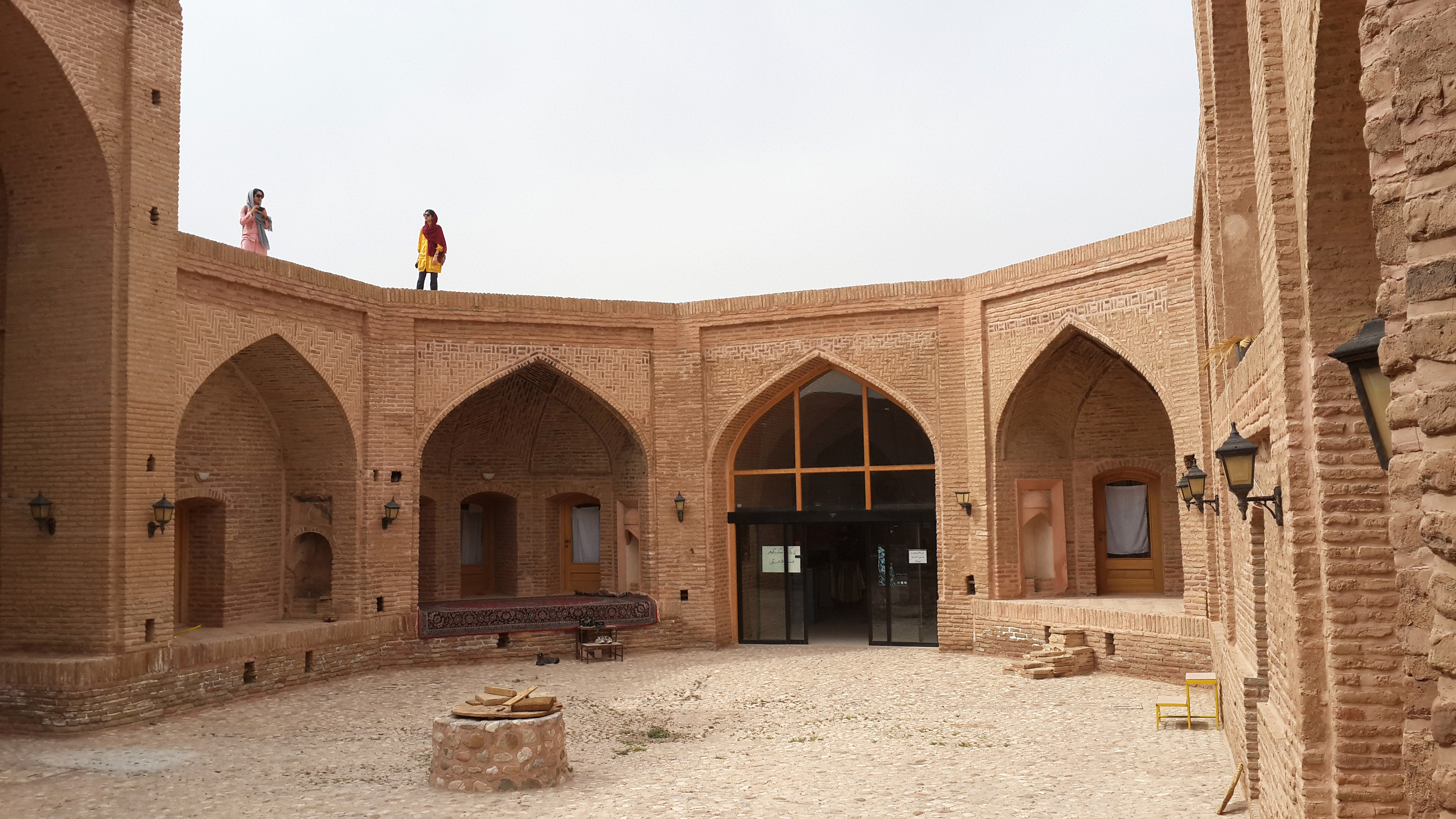
As an architecture student, I often traveled to historical cities across Iran to study buildings and urban sites. I never traveled alone; there was always a female friend with me. But even then, our independence was only partial. My father had to reserve hotel rooms for us in advance. By law, a woman cannot book a hotel room on her own in Iran. The system assumes that a woman without male authorization is inherently suspicious.
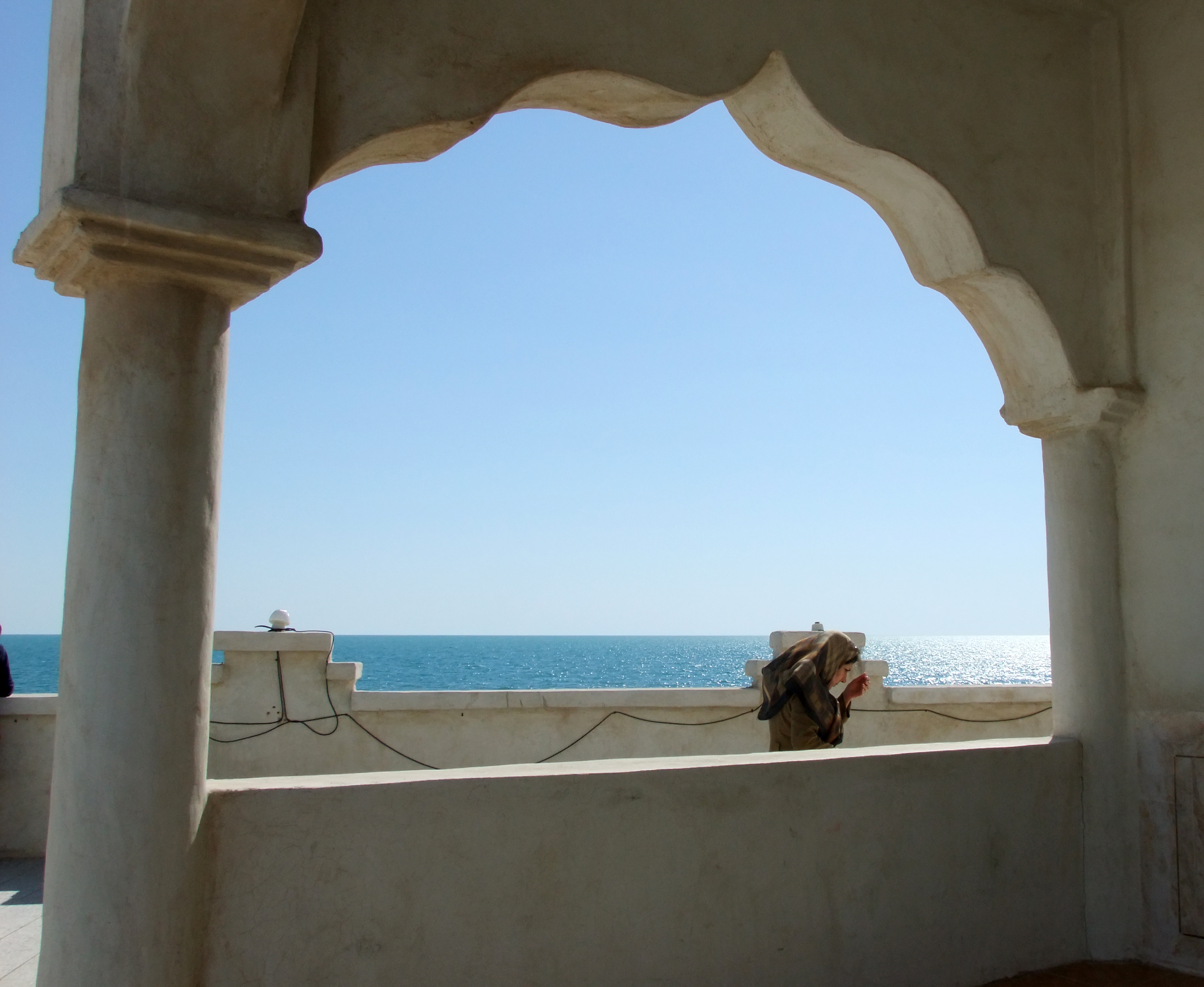
Even arriving in a city could become a problem. You had to calculate time carefully. If you reached Isfahan at five in the morning or Kerman at nine at night, finding a taxi was nearly impossible. A woman outside at the “wrong” hour immediately became a source of concern, someone who did not belong in public space. Cities existed, but not equally for everyone. For women, movement through space was never simply movement; it had to be justified, monitored, and carefully timed.
In a regime like the Islamic Republic of Iran when the state tries to dictate every aspect of everyday life, everyone is potentially at all times a dissident.
No one sets out to become a dissident. One becomes one simply by living as a thinking, choosing human being.
To be born a girl in such a system is to confront, from the very beginning, a structure that questions your autonomy and equality. You quickly learn that you are considered secondary, excessive, someone who does not fully belong in spaces of visibility, or authority. For the Islamic regime, this lesson must be taught early. From childhood, girls are trained to understand where they are allowed to exist and where they are not.
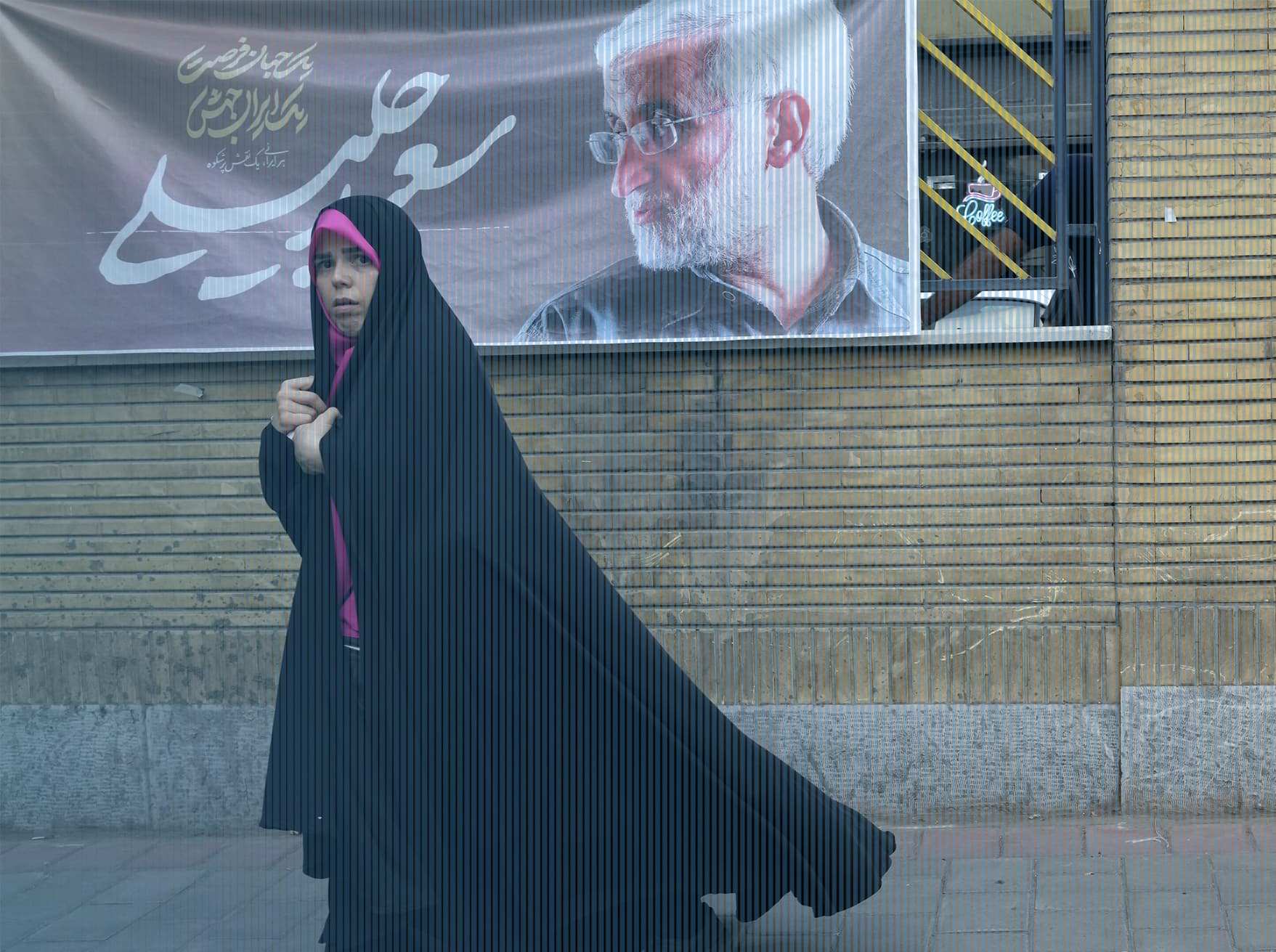
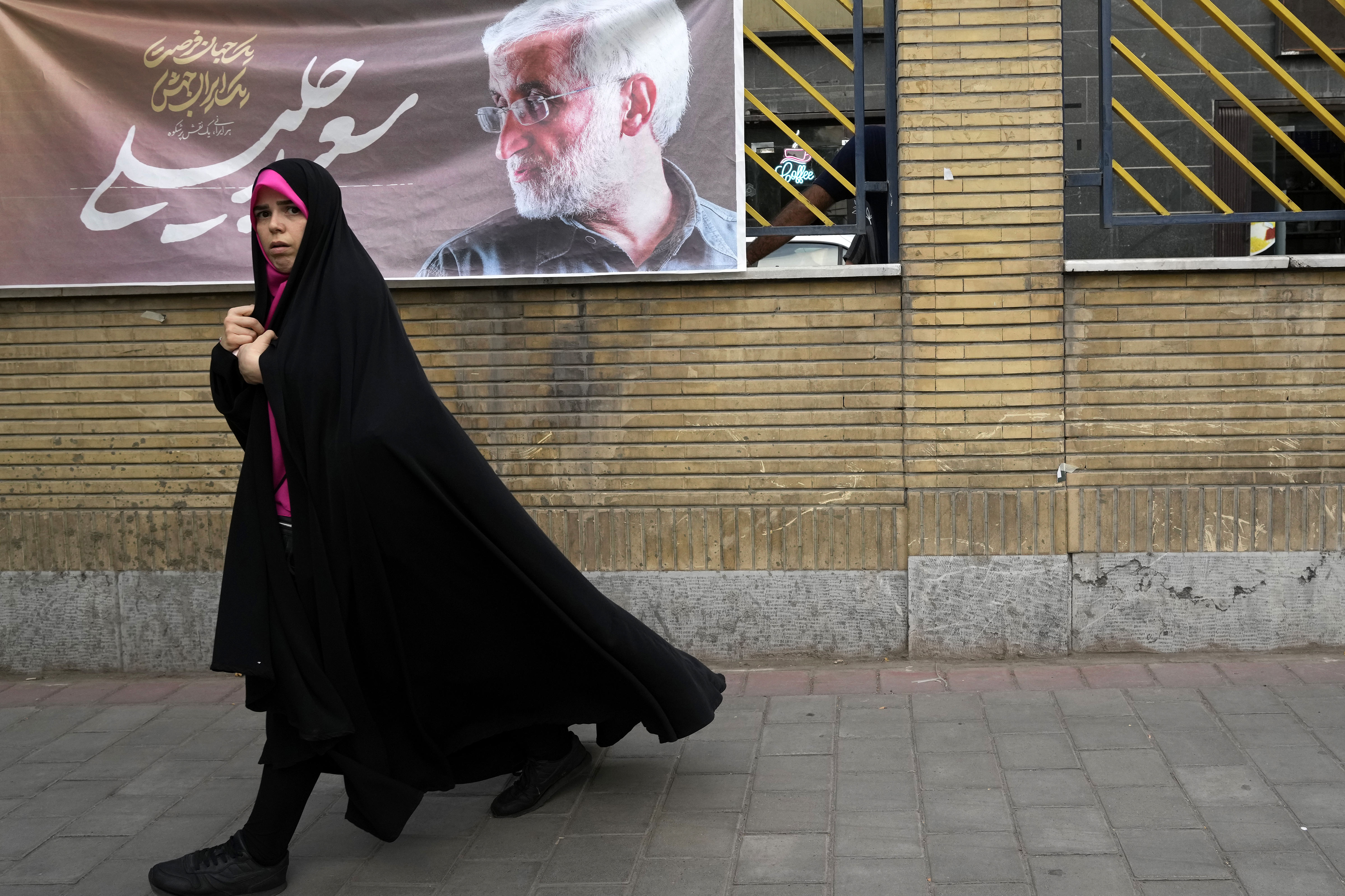
Through laws, schools, dress codes, and the constant regulation of bodies and movement, the system works to teach you that public space is not yours. It is something you occupy only conditionally, temporarily, and under supervision.
As the recent uprisings in Iran unfolded, my friend—now also in exile—told me she longs for the day she can return to a free Iran and, for the first time, walk the streets without the fear of the “morality police.”
Breaking free
When my sister was eleven, she won first place in a science competition. At the award ceremony, the governor presented prizes to the top students: a boy who ranked first among the boys, and my sister, who ranked first among the girls. The boy received a bicycle. My sister was given a sewing machine. The message was unmistakable. Movement, speed, and the open road were for boys. Girls, even when they excelled in science, were steered back toward the domestic sphere—toward immobility, toward sewing, toward the home. It did not matter how bright she was. What mattered was the role they had already chosen for her.
She earned admission to one of Iran’s top polytechnic universities, Amir Kabir, through the national entrance exam. In a class of more than fifty students, only a handful were women. Coming from southern Iran, she chose petroleum engineering so that she could return and work in our hometown, Bandar Abbas, which sits on one of Iran’s largest oil and gas reserves. Throughout her studies, she faced constant misogynistic behavior, yet she excelled academically and graduated at the top of her class. She entered the master’s program directly as the highest-ranked student.
After graduation, however, she struggled to find a job because she was a woman, despite her outstanding qualifications. The oil refineries were state-run, and authorities deemed them unsuitable workplaces for women. She refused to accept that verdict. Instead, she left Iran for Brussels, earned a second master’s degree in data science, and rebuilt her life from the ground up.
Today she works successfully in the Netherlands. They tried to confine her to a sewing machine; she crossed borders instead.
Women without borders
The state attempted to regulate women’s movement, restricting where they could go, how they could live, and what futures they were permitted to imagine. But many of the women it tried to confine refused to remain within those boundaries. They crossed borders—geographical, intellectual, and political. In doing so, they transformed the condition of imposed confinement into a form of global mobility, carrying the voices and experiences of Iranian women beyond the limits the state had tried to impose.
But not everyone had the privilege or the family support to endure and transcend that kind of pressure. Many were never given the conditions that make strength possible. For some, the struggle began at home. The family could become the first totalitarian regime a child encountered, the first space of surveillance, control, and restriction. Many girls were denied the right to education or to travel freely. Some were forced into marriage at a young age.
And yet Iranian women found ways to resist. From within the very spaces meant to contain them, they carved out alternatives for liberty. With internet access, they connected with others from their homes and sold handmade crafts and artwork. What began as a way to earn money soon became strategies of autonomy. Financial independence opened the door to something larger: a voice, visibility, and agency. They did not wait for permission. They created opportunities and crossed borders, visible and invisible.
Mohadeseh Salari Sardari grew up in Bandar Abbas, southern Iran, and trained as an architect in Iran before pursuing her PhD in the United States. She is completing her dissertation, Literary Selves and Architectural Space, in the Department of History of Art and Architecture at Brown University. Her research explores the intersections of architecture, literature, gender, and spatial politics in modern Iran. She is currently a lecturer in Stanford University’s Department of Comparative Literature and has worked with museum collections and exhibitions at institutions including the Museum of Fine Arts, Boston, and the RISD Museum. Her work on Iranian literature, art, and culture has been published in both Persian and English.
Liberty Amplified features the voices of those who defy autocracy in pursuit of freedom. It is part of the Hoover Institution’s Human Security Project (HSP) led by Lt. Gen. (Ret.) H. R. McMaster, senior fellow at the Hoover Institution and former national security adviser. The project carries out research into how authoritarian regimes sustain power and how pro-democracy groups and their allies can challenge them to advance liberty. HSP is an educational resource and tool for activists both outside and within those countries.