 Powered by
By Ayaan Hirsi Ali
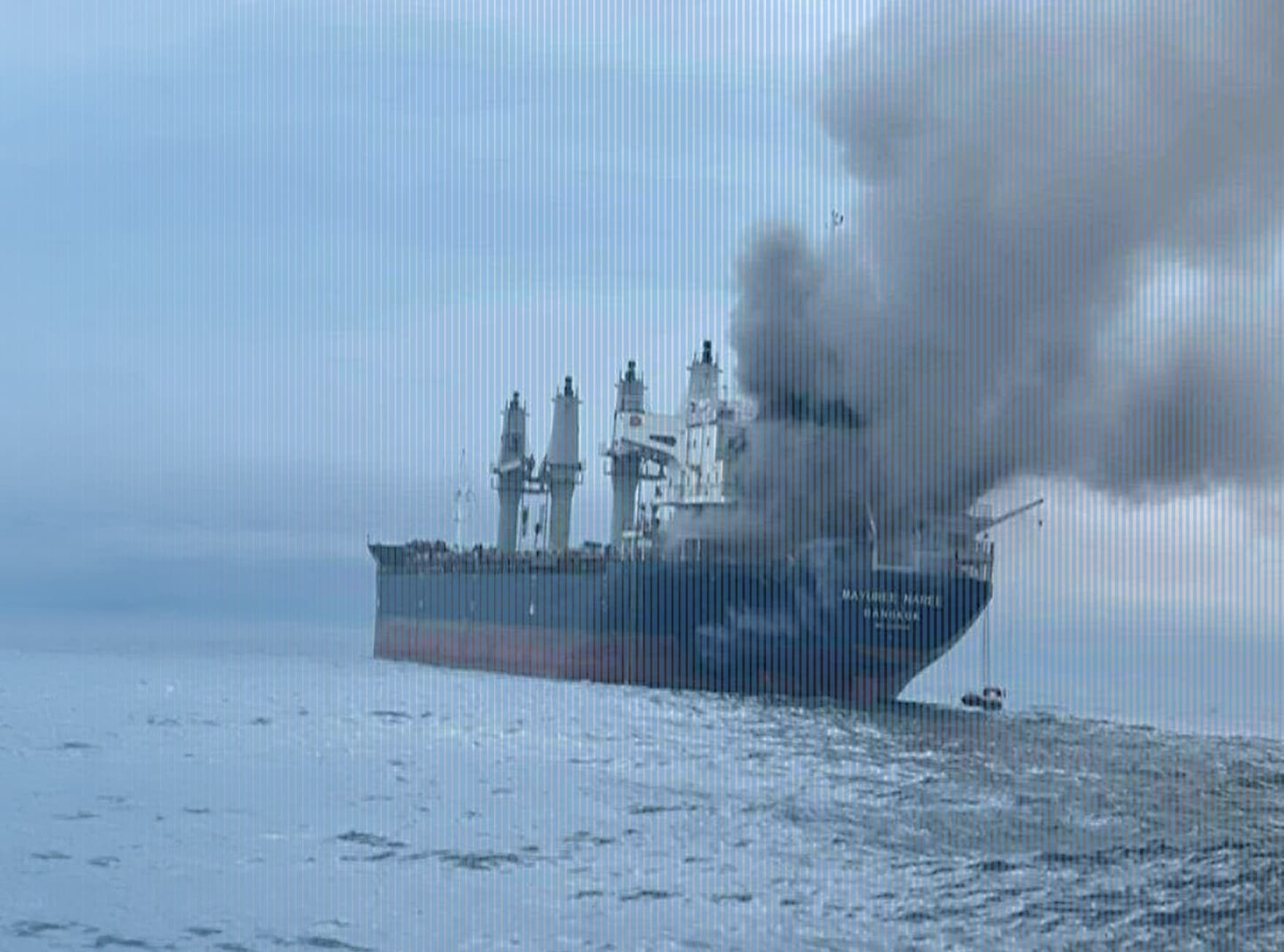
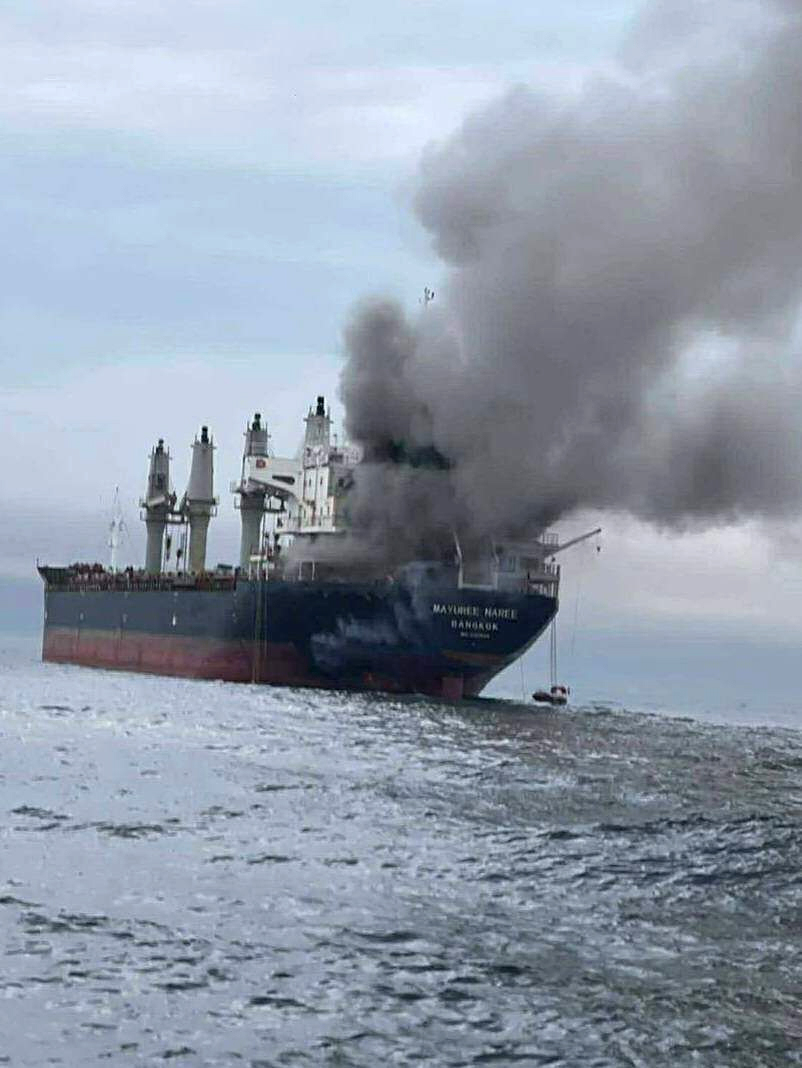
On Tuesday evening, President Trump announced a two-week cease-fire with Iran, pulling back from strikes he had threatened would kill “a whole civilization.” The deal asked one thing of Tehran: reopen the Strait of Hormuz. Tehran appeared to agree. By Wednesday morning, the strait was closed again.
Anyone acquainted with this regime’s forty-seven-year record of treating agreements as tactical instruments rather than binding commitments should have seen this coming.
The pattern holds across decades. Iran signed the 2015 nuclear deal and ran parallel enrichment programs. It agreed to the June 2025 cease-fire after the Twelve-Day War and launched missiles at a US base in Qatar the same evening. Tuesday’s agreement had barely taken effect when Iranian drones began striking Gulf Arab states. Kuwait intercepted 28 Iranian drones in a single day; the UAE intercepted 35. A fire broke out at Abu Dhabi’s Habshan gas complex. A Saudi pipeline took a direct hit. Iran’s Supreme National Security Council issued a statement that same day, warning that their “hands are on the trigger, and the moment the enemy makes the slightest mistake, it will be met with full force.”
The diplomatic confusion surrounding the deal was equally deliberate. Iran spent weeks refusing to reopen the strait while wielding it as leverage, then agreed to open it at the final hour before Trump’s deadline—and closed it again within hours. Iran’s foreign minister announced that ships wishing to pass would need to coordinate with Iran’s military, that passage would be subject to limitations, and that Tehran intended to charge tolls for transit through what the rest of the world considers international waters. President Trump has flatly refused.
The strait, through which 20 percent of the world’s oil passed before the war, remains a chokepoint in Iranian hands—and Washington is now in the position of negotiating with the regime that seized it over the terms of its release.
That negotiation begins Saturday in Islamabad. It is worth pausing to consider what that means. The United States, the world’s pre-eminent military power, is flying its vice president to Pakistan to ask a sanctioned theocracy to honor the one condition it already agreed to and immediately broke.
A regime that behaves this way on the opening day of a cease-fire is not a negotiating partner but a direct and active threat to American interests, to the free flow of global commerce, and to every Western government that has spent years consoling itself with the belief that Tehran’s ambitions are ultimately negotiable. They are not.
The ideology driving this regime was not formed at a bargaining table and will not be dissolved at one.
The Islamic Republic of Iran doesn’t pursue foreign policy in the way France or Japan does. Its ambitions are theological before they are geopolitical. The constitution of 1979 established a divine mandate as much as a government. The supreme leader is an earthly vessel of God’s will, bound by doctrine to advance the eventual return of the Hidden Imam and, with him, the global reach of Islamic governance. When the regime funds Hezbollah, arms the Houthis, and trains Shia militias across countries, it is assembling, piece by piece, the architecture of a caliphate.
A cease-fire doesn’t dissolve the ambition. To think otherwise is to read a tactical retreat as a strategic surrender.
Going underground
After the death of Supreme Leader Ali Khamenei in late February, intelligence officials intercepted encrypted communications originating in Iran, believed to contain “operational triggers” for “sleeper assets” positioned inside the United States. Since 2021, more than 2,500 Iranian nationals have been arrested inside the United States.
The threat has already crossed from intelligence cables onto Western streets. Last month, a gunman opened fire at an Austin bar while wearing the emblem of the Islamic Republic. Germany, Europe’s economic powerhouse, is now confronting Iranian operatives already embedded on its soil. In late March, French authorities prevented an attack on an American bank linked to a pro-Iranian group.
A two-week truce deactivates none of the networks, none of the cells, none of the instructions already in circulation. The attention lavished on the Strait of Hormuz, on oil prices, on the mechanics of a “definitive” agreement for long-term peace, is understandable. These are visible, measurable things. What is less visible, and therefore far more dangerous, is where the Islamist project migrates next.
Iran’s Shia proxy network has been comprehensively degraded. Hezbollah has been weakened. The Houthis are under sustained pressure. On the Sunni flank, Al-Qaeda and ISIS have faced years of military attrition. The Muslim Brotherhood has encountered significant political headwinds from Riyadh to Cairo. Even Saudi Arabia, home to Mecca and Medina, is no longer the reliable incubator of Wahhabist radicalism it once was. Mohammed bin Salman, the Saudi crown prince, is not a liberal—the distinction between modernizing and westernizing matters, and serious historians debate it—but his Vision 2030 has deliberately throttled the religious establishment that exported extremism for decades.
So where does radical Islamism go when its traditional territories contract? It goes where resistance is lowest, and resistance in Europe has never been lower.
New lands to conquer
The map was drawn long before this moment. Since the abolition of the Ottoman caliphate in 1924, Islamist intellectuals have pursued a project that measures progress in generations. Their strategy relies not only on force but also on patience, demographics, institutional capture, and the manipulation of the language their host societies love most. In Europe, that language is the language of rights, inclusion, diversity, and victimhood. It is a language the left has refined over decades, and Islamists have learned to weaponize with remarkable precision.
The sociologist W. I. Thomas observed in 1928 that if men define situations as real, they are real in their consequences. Islamist networks in Europe have turned that observation into an operating manual. Convince Western institutions to accept the label “Islamophobia,” and scrutiny becomes bigotry. Convince them to treat integration as cultural imperialism, and assimilation becomes oppression. Convince them to read every security measure as a racial grievance, and the apparatus designed to monitor extremism begins to dismantle itself. The situation, once framed, produces exactly the consequences the framing was designed to produce.
Across Europe, those consequences are now visible. Several mosques and Islamic centers operate under direct Iranian control. Britain’s Metropolitan Police have actively pursued diversity recruitment under frameworks that group all nonwhite communities under a single umbrella—a bureaucratic convenience that, in practice, blurs the distinction between Muslim communities living peacefully and Islamist networks with explicit political agendas. When an institution as powerful as a national police force cannot make that distinction, it has already lost the fight it was built to win. The very people hired to protect may be among those least inclined to do so.
Europe is not short of blueprints for how this ends. Recep Tayyip Erdoğan—the man who famously said that “democracy is like a tram,” and that you get off when you reach your destination—is the prototype, not the exception. His Turkey demonstrates that democratic mechanisms are entirely compatible with the erosion of democratic norms. Elections, courts, police forces, and civil services can all be captured incrementally, each step defensible on procedural grounds. The destination is not, and has never been, democracy. The streetcar just happens to run through it.
Most Muslims in Western countries want what everyone wants: jobs, schools, safety. They are beside the point. The threat is the organized movement that seeds itself among them, thrives on the confusion, and hides behind Muslim identity, secure in the knowledge that the West will protect its own sensitivities long before it protects its own streets.
What awaits American diplomats in Islamabad on Saturday is a government that has spent nearly half a century demonstrating exactly how much its commitments are worth.
The cells are in place. The networks are embedded. The cultural project advances through the West’s own institutions, sustained by a tolerance it has no intention of reciprocating. A cease-fire between governments does nothing to interrupt any of that. The regime in Tehran has never needed a war to pursue its objectives. It has always been far more patient than its adversaries, and far more candid in its own councils and its own doctrine about where all of this ends.
An ominous intermediary
The choice of venue compounds the problem. Pakistan brings its own nuclear arsenal, its own ideological sympathies, and a track record of playing both sides against Washington.
Publicly, it accepted tens of billions in aid and presented itself as a counterterrorism ally after 9/11. Privately, elements of its military and intelligence services sheltered groups like the Taliban, allowing them to regroup and strike US forces in Afghanistan. Through the Bush and Obama years, American diplomats were led around the garden while Osama bin Laden lived comfortably in Abbottabad, less than a mile from Pakistan’s premier military academy. The ISI knew. The government knew.
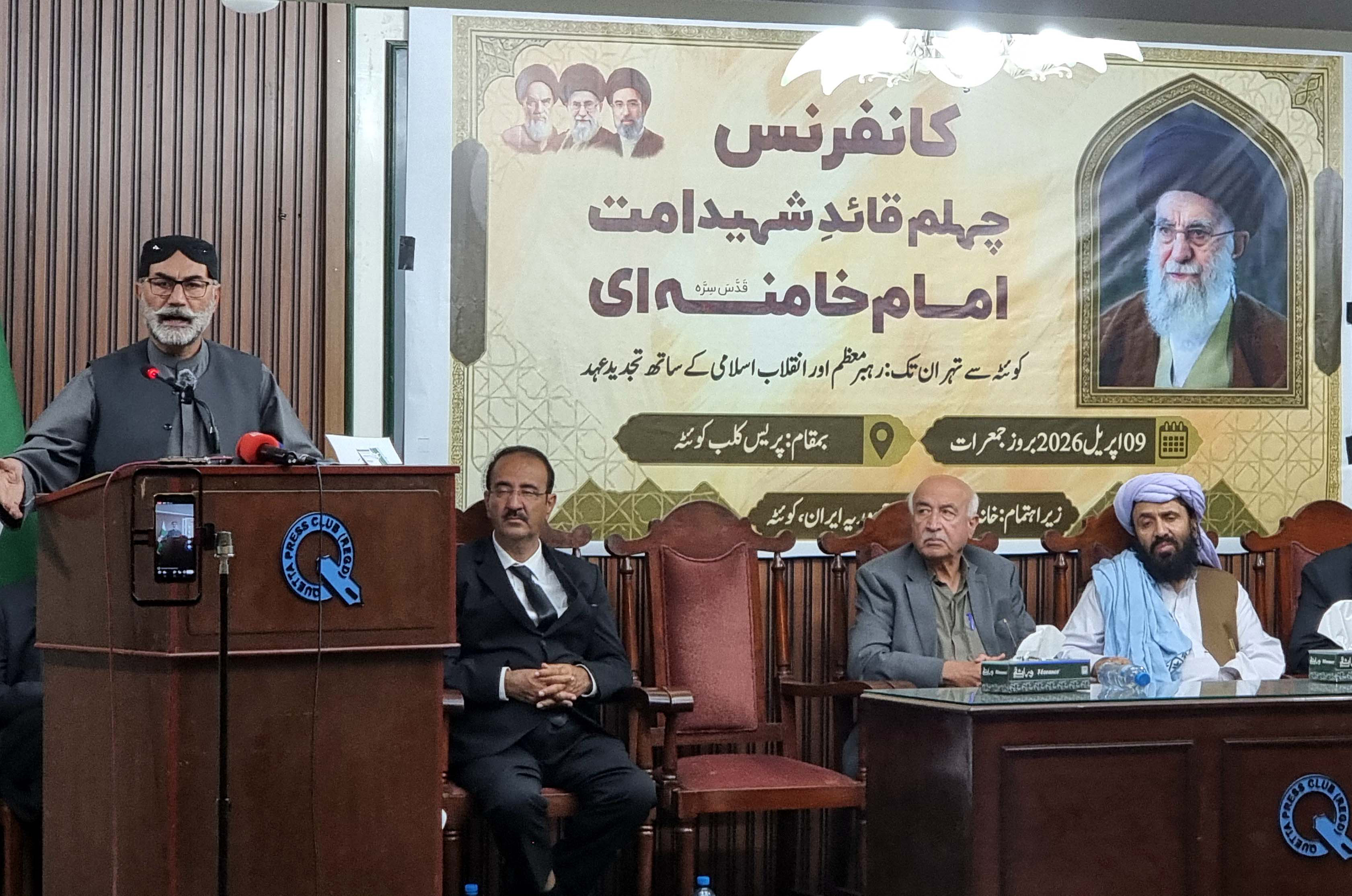
These are the intermediaries the United States has chosen to broker a deal with the Islamic Republic of Iran. Every sensitive exchange that passes through Islamabad passes through a government with its own agenda, its own back channels to Beijing, and a forty-year habit of telling Washington what it wants to hear while pursuing exactly the opposite.
By the time anything from Saturday’s talks reaches an American hand, it will have passed through Tehran’s calculation, those same Pakistani interests, and Chinese intelligence services. For this reason, among many others, the question Saturday is not what Washington will gain but what it will give away in the process.
Ayaan Hirsi Ali is a research fellow at the Hoover Institution and founder of the AHA Foundation. Her latest book is Prey: Immigration, Islam, and the Erosion of Women’s Rights (HarperCollins, 2021). She also writes at her popular Substack, Restoring the West.