 Powered by
This article is part of Liberty Amplified, a recurring series produced in partnership with the Hoover Institution’s Human Security Project, featuring voices that challenge authoritarianism in pursuit of freedom.
War is simply the continuation of political intercourse with the addition of other means. The main lines along which military events progress, and to which they are restricted, are political lines that continue throughout the war into the subsequent peace.
— Carl von Clausewitz, On War
The distinction between winning a war and resolving one is where strategic ambition has most often outrun strategic design.
Credible military force is fundamental to deterrence and often provides the leverage that enables diplomacy. Throughout modern history, in fact, diplomacy has rarely functioned in its absence.
The United States has repeatedly demonstrated military capacity at a level no other nation can match. But success in the application of force does not, on its own, produce political outcomes. Without a coherent answer to what follows, it remains incomplete. The issue is not whether the strike worked, but what comes next, who builds it, and whether the conditions that generated the threat have been altered or merely disturbed.
This essay is about the gap between kinetic success and institutional resolution, between the end of the strike and the beginning of what must follow.
The commander dies; the network survives
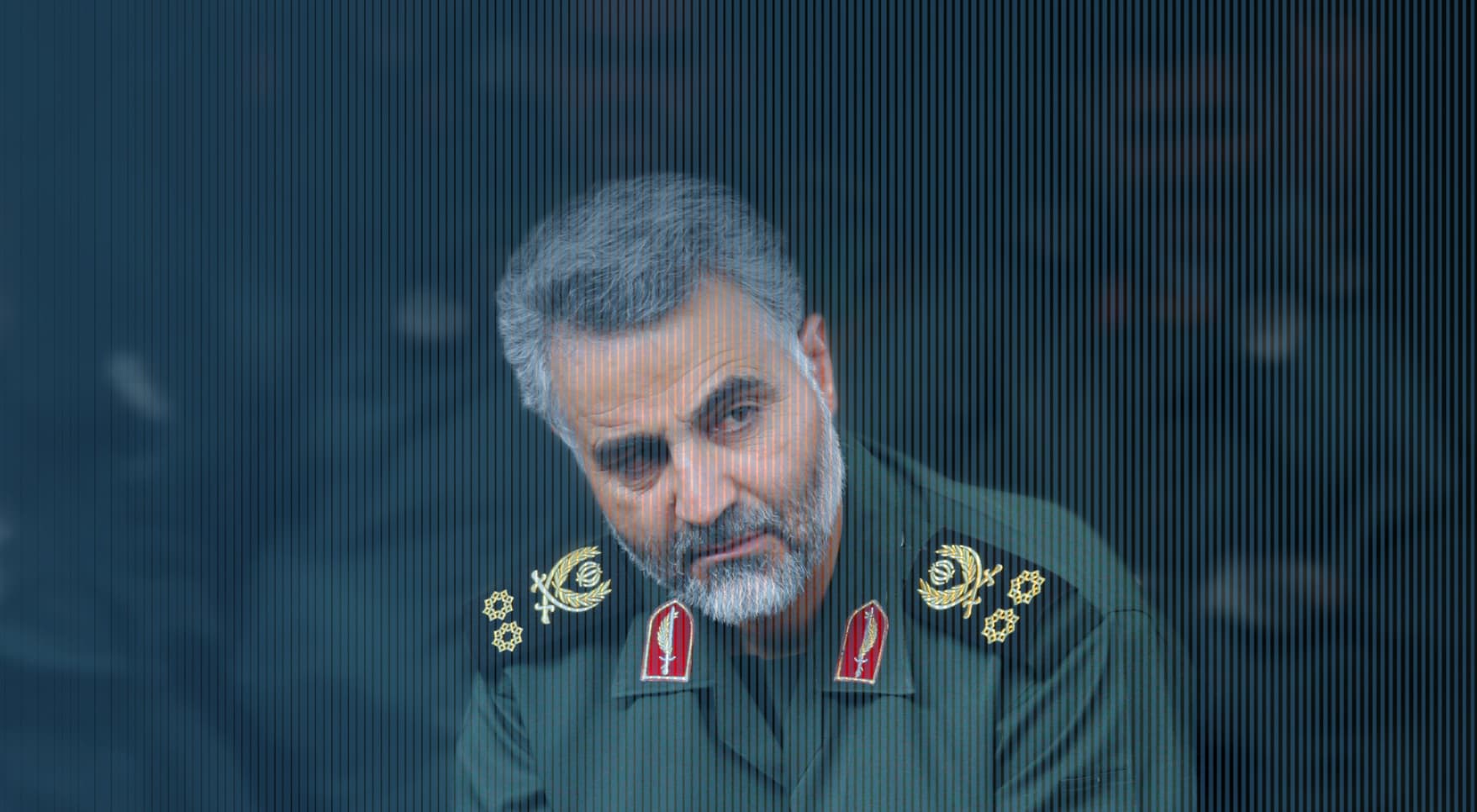
The 2020 US strike that killed Iranian Quds Force commander Qassem Soleimani showed both the reach of US military power and the limits of decapitation as a strategy. Soleimani was more than a battlefield commander. He spent decades building relationships in Iraq, Syria, Lebanon, and Yemen. He managed finances, coordinated militias, and linked Iran’s regional network.
His removal was tactically decisive, but the system he helped build endured. For the next five years, violence across the region would demonstrate exactly how much.
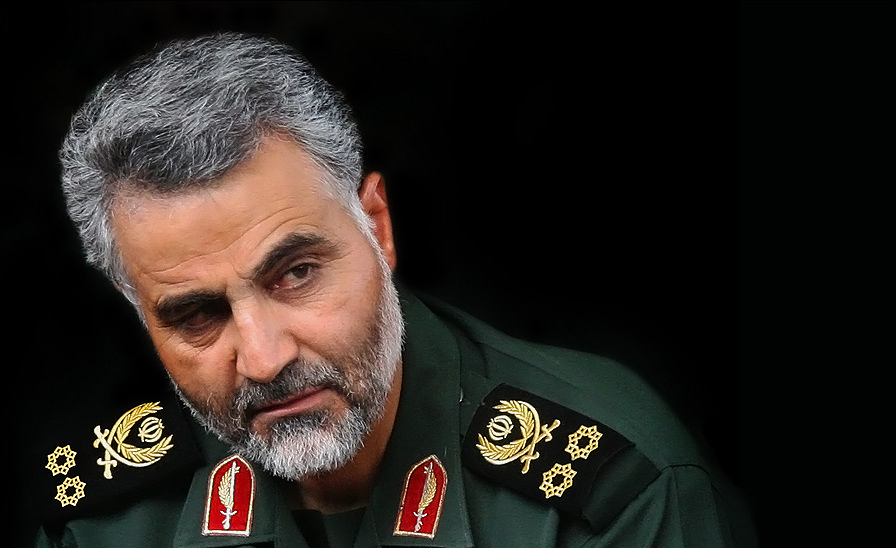
The network did not wait.
Five days after Soleimani’s death, Iran launched ballistic missiles at two Iraqi bases housing US troops—the largest direct missile attack on American forces in history. The system had not been decapitated. It had been provoked.
What followed over the next four years was not chaos-driven escalation. Rather, it showed the steady operation of what Iran and its partners call the Axis of Resistance. This coalition includes Hezbollah in Lebanon, Hamas in Gaza, Houthis in Yemen, and Iranian-backed militias in Iraq and Syria. Soleimani had spent decades building this network. From 2020 to 2024, these militias conducted hundreds of drone and rocket attacks on US military positions in the region. The attacks did not stop—they evolved and intensified.
Then came October 7, 2023. Hamas launched a large-scale, coordinated attack in Israel. The network responded as it was built to do. Hezbollah and Israel exchanged sustained fire along Israel’s northern border. The Houthis expanded attacks into the Red Sea, disrupting global shipping and drawing in US naval assets. Iranian-backed militias intensified operations, carrying out more than 170 attacks on US positions in Syria, Iraq, and Jordan in the months that followed.
In January 2024, a drone strike killed three American service members at Tower 22 in Jordan.
These events did not depend on direction from a single individual. They reflected the strength of a system built over decades that can operate across multiple fronts, with each part functioning independently.
Decapitation
The Soleimani strike fits a broader pattern within US military operations. Over the past two decades, the United States has removed Saddam Hussein, Abu Musab al-Zarqawi, Osama bin Laden, and Abu Bakr al-Baghdadi. Each operation achieved its tactical objective and contributed to deterrence or disruption. None, however, proved sufficient to produce durable regional stability.
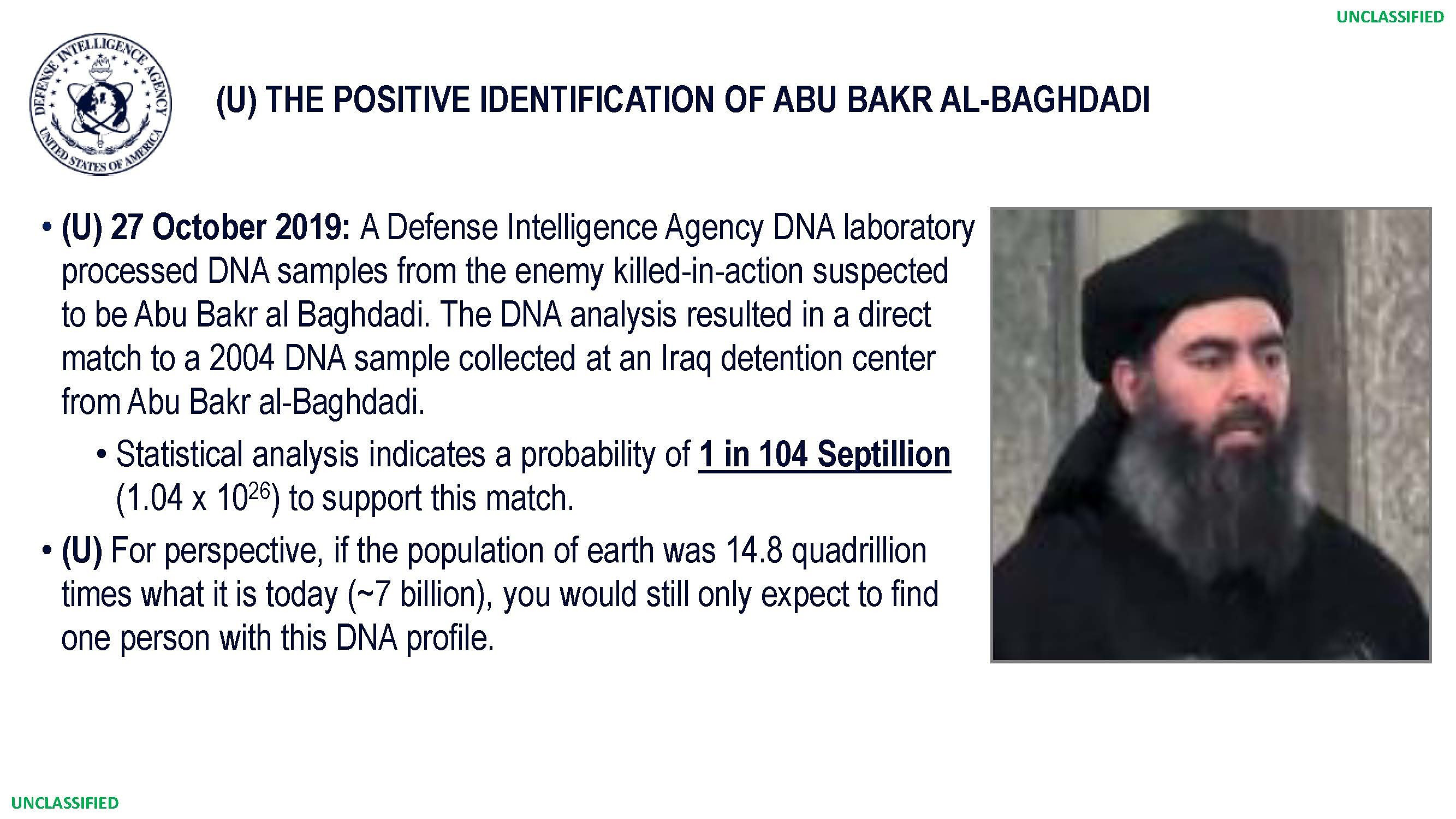
The ISIS case clearly shows the limits. After Abu Bakr al-Baghdadi was killed in October 2019, ISIS quickly named a new leader, Abu Ibrahim al-Hashimi al-Qurayshi. In January 2022, ISIS launched a large-scale attack on a detention facility in northeastern Syria, involving hundreds of fighters and triggering a multi-day battle that required US air support and ground intervention alongside the Syrian Democratic Forces. The assault resulted in hundreds of deaths and underscored the group’s continued operational capacity. Weeks later, Qurayshi was killed in a US raid. His successor, Abu al-Hassan al-Hashimi al-Qurayshi, died in battle in southern Syria later that year.
Three ISIS leaders were removed in three years. The organization did not dissolve. It adapted, decentralized, and continued operating in both Iraq and Syria, as well as through global affiliates.
The question was not whether targeting worked, but whether it was enough. It was not a conclusion; it was a transition of leadership.
Built to last
The endurance of militant networks is not accidental. It reflects how they are constructed.
Hezbollah is the clearest example. Since 1982, it has evolved into a political actor, social welfare system, and security force within Lebanon’s Shia community. Its hospitals, schools, and financial networks generate both dependency and legitimacy—assets that do not vanish with a leader’s death. These losses are quickly reframed as martyrdom, reinforcing legitimacy and sustaining recruitment.
Hassan Nasrallah’s death in 2024 was a major disruption, exposing internal strain and growing fatigue among constituents. Yet Hezbollah did not collapse. Its political, social, and military structures endured. It is built to survive decapitation.
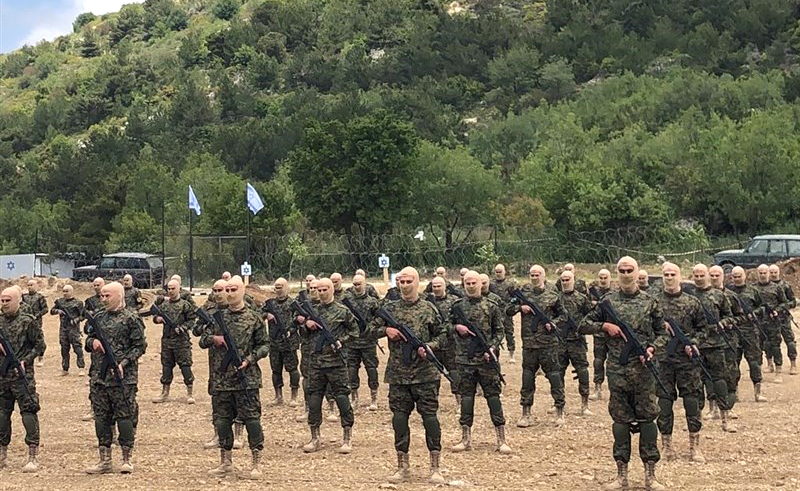
Military force cannot fill the governance vacuum that made the organization possible in the first place. Emerging technologies accelerate this dynamic. Institutional knowledge is distributed across networks, continuously reproduced, and resilient to leadership loss.
The missing middle
Military force can remove power, but it cannot determine what replaces it. This is the persistent gap in strategy.
Post-2003 Iraq illustrates the problem. De-Ba’athification removed regime loyalists along with the administrative capacity needed to run the state, producing not just political disruption but institutional collapse. That collapse created a structure of grievances that militant groups could exploit. This was a strategic failure. The regime was removed, but the causes of instability remained.
But the absence of the “middle” is not inevitable. In northern Syria, I saw a different version of this space. Kurdish partner forces did not ask first for ideology or long-term political guarantees. They asked for the basics: food, uniforms, medical supplies, and reliable resupply. What they required was not abstract support, but dignity—predictable, tangible proof that they were not alone.
Timely resupply was not logistics alone; it was a signal, demonstrated commitment, built trust, and reinforced cohesion in situations where abandonment had historically been the norm. In those moments, American strength wasn’t measured in strikes but in reliability.
Where that reliability exists, space stabilizes. Where it does not, actors adapt, often in ways that undermine long-term US interests.
The absence of a post-conflict framework does not create a vacuum. It creates something more dangerous: a marketplace. Armed groups, sectarian networks, and external actors compete to fill the void, often more quickly and effectively than state-building efforts ever could. These systems are not temporary. They harden. They govern. And they endure.
What is often described as transitional justice attempts to address this space: rebuilding institutions, establishing accountability, and managing the reintegration of former regime elements. Its record is uneven, but the alternative is not neutrality—it is collapse. In this area, collapse is not a pause in conflict; it is the opening phase in preparation for the next one.
The missing middle is not a technical oversight. It is the decisive terrain of modern conflict. And until strategy accounts for what comes after force, military success will continue to produce political failure.
In the end, people do not align with power. They align with who shows up.
What comes after
Without investment in governance, economic recovery, and institutional capacity, the removal of a regime or network does not produce stability. It creates a competition for control that illiberal actors are often better prepared to win. Across the Middle East, millions remain displaced by war, including many of the professionals required to sustain functioning institutions. Wars can remove regimes in months. Rebuilding administrative capacity takes decades.
Post-conflict strategy extends the use of force beyond the moment of the strike. Removing a threat without addressing the conditions that produced it leaves those conditions intact.
Liberty is not a byproduct of victory. It must be built deliberately, institutionally, and within a window that closes faster than strategy typically allows. Without that effort, kinetic success risks becoming a mirage: repeated, persuasive, and ultimately unresolved.
Carey Zott (a pseudonym) is a US national security practitioner with operational experience in the Middle East. The author writes on US policy, military operations, and diplomacy.
Liberty Amplified features the voices of those who defy autocracy in pursuit of freedom. It is part of the Hoover Institution’s Human Security Project (HSP) led by Lt. Gen. (Ret.) H. R. McMaster, senior fellow at the Hoover Institution and former national security adviser. The project carries out research into how authoritarian regimes sustain power and how pro-democracy groups and their allies can challenge them to advance liberty. HSP is an educational resource and tool for activists both outside and within those countries.