 Powered by
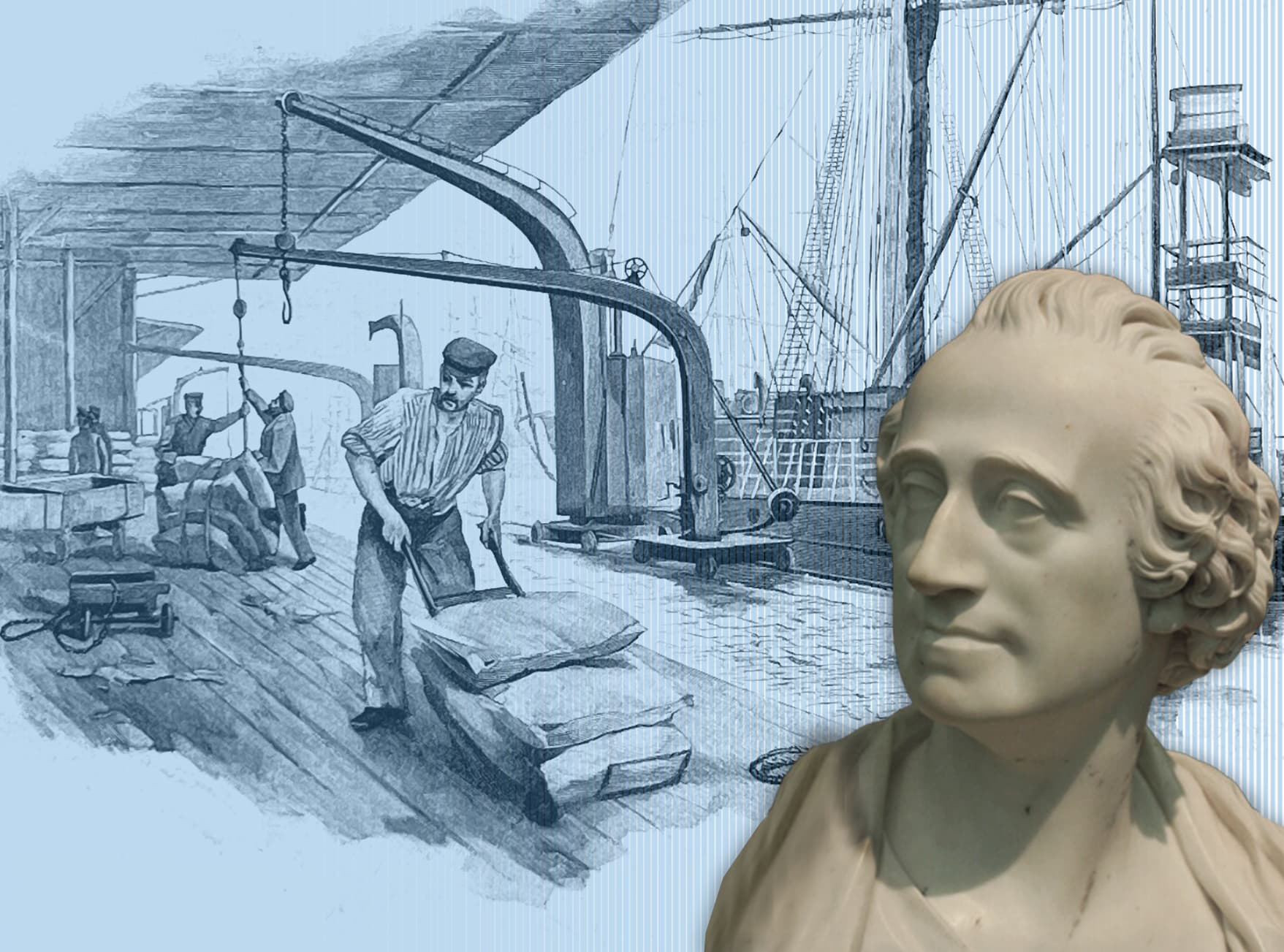
My Dear Friends,
Few begin by denouncing open, competitive markets outright.
They begin by making exceptions to the ordinary rules of those markets.
One for defense.
One for a favored industry.
One in response to a foreign rival.
Each sounds prudent.
Each promises to be temporary.
This is an imagined letter from Adam Smith to the Americans of 2026. The letters in this series are constructed from Smith’s own words and ideas, primarily those in “The Theory of Moral Sentiments” and “The Wealth of Nations.” All quotations are verbatim; paraphrases are faithful to Smith’s views. Interested readers can learn more about the sources here.
Exceptions are not defended as privileges.
They are defended as necessities.
Together, they move a nation away from the general rules and toward a system of special pleas and patronage.
The first exception
You can hear such arguments everywhere.
In debates over trade, industry, and security, they are presented as urgent, reasonable—and necessary.
This industry is strategic.
That dependency is dangerous.
These producers are unfairly burdened.
This trade is too important to leave to ordinary competition.
No one proposes to abandon markets.
They ask only to be excused from them.
I did not deny that one exception may sometimes be justified; I warned only this: once the law bends for one interest, every other interest learns how to make its case for an exception.
The difficulty is not in seeing that some cases are exceptional.
It is in ensuring that they remain so.
A reasonable beginning
Consider the case of national defense.
I wrote that “defence . . . is of much more importance than opulence.”
A nation must survive before it can prosper.
On that ground, I spoke favorably of the Navigation Act, calling it “perhaps, the wisest of all the commercial regulations of England.” When a country depends upon its sailors and shipping, it is no folly to strengthen its fleet—even at some cost.
But mark what followed.
What began as an exception for naval strength did not remain so.
The same system confined certain colonial goods to the British market and required much of the rest to move through British shipping—giving British merchants a privileged place in that trade, allowing them to buy more cheaply and sell more profitably.
Defense opened the door.
Private interests quickly learned the way.
How exceptions multiply
And the list widened.
Among the commodities drawn into this system were “masts, yards, and bowsprits, tar, pitch, and turpentine”—the materials needed to build and maintain a navy. Britain sought to make itself “as much as possible independent” of foreign suppliers.
Again, the reason was public defense.
The result was commerce governed by exception, not competition.
Defense was only the beginning.
Elsewhere, the claim was not national survival, but industrial protection.
I observed how prohibitions and high duties secured “the monopoly of the home market” for cattle, salt, corn, textiles, and other manufactures.
Once one industry is protected as a necessity, others soon learn to make the same claim.
Then comes fairness.
If domestic producers had to pay taxes, many insist that foreign goods should bear an equal burden.
In the narrowest sense, this reasoning has force.
But it seldom remains narrow.
To quiet the “clamorous complaints of our merchants and manufacturers,” lawmakers commonly imposed “a much heavier duty” than equal competition required.
What begins as fairness ends as favor.
And once granted, favor is rarely surrendered.
Different justifications—defense, fairness, protection, necessity—yet all lead in the same direction: privilege and patronage.
So, exceptions spread—case by case, argument by argument, industry by industry.
The confidence that misleads us
Statesmen may believe they can manage this process—that they can grant the sound exceptions, refuse the unsound ones, and keep the system within prudent bounds.
I thought such confidence rested on “innumerable delusions.”
I warned of the “man of system,” so enamored with the beauty of his own plan that he imagines he can arrange society as he pleases.
Such authority, I wrote, “would nowhere be so dangerous as in the hands” of those who fancy themselves fit to exercise it.
For they do not see themselves as bending the rules.
They see themselves as improving them.
Such a planner forgets something simple: People are not pieces on a chessboard.
They have interests of their own.
They respond.
They adapt.
They press for advantage.
And once the law is allowed to bend, they learn to bend it further.
Two questions
A free society asks: What rule should govern all?
A society of exceptions asks: Who is important enough to be excused?
The first disciplines power.
The second invites it.
The first rewards persuasion.
The second rewards influence.
The first directs ambition toward serving others.
The second directs it toward securing favor.
Over time, that is the difference between a society governed by law and one governed by favoritism.
* * *
I did not deny that necessity may sometimes justify departure from general rules. Nor did I deny that where long protection has fixed labor and capital in particular employments, reform may require slow gradations, reserve, and circumspection.
I denied only that such departures could be made lightly, extended safely, or confined easily.
What begins as necessity soon speaks the language of entitlement.
What is granted once is soon expected.
That is how liberty softens into favoritism.
The danger is not the first exception.
It is that the first exception teaches every other interest how to demand the second.
And once that lesson is learned, the rule survives only in name.
Your humble servant,
Adam Smith
Ross Levine is the Booth Derbas Family/Edward Lazear Senior Fellow at the Hoover Institution and co-director of Hoover’s Financial Regulation Working Group. He is a founding member of the Hoover Program on the Foundations of Economic Prosperity. Levine is also a research associate at the National Bureau of Economic Research.