 Powered by

When we humans see a problem, our inclination is to find a solution and fix it. If you have a leaking faucet, fix it yourself or call the plumber. If a smokestack is belching smoke, regulate the source to reduce emissions. If global temperatures are rising because of greenhouse gas emissions, regulate the use of carbon-based fuel.
Striving for solutions, be they individual actions or government regulations, is a noble goal, but economists always want to know: what are the benefits and costs of solving the problem? If you pay little or nothing for the leaking water and plumbers are expensive, you may let the faucet drip. If shutting down the smokestack would ruin the local economy, build a taller smokestack so the emissions go elsewhere. If electric vehicles are expensive and gasoline is cheap, keep driving your old beater.
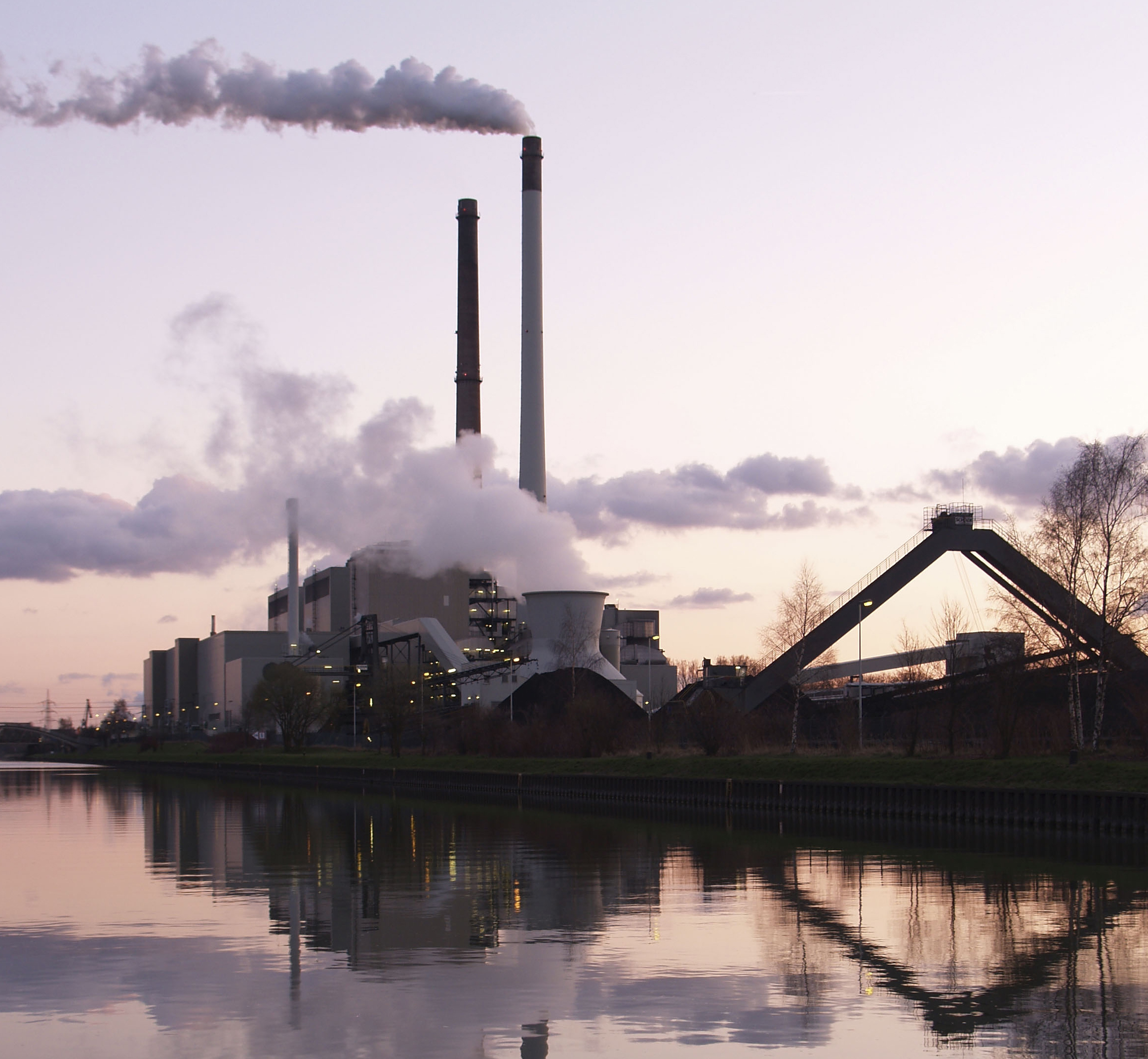
These examples are at the heart of Hoover economist Thomas Sowell’s observation that “there are no solutions; there are only trade-offs,” an admonition especially relevant for improving the environment and our choice of tools for doing so. Hence, environmental policy is often framed as markets versus mandates.
On May 12, the Hoover Institution will revisit this compelling question of how best to resolve environmental trade-offs. The fourth annual “Markets vs. Mandates” conference takes place as news stories focus on tariffs, trade bans, environmental threats, and government regulation—and most recently, the future impact of vast data centers and artificial intelligence. Every day, it becomes more important to count the costs of protecting our environment and its resources efficiently and fairly.
It starts with rights
True markets depend on voluntary exchanges of rights to use environmental resources ranging from land to oceans to air to wildlife. Those rights may have evolved over millennia, like the markets to land and water in the American West, or they may have been established as government-mandated rights, as in the case of some ocean fisheries or permits to emit waste into the air. Regardless of how the rights are created, they give holders of those rights an incentive to make trade-offs. Should a farmer use her land for crops or subdivisions? Should a fisherman go fishing in stormy waters or wait for the storm to pass? Should a homeowner harvest trees around his house to reduce the risk of wildfire or leave them to sequester carbon?
In this context, comparing markets to mandates requires comparing solutions dictated by mandates with market exchanges in which owners calculate trade-offs. To use another of Thomas Sowell’s observations in A Conflict of Visions, mandates “depend on the special knowledge of the few being used to guide the actions of the many.” In this way, regulatory mandates can deliver clearer, more immediate standards and may better address urgent or localized harms—but they also often impose higher compliance costs, stifle flexibility, risk unintended consequences by favoring special interests, and violate individual rights.
Markets, on the other hand, encourage innovation and cost-effective exchange, but require property rights that are costly to define and enforce and may produce unequal outcomes. The real question, then, is not which approach “solves” environmental problems, but which set of trade-offs—efficiency versus uniformity, flexibility versus control, innovation versus certainty—best aligns with ecological goals and the rule of law.
Water to use, and to trade
As an example of markets versus mandates, consider water allocation. In the American West, rights to divert water from streams are denominated in terms of “first in time, first in right.” Historically, the first miners diverted water to sluice gold from gravel in streams. Their rights to divert depended on when they first diverted water. Hence, in low-flow years when there would not be enough water to satisfy all diversion demands, those with the later diversion dates had less priority for water use. Furthermore, to maintain a prior appropriation right, diverters had to use their water on a continuous basis: to “use it or lose it.” That requirement provides owners of water little incentive to conserve—unless, that is, the water they conserve can be sold to others via water markets.
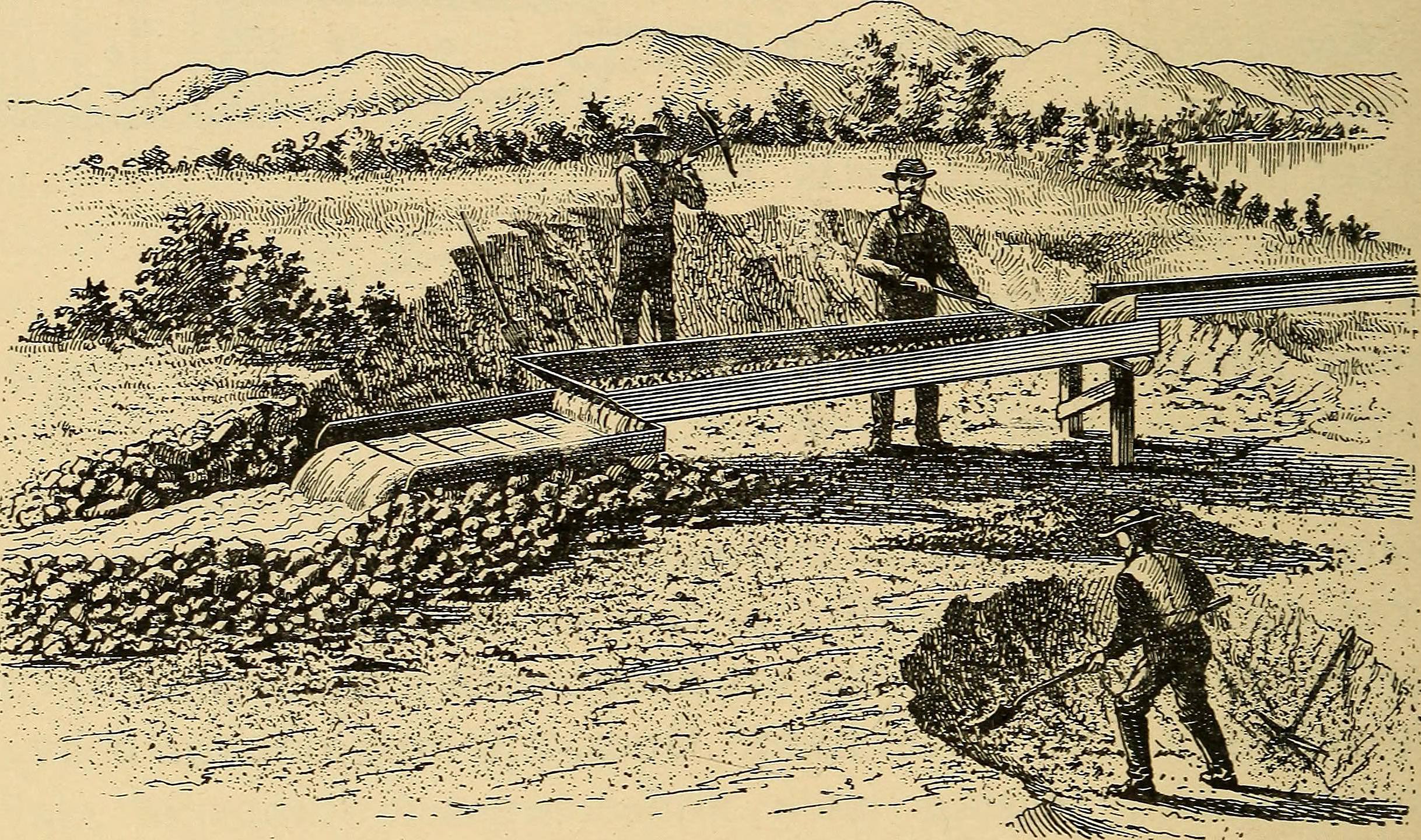
If diversion rights are tradeable, exchanges give owners an incentive to consider the trade-offs among various uses. If a miner needed more water to wash gold because his gravel might produce more, he could purchase water rights from others with lower-valued claims.
To be sure, who had what priority and quantity of rights had to be resolved. Generally, dispute resolution occurred in mining camp meetings or farming communities where the users themselves were the judges. Messy, perhaps, but effective nonetheless.
As demands on flowing water have increased, these rights have become more complicated, and governments have gotten more involved in adjudicating disputes over quantities and priority dates. For example, upstream diversions for irrigation yield downstream return flows available for downstream irrigators. The quantity of return flows for a given quantity of water diverted is complicated depending on the nature of the soil (for example, clay versus gravel), the slope of the land, and the water captured by the crop (wheat versus tomatoes, for instance). Because of the complexity, state governments require that water basins be adjudicated through water courts that resolve disputes and record the outcomes.
In the early mining camps, demands for water left instream for fish and wildlife habitat were not accounted for. Use-it-or-lose it has left streambeds high and dry.
In the absence of instream flow rights, states have mandated minimum stream flows. Because mandates are difficult to implement, some instream flow demanders in Oregon established the Freshwater Trust. As a result, Oregon changed its laws to allow ownership of instream flow rights and encouraged water markets to evolve. Environmentalists and fishers have used such markets to purchase diversion water rights and leave water instream for spawning salmon.
Managers of fish
Another example of how markets and mandates differ is obvious in the case of overfishing in the oceans. Without property rights to the open ocean, fisheries are a “commons” and therefore subject to the “tragedy of the commons.” Each additional fisherman into the commons has a minuscule effect on the productivity of the fishery and is rewarded by catching more fish. However, as more fishermen enter the commons, eventually the total stock of fish declines. Therein is the tragedy.

There are two options for preventing the tragedy. One is for the government to restrict the number of people who can fish. This has been the typical solution to overfishing. Such mandates have been ineffective because there are so many margins at which fishers can adjust: Limit the fishing season, and fishers have an inducement to operate around the clock and to endure the dangers of going out when the weather is bad. Limit the number of boats, and fishers use bigger boats and better technology. In short, fishing mandates have been ineffective.
Because of this, markets are replacing mandates in fisheries management. Instead of licensing each boat, government fishery regulators are setting a total allowable catch and are issuing tradeable rights or “catch shares” of the total. Tradeable shares give the owners an incentive to consider Sowell’s trade-offs. Is the share more valuable to the current owner or to a potential buyer? Around the world, results from this market approach are proving to be effective in eliminating overfishing and improving the quantity and quality of fish stocks in the ocean.
A land of change
Turning to the toughest of all environmental problems, climate change, markets also induce focus on trade-offs. Most of the effects of climate change manifest themselves through asset markets. Rising sea levels reduce the value of seaside property relative to higher elevations. Greater wildfire risks lower the value of housing near forests and increase insurance rates. And rising temperatures change agricultural yields, in some cases up and in others down, again affecting the value of agricultural land. Responses to these market prices have led to construction techniques that make homes more resistant to coastal flooding; to more fire-resistant housing; and to shifts in cropping patterns such as wine grape production moving from France into Germany.
Even with a problem as big as climate change, when comparing markets to mandates for addressing environmental problems, markets have the advantage of inducing owners of environmentally sensitive assets to consider trade-offs and to adjust at margins.
Markets are dynamic; they are a moving picture rather than a still life. Mandates, on the other hand, focus on static solutions that ignore trade-offs and are difficult to change as environmental conditions change. Moreover, mandates set targets, which, if reached, provide little incentive for further improvement.
Thomas Sowell is right: there are no solutions to environmental problems, there are only trade-offs. And markets with clearly defined and enforced property rights offer an alternative for managing those trade-offs.
Terry L. Anderson is the John and Jean De Nault Senior Fellow (adjunct) at the Hoover Institution. At Hoover, he co-directs the Markets vs. Mandates and Renewing Indigenous Economies research programs. He is the past president of the Property and Environment Research Center in Bozeman, Montana, and an emeritus professor at Montana State University.