 Powered by

After World War II, the United States and its allies built a new order founded on a radical idea: Growth and prosperity were not zero-sum. Through cooperation—and protected by American military might—the benefits of liberty and private enterprise could be shared. Violent conflict over resources would be a thing of the past, replaced by free flow of capital and goods.
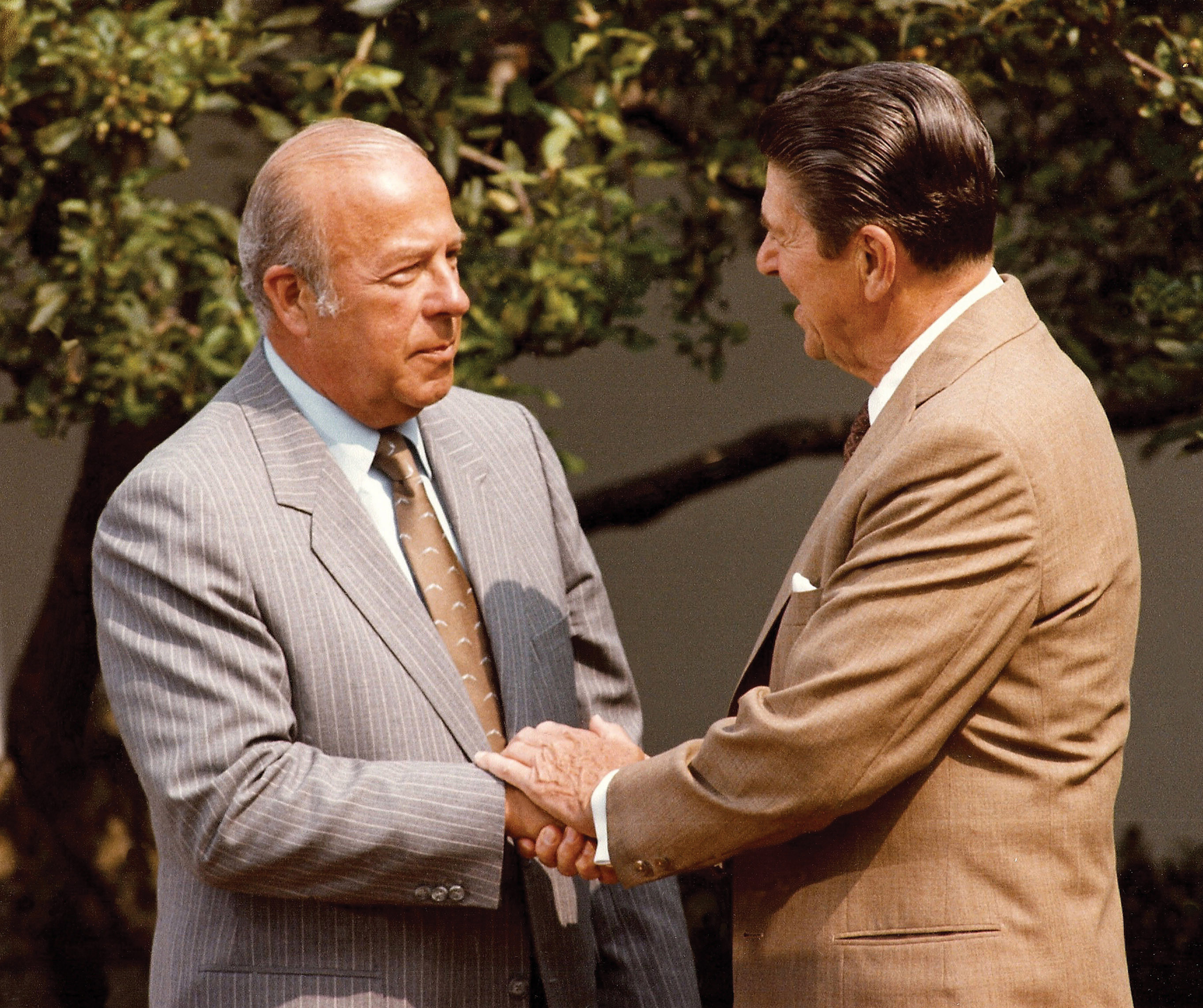
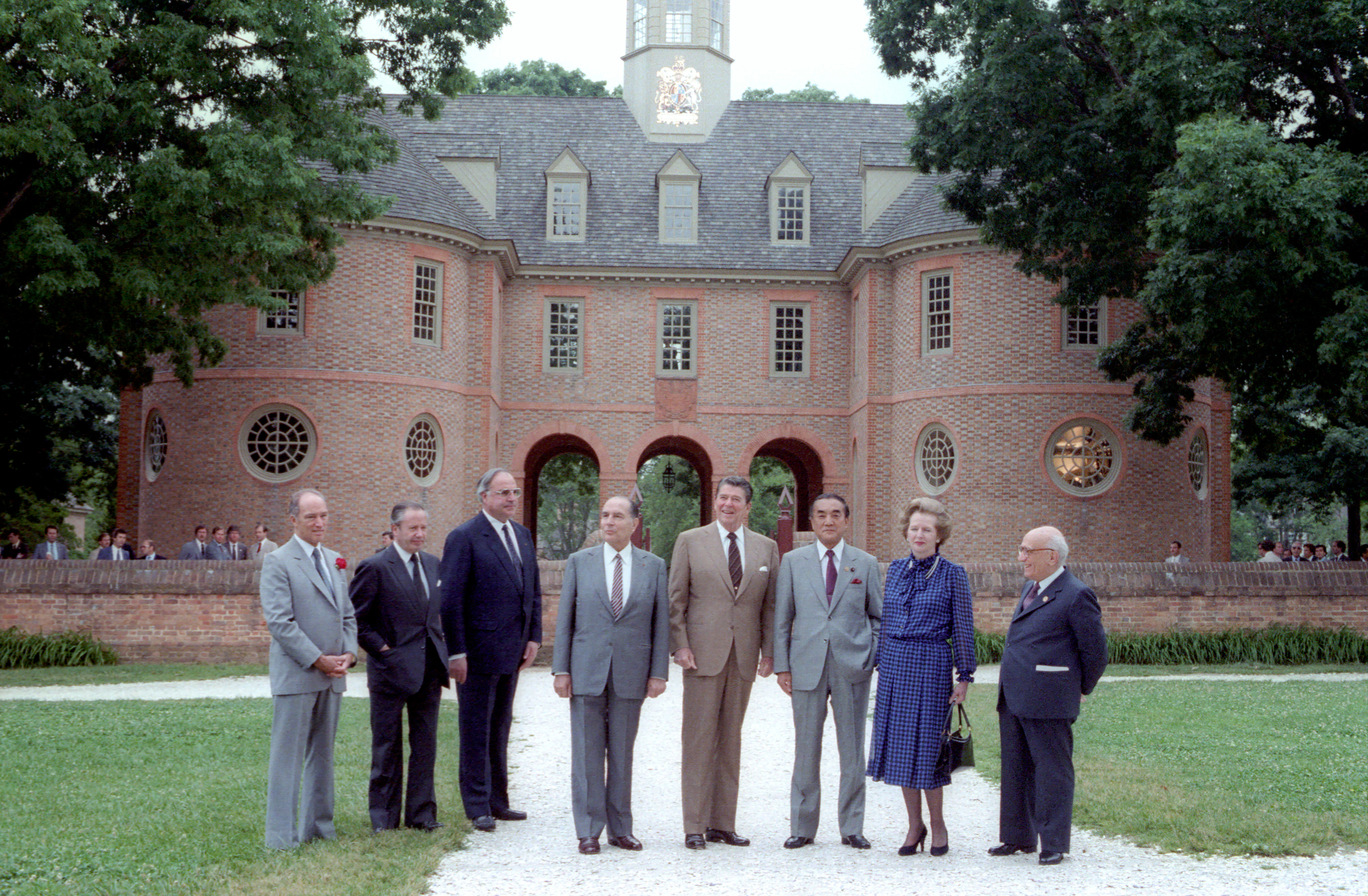
The idea reached its zenith when Ronald Reagan and George Shultz convened the G-7 in 1983. The seven largest economies of the world were democracies embedded in the American security system. With the collapse of the Soviet Union and China’s emergence from isolation, it gained momentum. International economic integration meant that businesses could put supply chains where they were most efficient, investment where it found the highest return, and manufacturing where conditions were best.
China’s inclusion, however, included a seed of the system’s destruction. Xi Jinping turned the benefits of integration toward challenging the United States. Great power rivalry re-emerged, fueled by Chinese aggression and Russian revanchism.
But that is not the whole story of the unraveling. In the developed, democratic world, the benefits of globalization were enormous but diffuse. The pain was concentrated and intensely felt, particularly punishing those who lacked the education and skills to adjust to changing economic circumstances. Support for the system eroded, and the Four Horsemen of the Apocalypse—populism, nativism, protectionism, and isolationism—emerged. Here, these were further fueled by a widening belief that America had been disadvantaged and deindustrialized, and carried too much of the security burden.
When trying to understand why we are where we are, one thing cannot be overlooked: The breakdown of the social contract between leaders and citizens in developed democracies. That contract was never explicit, but it was fully understood: “We will govern in a way that will allow you to live a fulfilling and purposeful life and to pass that promise on to your children.” The Founders called it “the pursuit of happiness.”
That bargain is in tatters. Progressivism promises more wasted money, unattached to tried-and-true values. It pits one group against another, asking Americans to forgo their common heritage for one based on tribalism and race. It is driven by a belief that there is a fixed pie that must be endlessly redistributed.
But if we are truthful, we will admit that conservatives have not been able to fully address the breakdown either.
To respond, we need to understand better what is happening to our families, civic and religious institutions, and communities. And we need audacity. We need people who are unafraid to ask the big questions.
The biggest is this: What happened to our confidence? We need an answer. Because without this grounding it will not be possible for America to lead the reconstruction of the global commons that is so needed.
After World War II, when we created the global economic and security commons, we were a confident country. We extended prosperity through a manufacturing boom, a GI bill that educated millions, and a growing middle class. We built an interstate highway system and set our sights on the moon. We had work to do to extend the franchise to Black people in places like my home state of Alabama, but even in segregation, strong families, faith, and educational opportunity pulled many through to success.
It took a confident country to spread prosperity through free trade rather than protect our share of the pie. It took a confident country to rebuild the devastated economies of friend and foe alike. It took a confident country to willingly put ourselves at risk—“an attack upon one is an attack upon all”—to defend freedom. That is not the America of today.
What can we do, and what will it take? And why must the Hoover Institution take on the challenge?
I believe this is exactly what Herbert Hoover had in mind for this institution in terms of making the human condition better. Over the course of 100 years, across an array of disciplines, we have assembled great minds who care deeply about the future of America and our values of freedom, limited government, and private enterprise. What better place than Hoover to produce a new north star?
And so, we have taken on the challenge as a fellowship. We are launching a Hoover Initiative to envision an Economic and Security Commons—one that expresses a vision of people and societies who share our commitment to freedom, and working together on common problems at this pivot of American and world history. We will draw talents across the Institution into a common effort. We will seek help from outside of Hoover. We will share ideas engaging with partners around the world and work to map the global and political landscape with teams focusing on nearly thirty specific topics. Our initiative will encompass economics, security, and technology, cutting across the usual disciplinary divides to develop concrete ideas about how America and its partners might adapt to this new era.
We are launching The Commons presence on Hoover’s Substack, Freedom Frequency, as a dedicated channel to make the Commons Initiative more accessible by translating complex ideas on economic strength, national security, and technological transformation into clear, structured, and policy-relevant analysis.
Hear about the vision for Hoover’s Economic and Security Commons initiative from members of its steering committee.
America will soon celebrate 250 years since independence. The experiment launched then should have had little chance of succeeding. Yet here we are, still standing, the best testament to the power of freedom that human history has ever seen.
Now, it has fallen upon us all to write the next chapter, as we respond to a new set of challenges to the American ideal, at home and abroad. Herbert Hoover founded this institution to do precisely that—and we accept the challenge.
Condoleezza Rice is the Tad and Dianne Taube Director of the Hoover Institution and the Thomas and Barbara Stephenson Senior Fellow on Public Policy. From January 2005 to January 2009, she served as the 66th secretary of state of the United States.