 Powered by

The case for market-based capitalism is not that it is perfect. It is that nothing else comes close.
When China loosened its grip in the late twentieth century and let markets operate more freely, roughly 800 million people rose out of extreme poverty—the largest and fastest escape from poverty in human history. And consider where people choose to move when they can: overwhelmingly, toward market economies—and almost never toward centrally planned ones, which have sometimes had to wall their people in.
These facts are not much in dispute. What is worth understanding is why—why competition under fair rules produces both prosperity and freedom, and what makes that achievement morally legitimate and not merely productive.
And then the harder questions: what undermines the rule of law that is the foundation of open, competitive markets, and what can a free people do to protect it. No society settles these questions once and for all. The same foundation that lengthens lives and frees people to build them is the one that, when it cracks, brings both down. Holding it in place is the never-finished work of a free people.
Let me be precise. Market-based capitalism is an economic system in which the means of production are predominantly privately owned, and in which decisions about what to produce, at what price, and for whom are coordinated largely through competitive markets rather than political direction. Such markets foster freedom and prosperity only when they are genuinely open and competitive—and they are open and competitive only under the rule of law.
By the rule of law, I do not mean law in general. I mean the institutions that forbid force and fraud, grant no special legal or regulatory favor, and bind the powerful as tightly as everyone else.
No real economy ever achieves this in full. The point of describing the system at its best is to see clearly what its rules are for, and then to assess where the real thing falls short—and what can be done about it.
The economic case
So, begin with the obvious question: why does a competitive economy keep getting better at things when no one is in charge of making it do so?
Because competition forces a search. If the only way to earn your business is to offer something you prefer to the alternatives, then everyone is under constant pressure to find a better way—a cheaper method, a sturdier product, a service that saves you time, a thing no one had thought to offer. The moment a rival finds it, the customers leave. No firm can rest; every firm is searching. And the millions of small improvements that search turns up, compounding year after year across an entire economy, add up to a standard of living no planner could have designed and no committee could have foreseen.
And no planner could have, because the knowledge a planner would need does not sit in any one place. What customers actually want, what a new material can bear, where a process quietly wastes an hour a day—this is scattered across millions of heads and almost never written down. The market need not collect it in one place. It lets each person act on the small piece they alone know, and competition sorts the results, rewarding what works and discarding what doesn’t.
No one understands the whole. The whole works anyway.

And “standard of living” is a cold phrase for a warm thing. The better ways that pile up are antibiotics and anesthesia and vaccines—a child who lives through an illness that would have buried her grandmother. They are the surgery a parent survives in time to see the grandchildren grow. They are a small screen holding the face of someone you love a continent away, so distance no longer means silence. Prosperity is not a pile of goods. It is less suffering, more years, and more of the connection that makes the years worth having.
But this works better when the road to profit runs through serving people rather than around them. Let a firm prosper instead by deceiving customers, starving rivals of the chance to compete, capturing its regulators, or pushing its costs onto people who never agreed to bear them—and the search goes slack. Why build a better product when you can lobby for a rule that bans the alternatives? Talent drifts from invention to maneuver, and the firm with the best lobbyists beats the firm with the best idea.
The rule of law is the difference between an economy that discovers and one that extracts.

But even a competitive market does not do everything. When a factory pours its waste into a river it does not own, the people downstream pay in sickness while the price of the factory’s goods stays low—so the price lies, telling buyers the product is cheaper than it truly is to society. The market-based cure is to make prices tell the truth: by taxing pollution, or by other means of making the factory bear the full cost of the harm it causes.
Markets undersupply some goods too—basic science, public health, national defense—because people can enjoy the benefits without paying for them.
But under the rule of law, with prices made to tell the truth and public provision of what markets miss, this discovery machine has no rival. That is the engine behind the facts I began with—the escape from poverty and the migration toward market economies.
The moral case
The case for market-based capitalism is not only economic. Even people who grant that markets produce prosperity often doubt that they are fair. So set the economics aside for a moment.
I will not try to define a perfectly just society. I want to observe something narrower and harder to dispute.
A market built on the rule of law forbids what major religious and secular moral traditions have condemned—taking by force, getting by fraud, preying on the weak—and rewards what those traditions honor: serving others by offering them something they value and are free to refuse. Traditions that agree on almost nothing agree on this.
Consider what a competitive market built on the rule of law does not allow. The seller cannot command the buyer. The employer cannot own the worker. The incumbent firm cannot lawfully block the upstart merely for being a rival—it can only outcompete the challenger. To get ahead, you have to make yourself useful to people who are free to walk away—which means the way up runs through service, not power.
But the freedom to refuse is not secured by a formal right alone. It depends on having somewhere else to go. A worker with one possible employer, or a borrower with one possible lender, may have every legal right to walk away and yet no real ability to do so.
This is why open competition matters morally, not just economically: by creating alternatives, it turns a formal right to say no into a real one.
Such freedom is historically rare. For much of human history, most people had little choice over their work—birth largely chose it for them.
The claim is not that markets give each person what they “deserve”—no system does that. Luck, family, and where you start shape every life.
The narrower claim is this: where success comes from serving others rather than seizing from them, and where the rules bind the powerful as tightly as the weak, people can look at who prospers and see that the game was played by fair rules. That is not everything. But it is worth a great deal. A society whose members believe the rules are honest will cooperate, invest, and accept outcomes they dislike; a society convinced the rules are rigged comes apart.
But fair rules are only part of what makes a system legitimate. People also ask whether the starting line was fair—whether the child of the failing school and the child of privilege were ever really running the same race. Impartial rules do not answer that question. They were never meant to. It is among the hardest questions a free society faces, and I will come to it.
No market without a state
The rule of law is what makes a competitive market possible at all. It takes courts that rule without fear or favor, contracts that bind a stranger you will never meet, property records, honest weights, and the basic security without which no exchange is truly free.
None of this maintains itself. All of it must be built, paid for, and defended, generation after generation.
And here is the difficulty. Rules do not enforce themselves; they need a state behind them. But a state strong enough to make the powerful obey is strong enough to break the rules itself—to sell exceptions and hand out favors. A weak state cannot protect a market from the predators inside it. An unchecked state becomes the predator. What a free society needs is a state strong enough to enforce the rules and bound enough to follow them.
No society simply picks the best way to build and bind a state off a menu. Geography, conquest, and inherited social structures shape who controls resources, who can organize, and who can constrain the state. History is not destiny, but no nation writes its laws on a blank page.
How the powerful break markets
The greatest danger to capitalism comes from those powerful enough to escape its rules.
Sometimes that means successful capitalists themselves; sometimes it means a well-organized constituency; sometimes it means the officeholders who write the rules. What unites them is power. Competition is wonderful for everyone except the person who has already won, and whoever has won—in the market or in politics—would rather not face the next challenger. So, the powerful seek shelter from the rules that bind everyone else.
Imagine you have built something better—a cheaper way to deliver a service, a product that does more for less. You should win customers. But the established firm has something you do not: a relationship with the people who write the rules. It does not need to match your product. It needs a regulation whose paperwork you cannot afford, a licensing requirement you cannot yet meet, a safety standard written around its own design and not yours. You lose, not because you served customers worse, but because your rival shaped the rules and you could not.
The shapes are familiar: a tariff to keep a rival out, a subsidy the unconnected never see. Each arrives dressed as a public purpose—protect jobs, ensure quality, keep the system safe—and now and then the purpose is real. But the market is not the same thing as the firms inside it, and a player who can win by capturing the rules will not trouble to win by serving anyone better. Adam Smith saw it: “People of the same trade seldom meet together, even for merriment and diversion, but the conversation ends in a conspiracy against the publick, or in some contrivance to raise prices.”
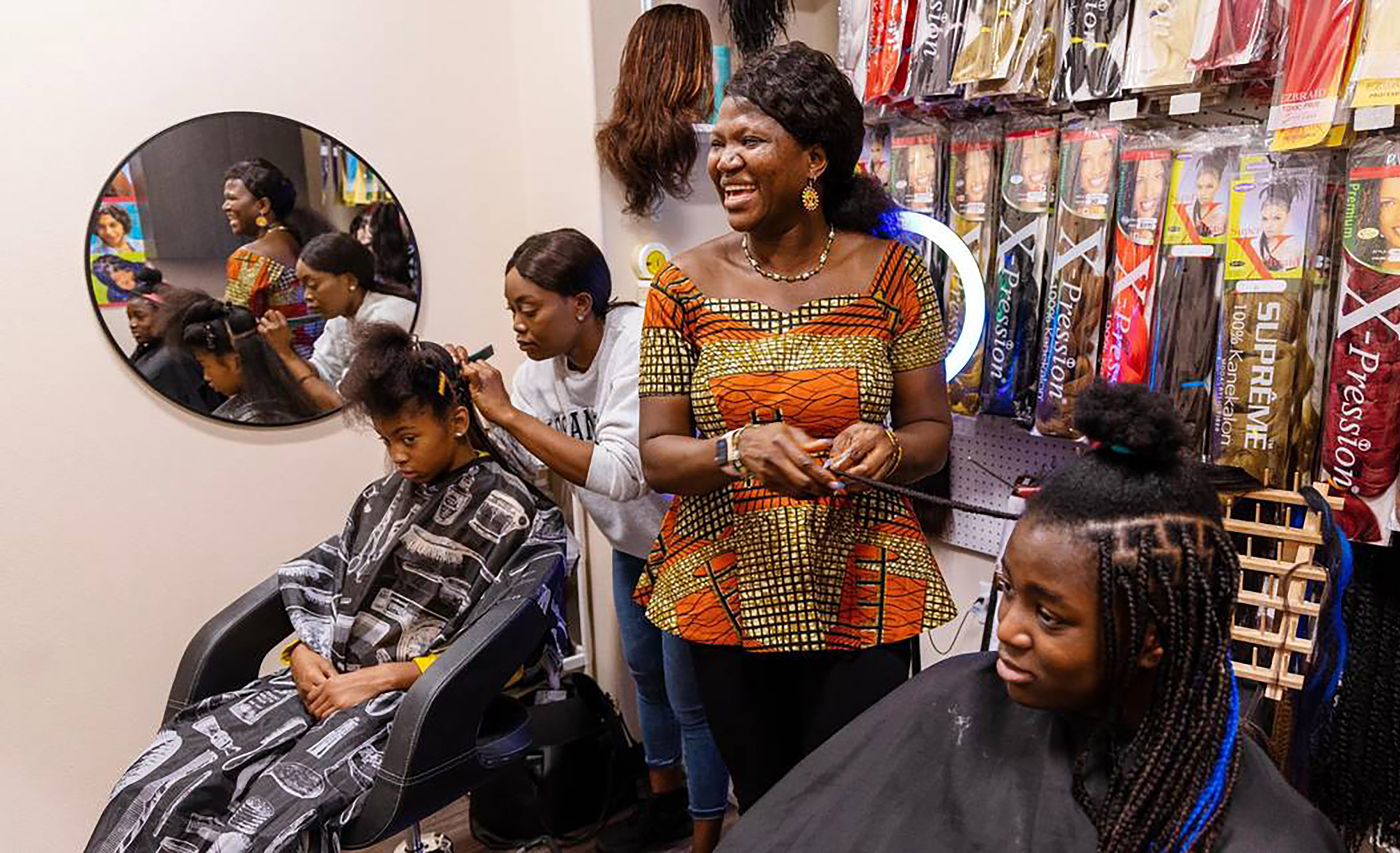
The same goes for any group organized enough to ask. A licensed profession writes the rules for who may enter it. Until recently, twenty-four states required hair braiders to obtain cosmetology licenses—including up to 2,000 hours of coursework that taught little or nothing about braiding. Homeowners block the housing that would change their streets; a union, a farm lobby, a professional guild each secures the carve-out its members want. None of this requires corruption—only that a concentrated group with much to gain out-organizes a dispersed public whose members each have too little at stake to fight for. The unorganized pay for exceptions they may never see.
The gravest exceptions, though, are political. When the officeholders who make the rules are the ones escaping them—subordinating the courts meant to check them, or drawing electoral districts to insulate themselves from voters—the most dangerous exception of all appears: the one that exempts the powerful from the verdict of the governed.
And exceptions accumulate. No single one is the problem; the problem is the thicket they grow into—thousands of requirements, each defensible alone, that together only a large player can afford to navigate.
A system of exceptions is no longer a system of rules.
Hidden costs of favoritism
Favoritism does more than shelter incumbents and divert talent. It corrodes something the whole economy quietly runs on: the shared expectation that the rules will hold for everyone.
That expectation is what lets a market work without policing every transaction. People lend, hire, invest, and trade with strangers because they are confident that if a deal is broken, the law will stand behind them—so most deals are never broken, and most disputes never reach a court. What holds a market economy together is not constant enforcement. It is the shared expectation that enforcement is real, and that it falls on everyone alike.
Favoritism drains that confidence. When people watch connected firms get bailed out, the permit appear for the insider and not for others, the subsidy find those who least need it, they stop assuming the rules will hold for them. No longer sure the law will stand behind a broken deal, they protect themselves: more collateral before they lend, payment up front before they ship. They increasingly keep their business inside circles they already know and stop taking chances on strangers and untried ideas. The economy that results is higher-cost, narrower, and less innovative—because trust, once withdrawn, is expensive to replace.
And people copy what they see winning. When the firms that get ahead are the ones that worked the rules, working the rules is the lesson everyone draws. Citizens who once played it straight begin lobbying for exceptions of their own.
This is how the rule of law erodes—not torn down in a single blow, but dismantled exception by exception, by people who concluded that this is simply how you get ahead.
And when the rule of law gives way, both the moral and economic cases for the market give way with it. The sheltered get ahead by shaping the rules rather than serving anyone; the rules they win become walls against everyone else’s freedom to compete; and because they no longer have to improve, the engine of prosperity stalls. The moral harm and the economic harm are one, because they have one cause: people who escaped the competition that was supposed to discipline them.
At that point, capitalism is just a word for whatever the powerful can take.
Fair rules, unfair race
One of the most influential critiques of market-based capitalism is that even under impartial rules, people do not begin the economic race from the same line. A child born into a stable home, a good school, and a safe street, and a child born into none of those, meet the market under the same rules but on entirely different terms. The first child’s effort builds on a foundation already laid; the second’s begins with obstacles the first will never see. To tell the second child that the rules were applied impartially is true; to tell that child the race is fair is another thing.

But this critique is incomplete, because it watches the gap and ignores the floor. Market-based capitalism has been the most productive system yet conceived—and that is not a matter of bigger televisions. The antibiotics, the vaccines, the clean water, the cheaper food reached the poorest and the richest—those gains are moral, not merely material.
The race analogy fixes attention on rank—who starts and finishes where. But rank is not the whole of life. What matters at least as much is whether the runners are advancing—and under competitive markets, even those who place last have tended to move forward.
Still, rank is not nothing—the purely market-based answer is incomplete too. Thousands of years of philosophy and literature testify that human beings care about their standing among others—about dignity, about being a full member of the community rather than a tolerated dependent within it. A rising floor does not erase that concern.
The critic is right that people do not start from the same line. The free-marketeer is right that abandoning the market would forfeit the one engine that has lifted more people from poverty than any alternative. The task is to widen the chance to compete without replacing fair rules with a new system of privileges.
The market-based answer is to attack the start. First, remove what government already does to block opportunity: licensing rules that lock people out of trades, zoning that walls off housing and blocks people from moving to where the work is, credential requirements that protect insiders, and regulations that keep financial institutions from competing to fund the best ideas rather than the best-connected. Then come the public investments—better maternal health, better early childhood care, better schools, including greater choice for families whose assigned schools have failed them.
But rules written to protect the vulnerable often end up protecting others instead—rent controls that shrink the housing they were meant to make affordable, subsidized credit that inflates the price of the very thing it was meant to make reachable. The aim is to get more runners into the race, not to hand out the prizes in advance.
The work of a free people
The case for market-based capitalism is this: under impartial rules, fairly enforced, open competition produces the prosperity that lengthens and eases human lives, and enlarges the freedom to choose one’s own path without bowing to those above. No other arrangement has delivered as much of either.
But the system that delivers it has never existed in pure form, and never will. Every real economy falls short, and every attempt to close the shortfall meets the same wall: the remedies carry costs of their own. Poorly designed or excessive taxation can weaken investment, work, and innovation—the very processes that raise the floor. No formula tells us how much is too much. There is only judgment, exercised again and again, under rules meant to bind the powerful too.
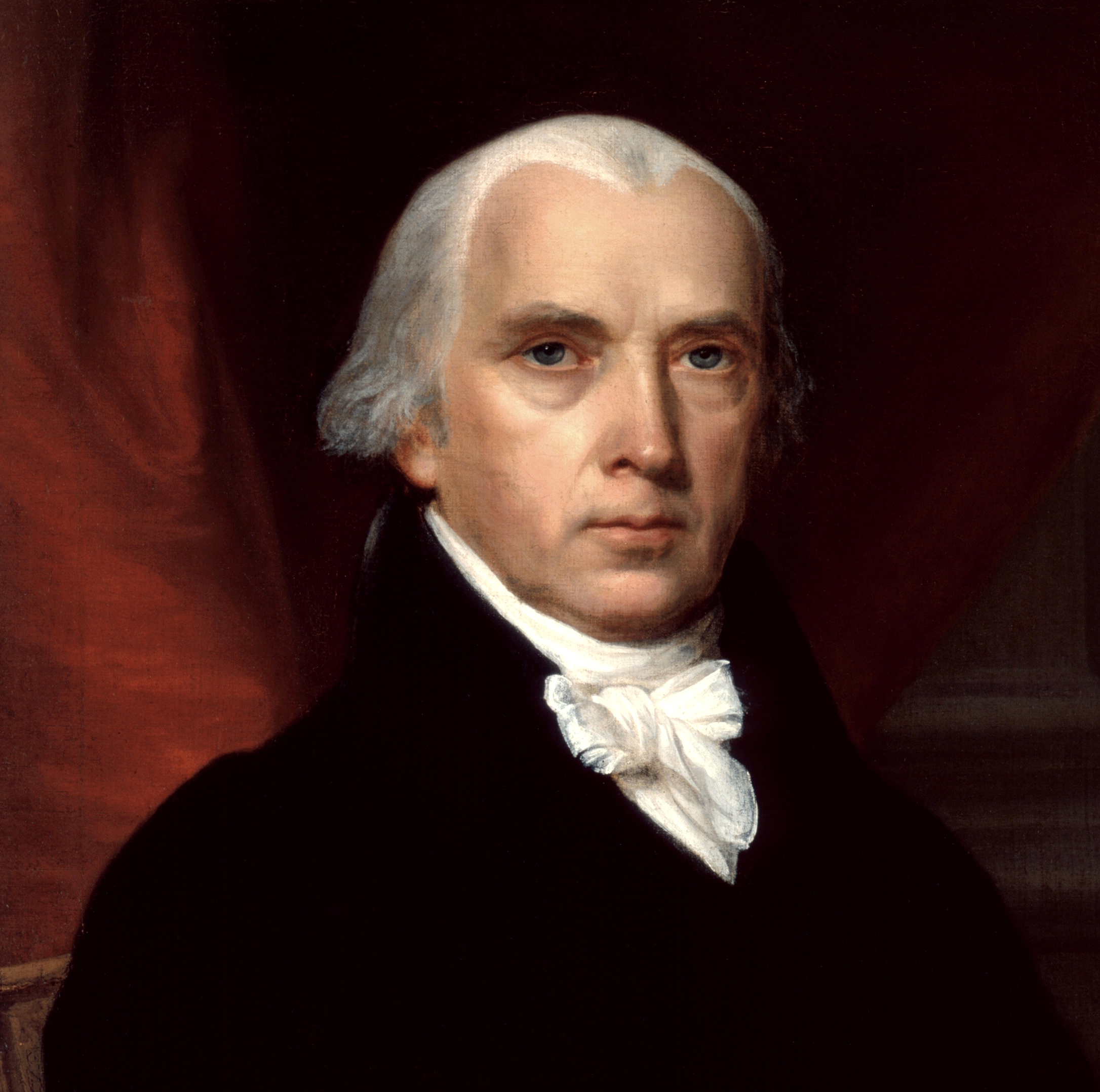
This is what James Madison, a principal architect of the US Constitution, understood. People are not angels, and those who govern them are not angels either. His insight was that the remedy is not better leaders or firmer promises—both fail—but institutions that set ambition against ambition, making violations costly to those who would commit them. Achieving that balance is rare. Keeping the structure of countervailing power in working order, as wealth and ambition find new ways around it, is rarer still.
So, the case is never closed. A market order endures only as long as a free people keep privilege from hardening into law and keep the chance to compete open to newcomers. The aim is not to pretend that every outcome is deserved or every starting point fair. It is to keep ambition working, through service rather than power—so that the way up runs through making others better off, not through holding them down. That is not a perfect system. It is the best foundation, moral and economic, that we have found for a free people to build good lives.
Ross Levine is the Booth Derbas Family/Edward Lazear Senior Fellow at the Hoover Institution and co-director of Hoover’s Financial Regulation Working Group. He is a founding member of the Hoover Program on the Foundations of Economic Prosperity. Levine is also a research associate at the National Bureau of Economic Research.