 Powered by
For much of the postwar era, a stable international trading system has been regarded as one of the principal achievements of the rules-based international order. Open markets and agreed rules were understood to emerge from a broader world order underwritten by US leadership and embodied in multilateral institutions such as GATT and later WTO.
Today that order is under strain. Great-power rivalry has visibly driven acts of international aggression. Economic and national security have become central concerns of governments around the world. Industrial policy is debated, not as developmental engines for poorer economies, but as economic statecraft for advanced countries. Tariffs, sanctions, and export controls have proliferated. Increasingly, the assumption is that the weakening global order will inevitably produce a less stable and free trading system.
Is that momentum baked in? What might be done to restore enough of the post-1945 system so that prosperity and stability might be available still, at least to those nations that continue to see benefit in a reconstituted global order bearing some similarity to what currently exists? This essay argues for an approach that builds on a reverse causal relationship to conventional thinking, namely that trade might actually build and sustain order, rather than just be the latter’s passive consequence. The essay’s reasoning has a further payoff: the right policy debate is not about “free trade vs. protectionism”; it is about using the optimal mix of instruments for clearly stated social objectives.
Trade is infrastructure, and therefore a public good that produces order. Economists have long viewed trade as a source of prosperity. While maintaining that position, this essay argues further that a stable trading system is also a technology for producing international order.
A stable trading system creates predictability and well-understood norms, common standards, and repeated interactions among nations. Such engagements, sustained over time, encourage nations to cooperate even when they disagree politically. These interactions reduce uncertainty, establish expectations about acceptable behavior, and lessen the need for relationships to be governed by coercion.
To be clear, this is not an argument for free trade as ideology. Nor is it an argument that trade overrides other national priorities. Rather, it is an argument about institutions. Trade is not only a mechanism for exchanging goods across borders; it is institutional infrastructure. Like roads, ports, or communications networks, trade enables interactions whose cumulative effects extend beyond their original purpose. Over time, those interactions generate habits of collaboration that no individual participant intended or foresaw.
Trade produces inadvertent cooperation.
This argument complements the traditional case for trade. Economists have long argued that trade raises productivity, allows countries to specialize, expands market size, and most importantly, through the theory of comparative advantage, allows all nations—small and large—to benefit. Those arguments remain valid. But they are propositions about aggregate efficiency. They don’t cover what this essay argues is trade’s broader significance for global order. (And, we will see, neither do they shed light on current political controversy surrounding international trade.)
This then is the essay’s central claim: a stable trading system should be understood not merely as a source of economic efficiency, but as a global public good. It enables a framework within which countries of every size can pursue prosperity while simultaneously cumulating the benefits to international cooperation.
A stable trading system accomplishes this not because it eliminates political disagreement. It plainly does not. Countries continue to compete over technology, security, influence, and ideology. They disagree over values and national interests. But trade provides a structured environment within which those disagreements need not spill over into every aspect of international relations.
The institutions surrounding international trade illustrate this mechanism:
Trade agreements establish commitments that governments voluntarily undertake.
Customs procedures standardize the movement of goods across borders.
Technical standards allow firms in different countries to manufacture compatible products.
Contracts become enforceable because legal systems recognize common commercial practices.
Dispute-settlement procedures provide mechanisms through which disagreements can be resolved without immediate recourse to retaliation.
None of these undermines national sovereignty. Nor do they prevent governments from pursuing their own interests. Instead, they reduce uncertainty by making behavior more predictable. They replace ad hoc bargaining with commonly understood procedures. They transform interactions from unilateral exercises of power into multilateral engagements governed by rules and shared understanding.
Businesses invest with confidence when they can anticipate market access, regulatory treatment, and contractual enforcement. Consumers benefit from lower prices and greater variety. Governments are better able to plan long-term infrastructure, education, and industrial investments. Smaller countries gain confidence that larger ones cannot arbitrarily rewrite commercial relationships without consequence. Larger countries benefit because their firms and investors face lower uncertainty abroad, and their values and norms are disseminated as predictable best practice.
These gains are not simply the byproducts of trade. In practice they connect with something more fundamental: institutional stability.
The distinction matters because institutions produce benefits extending well beyond just economic exchange. With trade, governments develop additional channels of communication. Regulators and technical agencies collaborate and exchange information. Firms establish supply chains spanning multiple jurisdictions. Universities collaborate in research. Entrepreneurs, engineers, and scientists develop professional relationships that persist despite political tension. In other words, a stable trading system enables cross-border, person-to-person engagement, building resilience in the fabric of the international system.
Countries that distrust one another politically frequently continue to cooperate commercially because doing so serves mutual interests. Those relationships that succeed rarely depend upon goodwill alone. Instead, they rely on accumulated expectations, legal arrangements, standards, contracts, and institutions that normalize continued cooperation.
Ideologies ask countries to believe particular propositions. Infrastructure enables countries to interact despite continuing disagreements.
Nations need not agree on political values to accept common customs documentation, recognize product standards, honor commercial contracts, or participate in dispute-settlement procedures.
This distinguishes institutional infrastructure from ideology. It bakes into the international system modalities of inadvertent cooperation, not from shared political purpose but from repeated participation in mutually beneficial stable arrangements.
In this perspective, different sides of many familiar debates about international trade have used only incomplete reasoning.
For decades, economists defended trade because it generated efficient economic outcomes. Comparative advantage implied that voluntary exchange made every trading partner better off. Increasing returns to scale showed that larger integrated markets could raise productivity even among countries with similar resource endowments. These remain among the economics discipline’s most powerful insights.
But concentrating exclusively on economic efficiency understates what a stable trading system contributes. The international trading system is valuable not only because it increases national income. It is valuable because it establishes predictable patterns of behavior among states that would otherwise interact under conditions of far greater uncertainty. Prosperity is thus one benefit of stable trade. Order is another.
Recognizing this helps us understand not only why trading systems have proved durable over the past eight decades, but also why their erosion has causes and consequences extending beyond just economics.
Trade is one set of instruments. But nations have multiple goals. The traditional economic case for trade remains compelling. Yet it shifts remarkably little of today’s policy debates.
Whether the issue is tariffs, industrial policy, supply-chain resilience, semiconductor controls, critical minerals, income inequality, or economic security, policymakers rarely even mention comparative advantage. They argue over jobs, national resilience, strategic dependence, technological leadership, and geopolitical influence.
More recently, trade itself has become the object of political contestation. Why has debate on trade grown toxic?
It is not that the economics has changed or that policymakers have suddenly forgotten the benefits of specialization and exchange. Instead, it is because trade has come to be associated with objectives that it never guaranteed or were ever intended for it to deliver.
Every nation seeks prosperity. But, more and more, governments also seek social cohesion, political stability, national resilience, technological capability, and economic and national security. Governments are accountable not just for maximizing GDP but for maintaining employment, protecting vulnerable communities, preserving national capabilities, responding to natural disasters, and ensuring that strategic industries remain viable in times of crisis.
The relative weights attached to different objectives also vary across countries. Small nations emphasize secure access to foreign markets. Resource exporters seek reliable demand. Large continental economies value strategic autonomy. Technological frontier economies worry about maintaining innovative capacity. Developing countries prioritize industrial upgrading and capability building.
This diversity of objectives is both natural and appropriate. And, as that diversity has evolved, policymakers no longer prioritize economic efficiency the way they might have done previously.
While trade is extraordinarily powerful, it provides only a single set of instruments, limited to elements of cross-border interaction. Another core insight in economic thinking is relevant here: no one limited set of instruments can simultaneously achieve all policy objectives.
Trade is in disrepute because the goalposts keep moving, but its defenders focus only on what is unchanging. Consider a country sourcing manufactured goods from a single foreign supplier offering the lowest prices and highest quality. If minimizing production costs is the objective, concentrating purchases on that supplier is the optimal action. For many manufactured goods over the past two decades, sourcing from China often represented precisely such a choice.
Suppose, however, that the government grows concerned about resilience following the disruptions experienced during the COVID-19 pandemic. That single source that stemmed from China’s high manufacturing productivity is now instead a chokepoint. The nation might then diversify purchases across Vietnam, Indonesia, Mexico, or India, sacrificing as needed some degree of productive efficiency. Doing so increases resilience, reduces dependence upon any single supplier, and lowers exposure to future disruptions. For some policymakers, that trade-off is the right one to improve their nation’s well-being. When that is the case, it is not helpful to harp on about comparative advantage, how it continues to suggest importing only from that single, most-productive economy.
In a world of rising mistrust across borders, comparative advantage is no longer the operative concept.
Countries seeking rapid industrial development may temporarily shelter infant industries while they acquire technological capability. Governments concerned about national security increasingly restrict exports of advanced semiconductors or impose controls on sensitive technologies. Nations worried about strategic dependence invest in domestic production of pharmaceuticals, critical minerals, or energy infrastructure despite higher costs. Regional trade agreements such as CPTPP strengthen commercial integration while simultaneously reinforcing rules-based cooperation among participating economies. Other regional trade agreements, such as RCEP, emphasize special treatment for lesser-developed economies.
Each of these uses trade differently because each begins from a different conception of what national policy should achieve. In all cases trade has not changed, but objectives have.
Viewed in this light, a great deal of current political disagreement over globalization becomes easier to understand.
In the decades that immediately followed the Cold War, advanced economies prioritized economic efficiency. Expanding markets, lowering tariffs, reducing production costs, and integrating global supply chains were consistent with both national prosperity and international stability. Other goals existed, but they were assumed either to follow automatically from economic growth or to be addressed separately through a willingness to exercise domestic policy.
Today, governments operate under a different set of priorities. The experience of the global financial crisis, the COVID-19 pandemic, growing geopolitical rivalry, disruptions to supply chains, rapid technological competition, and heightened concern over economic and national security have altered the relative importance attached to different objectives. Policymakers now devote greater attention to resilience, industrial capability, strategic autonomy, domestic inequality, and national security alongside economic efficiency.
Through all this the essential justifications of trade—even in its modern form of global supply chains—has remained remarkably similar. But the objective function of governments has evolved.
The distinction between instruments and objectives explains why debates over international trade have become increasingly polarized.
Critics condemn trade because it fails to deliver resilience, equality, security, or jobs. Defenders respond by arguing that trade raises productivity and income. Both arguments are almost surely correct. Yet they fail to engage with one another because they implicitly assume different objectives. One side evaluates trade against resilience. The other evaluates trade against efficiency. Both talk past the other and neither addresses the other’s concerns.
The resulting debate quickly degenerates into an unhelpful choice between “more trade” and “less trade.” But that is a false binary. The real policy question is not whether countries should trade. It is how trade should be designed and combined with other policies to advance the particular objectives that societies legitimately and appropriately choose for themselves.
I am not arguing here that trade ought to be used to pursue every national objective. The choices societies make are political judgments that vary across societies and over time. The point is to understand that trade is only one limited set of instruments among other policy tools, and that a nation’s portfolio of multiple goals needs to be the ultimate deciding factor on what policy mix is appropriate.
In practice, governments already view trade as intertwined with economic growth, resilience, security, technological leadership, industrial development, and international influence. The more productive question is not whether trade is good or bad, but how trade should be deployed alongside other instruments of public policy. To do that, the discussion needs to consider all the many things trade does.
Trade and other tools
The rules-based international order did not create a stable trading system and end its engagement there. Causality runs also in the opposite direction. Stable trade creates habits of cooperation, reinforces institutions, and builds the predictability upon which durable international order depends.
Trade provides a remarkably powerful set of policy instruments. But it is just one limited set of instruments and it is not the only one available.
Trade policy cannot be expected to accomplish every national objective simultaneously. There is no single optimal trading regime independent of the objectives that governments choose to pursue. A country concerned primarily with maximizing economic efficiency will design its trade policy differently from one prioritizing resilience, strategic autonomy, or industrial development. Neither is necessarily mistaken. They are solving different policy problems.
Notwithstanding these aspirations on better custom-designed trade policy, however, an open trading system, even if imperfect, could still be a fine medium term solution. Many states have insufficient administrative capacity, political consensus, or targeted expertise to implement their optimal trade strategy, not least if those policies are complex and require longer-term commitment. Accessing a stable trading system in the interim could provide the breathing space and motivation to allow improvement in a nation’s policy capabilities. Degrading that stable trading system then removes even this option.
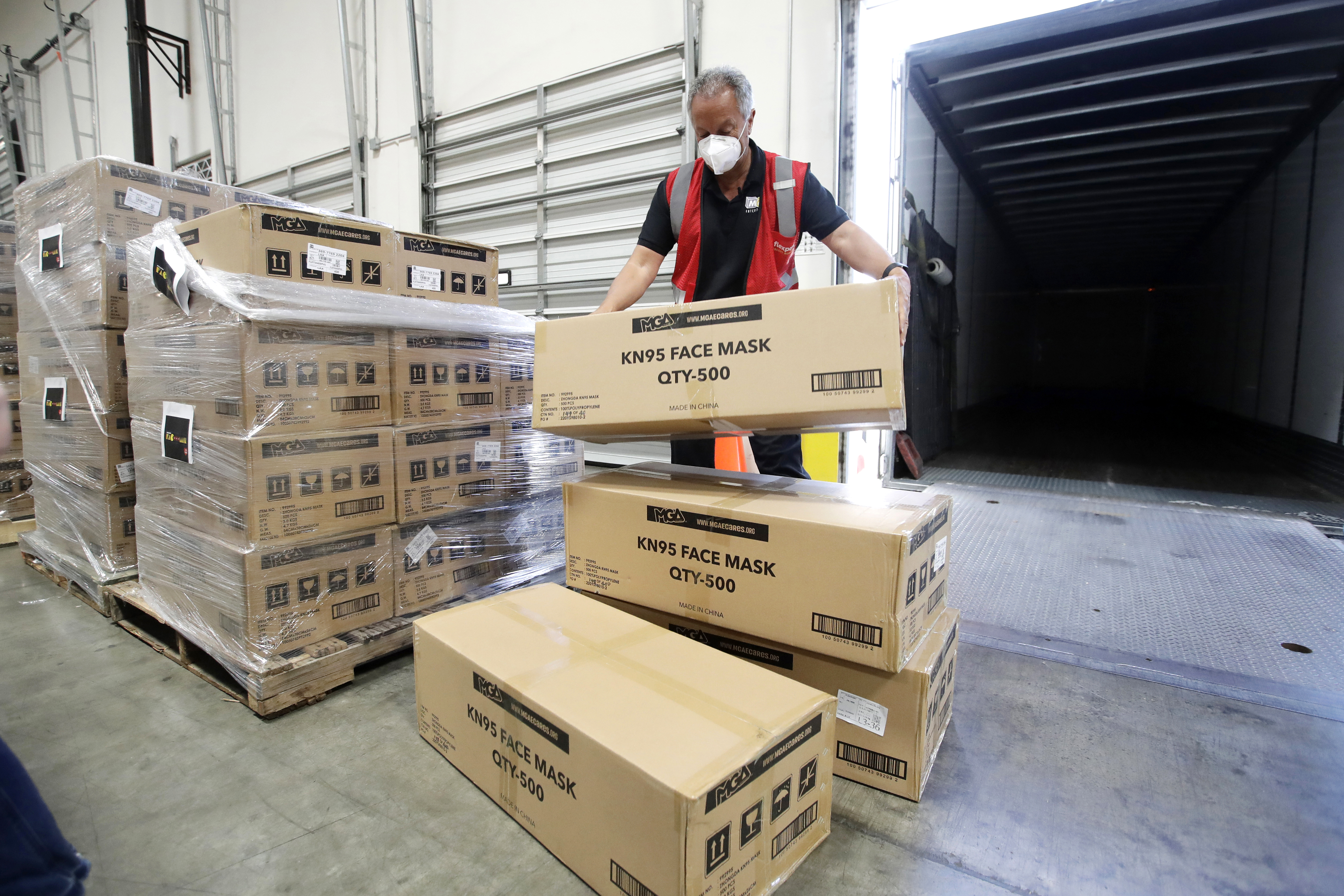
Further, while this essay’s argument, for clarity, contrasts trade’s effects on economic efficiency with its effects on resilience, autonomy, and development, the reality is that trade’s effects run in multivaried forms. For instance, an open trading system can also raise resilience by providing safeguards against domestic disruption and internal supply failures. The COVID pandemic is often used as an argument for raising resilience through domestic capacity. But in the event, when many nations urgently needed personal protective equipment, China was the source to which they turned, and China supplied. This allowed sufficient room then for nations to develop their own manufacturing capacity. Open trade allows a nation’s resources to be used more efficiently and in doing so increases that nation’s wealth and therefore elevates its autonomy and accelerates its economic development. None of this overturns the argument in this essay, but taken together they suggest greater circumspection so that we do not paint trade as a simple binary—and that is very much in line with the general message of the essay.
Trade policy needs to be understood as one component of a broader policy framework. Governments possess many instruments besides trade: industrial policy, competition policy, education and training, infrastructure investment, social insurance, taxation and redistribution, research funding, and national security policy. These instruments exist precisely because societies pursue multiple objectives that no single policy can achieve alone.
Reframing trade to distinguish objectives and instruments improves the policy discussion. Too often, debates over trade become contests between supporters and opponents of globalization, as though countries must choose between openness or protectionism and autarky. In reality, successful economies have always combined openness with complementary domestic policies. Open markets have coexisted with investments in education, infrastructure, scientific research, social protection, and industrial capability. The practical policy question has never been whether trade alone can produce desirable outcomes. It is how trade can work alongside other institutions and policies to do so.
A stable trading system is valuable to all nations small and large not only because it helps them become richer. It is valuable because it helps countries interact within a framework of predictable rules rather than coercion and unilateral actions. A stable trading system lowers the costs of collaboration among sovereign states that will continue to disagree over politics, security, and ideology. But even against that backdrop of contestation, trade makes cooperation inadvertent and ordinary.
Danny Quah is the Li Ka Shing Professor in Economics, Lee Kuan Yew School of Public Policy, NUS; Director, Asia Competitiveness Institute; and Faculty Associate, Centre on Asia and Globalisation. The author thanks Steve Davis for helpful suggestions.