 Powered by
China’s appropriation of intellectual property is so familiar a complaint that we have almost stopped voicing it.[1] Chinese private firms and State-Owned Enterprises (SOEs) use many techniques to access IP. They range from nominally legal but coerced joint ventures to outright theft—ignored or neglected by Chinese courts—and industrial espionage by employees at Western firms.[2] The biggest beneficiaries have been technology firms, above all Huawei.[3] For years, Western governments and companies have tolerated China’s behavior as the “price of doing business.” Many firms now central to the AI supply chain, including Samsung and TSMC, have profited enormously from China despite its systematic IP theft. Accepting that anything on the mainland would eventually be stolen, they made copying as hard as possible and tried to use their Chinese revenues to stay a few years ahead of the copies.
Today, however, the situation is becoming untenable. China is a more formidable industrial and military competitor than ever. It is reaching for the commanding heights of emerging technologies that will define the global strategic balance and the fates of trillion-dollar industries. AI also threatens to enable IP theft at an unprecedented speed and scale.[4] Western governments must refocus on IP theft. This requires asking broader questions about why the global trading system has failed on the issue, and how to reform it.
Managing the new
How can a global trading system reconcile the duties that advanced democracies owe their own citizens with the right of every state to shape the terms on which it trades? This is the central challenge of the global economic commons. It is fundamentally connected to IP.
New technologies that reshape the world economy are discovered in particular countries at particular times. For centuries, countries that lead in technology have sought IP regimes to protect the advantages their discoveries confer and encourage further innovation. Meanwhile, states without advanced technology have sought weaker protection and enforcement for IP. For most of history this tension was settled at the border. States used tariffs, export controls, quotas, and other tools to shape trade across the global commons. Governments bargained with one another, issue by issue, each seeking the market access it judged to serve its interests. This included responding dynamically to issues of piracy and IP theft.
In the 1990s, our two countries, the United States and United Kingdom, proposed a radical departure: a system best described as “judicialized universalism.” Under it, all international trade, including IP, would fall under a single legal architecture. The new system built in structural concessions to developing countries. It limited states’ ability to respond unilaterally to each other’s actions in the global economy.[5] A key objective was to maximize the gains from what was then called “information technology” by requiring every participant to accept binding commitments to protect IP. Indeed, that requirement was one of the main reasons the United States agreed to support the WTO at all.
Unfortunately, China’s failure to enforce IP rules has contributed to the breakdown of the WTO system, and simply strengthening US export controls and domestic cybersecurity is not a sufficient answer. We need an affirmative vision for how we protect our economic security and prosperity while preserving as much open trade as possible, including in products based on IP that cannot be shared with China. Furthermore, we need to achieve this vision of fair, open trade in the context of continued economic competition between the United States and China and an AI race, which will make it much harder to protect IP.
The United States should build new multilateral partnerships to help partner countries secure their own intellectual property and fend off cyberattacks, while creating incentives for them to protect American IP as well. Only at the international level, rather than firm by firm, can we address the challenge of China’s IP theft. The public argument should be that all states have the right to economic self-determination: the power to control effectively their own economic borders.
Intellectual property’s role in WTO legitimacy
In private, if rarely in public, Chinese business figures and officials often observe that everyone in the global economy, in every era, has stolen IP.
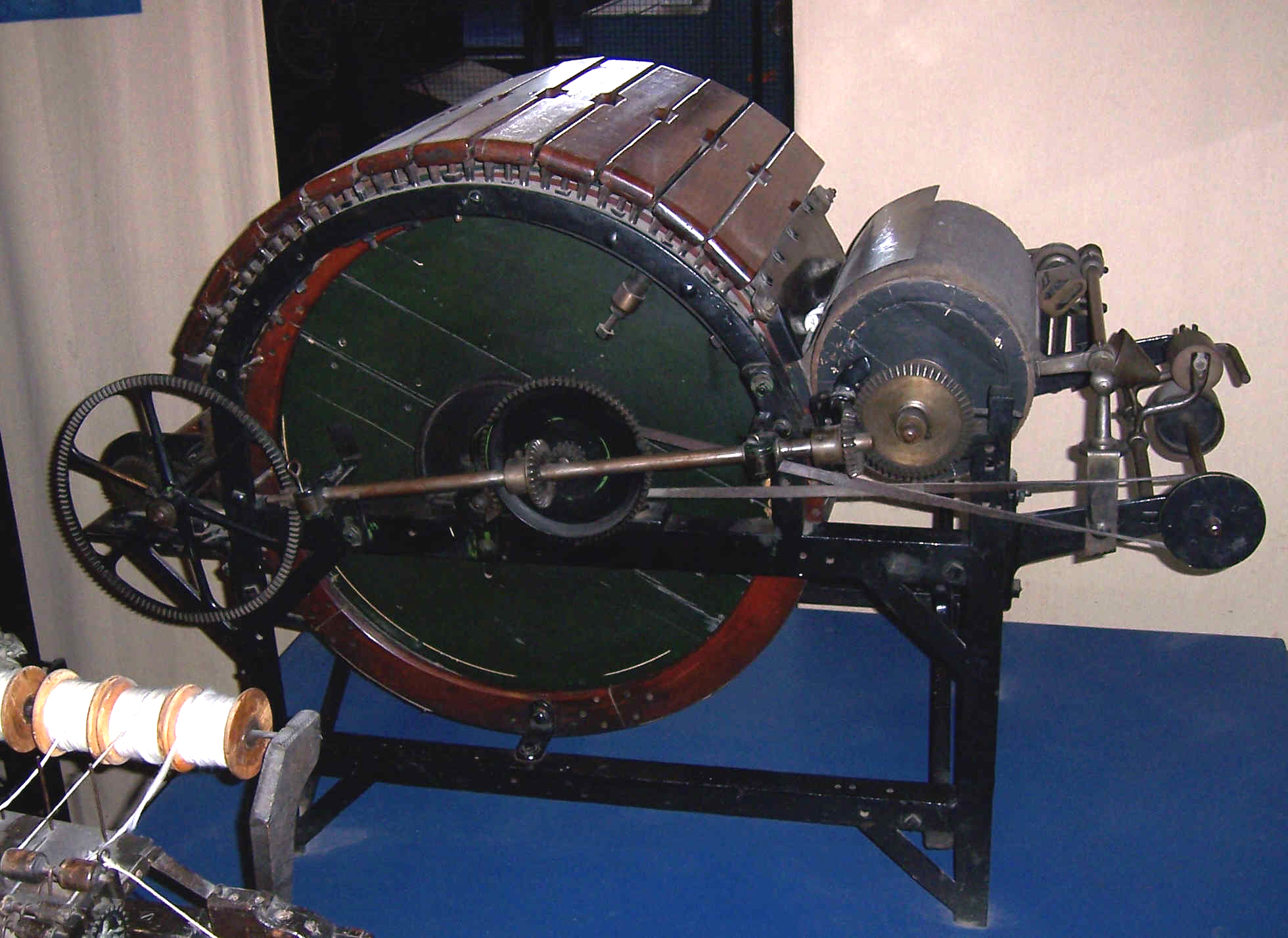
Historically, this is quite correct. Chinese leader Xi Jinping likes to talk about the “four great inventions” of the compass, gunpowder, papermaking, and printing, which began in China and moved west. Since one of us is a historian of Early Modern Britain, we would add that Thomas Lombe’s silk mill, a key inspiration for Arkwright’s spinning frame, owed its design to his brother John Lombe, who apprenticed at a Piedmontese mill and smuggled its design out on plans hidden in bales of straw.[6] Industrial history is full of similar stories of dubious IP “transfer.”
For most of history, states were free to respond with trade measures at the border. While China still enjoyed complete economic self-determination, it asserted a porous state monopoly on foreign trade. Later, it opened overseas trade to private merchants while establishing high customs duties and restricting Western merchants through geographical limits.[7] Victor Amadeus of Piedmont-Sardinia responded to the Lombe theft by embargoing raw silk exports to Britain, causing a diplomatic and economic crisis that took years to resolve.[8] More recently, the Reagan administration cracked down hard on foreign IP theft.[9]
The WTO and the related Trade-Related Aspects of Intellectual Property Rights (TRIPS) agreement aimed to create a quasi-judicial international process for adjudicating disputes over IP and other aspects of trade policy.[10] What made this vision of global rules possible, when even its advocates at the time thought it seemed utopian, was that it was a “single undertaking.”[11] All parties were required to sign up to all elements. It was a grand bargain to create a new global economic system.
The developing and post-colonial economies campaigned for a global arrangement to secure their access to the IP they needed to develop. The defining document in this campaign was the Declaration on the Establishment of a New International Economic Order (NIEO), endorsed by the UN General Assembly in May 1974. Taking equity as its principle, it demanded wide concessions to developing economies, including access to “the achievements of modern science and technology” by promoting technology transfer and “the creation of indigenous technology.”[12] It also called for protecting the right to nationalization, “just and equitable” commodity prices, support for producers’ associations, and the overall right of a state to determine the economic system that seemed “most appropriate for its own development.”
At the 1981 North-South Summit in Cancun, Reagan and Thatcher made clear these principles were incompatible with free markets and with American and British interests.[13] But they still needed developing-country cooperation, and two changes soon drew the United States toward trade reform on different terms. The first was the US trade deficit, driven by advanced manufacturing in the EEC and Japan, which German unification and the euro seemed likely to deepen.[14] The second was the growing importance of intellectual property created by the rise of information technology and the shift to a service-led economy in both the UK and the United States. The greatest areas of concern were computer programs, data compilations, and the designs and layouts of integrated circuits, where protections simply did not exist. There was also a clear need to strengthen protections for industrial designs and models.[15]
When the Uruguay Round of global trade negotiations began in 1986, the advanced economies saw room for a deal. Developing nations and manufacturing exporters would accept new rules on intellectual property and services in exchange for a new legal framework for resolving trade disputes, as well as specific concessions on agriculture and textiles.[16] This agreement would simultaneously address the clashes between advanced economies over tariffs and nontariff barriers—though not currency manipulation—and form the basis for a new “grand bargain” between North and South. A new framework for IP and services trade would let US firms expand into new markets, an economic win that justified concessions elsewhere.
This bargain underpinned the WTO. The new institution enshrined the concept of “special and differential treatment” (S&DT) for developing countries within the new “rules based” trading regime.[17] Countries designated as “developing” retained greater latitude to adopt market-distorting policies such as tariffs, nontariff barriers, and industrial policy. Developing countries accepted both TRIPS and a new General Agreement on Trade in Services (GATS). The new system of dispute resolution took power to respond to other countries’ unfair trade practices out of the hands of states and vested it in the WTO system.
China disregarded the bargain
When China joined the WTO in 2001, it did so as a developing country, with all the benefits associated with S&DT. It also set about building an IP regime from scratch, which it pursued with some initial success.[18]
However, building a legal regime is not the same thing as enforcing it.
For years, it took so long to get IP cases heard before Chinese civil courts that litigation was almost meaningless. In the 2010s China reduced delays somewhat by creating specialized IP courts and a Supreme Court IP tribunal.[19] However, the system remains dominated by a toxic combination of “low professionalism, local protectionism, and lack of independence from the Communist Party.”[20] Certain cities have become centers for IP theft because of compliant local courts, supported by the local party bureaucracy.[21] A wider culture of intimidation pressured private firms not to pursue relief for IP theft through other channels, and it remains extraordinarily difficult to get IP cases onto the criminal docket in China.[22] Chinese law has no civil discovery process and few effective alternatives.[23] As a result, IP theft between Chinese businesses is also endemic—though here the CCP is more comfortable acknowledging the problem.[24]
Meanwhile, China was running a state-supported IP appropriation campaign at the international level through joint venture requirements, overseas equity stakes that provide pathways for access, and employee theft, particularly in “strategic” sectors included in the five-year plans. Chinese nationals, or even American citizens with family in China, are coerced into sending IP back to state-backed firms.[25] In 2015, Chinese leader Xi Jinping promised his American counterpart, Barack Obama, that China would desist from cyber-theft of American IP.[26] But China flagrantly violated this pledge, and it faced no serious consequences for doing so. In 2021, fully 80 percent of the Department of Justice’s economic espionage cases involved China.[27]
China’s legal system now also works to block IP enforcement even beyond its borders. In 2020, Chinese courts began issuing “anti-suit injunctions” to protect their national champions, particularly in telecommunications. These rulings threaten foreign companies with heavy fines for pursuing Chinese firms abroad, stripping them of the ability to defend their patents globally. The WTO has not been entirely silent—ruling in July 2025 that anti-suit injunctions were incompatible with TRIPS—but it lacks the power to penalize China directly, and prospects for WTO reform are dim.[28]
By increasingly ignoring both the letter and the spirit of TRIPS, China has broken the fundamental bargain on which the entire WTO system was based. It exploits the privileges of the system while shirking the responsibilities. The WTO’s enforcement arm also failed to hold China to account. For example, in a landmark 2011 ruling, the WTO’s Appellate Body determined that subsidies provided by SOEs were not automatically subsidies from “public bodies.” As Paul Tucker argues, this single ruling “altered the course of world history” by giving China’s massive state sector structural protection under international trade rules.[29]
Today, hoping to lock in this favorable system, China under Xi Jinping is promoting a grand narrative to the developing world. The essence of the argument is that the United States and a club of rich countries are trying to tear down the old system, reverse globalization, and deny developing countries the right to technology and development. China claims that it is standing up to defend world order and global governance. To make this argument, China borrows heavily from the old language of the NIEO to emphasize its historical solidarity with the developing world. China has pledged to forgo developing country status in future negotiations, but Li Yihong, senior delegate at China’s mission to the WTO in Geneva, has stated that China “will always be a developing country.”[30]
Western countries need a counteroffer to China’s pitch. Many developing countries are sympathetic to China’s implicit argument that Western IP restrictions are an obstacle to their development. Even though they know that the status quo works much better for China than for them, they fear that if the system collapses, they could lose access to technology and markets they need to develop. The burden is now on the Western countries to articulate a better way.
Intellectual property in a new global system
While neither TRIPS nor the WTO should be abandoned, we need a new approach to global trade and IP. China’s refusal to honor the bargain behind the post-1990s order means the United States and its allies must be prepared to act unilaterally and in small groups to protect their interests. These include export controls to limit China’s access to leading technologies, especially computer chips, and new regulations to secure the research enterprise in academia and industry. The SECURE program, a $67 million research security effort authorized by the 2022 CHIPS and Science Act, in which the Hoover Institution is a leading participant, is an excellent example of the approach we need to adopt.
But national policy alone is not enough. Judicialized universalism has not been a satisfactory solution for governing the world economy, but it also brought profound benefits. Three decades of global market integration have created a broad commonwealth of states trading to mutual benefit across a free and open commons, sustaining the prosperity our two countries enjoy today. It is not enough to say that the current system is broken. We need an affirmative vision of what should replace it, one attractive across the global economy, including in those countries sympathetic to China’s anti-imperial narrative.
This new vision must recognize that there is no longer a clean distinction between hardware and software. China’s frontier AI models are highly adept at hacking, threatening to penetrate the IT systems of companies worldwide and steal valuable IP.[31] Chinese firms have also been accused of extracting the capabilities of leading US models through a process known as “distillation.”[32] China is also making these models open-source, giving users everywhere formidable tools to steal IP.
Cybersecurity cooperation is more important than ever before.
The United States should therefore frame its approach to IP protection as support for economic self-determination globally. This requires renewed multilateral cooperation to strengthen the cybersecurity capabilities of all states. It is in the interest of the United States to help as many countries as possible protect their IP and their citizens’ data. A renewed focus on cybersecurity is also a prerequisite for sustaining open trade in economically or geopolitically sensitive technologies—and ultimately sustaining US technology firms’ access to emerging consumer markets.
To start, the United States can sign “non-weaponization” agreements for key products and technologies with coalitions of partner countries. Parties to these agreements would agree not to restrict the export of certain products, designs, or data to one another on national security grounds. In return, they would deny access to non-signatories without mutual agreement, and they would agree to enforce common economic and cybersecurity standards.[33] Rather than a “universal legal” approach, such agreements should follow an “opt in/opt out” model. States could join non-weaponization agreements on a product-by-product basis and withdraw if circumstances changed. The idea would be to create conditions so that advanced US and British technology could be sold in as many countries as possible, limiting the negative impact of economic security measures. In other words, IP protection would no longer be up to global governance institutions. Instead, coalitions of countries united by a shared interest in economic self-determination would cooperate to protect their IP and secure access to each other’s markets.
TRIPS and the WTO were designed to create a system of universal legal rules of the road for international trade, including IP protection. China played by the rules only when convenient, and the system no longer works. Yet any alternative reform program must take up the central challenge of the commons that the WTO sought to address: how to balance the interests of different economies in the context of technological change and uneven development. By building new intergovernmental structures to support the economic self-determination of all states and limit the weaponization of technology, the United States can forge a new grand bargain—and preserve the best of what the WTO created.
Hugo Bromley is a research associate at the Centre for Geopolitics at Cambridge and an affiliated research associate at Robinson College, Cambridge.
Eyck Freymann is a Hoover fellow and leads Hoover’s Allied Coordination Working Group. He is also a nonresident research fellow at Columbia University’s Center on Global Energy Policy, the Institute of Geoeconomics in Tokyo, and the China Maritime Studies Institute at the US Naval War College.
[1] The 2013 AmCham China survey found that 42% of respondents in advanced technology sectors were concerned about ‘de facto technology transfer requirements as a condition for market access (AMCHAM CHINA, 2013 China Business Climate Survey Report, 10 (2013)). In 2019, the Kroll Fraud and Risk Report survey of foreign firms operating in China found that 94% of companies operating in China identified IP theft as their main risk, while 48% reported experiencing IP theft in the last years (https://www.kroll.com/en/reports/global-fraud-and-risk-report-2019/regional-overview/china). The 2018 USTR Commission on the Theft of Intellectual property found that the number was likely meaningfully higher due the CCP pressure on firms not to report examples of IP theft. (https://ustr.gov/sites/default/files/Section%20301%20FINAL.PDF). Similar results have been reported by the European Union. European Commission, Impact Assessment Report on the EU-China Investment Relations, SWD (2013) 185final 12 90, 95 (May 23, 2013).
[2] This idea was recognized at the time, especially during the 2000s and early 2010s. Martin Dimitrov, Piracy and the State: The Politics of Intellectual Property Rights in China (Cambridge, 2012).
[3] After its founding in 1987, Huawei benefited from early technology access through cross-licensing arrangements required for foreign firms—most notably Ericsson—to operate in the Chinese market. This occurred alongside widespread allegations of systematic intellectual-property theft affecting multiple firms, including Cisco, which accused Huawei of “direct, verbatim copying” of source code. The most consequential victim may have been Nortel, once a global leader in fibre-optic infrastructure following its 1991 acquisition of STC. Xiaobo Wu, Johann Peter Murmann, Can Huang, and Bin Guo, The Management Transformation of Huawei: From Humble Beginnings to Global Leadership (Cambridge: Cambridge University Press, 2020). See also Elisabeth Braw, Goodbye Globalization: The Return of a Divided World (New Haven, CT: Yale University Press, 2024), 20. Tom Blackwell, “Did Huawei Bring Down Nortel? Corporate Espionage, Theft, and the Parallel Rise and Fall of Two Telecom Giants,” National Post, February 20, 2020.
[4] nytimes.com/2026/02/23/technology/anthropic-chinese-startups-distillation
[5] For the judicialized universalism framing, see Paul Tucker, Global Discord: Values and Power in a Fractured World Order (Princeton, NJ, 2022), chap. 17.
[6] British National Archives, Patent for Thomas Lombe, SP 35/12/103. G. Chicco, La seta in Piemonte 1650-1800: un sistema industriale d’ancien régime, Milano, 1995; A. Calladine, ‘Lombe’s Mill: An Exercise in Reconstruction’, Industrial Archaeology Review, Volume 16, Issue 101 October Autumn 1993.
[7] Zhao, Gang. The Qing Opening to the Ocean: Chinese Maritime Policies, 1684-1757, (Honolulu, 2013).
[8] Calladine, ‘Lombe’s Mill: An Exercise in Reconstruction’, Industrial Archaeology Review, Volume 16, Issue 101 October Autumn 1993; Chicco,G.,Il Re e l’Organzino La Filatura del la Seta in Piemonte el Sei-Settecento, Doctoral Thesis, University of Pisa (1988), p.138.
[9] Maureen Irish, ‘Intellectual Property in North-South Relations’ in George Stewart ed., International Trade and Intellectual Property, the Search for a Balanced System, (New York, 1995). Peter-Tobias Stoll, Jan Busche, Katrin Arend, and Max-Planck-Institut für Ausländisches Öffentliches Recht und Völkerrecht, WTO--Trade-Related Aspects of Intellectual Property Rights, (Leiden, 2009).
[10] For the best description of the political philosophy of the WTO, see Paul Tucker, Global discord.
[11] Martin Daunton, The Economic Government of the World: 1933-2023, New York: FSG, p.642.
[12] Declaration on the Establishment of a New International Economic Order, UN. General Assembly (6th special sess. : 1974).
[13] Daunton, Economic Government; Goldstein, Walter. “Redistributing the World’s Wealth: Cancun ‘Summit’ Discord.” Resources Policy 8, no. 1 (January 1, 1982): 25–40.
[14] Philip Zelikow and Condoleezza Rice, To Build a Better World: Choices to End the Cold War and Create a Global Commonwealth (New York: Twelve, 2019), p.356-7; Douglas A. Irwin, Clashing over Commerce: A History of US Trade Policy, (Chicago, 2018).
[15] Stoll, Peter-Tobias, Jan Busche, Katrin Arend, and Max-Planck-Institut für Ausländisches Öffentliches Recht und Völkerrecht. WTO--Trade-Related Aspects of Intellectual Property Rights / Edited by Peter-Tobias Stoll, Jan Busche, and Katrin Arend. 1st ed. (Leiden, 2009).
[16] Daunton, Economic Government, p.637. Narlikar, Amrita. “Fairness in International Trade Negotiations: Developing Countries in the GATT and WTO.” World Economy 29, no. 8 (August 2006): 1005–29.
[17] Satoshi Kodera, “Significance of ‘Special and Differential Treatment’ in the Free Trade System: From the Perspective of the Theory of Plurality of Norms,” Public Policy Review 20, no. 4 (December 2024).
[18] Martin Dimitrov, Piracy and the State: The Politics of Intellectual Property Rights in China (Cambridge, 2012).
[19] D. Rechtschaffen, How China’s Legal System Enables Intellectual Property Theft. The Diplomat; Tokyo (Nov 10, 2020).
[20] Qing-Yun Jiang, Court Delay and Law Enforcement in China, ÖAR, 2006; Dimitrov, Piracy and the State, p.97.
[21] D. Rechtschaffen, How China’s Legal System Enables Intellectual Property Theft. The Diplomat; Tokyo (Nov 10, 2020).
[22] Ibid.
[23] D. Rechtschaffen, ‘How China’s Legal System Enables Intellectual Property Theft’, The Diplomat, 2020.
[24] https://saisreview.sais.jhu.edu/how-chinas-political-system-discourages-innovation-and-encourages-ip-theft/
[25] https://www.aei.org/articles/the-rising-risk-of-chinas-intellectual-property-theft/
[26] https://obamawhitehouse.archives.gov/the-press-office/2015/09/25/remarks-president-obama-and-president-xi-peoples-republic-china-joint
[27] Ibid.
[28] European Commission, “WTO Appeal Arbitrator Finds China Wrong to Restrict Intellectual Property Rights in Dispute Brought by the EU,” July 22, 2025, https://policy.trade.ec.europa.eu/news/wto-appeal-arbitrator-finds-china-wrong-restrict-intellectual-property-rights-dispute-brought-eu-2025-07-22_en.
[29] Tucker, Global Discord, 402.
[30] https://www.reuters.com/world/china-says-it-wont-change-developing-country-status-will-forgo-benefits-2025-09-24/
[31] For the overwhelming importance of cybersecurity in understanding the impact of artificial intelligence, see R. Danzig, ‘Artificial Intelligence, Cybersecurity, and National Security, The Fierce Urgency of Now’, Rand Expert Insights, July 2025.
[32] foreignaffairs.com/china/chinas-ai-heist
[33] The recent bilateral agreement signed on essential supply chains signed by Singapore and New Zealand is an interesting example of what is possible. https://www.channelnewsasia.com/singapore/singapore-new-zealand-essential-goods-free-trade-agreement-legally-binding-6097926