 Powered by
Every financial crisis arrives the same way: after a stretch in which serious people explain, persuasively, why the system was safe. The explanations are rarely foolish. In 2005, those who said nominal house prices had never undergone a sustained national decline in the postwar data were stating a fact. Those who said bundling mortgages into securities would allocate risk to whoever could best bear it were describing something real. Each individual reassurance was defensible. The error was in failing to connect them.
Over the past twelve months, the United States has made a series of policy choices, each with a respectable defense, that together push the financial system toward a worse place. It is widening the public safety net while weakening both things that hold risk in check: private scrutiny and public oversight. This is backwards. The more the government promises to cover losses, the more it needs private and public discipline—not less.
This is how fragility accumulates: quietly, defensibly, and without anyone casting the deciding vote for catastrophe.
Why this kind of risk is worse than it looks
Start with the standard story about government safety nets. When the government promises to absorb part of the losses a bank suffers—when it provides a backstop—the bank takes more risk. That promise need not be written down; an implicit expectation of rescue works the same way. The point is familiar—the classic problem of moral hazard, and no one really disputes it.
The error is in the next step. The standard story says this extra risk at least buys something: higher expected returns. Yes, the country ends up taking more risk than it would freely choose because of the backstop, but at least it gets higher returns. A questionable bargain, the standard story admits—but a bargain.
That’s not what happens. Government-generated risk-taking tends to leave the country with greater risk and lower expected returns. That is not a questionable bargain—it is a bad, bad deal. There are two reasons, and the second matters more than the first.
The first is textbook. When the upside of a risky bet flows to the person who places it—in bonus, in equity, in career—while the losses fall on the taxpayer, that person wants the bet whether or not it is a good deal for society—or even for the bank. Heads, the banker wins; tails, the public loses.
The second reason is quieter and more corrosive. A healthy financial firm is watched by private parties with their own money on the line: lenders who charge a shaky bank more, boards that ask hard questions, depositors and counterparties who pull their money at the first bad sign. Each of them watches the financial firm less closely once the government is standing behind it. Why scrutinize an institution that politicians have signaled, explicitly or implicitly, taxpayers will rescue?
So, watchfulness decays—not just on risk, but on everything. A firm that no longer expects to pay for its own mistakes becomes worse run in general: sloppier lending, weaker controls.
And here is why that costs the whole economy, not just the firm. Finance’s job is to steer the nation’s savings to their most productive uses—the promising new company rather than the connected incumbent. When that steering erodes, capital flows to worse projects, innovation slows, and growth dwindles year after year. That is the second loss, and the larger one: not just a riskier financial system, but a slower-growing economy.
There are only two brakes. We are loosening both
A financial system has only two ways to restrain excessive risk-taking. The first is private market discipline: the watchful self-interest of investors with their own wealth on the line. Market discipline can manifest through board governance, loan covenants, executive compensation design, and other means. A substantial empirical literature suggests that private discipline, combined with open and competitive markets, is the best mechanism we have to limit excessive risk-taking and steer capital to its most productive uses.
The second is public oversight: capital rules that keep enough of the owners’ own money at stake to feel the losses, supervisors who examine and correct, resolution rules, auditors who verify the numbers, disclosure that shows what is there.
Picture it as a tug of war inside every financial firm. On one side, the people pulling for more risk: the shareholders and option-compensated executives, who pocket the gains when a big bet pays off. On the other, the people pulling for prudence: the creditors who financed the firm, who get none of the upside but share the losses if it fails. In a healthy system those creditors pull hard, and their caution restrains excessive risk-taking.
Now let the government insure the firm. The creditors know they will be made whole no matter what, so they drop the rope. The risk-takers fall backward into as much risk as they like—and nothing private pulls back. Restoring the balance then takes one of two things: the government steps in as the missing counterweight, or it forces the firm’s decision-makers to put enough personal wealth at risk that they pick up the rope and pull for prudence themselves.
Nearly every major US financial policy choice of the past year does the opposite: it widens the backstop and weakens the public brake at the same time. Stronger incentives for excessive risk-taking, weaker counterweights against it. A bad, bad deal.
Three decisions, up close
1. The safety cushion at the biggest banks got thinner. Banks run on other people’s money. A large bank funds most of its assets with borrowed money; only a thin sliver is owners’ equity. That equity does two jobs. It is a cushion that absorbs losses before anyone else gets hurt. And because it is the owners’ own wealth on the line, it gives them a reason to restrain excessive risk—market discipline of the most direct kind. There is a rule, with the forgettable name “enhanced supplementary leverage ratio,” that sets a floor under how thick that equity cushion must be, measured against the bank’s total assets.
In November 2025, regulators lowered that minimum. At the insured-bank subsidiaries of the eight largest US banking groups, Federal Reserve estimates put the reduction in required capital—owners’ own equity—at roughly $219 billion, or 28 percent.
There is a real argument for the cut. Banks already face a separate capital rule that sets the cushion according to risk: more risk, more capital. The leverage floor ignores risk entirely—it demands the same cushion for a safe Treasury bond as a risky loan—so when it becomes the binding constraint, it can nudge a bank toward the riskier asset, which ties up no more capital but pays more. Reasonable.
But that argument holds only if regulators had strengthened the risk-based rule as they lowered the leverage floor. They didn’t. They simply lowered the floor.
The reform therefore lets banks back the same assets with less of owners’ own wealth at stake—weakening both jobs that equity does. Less discipline, because owners have less to lose; a thinner cushion, so the taxpayer is more exposed when something breaks.
And since then, it has gotten worse. In March 2026, regulators proposed cutting the risk-based requirements too—the very rule whose strength was supposed to justify the leverage cut. By one Federal Reserve governor’s estimate, those proposals, combined with the leverage cut, would reduce the largest banks’ capital requirements by roughly 6 percent, about $60 billion.
2. Retirement annuities have quietly become riskier. Start with what an annuity is. You hand a life insurer your savings, and it promises you a steady income for the rest of your life. You make that bargain because you trust the promise will be kept. And you trust it because, in the United States, a state insurance regulator supervises the insurer, requiring that its promises be backed by enough assets—and that the riskier those assets, the more of the owners’ own money must stand behind them.
However, the insurer’s owners have powerful incentives to avoid those requirements. Safe assets earn little. Riskier ones—like private credit, real estate debt, and complex structured loans—earn more, and the extra profit flows to the owners. So how do they reach for those returns without the regulator stopping them?
Here’s the maneuver. The US insurer remains liable to the policyholder but reinsures the annuity through a Bermuda affiliate, shifting assets and economic risk into the Bermuda regulatory perimeter—one that may permit a riskier, less-liquid asset mix than US rules would otherwise allow and exposes less of the insurer’s owners’ wealth to the firm’s risks. The contract and the name on the door remain the same. But official oversight has moved offshore, beyond the purchaser’s state regulator, and market discipline has dwindled as owners have less exposure.
Picture the person: a retired teacher who handed over a lifetime of savings precisely so she would never again have to think about risk—who wanted the one thing the annuity advertised, a check that arrives every month no matter what the market does. But the reinsurance maneuver quietly increases the risk behind the promise she bought—without her knowledge, and without a way to assess or control it.
This is not a fringe trick. According to a 2025 Moody’s Ratings analysis reported by Reuters, US life insurers shifted nearly $800 billion in reserves to offshore affiliates between 2019 and 2024. Regulators have responded, but slowly and, in my judgment, incompletely.
So, what happens if the bet goes wrong—if the riskier assets don’t pay and the affiliate cannot cover the promise? Formal protection is thin: state guaranty funds cover a failed annuity only up to modest caps. But the real backstop is the one no one signed. A large enough failure, leaving ordinary retirees short, would create intense pressure on Washington to step in—and everyone in the business knows it. It is an implicit government guarantee that everyone counts on. The owners get the upside of risky investments, the retiree holds a hollowed-out promise, and the public could end up covering the downside of those bets.
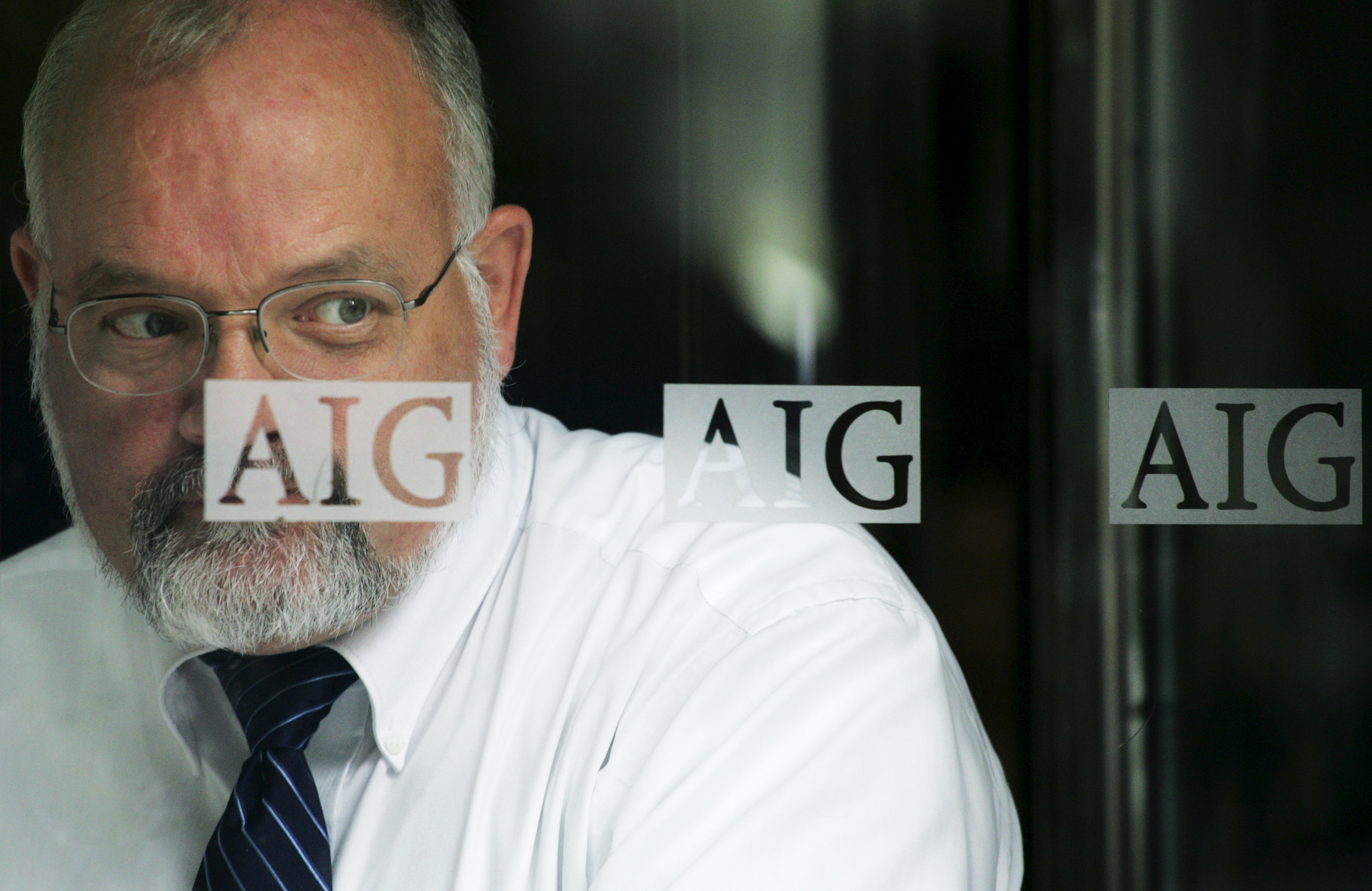
AIG is the cautionary analogy—not for how the risk was built, but for what Washington did when it broke. In 2008, the insurer’s Financial Products unit had written enormous, lightly supervised guarantees it could not honor. Federal authorities committed up to roughly $182 billion to stabilize it rather than permit a disorderly failure. The lesson is not that a rescue is guaranteed, but that when guarantees migrate beyond supervision and then fail, the pressure to expand the safety net becomes hard to resist.
3. Stablecoins: a guarantee people believe they have, and don’t. Congress enacted the GENIUS Act in July 2025, creating a federal framework for stablecoins—dollar-pegged digital tokens—scheduled to take effect in January 2027. The statute imposes reserve, redemption, capital, and supervisory requirements, and forbids issuers from claiming the tokens are federally insured.
Sounds reassuring: the law makes issuers tell buyers, in effect, “this token is not federally insured—if it breaks, don’t expect Washington to help.” But that ignores reality. Stablecoin issuers hold reserves largely as short-term Treasuries and bank deposits. Picture one concentrating a large share in an uninsured deposit at a single bank. If confidence cracks and holders rush to redeem their tokens for dollars, that scramble could produce severe liquidity pressure at the bank—and holders might find their “stable” coin is not so stable, whatever the GENIUS Act says.
This is not a hypothetical. In March 2023, the issuer of the second-largest stablecoin held $3.3 billion at Silicon Valley Bank. When the bank failed, the coin broke its peg with the dollar—and it recovered only after Washington guaranteed the bank’s uninsured deposits. The trouble ran from bank to coin that time. Next time, it could run the other way.
Some will say, “So what? Just don’t rescue the token-holders.” But that misunderstands when the damage is done.
By the time a rescue is on the table, even if it is ultimately rejected, the harm is already behind us. The excessive risk was taken years earlier by people acting on the belief that a rescue would come if necessary. That belief is the whole problem. Not the bailout, which merely ratifies a crisis already built. What fuels the next crisis is the bailout people expect.
And that expectation is not naive. It is learned. The government has said “you are not protected” before—to uninsured depositors, and to money-market fund investors in 2008—and then, when panic came, protected them anyway. People expect a rescue because the government keeps providing one. A printed disclaimer cannot undo a track record.
And the stakes are not small. Stablecoin reserves already run into the hundreds of billions of dollars; Treasury Secretary Scott Bessent has called $2 trillion by 2028 a reasonable estimate, and Standard Chartered has forecast roughly that level. The gap between what the law promises and what the public has learned to expect is a backstop waiting to be created at the worst possible moment.
The wider pattern
Several choices broaden government backstops, reducing market discipline. Since 2025, lawmakers have introduced a plan to raise the deposit-insurance cap to $10 million for certain business accounts—extending the post-2023 drift toward broader coverage that began when regulators protected Silicon Valley Bank’s uninsured depositors. The administration made it easier to place illiquid private investments into the roughly $10 trillion in Americans’ 401(k) plans, potentially putting taxpayers on the hook if those investments sour. The Federal Reserve expanded its standing repo facility, which backstops the dealers and banks that hedge funds use to finance leveraged Treasury trades. Those trades had already grown sharply: Fed researchers estimate Cayman-domiciled hedge funds’ Treasury holdings rose by roughly $1 trillion between 2022 and end-2024.
Other choices weaken government oversight—the second brake. The Federal Reserve refocused supervisory findings on material financial risk and removed reputational risk from examinations, while announcing a plan to cut central bank supervision-and-regulation staffing by about 30 percent by end-2026—a reduction that, by Governor Michael S. Barr’s account in March 2026, has already largely occurred. The CFPB directed a roughly 50 percent reduction in supervisory events and rescinded its nonbank enforcement-order registry. The OCC and FDIC withdrew the 2013 leveraged-lending guidance. And enforcement actions at the audit-oversight board fell in 2025.
While each is defensible, the overall direction is clear. Many actions, proposals, and supervisory changes facilitate excessive risk-taking. I found no offsetting moves of comparable weight.
A test every financial reform should have to pass
So, what should we do? Not a list of favorite reforms—that’s where these debates go to die, in endless argument over the right level of capital or the precise reach of the supervisors. Before any of that, every proposal should answer one threshold question, applied to every rule and rollback alike:
Does this increase or decrease the incentive of decision-makers inside financial institutions to take excessive risk?
It is not the only thing that matters—policy also weighs competition, credit, liquidity, and innovation. But it is the threshold. Run the year’s decisions through it: thinner capital at the biggest banks—the owners pull harder for risk, with less of their own money on the line. Annuities reinsured offshore—letting the firm make riskier investments with less capital backing the promise. Stablecoins backed by an expectation of rescue—the token holders and counterparties who should be monitoring the reserves have less reason to do so. Each raises the same directional concern: more pull toward excessive risk, fewer hands pulling back.
And the question cuts the other way too—it tells you what would pass. Anything that puts more of the decision-maker’s own wealth at stake, so the people choosing the risk feel the loss. Anything that gives a creditor, a board, a supervisor reason to grab the rope again. You don’t need a fifty-point agenda. At a minimum, policymakers should know which way each reform pulls.
The corresponding test for supervision is whether a change makes examiners more or less able and willing to surface material risk. The updated operating principles, the narrower use of supervisory tools, and the planned staffing reductions each have a defensible rationale. Taken together, however, they risk weakening the public brake just when a wider safety net makes that brake more important.
And this is not happening in calm waters. Strain is already visible—office delinquencies in commercial-mortgage securities hit a record in early 2026, and private-credit downgrades have outpaced upgrades for eight straight quarters. We are loosening the brakes on a system that is already stressed.
How it adds up
We have spent a year moving the financial system toward a worse place—a bigger backstop, less private-market discipline, weaker oversight—and every piece arrived wearing a reasonable argument.
That is what makes it dangerous. No one will ever cast a vote for the next crisis. There is no such vote to cast. There are only the smaller decisions—a dozen over the past year, each with its reasonable argument, each quietly dropping the rope—and a crisis is just what their sum eventually adds up to.
The question is whether we keep adding to this quiet accumulation—greater fragility and slower growth, bought one reasonable-sounding decision at a time—or begin restoring the private and public disciplines that hold risk in check.
Ross Levine is the Booth Derbas Family/Edward Lazear Senior Fellow at the Hoover Institution and co-director of Hoover’s Financial Regulation Working Group. He is a founding member of the Hoover Program on the Foundations of Economic Prosperity. Levine is also a research associate at the National Bureau of Economic Research.