 Powered by
Money, power and security are intimately connected. For extended periods, the world’s financial center has been concentrated in one country, one city, one currency, providing in effect a code of conduct, whose most effective modern variants have been the nineteenth-century gold standard (1873–1914), the Bretton Woods system (1945–1971), and the international system around the so-called Washington Consensus (1980–2008). Each of these orders eventually frayed, and alternatives needed to be constructed. Concentration around a financial center yields powerful network advantages, but the historical record warns against treating any such arrangement as permanent. The emergence of rival centers has repeatedly been associated with heightened conflict, war, and destruction.
An international order is not just an exercise in power projection. It is also built around a set of ideas that lay the basis for sustainable order.
Past orders were propagated by particular states that could project a grand vision attractive to many or most other countries: the nineteenth-century British case of Richard Cobden and John Bright on the universal beneficence of commerce, or the American vision of global commercial prosperity after 1945. But even visionary orders do not last. Certain dates—1688, 1789, 1914, 1945—mark epochal shifts in who holds financial and military supremacy, and on what terms.
Two historical cases stand out: the way that late-seventeenth-century England engaged in a financial revolution that lowered government borrowing costs and made Britain in the eighteenth century into a global power; and the institutional changes at the end of the Second World War in 1944 and 1945, at the Bretton Woods and the San Francisco conferences that built a new international order around the United States and the US dollar. By contrast, the Washington Consensus emerged much more informally.
Early modern Britain and a financial revolution
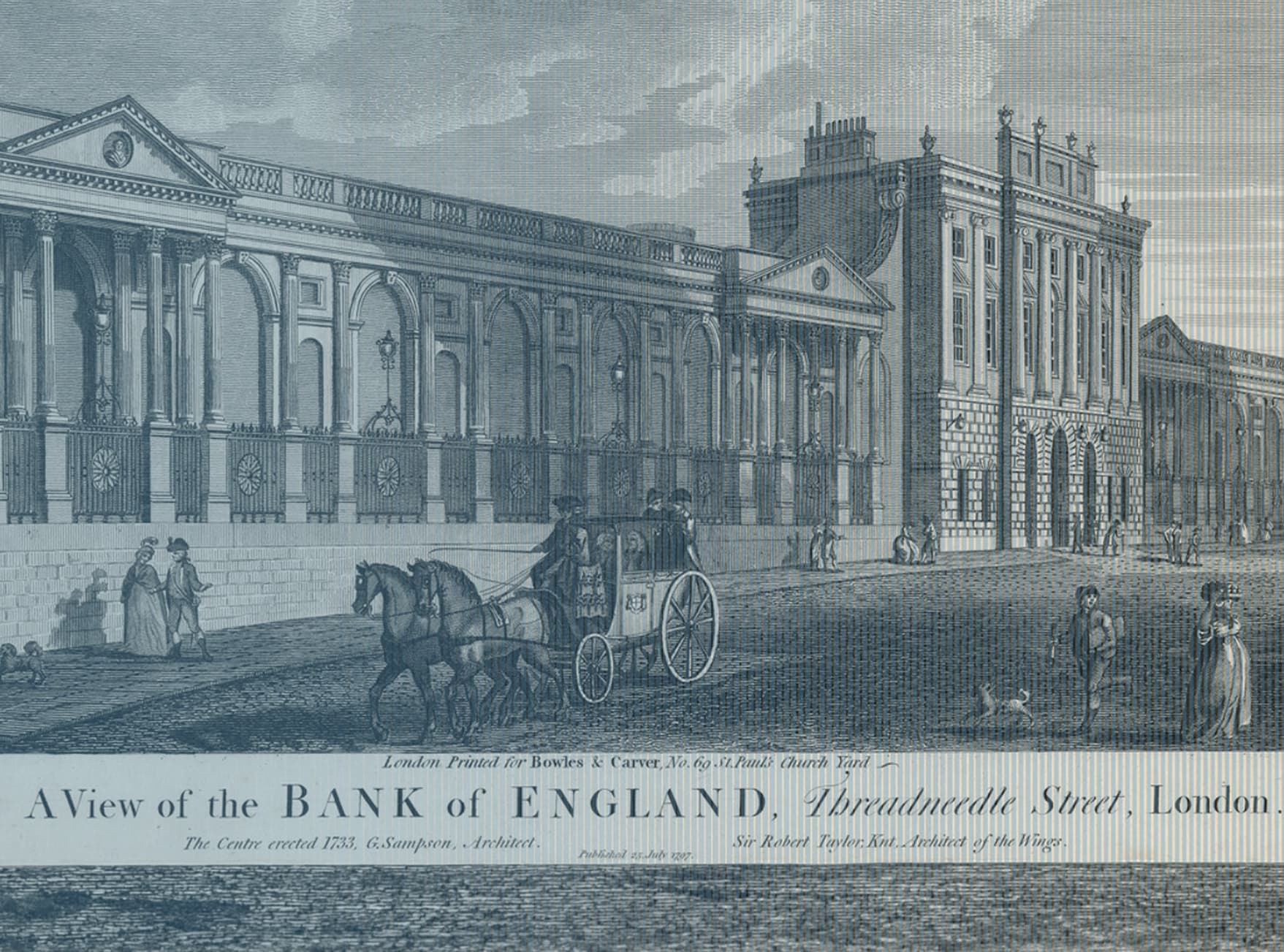
A powerful political science and economics tradition sees early modern Britain as the paradigmatic case of institutional reform generating growth. North and Weingast (1989), and subsequently Acemoglu, Johnson, and Robinson (2004), take as their core case late-seventeenth-century England in the aftermath of the Glorious Revolution of 1688, which replaced the would-be absolutist Stuarts with a constitutional monarchy. The key was a fiscal settlement that removed the random component of expropriation associated with royal attempts to garner revenue, embodied in the creation of the Bank of England, whose shareholders were also key figures in the representative assembly and holders of government debt—giving them a powerful incentive to vote taxes to service that debt, but also to keep taxes moderate. The result was that uncertainty and the cost of credit fell, so governments could fight wars more cheaply and entrepreneurs could borrow more easily.
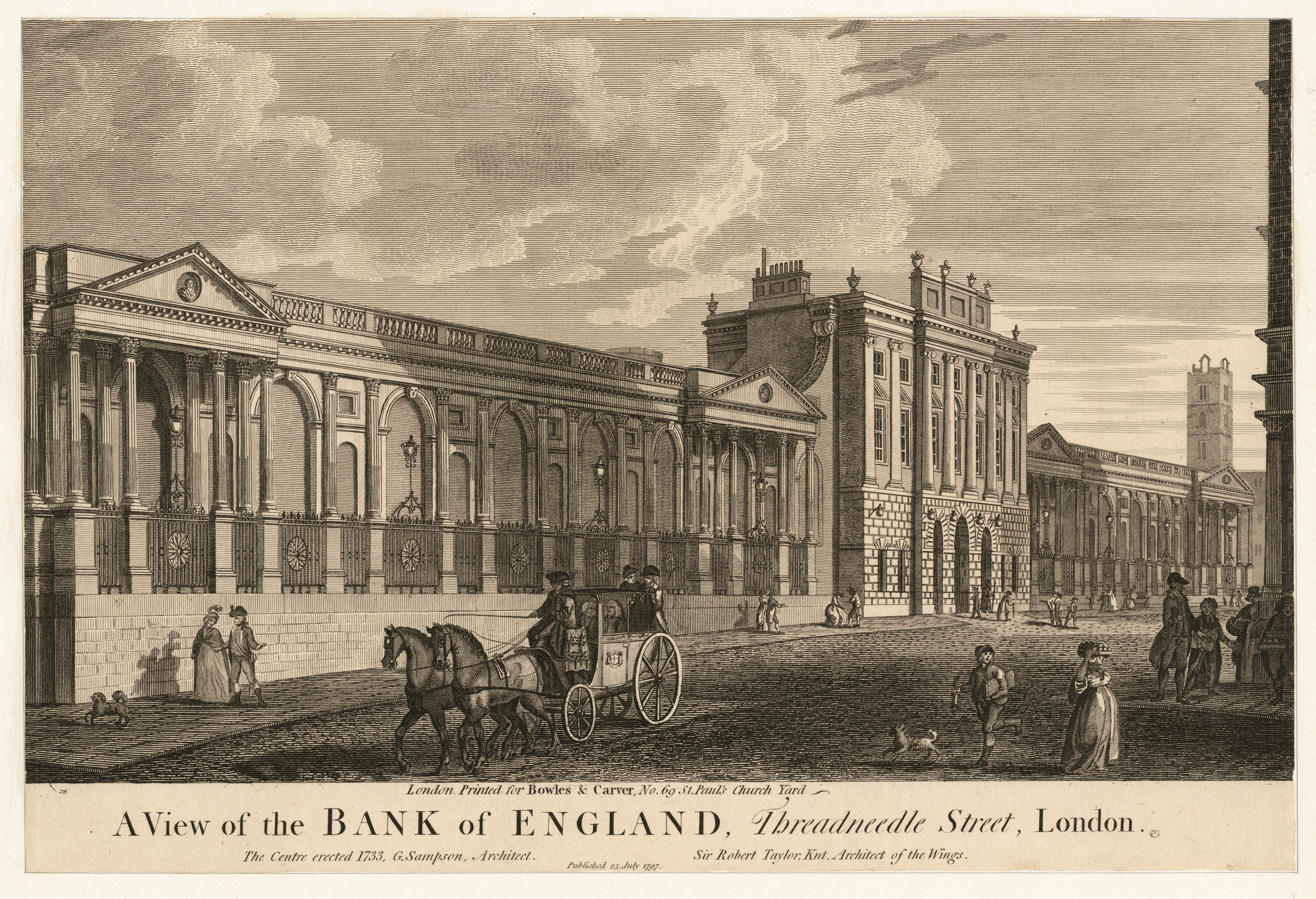
The first industrial revolution gave Britain dominant economic power that translated into military and political power: the British were able to win major wars against France, the dominant continental military power, because of their adoption of this superior fiscal technology (Bordo and White 1991).
Nineteenth-century globalization
The late nineteenth century era of globalization saw a major expansion of international commerce, widening prosperity, and an institutional framework centered on the gold standard as a “Good Housekeeping Seal of Approval,” in which countries committed to fiscally responsible policies to be able to borrow at cheaper rates (Bordo and Rockoff 1996). The system revolved around a complex set of financial institutions in the City of London, merchant banks that managed bond issues, but also acceptance houses that gave their signature to short-term commercial bills and enabled the markets—and a central bank capable of intervening in a financial panic—to measure the soundness of financial instruments.

British financial pre-eminence was definitively established only after 1871: until France’s defeat in the Franco-Prussian War, Paris and London had been rival centers for international bond issuance. At the very outset of this new era of British dominance, the journalist Walter Bagehot published, in 1873, Lombard Street: A Description of the Money Market, opening with a reflection on the balance of strength and fragility. Lombard Street was, he wrote, “the greatest combination of economical power and economical delicacy that the world has ever seen.”
Money, Bagehot emphasized, is economical power. It underpinned British imperial expansion. In the late 1870s, the power of the City of London was the key to the interventions that put Egypt and the Ottoman Empire in the effective control of the bondholders.

It also gave Britain a peculiar resilience. The mechanism that Bagehot meticulously described, and for which he gave his famous policy recommendations (Bagehot’s rule), meant that Britain avoided severe financial crisis of the kind that afflicted almost every country. As Liaquat Ahamed has shown (2026), in the year of Bagehot’s publication, Austria, the United States, and the new German Empire all faced crashes that led to the reorientation of their political order. Britain alone seemed immune. The Bank of England acted as the umpire of the gold standard using its Bank rate ( Lindert 1969) and helped to preserve its rules across the world.
The “envy of the financial hegemon” effect was just as visible in 1907, with major panics across the world, above all in the United States—but not in Britain, even though Britain’s industrial hegemony had long slipped away as the United States and Germany grew faster, with newer technologies. The City of London seemed to be Britain’s answer to holding onto its role as the dominant world power. Sterling bills financed global trade to the benefit of the City but also provided a public good to the rest of the world (Xu 2022).
The United States and Germany wanted to capture some of these rents. Reflection on the panic of 1907 pushed both the United States and Germany to think of institutional reforms—creating or strengthening the central bank, and developing the acceptance market. It was the ready market for accepted bills of exchange that made it cheap and convenient to finance trade between New York and Rio, or Hamburg and Buenos Aires, through London banks.
Merchant banks thus stood behind Britain’s dominant role and its conception of its security (James 2020). The information provided by Britain’s uniquely powerful merchant banks, and by its dominance of maritime insurance through Lloyd’s of London, gave the country a strategic advantage that it might use in time of war to interdict the trade of its adversaries.
Financial panic was itself a weapon. In 1911, Germany sent a gunboat to Agadir to force French concessions in Morocco, but a severe financial panic simultaneously struck Berlin. Reports—disputed but widely credited—held that French banks, backed by the government, had orchestrated a run on German banks and withdrawn gold; the Berlin bourse collapsed through September, culminating in a “Déroute” on September 8–9, with the Reichsbank losing a large share of its gold stock as Germans abandoned paper money.
The prewar financial tensions occurred at a moment of great technical change—the second industrial revolution, with automobile, radio, and aircraft all converging around 1900—that generated pressure to bet on new technologies and to contemplate pre-emptive strikes before rivals could exploit them. British financial dominance relied on information coming over transoceanic cables. The Italian inventor Guglielmo Marconi developed his technology for shortwave wireless communication mostly in Britain; a leading German electrical engineer, Adolf Slaby, who saw it there, returned to Berlin and convinced the German government to sponsor research and push German electrical companies to commercialize the technology through Telefunken. Wireless gave Germany a means of transmitting financial information less vulnerable to sabotage during conflict than the cables (Tworek 2019).
There were thus two developments that eventually undermined the stability-generating capacity of the London-centered gold standard mechanism: the politically motivated search for alternatives to a regime that seemed to give Britain a unique privilege; and technology, which offered alternative ways of communicating and organizing financial information—and thus redistributing economic power.
Interwar anarchy
The First World War, which Kennan (1979) referred to as the seminal catastrophe of the twentieth century, destroyed the fiscal stability at the heart of the prewar order, generated a morass of competing claims over war debts, reparations, and reconstruction loans, and severely strained the prewar hegemon, Britain.
The United States emerged as the dominant military and economic power, and the belligerents ended up deeply indebted to it.
The restored gold standard was based much more on holdings of sterling and US Treasury bills than the old prewar standard, and was thus usually called the gold exchange standard—an irony, since sterling bills now depended on a City of London whose international role was greatly diminished, even as US investment banks expanded their footprint in Latin America and Europe, giving strength to US bills (Bordo, Edelstein, and Rockoff 2002). Britain, still functioning as the key currency, had persistent payments deficits and a tendency towards deflation, torn between not creating enough reserve assets and having liabilities that could not be converted into gold and were thus subject to a potential run (which materialized in 1931). The surplus countries, France and the United States, meanwhile did not want to inject additional demand through monetary expansion (Mlynarski 1929).
The vulnerable financial system collapsed with contagious banking runs after 1931 (James 2001). In the 1930s, as the security situation deteriorated, financial weapons became increasingly central to security thinking, deployed as pre-emptive strikes. Germany had been the subject of a big run in 1931, which destroyed the German banking system; Germans believed—wrongly—that it had been orchestrated primarily by France. Protected by an increasingly intense exchange control regime, after 1933 Nazi Germany repeatedly tried to use its banks, especially branches abroad, to launch speculative attacks on the French currency, on the theory that a resulting drain would force corrective austerity, and the only area of substantial fiscal discretion lay in the military budget—so that cutting armaments expenditure would follow from financial attacks. The first of these attacks occurred in December 1933, and they became more systematic after 1936.
In this tense world, the United States saw the dangers of the European financial situation clearly. US Treasury Secretary Henry Morgenthau told President Roosevelt that the world was drifting rapidly towards war, and that the European countries were gradually going bankrupt through preparing for it.
In a famous analysis of the Great Depression, Charles Kindleberger (1973) argued that it arose out of a failure of world leadership. Britain had been the nineteenth-century hegemon, but the First World War destroyed its creditor position. In Kindleberger’s analysis, the United States emerged as the world’s largest creditor yet suffered a double vulnerability: a financial system prone to panics and a political system prone to populism and nativism. Where a responsible hegemon should have kept its markets open, the Smoot-Hawley tariff triggered retaliation; where it should have continued lending to distressed borrowers, intimidated US banks cut off the flow of credit, deepening world deflation.
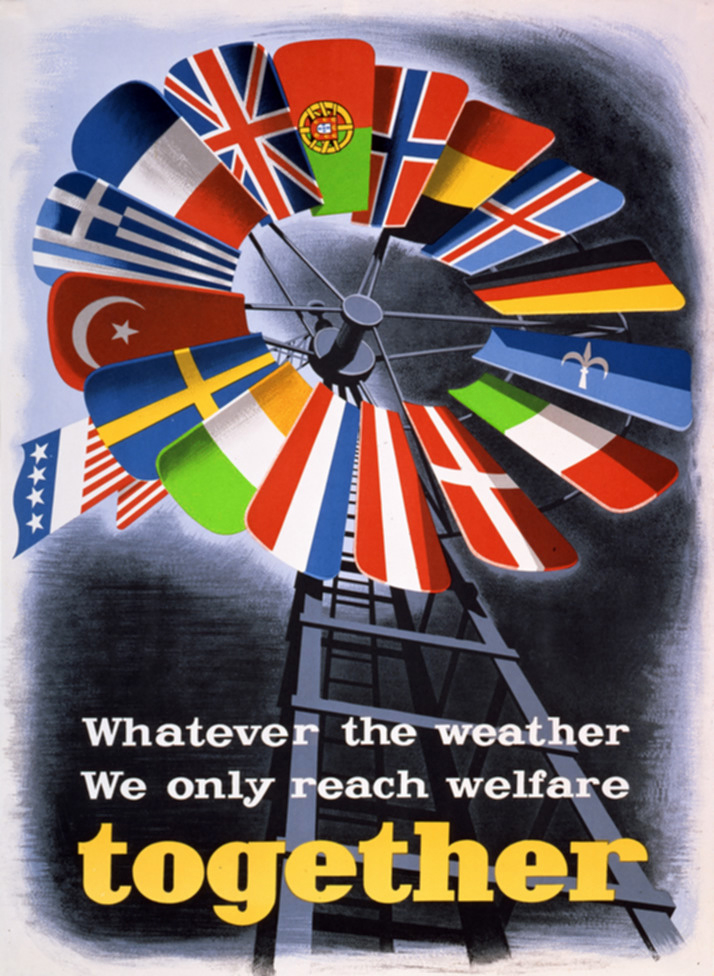
After 1945, Kindleberger helped design the Marshall Plan in explicit reaction to these failures and later generalized his insight into a theory of hegemonic stability: a benign leading power could align its own interests with those of the wider world by keeping trade and financial markets open.
A new world order around the United States
From the point of view of the New Deal, remaking the international order was also a moment to consolidate a particular American vision by internationalizing it. Treasury Secretary Henry Morgenthau explained at the opening of the July 1944 Bretton Woods conference that peace and prosperity were both indivisible: no country could be peaceful and prosperous on its own. The philosophy emerged out of New Deal debates and Secretary of State Cordell Hull’s trade vision.
The conference met just after the Normandy landings, when a speedy end to the European conflict appeared much closer than it proved to be, and Washington worried about a repetition of the chaos that followed the First World War. It was also clear that the new philosophy would strengthen American power without the kind of imperial system associated with the old European powers. Morgenthau told a strategy meeting candidly that the move was good for the world, good for the nation, and good for the Democratic Party (Blum 1967, 248).
In a mirror of the way that the Versailles Treaty produced a negative mythology, attributing the bad and unstable elements of interwar politics to the peace treaty rather than to the destruction of the war, Bretton Woods took on a positive mythology: an act of enlightened creative internationalism aligned the interests of multiple nation states and economic agents in a new synthesis of state and market. Bretton Woods was the intellectual sugar coating on the bitter pill of realpolitik dollar hegemony—and, simultaneously, a palatable wrapping for the internationalism that sat uneasily in domestic American politics.
The lessons drawn from the financial and security dysfunction of the 1930s thus lay at the core of the successful attempt to rebuild world order at the end of the Second World War, with the great conferences at Bretton Woods and then San Francisco that led to the creation of the International Monetary Fund and the United Nations. The financial/monetary order and the security order were closely intertwined: in the original vision, the five great powers that were permanent members of the UN Security Council were also the five largest shareholders of the IMF. Capital flows were subject to controls, on the belief that controls could prevent disorderly exchange rate movements and the kind of speculative attacks that had characterized the unstable international relations of the 1910s and 1930s.
The 1945 vision was never fully realized because of the Cold War. The Soviet Union never joined the Bretton Woods institutions, and China was represented in international institutions until the 1970s by the Republic of China (Taiwan), so that the outcome of the Chinese Revolution was not reflected in international ordering.
A revival of old strains
From the 1970s, with increasing capital market liberalization, international lending and bond markets revived, and something close to the pre-1914 world re-emerged—not as a result of any major conference, but from the attractiveness of the US financial and political model, an attractiveness that reasserted itself after a spell of inflation and uncertainty in the 1970s temporarily shook its appeal. The post-1980 world, sometimes labeled the Washington Consensus, generated enormous and potentially destabilizing capital flows, requiring profound institutional reforms—a new version of the Good Housekeeping Seal of Approval—as the price of access to cheap credit and sustainable growth.
It also became vulnerable over time to the same counterforces that emerged in the gold standard era: rival powers that believed they might capture the “exorbitant privilege” (in the famous admonition of France’s Finance Minister Valéry Giscard d’Estaing) of providing the currency and the financial infrastructure; and the development of alternative financial technologies. The search for alternatives became more intense after the 2008 Global Financial Crisis, which had its epicenter in the United States and its real estate market, but whose outcome seemed to show the resilience of the financial epicenter, while other countries focused more anxiously on the role of the US currency.
At an early stage in the financial crisis, there was an impressive coordination of multilateral international action. Many observers concluded that “the system worked.” A 2014 book of that title by Daniel Drezner argued that the world economy bounced back because global economic governance functioned to maintain economic openness and build resiliency into the international system. The coordination successes of 2008–9 contrasted starkly with the failed negotiations of the Great Depression and the disastrous 1933 World Economic Conference. The high point came at the G20 summits of 2009 in London and Pittsburgh, with macroeconomic stimulus and an extension of the IMF’s lending capacity: the spiral of trade decline that from September 2008 had looked like the interwar Kindleberger spiral stopped abruptly by April 2009.
But subsequent summits were much less impressive: Seoul (2010) was overshadowed by a futile US attempt to limit current account surpluses, and the G20 was eventually shunted into irrelevance by the 2017 Hamburg summit. Instead, after the Global Financial Crisis and again after the COVID pandemic, the monetary system depended on the Federal Reserve’s provision of swap lines to advanced economies but only to a handful of apparently arbitrarily selected emerging markets.
New alternatives emerged. Especially after the launching of China’s Belt and Road Initiative, credit flows were linked to the creation of new networks of clientage. Some Chinese analysts reflected on the recreation of the tributary system that had underpinned imperial China. A Confucian tradition suggests that the greatest display of strength lies in power that one only needs to show, not use (Dalio 2026).
Especially since 2008, the pre-1914 debates emerged once more with a new geography and a new spin. Is there an alternative to a world financial system built around the US dollar? The “envy of the financial hegemon” effect appeared all over again. The Bagehot-style interventions of the Federal Reserve gave the United States a peculiar resilience even after a financial crisis in 2007–8 that unambiguously originated in America.
Could China, or Europe, or quickly growing emerging markets, build their own system instead?
The fiscal vulnerability of large industrial countries—especially the United States—may reproduce earlier weaknesses. With a public debt level that exceeds its GDP, the US budget is peculiarly vulnerable to interest rate hikes. Could it be compelled to cut back its large proposed military expenditures by a fiscal crisis? Such fiscal vulnerability offers the possibility of pre-emptive speculative financial attacks. US policymakers had boasted of their capacity to do this to other countries—most strikingly in restricting Iran’s access to dollars with the explicit goal of creating depreciation, inflation, and political unrest that would lead to the overthrow of the regime.
Finally, there is the prospect of leapfrogging technologies. The rapid development of AI is a powerful tool, but it produces a race in which leadership rapidly shifts, between companies (OpenAI to Anthropic) and between countries, with China’s DeepSeek in 2025 outperforming US companies that had spent orders of magnitude more in developing AI engines. New technology could thus be the equivalent of Marconi’s wireless in revolutionizing strategy as well as financial relations in the early twentieth century.
Two roads
The old questions about international order from the first half of the twentieth century demand new answers. There are currently two possibilities for building a more secure international order, both with historical precedents.
The first is a revised multilateralism: institutions exercising genuine surveillance, supported by the transparent provision of economic, monetary, and security data—a return to the Bretton Woods and San Francisco vision, updated for the present moment.
Alternatively, there is the revived Cold War version, or a reconfiguration of the Britain-Germany rivalry that increasingly overshadowed pre-1914 politics and then led to catastrophe; in these orders a precarious stability is achieved by a balance of terror. In the modern version of this world, both the United States and China have the capacity to destroy or switch off each other’s AI operations and financial systems, but refrain from doing so because of mutually assured destruction. This is the far riskier option. The speed of technological change makes it conceivable that one side could achieve a decisive advantage—rendering it immune to retaliation and thus nullifying MAD itself.
Michael D. Bordo is the Duncan Stewart Distinguished Fellow at the Hoover Institution and Emeritus Distinguished Professor at Rutgers University and former director of the Center for Monetary and Financial History there. He is also a member of the Shadow Open Market Committee.
Harold James is the Claude and Lore Kelly Professor in European Studies at Princeton University, professor of history and international affairs at the School of Public and International Affairs (SPIA), and an associate at the Bendheim Center for Finance.