 Powered by
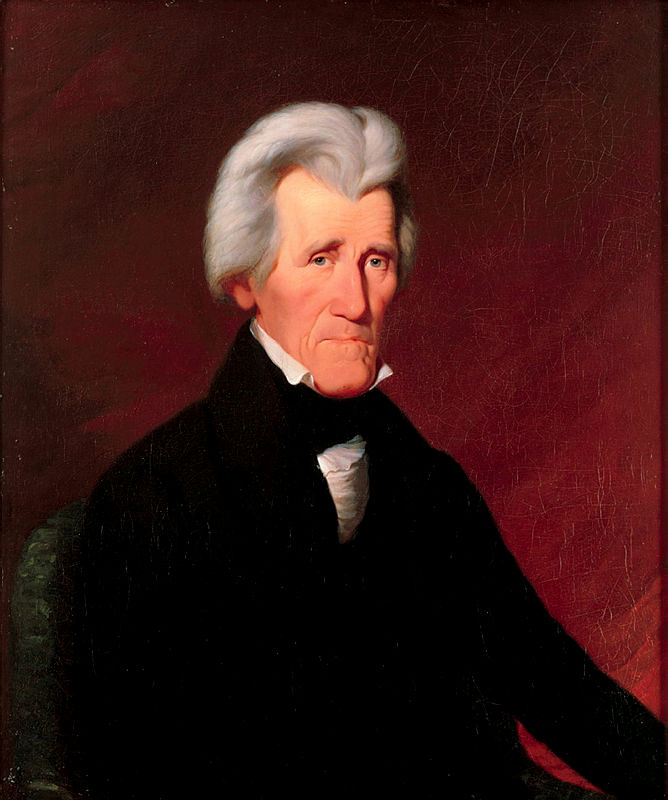
Today, with both World War II and the Cold War fading into memory, US foreign policy might best be described as “Jacksonian”: an evolution of the postwar order that sees America confronting hostile powers and their agents while wielding a new, and more complex, vision of deterrence.
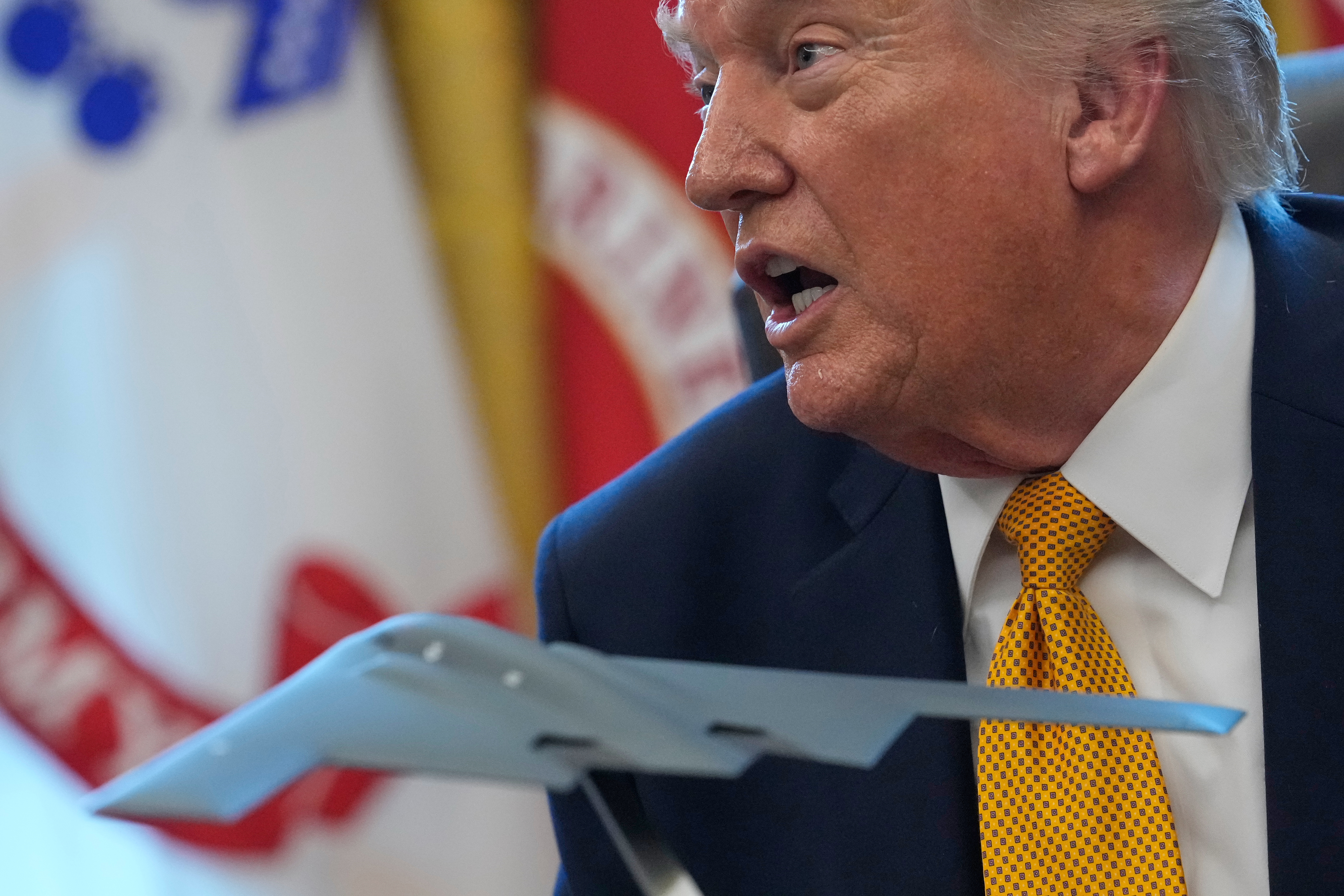
During his first five years as president, Donald Trump threaded the needle between the pre-emptive use of force abroad and the necessity of avoiding “forever wars.” He channeled Americans’ fear of more Middle Eastern quagmires like the Iraq war (2003–2011) and the twenty-year misadventure in Afghanistan.
Trump’s policies aimed to neuter charges both from the left that he was a “neo-isolationist,” and, from the right, that he was a “neocon” nation-builder.
Yet in his second term, Trump also accepted the reality that after four years of Biden defense-spending stagnation and Pentagon DEI initiatives, the calamitous flight from Afghanistan, the Russian invasion of Ukraine, and the October 7 massacres in Israel, US deterrence was eroded. Questions had arisen as to whether the American military was oriented more toward greenlighting cultural and social changes than to ensuring global combat pre-eminence.
Trump, in his first term, had crafted a new American foreign-policy doctrine of what might be called pre-emptive deterrence: dealing with looming threats before they transmogrified into full-scale wars. More commonly, it was dubbed “Jacksonian”—recalling the initiatives of populist president Andrew Jackson from 1829 to 1837. Jackson’s trademarks were fierce protection of perceived national interests whether from friend or foe, along with unapologetic use of force and threats to insist on reciprocal trade, freedom of the seas, and territorial expansion.
A first-term Trump had already put this doctrine into predictable practice when he obliterated the Russian mercenary Wagner Group’s attack on US troops in Syria (2018), eliminated ISIS leader Abu Bakr al-Baghdadi (2019), bombed ISIS into oblivion (2019), and took out the Iranian general and head of the terrorist Quds Force Qasem Soleimani (2020).
All these operations were either one-off pre-emptive air attacks or reactive ground counterattacks by US forces long stationed abroad. They did not tax the military. Trump accepted that the US military needed to be rebuilt and refashioned after cuts and neglect during the Obama and Biden years. There was no follow-up fighting after any of these actions, other than on one occasion when Trump allowed Iran to send over a few retaliatory performance-art missiles to save face.
No Americans were killed in any of these interventions. And few of Trump’s enemies were, either. Yet all of the operations helped restore US deterrence, and succeeded in their objectives—driving ISIS out of Iraq, curbing Iranian terrorist activity in Iraq, stopping further Russian aggression in Syria—and in confirming that a Jacksonian US at times would be mercurial and unpredictable, and would be better left alone. Nor was there much sustained domestic opposition to any of these operations, since they all were near-flawlessly conducted and, to repeat, cost no American lives.
Deterrence refined
These actions were only part of a successful foreign policy that re-established deterrence without the calamities or costs of the Afghanistan and Iraq wars. Russia, for example, invaded neighboring nations during three recent US administrations, but only prior to and after Trump—with the 2008 Russo-Georgian war under George W. Bush, the 2014 invasions of the Donbass and Crimea under Barack Obama, and the 2022 Russian attempt to take Kyiv, plus the start of the four-year border slog that followed, under Joe Biden. Apparently, Vladimir Putin, like others, assumed either that the Trump-era US military was too kinetic for him to run the risk of starting a war on NATO’s border, or that the United States itself was capable of anything if provoked.
Note, furthermore, that Putin attacked his neighbors on the watch of the staunchly pro-NATO presidents Bush, Obama, and Biden, but not under the constructive NATO critic Donald Trump. Perhaps the Russians were also deterred because Trump was the first president in a generation to so effectively browbeat NATO members to keep their defense-expenditure promises that the majority finally consented, ponying up $100 billion for new arms and military readiness.
In addition, the Trump administration greenlit the offensive-weapons sales to Ukraine that had been put on hold by his predecessors, withdrew from an asymmetrical missile treaty with Russia, and jawboned the Germans about unwise reliance on the Russian Nord Stream pipelines. All this sent a message—and at very little cost—to Putin that the United States now might be tactically mercurial in his responses to challenges to American security, but strategically absolutely predictable in fiercely protecting the interests of the United States, which often included those of its critical NATO allies.
A middle way
In his second term, Trump initially followed this same Jacksonian script, as he obtained massive increases in the defense budget and began dismantling much of the Pentagon’s DEI architecture.
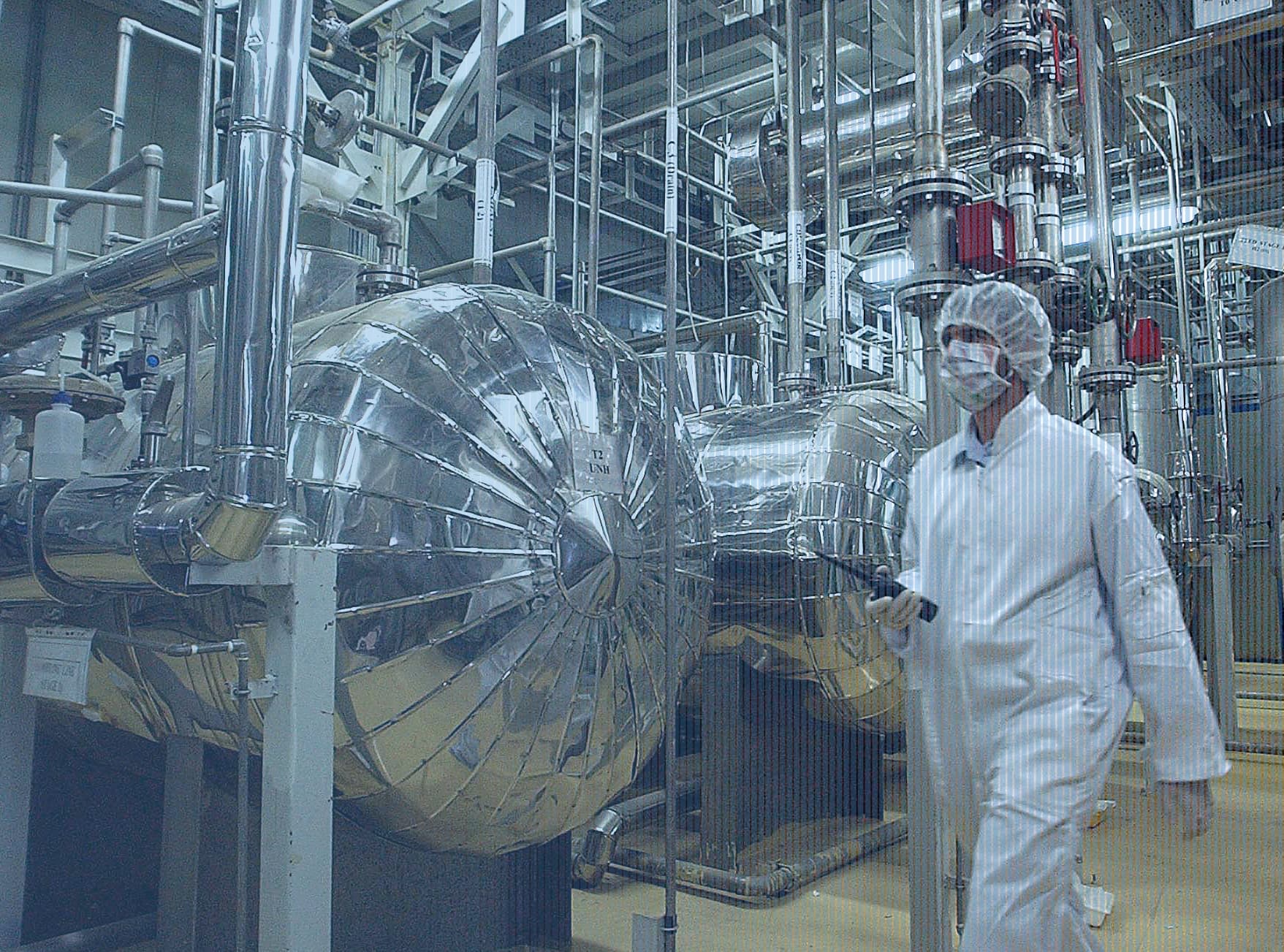
Then came the June 22, 2025, bombing of the Iranian nuclear facilities at Fordow, Natanz, and Isfahan with bunker-buster bombs (Operation Midnight Hammer), which lasted less than half an hour over Iranian territory.
While the left damned Trump for his “reckless” interventions, there were also a few objections from some on the right, alleging that Iran posed no immediate threat justifying such pre-emptive bombing. The left leveled an additional charge that Trump was now doing the bidding of Netanyahu’s Israeli government. The administration retorted that Iran was about to process enough enriched uranium to build nuclear weapons, and that seven prior presidents had all promised that a nuclear Iran would never have a bomb.
Trump himself further reminded his critics that the mini-“war” had begun and ended without any ensuing tit-for-tat conflict. All true.
On January 3, 2026, Trump conducted the removal and extradition of Venezuelan communist narco-autocrat Nicolás Maduro. Indeed, the United States virtually took control of the Venezuelan government, economy, and oil industry. The operation was part of a long-term effort to avoid chaos in Venezuela by allowing an autocratic caretaker regime to hold onto power, while the country transitioned to a consensual government.
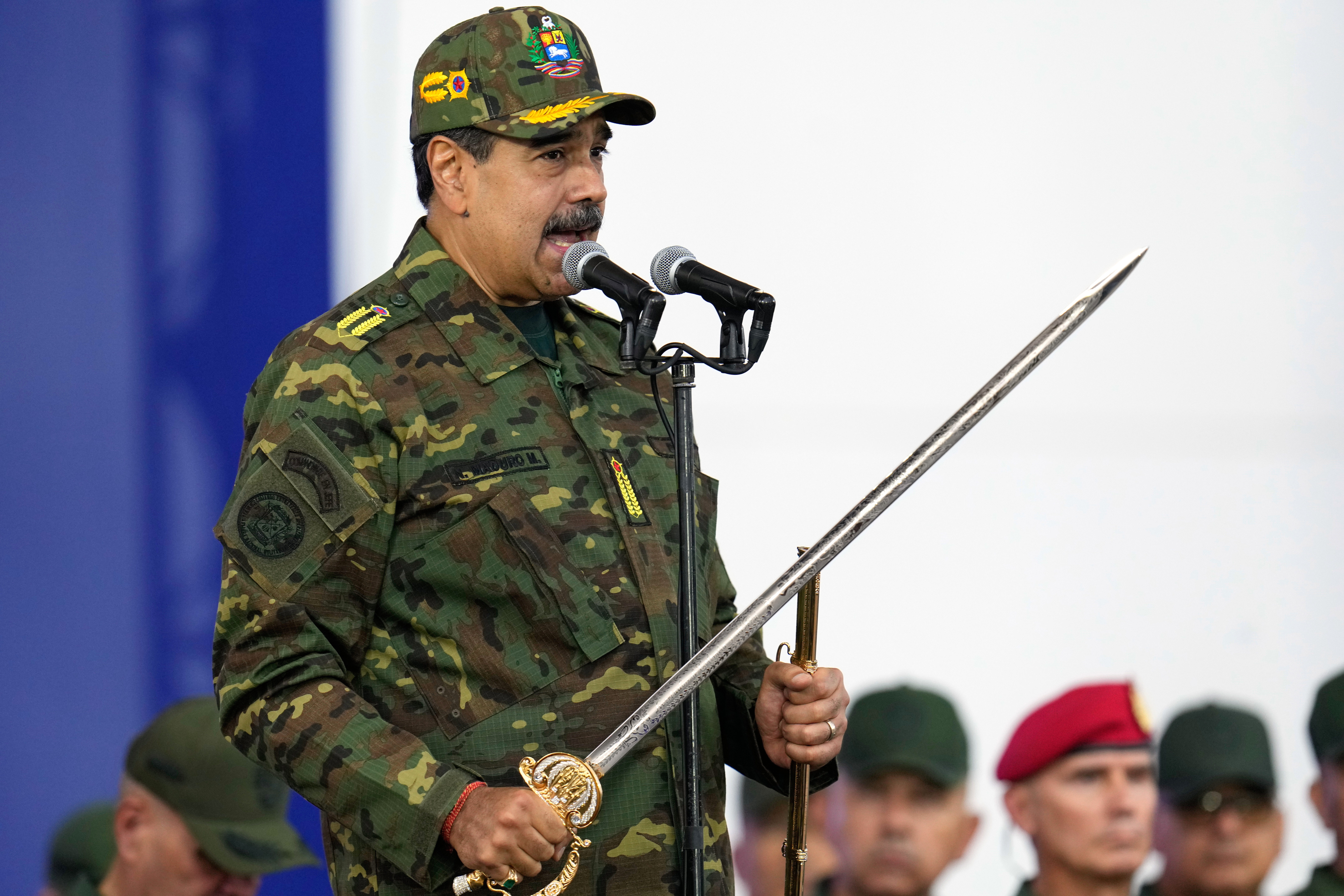
The strategic aim, however, was multifaceted. The United States wanted to stop Maduro’s stealthy sale of his sanctioned oil to China, and to end the massive exodus of Venezuelan illegal aliens—many of them criminals deliberately released by Hugo Chávez and Maduro to wreak havoc—into the United States. The administration also sought to stop Venezuelan drug shipments into North America and to end Maduro’s use of Venezuela as a hub for hemispheric communist expansion and subversion of South American governments.
A further geostrategic subtext of the incursion was aimed at China, in an attempt to restore the decaying Monroe Doctrine. Venezuela, in that regard, was a follow-up to the earlier administration effort to force Panama to honor its treaty obligations and eject Chinese companies from the exits and entrances of the Panama Canal.
The Maduro removal caused little domestic pushback—somewhat oddly, given the usual fierce anti-war opposition to any “Yanqui” use of force to remove a Latin American left-wing government. But the unpopular Maduro had virtually destroyed a once-rich nation, and jailed or killed off his opposition. And as with the killings of the odious Soleimani, Baghdadi, and the two hundred or so mercenaries of the Wagner Group, few lamented their passing.
Also like the Iranian bombing mission, no Americans died in one of the most difficult and complex operations conceivable: arresting and extraditing a terrorist foreign leader from his fortified and heavily guarded presidential enclave. Accordingly, most Americans either supported the mission or voiced no sustained objections. So far, the Trump’s administration’s continued Jacksonian policies, over the five years in which they were implemented, had not taxed the US military—whether in lives lost, arsenals depleted, effects on the economy, or multibillion-dollar expenditures.
In short, as of early 2026, the administration had established to both supporters and opponents that Washington was now neither isolationist, as caricatured by the left, nor a neoconservative nation-builder, as alleged by some on the right.
The Iranian detour
By early February, Trump was maintaining his normal 38–42 percent approval ratings, which stayed low amid massive left-wing demonstrations against Tesla, DOGE, and ICE, as well as the inherited Biden inflation that had not yet abated. Most Americans by February could see strong jobs reports, steady GDP growth, mounting foreign investment, a record-high stock market, and gas prices at near-record lows. In other words, no one expected in a midterm year that the Trump administration would revisit Iran, as it was busy prepping the economy to boom before the 2026 elections, and thus refute historical trends that an incumbent president hemorrhages badly in his first congressional referendum.
But, on February 28, Trump did not just bomb Iran as in 2025. Instead, he sought to destroy the Iranian regime’s very ability to make war. More controversially, he again did so in concert with the Netanyahu government and the Israeli air force. And unlike with past interventions, this time thirteen Americans were killed in the first thirty-eight days of bombing.
The first cycle of bombing under what was dubbed Operation Epic Fury continued from February 28 to April 8, demolishing Iran’s military and nearly wrecking its economy—before ceasing for nearly two months of “negotiations.” But in those ensuing weeks of deliberately sporadic Iranian haggling, many of the implicit and explicit American war aims—the surrender of Iran’s nuclear material, the destruction of its missile and drone capability, the end to subsidies to its Arab terrorist satellites, and free international passage through the Strait of Hormuz—continued to be rejected.
Deadlock ensued. The midterms grew closer. Gas prices climbed. And opposition to the war now intensified as never before—precisely as the militarily defeated (but still strategically alive) Iranians had planned.
The domestic left saw this apparent detour from the administration’s prior Jacksonian operations as a midterm godsend and began declaring that the war was already a quagmire, or Trump’s own Vietnam—as if forty days of bombing and thirteen fatalities were analogous to twelve years of war that cost 58,000 American lives. In many cases, critics at home praised Iran’s rope-a-dope strategy, as if the regime’s mere survival meant victory, discounting its loss of a half-trillion-dollar, fifty-year investment in its military-nuclear-industrial complex.
Again, tactically Iran was in shambles, but strategically it still saw a pathway to survival as the “war” now reached the four-month mark. Critics, now both left and right, claimed it had degenerated into a taboo “forever” war. The longer Iran could delay further American airstrikes and protect a few hundred missiles and drones in subterranean caches, and the more it could disrupt oil traffic through the Strait, the more the regime thought America would be forced by domestic and global pressures to back off, and leave a near-comatose but still-alive Islamic government in place.
The strategic and political results, Tehran wagered, would ripple beyond Iran, and call into question the efficacy and logic of Trump’s entire Jacksonian policy. Iran’s mere survival would be broadcast as victory.
A reaffirmation, a reversal, or something else?
So, what was Operation Epic Fury? A MAGA betrayal, or simply an expanded Jacksonian work in progress?
Militarily, there was no question that Iran’s military and nuclear industrial complex was severely damaged. Its armed forces were reduced to a few motorboats harassing ships in the Strait. Perhaps only 10 percent of its once-vast missile and drone fleets were still hidden in underground arsenals. The remnants, nonetheless, of this depleted stockpile were still being used to threaten gulf oil exporters should US bombing resume.
Nevertheless, the military verdict was clear: the Iranian terrorist and military juggernaut that had been supposedly indomitable for half a century had been neutered in less than six weeks, with limited US fatalities. Comparisons with past interventions are instructive.
The bombing itself was far shorter than the seventy-eight-day 1999 NATO attack on Serbia spearheaded by Bill Clinton. That operation finally succeeded in removing the regime of Slobodan Milošević, when Clinton ordered the destruction of dual-use targets, blew up the Serbian bridges on the Danube, and began taking out part of the Belgrade power grid—notably, doing much more damage to civilian infrastructure than Trump did in Iran.
The Iran “detour” was also quite different from another congressionally unauthorized war, the seven-month 2011 NATO bombing of Libya, directed by Barack Obama. That second often-incoherent operation left chaos in its wake, as it became increasing clear that no one quite knew which Libyan faction was fighting the other.
In fact, when it comes to any comparison of the Iran war with prior campaigns, rarely in military history has one side so destroyed the military of another in such a short time with so few casualties.
Did that fact matter? Not entirely. And why, after this spectacular success, did the Trump administration pause bombing for nearly two months?
First, Trump apparently assumed that mass popular Iranian resistance—despite the slaughter of up to 30,000 protesters just weeks earlier—might resume once it became common knowledge that the regime was now on life support. Thus, bombing targets like bridges, oil infrastructure, and power plants was at least initially ruled out.
Second, after decimating the Iranian leadership, the United States found it hard to find credible negotiators. American negotiators could not be sure whether this was a genuine beginning of regime collapse or simply a cynical ploy of “moderates” playing good cops, while the Revolutionary Guard “bad cops” sought to break the armistice.
Third, as June began, gasoline prices were still too high. More troublesome to the administration, gas prices fell on days when the endless negotiations were declared promising and rose on news of more tit-for-tat military exchanges. Delay put even more pressure on Trump from his nervous Republican congressional partners to wash his hands of Iran, declare victory, and turn his attention to the economy. Meanwhile, Iran was under banking sanctions, cut off from $150 million in daily oil sales, losing over $400 billion in economic output per day, and nearly bankrupt, but somehow still harassing shipping and issuing credible threats to use its vestigial hidden missiles to destroy the gulf oil infrastructure.
In sum, the United States was left with a temporary dilemma. The administration could easily and quickly destroy what was left of Iran’s military, wreck its entire oil industry, bury its enriched uranium and seal it under mountains of bombed rubble, and send the Navy into the strait to wipe out anything left of the Iranian “mosquito” boat fleet and missile arsenal—and then declare victory and go home.
But that avenue also entailed its own set of dangers: suffering more US casualties, further spiking the price of gasoline at home, risking a global recession caused by havoc in the Strait of Hormuz, endangering the fragile oil infrastructure of the oil-exporting nations, empowering the administration’s critics both foreign and domestic, escalating tensions with and against Israel—and losing both the House and the Senate, and with it the entire ongoing Trump counterrevolution.
So, in the end, Operation Epic Fury both was and was not a typical Jacksonian intervention. There remained an undeniable achievement in weakening Iran for a generation, legitimate hopes for future Iranian popular uprisings, and a regime left broke, in turmoil, and impotent. But once the struggling regime’s international antennae sensed that the American left and the Europeans were equating its mere survival with triumph, Iran began to stall and in near-Orwellian fashion declared victory.
The shape of a pragmatic future
The final irony?
Lost in the hullabaloo was that the US intervention had likely already changed the geostrategic map for the near future, and in Jacksonian fashion.
Israel was now—almost surreally—partnering with some of the gulf states to protect them against Iranian missiles. There was new talk of expanding the Abraham Accords and Arab recognition of Israel.
China had already lost its discounted Venezuelan oil and now was threatened by a cut-off from cheap Iranian oil as well. In short, Beijing needed over eleven million barrels a day of imported oil, while the United States had now become the largest oil and gas producer in history. Chinese plans to infiltrate Latin America had earlier been sidetracked in Panama.
Furthermore, Chinese-supplied air defenses and weaponry proved dismal in Iran, while the US Navy and Air Force had put on a show of spectacular military efficiency and professionalism.
Russia was still bogged down in Ukraine and, with clients Syria and (for now) Iran lost to it, had lost its toehold in the Middle East.
Hezbollah, Hamas, and Yemen’s Houthis were cut off from a now-bankrupt Iran’s monthly subsidies and were slowly dying on the vine. Tiny Israel loomed as the Middle East’s military, technological, and economic powerhouse, and was increasingly, though quietly, seen by gulf regimes not as a threat but as an unspoken ally.
Trump himself had been reviled by the left as a “TACO” (“Trump always chickens out”). But even his foes conceded that he was the first president of the past eight not merely to say that Iran should not have a nuclear weapon but to take great risks, before critical midterm elections, to guarantee that it would not.
The war was unpopular not because of the usual reasons of tactical stalemate, high casualties, trillion-dollar-costs, or widespread Arab furor. The anger at home and to an extent abroad derived from election-year politics in the United States; relatively anemic communications from the administration about the course, cost, and aims of the war; a general global desire to see the controversial Trump stymied and embarrassed; the fragility of the world economy’s reliance on the Strait of Hormuz; and the Western disdain for any new military operation in the Middle East’s religious and fossil-fuel tinderbox.
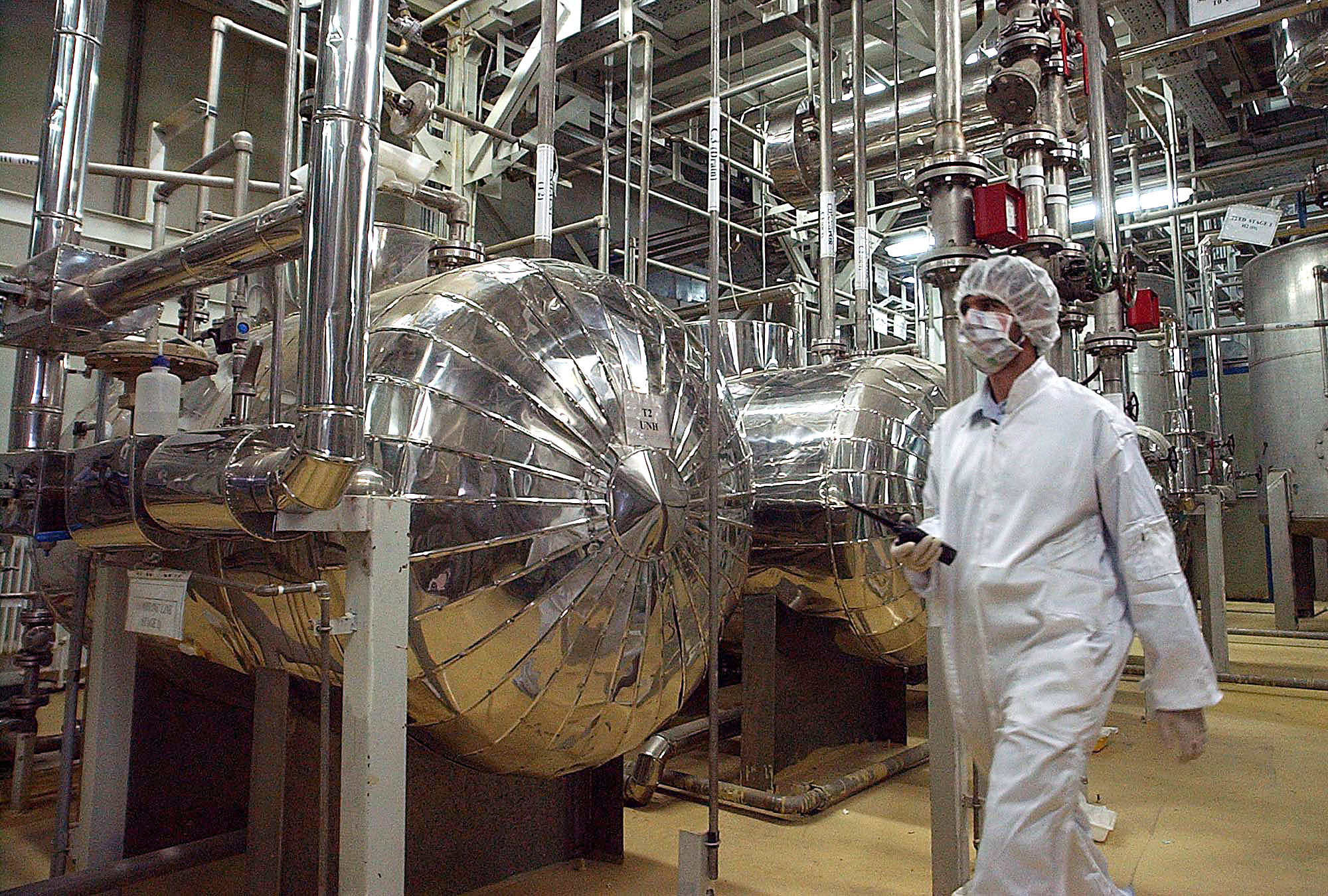
The Jacksonian verdict of the war now depends on what it would cost in American time, lives, and treasure for theocratic Iran to become denuclearized, its military neutered for years—and whether the Iranian people overthrow the murderous theocracy.
That said, contrary to the conventional wisdom, the future of a Jacksonian America in a radically changing world has rarely been brighter. America is now radically ascendant; China, the supposed new superpower, is stagnating. In all the most important indicators of global power and influence—oil and gas production, food self-sufficiency, fertility, innovation, weaponry, constitutional stability, personal freedom, influential global popular culture, university STEM programs, naval carrier groups, air power, nuclear arsenals, space exploration, GDP per capita, alliances, and new technologies such as AI, robotics, satellites, and biological engineering—America is extending its advantages over China and the world at large.
The Iran war reminded even critics that the European Union is military impotent, almost entirely reliant on America’s NATO membership, and stagnating under disastrous green-energy programs, open borders, illegal immigration, plummeting fertility, failed socialist policies, and illiberal censorship.
The warning for an ascendent America is not to allow its growing dominance to result in overreach and hubris, given the historical fragility of superpower ascendance. Twenty-first-century Jacksonism emerges as a pragmatic and pre-emptive policy of restoring deterrence, at reasonable costs—while offering an antidote to, not a repeat of, misadventures like Vietnam, Afghanistan, and Iraq.
Victor Davis Hanson is the Martin and Illie Anderson Senior Fellow at the Hoover Institution. A scholar of classical antiquity and military history, he is a bestselling author, penning more than two dozen books, including The Second World Wars: How the First Global Conflict Was Fought and Won.