 Powered by

This article is part of Liberty Amplified, a series produced in partnership with the Hoover Institution’s Human Security Project, featuring voices that challenge authoritarianism in pursuit of freedom.
Today marks the first day of the 2026 FIFA World Cup, a monthlong global competition centered on the world’s most popular sport.
The power and influence of sport are undeniable. At the local level, it not only transcends culture, language, and background but also allows an individual—whether athlete or fan—to be part of a cause greater than herself. Sport is a platform for growth, change, and self-expression—particularly for women and girls, who have historically been excluded from sport.
I think back to the 1999 Women’s World Cup final, where Brandi Chastain of the US Women’s National Team ripped her shirt off after scoring the winning penalty kick. This groundbreaking moment was seen around the globe, with some viewers appalled, others inspired.
Brandi’s penalty-kick celebration sparked a much-needed discussion of equality in women’s sports, and she has continued to advocate for women’s access to sport both in the United States and around the globe. Through her creation of the Bay Area Women’s Sports Initiative (BAWSI), Brandi has worked to support girls’ engagement in sports, particularly those from poorer neighborhoods and children with disabilities. She also founded Bay FC, the Bay Area’s first National Women’s Soccer League (NWSL) team, and currently serves as a US State Department sports envoy.
To me, Brandi Chastain is not just a World Cup champion, Olympian, and sports icon but a coach, mentor, and friend.
She became my competitive club soccer coach when I was eleven years old, and served as a role model throughout my formative years. I will never forget when I had my first knee dislocation, and she carried me off the field even though she herself had just undergone back surgery. Through my soccer career and Brandi’s influence on my life, my eyes have been opened to the impact of sport on individuals and society, and how it can be a vehicle for freedom.
In an interview I conducted with Brandi for this article, she told me, “Sport has a depth and a breadth that nothing else has. We can just get together at a park, decide we’re going to play game X, and anybody can join. To me, that’s freedom.”
As Brandi noted, sport empowers people because the environment is inherently “open, welcoming, allows you to compete, challenge yourself, and be a part of a team.”
This is something I’ve lived, too. Sport has taught me the importance of accountability, teamwork, and sacrifice. On the soccer field, I have experienced profound joy and personal freedom.
Yet this same activity, used to liberate individuals, can also be used to control.
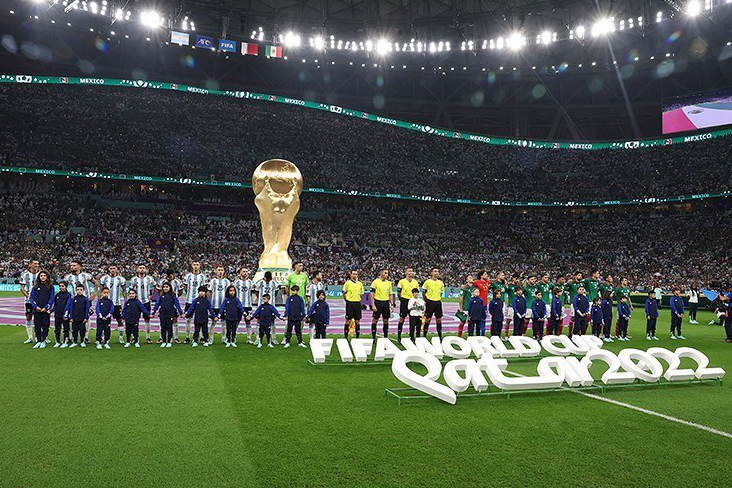
Many governments, often authoritarian regimes, engage in “sportswashing,” a tactic where governments leverage international sporting events to divert attention away from human rights abuses and systemic failings. By using these large events to project a positive image, authoritarian regimes can drown out criticism and dismiss shortcomings. Take Qatar, host of the 2022 World Cup. The Qatari government spent more than $220 billion on infrastructure development, pumped out positive news coverage, and provided numerous tourist activities and attractions, all meant to wow international audiences and distract them from government failings.
Aside from sportswashing, authoritarian regimes also often crack down on participation in sports, particularly for women and girls. As noted in a previous Liberty Amplified piece, “Why Authoritarians Target Women,” regimes often repress women specifically to “divide and conquer”—singling them out from men, offering visible proof of power, and attracting like-minded supporters around the globe. This argument holds true in the sports world.
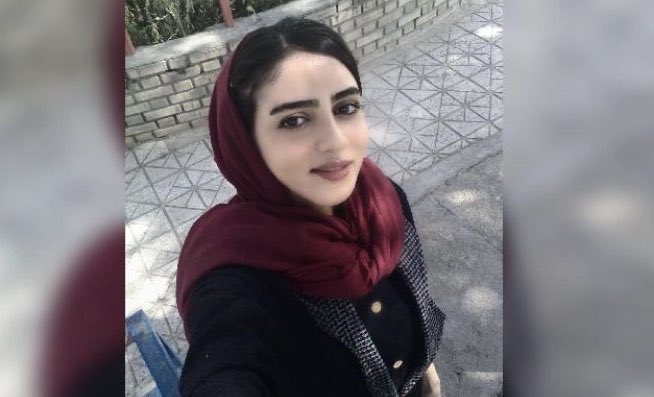
In 2014, a Saudi woman disguised as a man was arrested for trying to watch a soccer game. In 2019, Iranian soccer fan Sahar Khodayari, called “blue girl” in reference to the colors of her favorite soccer team, Esteqhlal FC, set herself on fire to protest Tehran’s laws banning women from entering stadiums.
These tragic stories are just a few of the many instances in which women’s access to watch and play sports is brutally restricted. Brandi shared, “[Sport] should land everywhere. No one should be able to say, ‘You can’t play sports, but you can play sports.’ ”
Sport allows for a sense of agency and autonomy because it teaches people that choices have consequences, and that effort, sacrifice, and presence (on or off the field) matter. It is a vehicle for change and progress—which makes it dangerous for autocrats.
I believe that sport—particularly for women and girls—is freedom. And not enough people have access to it.
Brandi told me, “Any time we open doors for people, we have an opportunity to grow humanity, and sport is the perfect place for that to blossom.”
Looking ahead, the 2027 FIFA Women’s World Cup will serve to prove just that. The tournament, held in Brazil, is expected to surpass the 1.5 billion views from the 2023 Women’s World Cup, sending a message to girls worldwide that there is a place for them in sport.
To fight for freedom around the globe, we must recognize the importance of sport and continue to advocate for access to it. “It’s not going to take [just] one woman,” Brandi told me, “but it takes all of us to be brave enough to fight for space, agency, and opportunity.”
When I am on the soccer field, I feel true freedom. I hope that one day, all women and girls around the world can experience this same joy.
Grace McGoran is a student at Stanford University pursuing a B.A. in International Relations. A Bay Area native, Grace has played soccer her whole life and currently serves as President and Captain of Stanford Women’s Club Soccer.
Liberty Amplified features the voices of those who defy autocracy in pursuit of freedom. It is part of the Hoover Institution’s Human Security Project (HSP) led by Lt. Gen. (Ret.) H. R. McMaster, senior fellow at the Hoover Institution and former national security adviser. The project carries out research into how authoritarian regimes sustain power and how pro-democracy groups and their allies can challenge them to advance liberty. HSP is an educational resource and tool for activists both outside and within those countries.