 Powered by
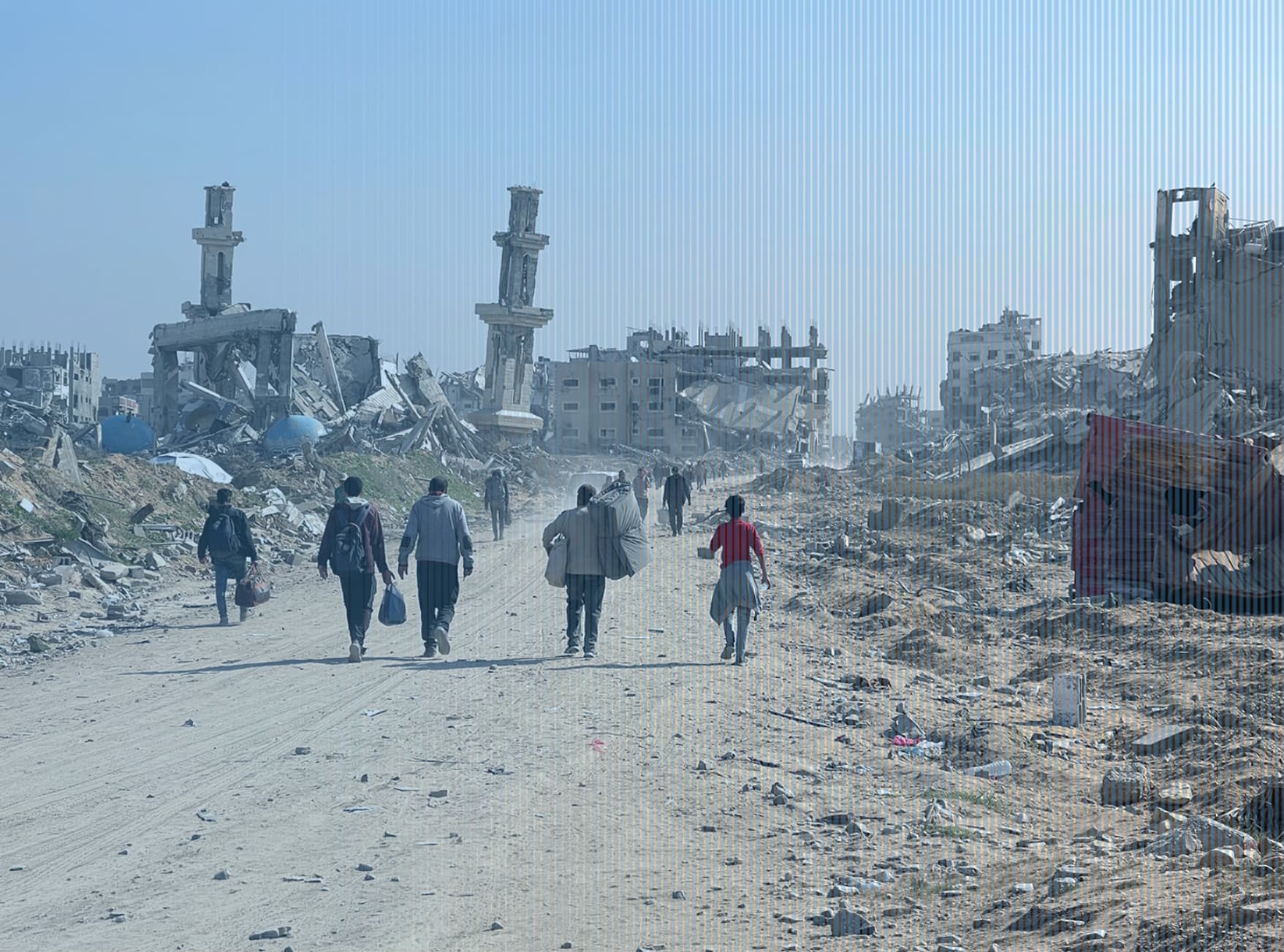
There is no new government in Gaza. Hamas has not been disarmed, and Israel has not withdrawn. Nonetheless, the large-scale fighting that prevailed a year ago before President Trump announced a twenty-point plan for the future of the territory has ceased. Sporadic fighting continues and the conflict is by no means over, but it is less bloody, and that alone is an important accomplishment. Lives have been saved.
Hamas attacked Israel on October 7, 2023, and nearly two years of intense fighting ensued. On September 29, 2025, Trump announced his plan. Israel and Hamas agreed to the first phase, which produced a cease-fire, hostage/prisoner exchanges, aid provisions, and an initial Israeli pullback. The harder issues—disarmament, governance, the International Stabilization Force, further withdrawal—were left unresolved. Some five weeks after the cease-fire took effect, the United Nations Security Council endorsed the Comprehensive Plan in Resolution 2803, calling for demilitarization and the establishment of a “technocratic, apolitical” committee to lead the territory’s government. Several countries promised troops for the stabilization force, but it remains only aspirational.
The cease-fire therefore deserves neither dismissal nor uncritical celebration. The decisive question is whether Hamas’s recent movement on disarmament can break the impasse.
An important assumption behind Trump’s vision, captured in his image of Gaza as a “Riviera in the Middle East,” is that prosperity can help overcome political conflict. Yet no significant financial investment will take place unless the prospect of war has disappeared. That is the roadblock: Hamas has resisted calls for genuine disarmament, and Israel refuses to withdraw unless Hamas gives up its weapons. No “Riviera” promise can overcome deeply held hostilities.
Harsh realities
Hamas remains an Islamist movement committed to armed resistance against Israel; whatever tactical language it employs concerning Palestinian statehood, it has never undergone the ideological transformation that would make Israeli security concerns disappear.
For Israel, withdrawal from Gaza without the disarmament of Hamas is not an option, and not only because of the trauma of October 7. More than twenty years ago, Israel unilaterally withdrew from Gaza. Rather than producing a stable peace, the withdrawal was followed by Hamas’s victory in the 2006 Palestinian elections and its violent takeover of Gaza in 2007. For many Israelis, that sequence has become a cautionary example of the danger of territorial withdrawal without reliable security guarantees.
The 2025 cease-fire declaration and the subsequent Security Council resolution represent the formal terms of governance in Gaza. In reality, the strip is divided, roughly from north to south, along the so-called “Yellow Line.” Israel controls the eastern side, adjacent to its own territory, which it regards as a security buffer to prevent another October 7. The remainder is outside direct Israeli military control and is the area in which Hamas retains substantial authority. It is not impossible to imagine this divided Gaza as a likely outcome, a frozen conflict, where neither Hamas nor Israel cedes power. The principal losers would be Gaza’s inhabitants, since prolonged partition would provide neither political stability nor the conditions necessary for reconstruction.
Yet there are indications of a positive development. Last January, Hamas indicated a willingness to discuss disarmament. This signal of flexibility represented a major shift from the earlier insistence on maintaining its complete arsenal. Matters picked up speed at the end of July, when Trump announced that the “Board of Peace” had persuaded Hamas to accept disarmament. Hamas’s statement was more equivocal: instead of relinquishing its weapons, it announced a willingness to hand them over to a Palestinian force for storage. Such terminology would avoid the appearance of surrender. Hamas also conditioned this arms transfer on Israeli withdrawal.
This relative softening of the Hamas position was reportedly reaffirmed in a meeting between Jared Kushner and Hamas leader Khalil al-Hayya in Egypt on August 16; Kushner met Prime Minister Benjamin Netanyahu in Jerusalem on August 17. Hamas now proposes a phased disarmament linked to a phased Israeli withdrawal. But in his meeting with Kushner, Netanyahu insisted on the prior disarmament of Hamas as the condition of withdrawal. The dispute has narrowed significantly, but the remaining sequencing issue is fundamental.
For context, recall that a similar demand for “decommissioning” weapons between apparently intractable enemies in Northern Ireland succeeded—but it took more than a decade to finalize.
Small shifts may lead to larger ones
Why has Hamas moved? Several factors account for the change. The group has been significantly degraded by the Israel Defense Forces. Its top tiers of leadership are gone, its military cadres are depleted, and its resources have been exhausted. While it continues to maintain some semblance of rule in part of Gaza, it is no longer the formidable force it once was.
Second, it faces increasing pressure from key regional states, including Egypt, Turkey, and its longer-term benefactor, Qatar, who understand that Hamas has no prospect of genuinely winning. Further fighting is in vain.
Third, Hamas now operates in a much less favorable regional environment: Iranian power and the wider proxy network on which Hamas once relied have been badly weakened.
Fourth, the prospect of achieving an Israeli withdrawal—however the sequencing is arranged—would give Hamas some sign of victory to which it could point as a justification for the war it had caused. Whether the Gazans will find that claim credible is another matter.
Finally, since the announcement of the Trump plan, Hamas has been able to develop a vocabulary to describe the decommissioning of its weapons without conceding defeat.
If fully implemented, such a process would end Hamas’s autonomous military capability in Gaza. That might be sufficient for Israel to withdraw, although probably not before the October election. Israel would potentially want to retain a security barrier along the border, but it makes no sense for Israel to try to govern the Gazans; it wants out. If Hamas ends its career as an autonomous fighting force, a political successor might conceivably follow a path analogous—not identical—to Sinn Féin’s evolution during the Northern Ireland peace process, while the IRA itself decommissioned its weapons.

The present framework excludes Hamas from governing Gaza, but over a longer horizon, a demilitarized political movement emerging from it could seek a role in Palestinian politics.
That sort of outcome is at best far in the future. Much remains open: whether investment will in fact rebuild Gaza; the future of the blood feud between Hamas and the Palestinian Authority; and eventually the prospect of governmental integration of Gaza and the West Bank. Further afield lies the fate of the other elements of the “axis of resistance”: Hezbollah, the Houthis in Yemen, and the Iraqi militias. Gaza is therefore one part of a larger regional transformation. Its outcome will depend not only on Israeli and Palestinian choices but also on the fate of the Iranian-backed network—and ultimately on the trajectory of Iran itself.
Russell A. Berman is a senior fellow at the Hoover Institution and a co-chair of Hoover’s Working Group on the Middle East and the Islamic World. He also participates in Hoover’s Military History in Contemporary Conflict working group and its Global Policy and Strategy Initiative. Berman is the Walter A. Haas Professor in the Humanities at Stanford University.