 Powered by

This article is part of Liberty Amplified, a series produced in partnership with the Hoover Institution’s Human Security Project and the Hoover Institution Library & Archives, featuring voices that challenge authoritarianism in pursuit of freedom. It draws on oral history interviews conducted by the author as part of the Hoover Afghanistan Research & Relief Team (HART). The HART project documented the important stories of Afghans in the wake of the Taliban’s return to power and supported the evacuation and relocation of 400 Afghans. Thank you, Halima, for keeping these stories alive. —H.R. McMaster
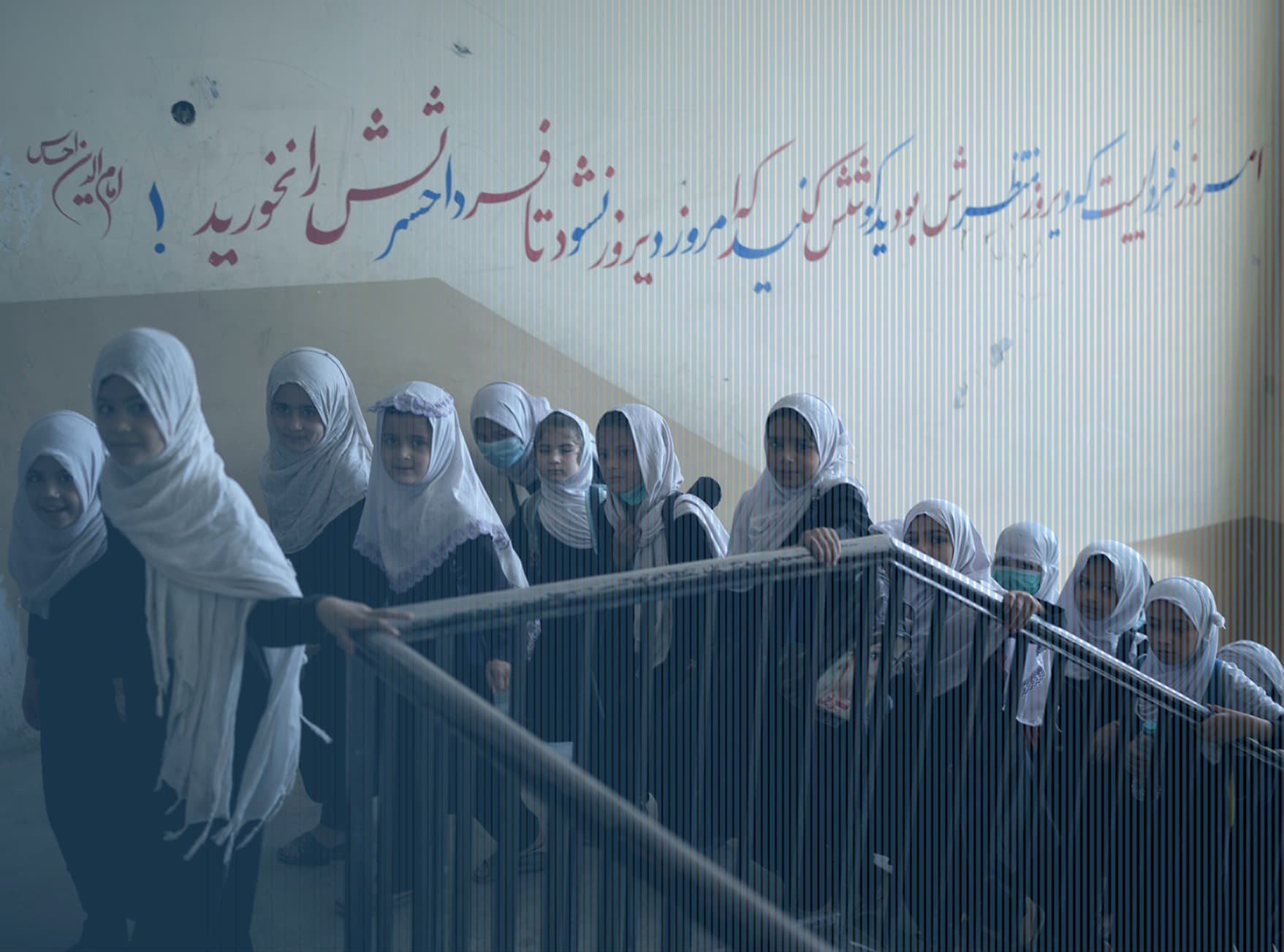
In May 1997, as the Taliban pushed into northern Afghanistan, Shaharzad Akbar’s family began emptying their house of anything that could incriminate them. They lived in Jawzjan, on the northern border with Turkmenistan, and she was nine. The Taliban had held Kabul since 1996, and their rules were known in the provinces: television, music, and images of living things were forbidden, and houses were searched to enforce it. The family’s television was lowered into a dry well. Books, pictures, and music cassettes were hidden. A neighbor tore up his photographs of Abdul Rashid Dostum, the Uzbek commander who had ruled Mazar-e-Sharif, the largest city in northern Afghanistan.
The Taliban were driven out within days, and her father drew his own conclusion. “He said Taliban will come back and this time there will be revenge,” she told me.
Akbar was born in 1987, and by then her schooling had already been interrupted several times: a few months of first grade in Kabul, abandoned when the civil war reached the city, then Jawzjan, then Mazar-e-Sharif. She remembers being afraid her school would be bombed. “At some point we basically were being homeschooled and going to English courses, but not attending school full time,” she said. Then Kabul again, and in August 1998 the family crossed into Pakistan, to Peshawar.
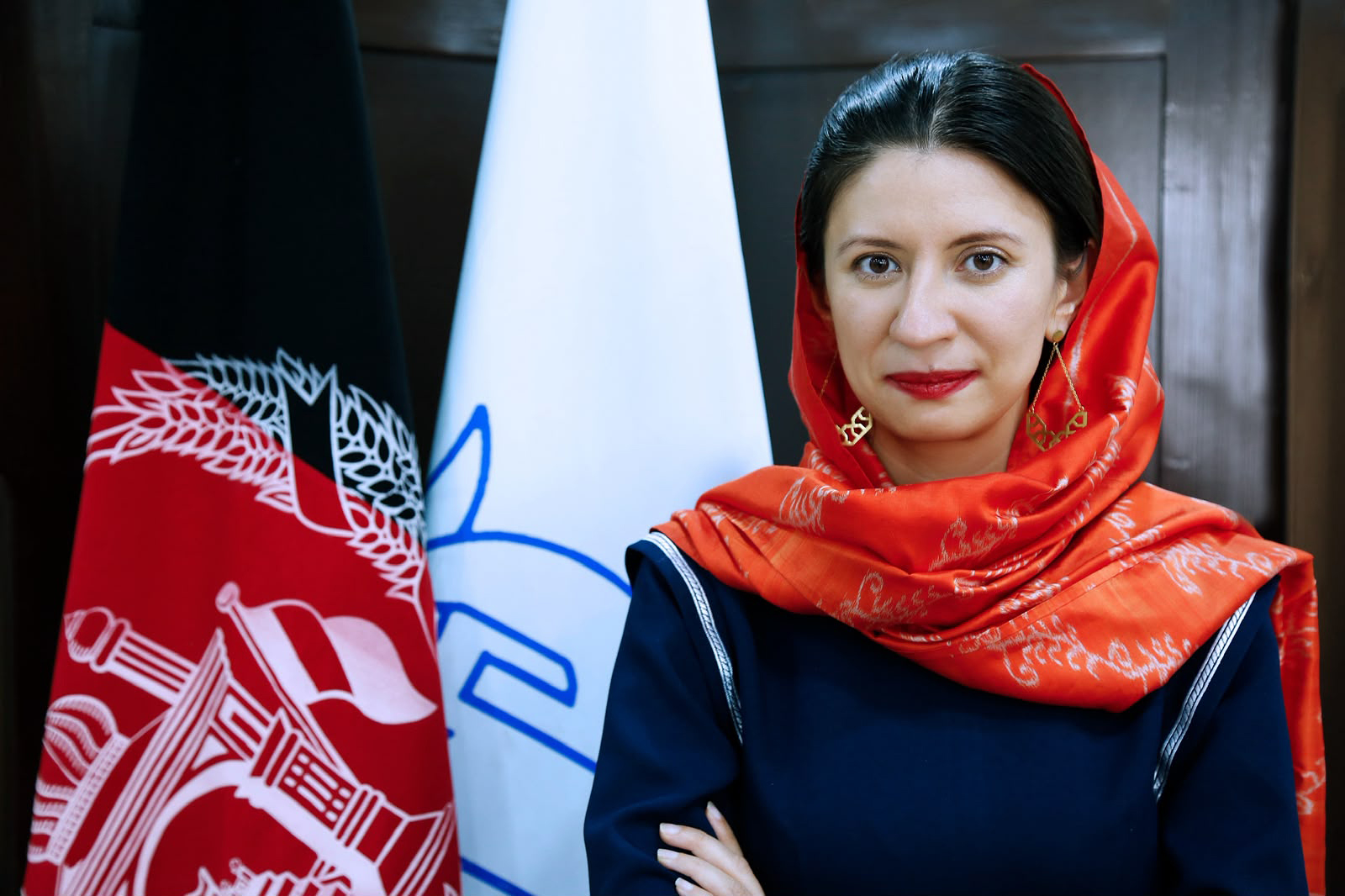
They returned to Kabul in February 2002, to a house with no electricity and no glass in the windows. Among the first tasks, she said, was “transferring our paperwork so that we could sign up for schools.” But there was no grade to which she could return. She took an exam and was admitted directly into the twelfth grade, “the way that they did for girls generally, because they had missed a few years of schooling.” An entire cohort passed through at once, on improvised documentation and in haste. She graduated in 2005, enrolled at Kabul University, and would go on to chair Afghanistan’s Independent Human Rights Commission.
On October 5, 2026, the International Criminal Court (ICC) unsealed four arrest warrants in its Afghanistan investigation. Two of the names were already public: Haibatullah Akhundzada, the Taliban’s supreme leader, and Abdul Hakim Haqqani, who heads their Supreme Court. The two others were not. Habibullah Agha is the minister of education. Neda Mohammad Nadim is the minister of higher education. The officials who administer Afghanistan’s schools and universities are wanted for a crime against humanity: persecution on gender grounds, against women and girls and against those who do not conform to the Taliban’s rules on gender.
The charge against a supreme leader is the expected one, locating the crime in the man whose convictions produced the policy. The charge against two education ministers extends it rather than replacing it. Persecution as a crime against humanity turns on discriminatory intent, which means the ideology is not incidental to the case but an element of it.
What the warrants add is that the ideology is answerable in the form it takes. On December 20, 2022, the Ministry of Higher Education had circulated a letter suspending the education of female students until further notice. Nadim signed it. Agha’s ministry has kept girls’ secondary schools closed throughout his tenure, an accumulation of such documents rather than one. The belief and the machinery are charged together, and the machinery has operators who can be named.
This matters because of the argument it displaces. For five years, Afghan women have been told that the exclusion of girls from education is cultural, to be negotiated gradually and from within. I have heard this from diplomats and from humanitarian aid officials. A court has now characterized it as policy, and policy has authors.
Paths to accountability
Policy can also be undone, which is why, of the several hundred hours of testimony I have recorded for the Hoover Afghanistan Research and Relief Team archive, it is that examination I return to. What is required to restore years of schooling a government has removed? It was answered once already, for girls whose education the Taliban had interrupted the first time.
Enforcement is another matter. The court maintains no police force, and the states bound by the Rome Statute are not, for the most part, those currently receiving the main Taliban delegations. Russia, China, Pakistan, Iran, Qatar, and the United Arab Emirates are not parties to it. (Nor, for that matter, is the United States.) The question is what other instruments exist, and whether any operates on a useful timescale.
Two instruments do. In September 2024, Australia, Canada, Germany, and the Netherlands announced they would hold Afghanistan to its obligations under the Convention on the Elimination of All Forms of Discrimination against Women, which Afghanistan signed in 1980 and then acceded to without reservations in 2003. In September 2026, Afghan organizations marked the second anniversary of the announcement by asking the four governments why the case still had no public filing and no published timeline.
The second is live: the United Nations is negotiating the first standalone convention on crimes against humanity. Its draft carries over the Rome Statute’s race-only definition of apartheid, which covers only domination by one racial group over another, and on political grounds against those seen as their allies. Afghan women and their allies have argued that it should cover gender as well, so that a regime organized around the subordination of women can be named as such. A consolidated text goes to the preparatory committee in April 2027.
Whether any of these instruments functions depends less on their design than on whether anyone with power attends to the documentation. When the 2020 US-Taliban agreement required the release of thousands of Taliban prisoners, the commission Shaharzad Akbar chaired published an open letter asking how many had been detained on allegations of crimes against humanity. Not even the UN mission, she says, publicly supported the question.
Waiting for action
Yalda Royan was born in Kabul. As a small child, she would take her older brother’s backpack and walk to the corner of the street, pretending to go to school, until her father enrolled her a year early, at six. Her education then came apart in stages: rocket fire sending classes home, displaced families occupying half her classroom, and the seventh and eighth grades held as examinations without school. She was in the ninth grade when the family left Kabul, and after the Taliban took Ghazni in 1995, they went on to Pakistan.
She finished her schooling in 1998 at a school for Afghan refugees in Quetta. “After that,” she said, “I could not continue my studies.” A decade later, she moved into gender policy work in Kabul and eventually earned a master’s in gender studies.
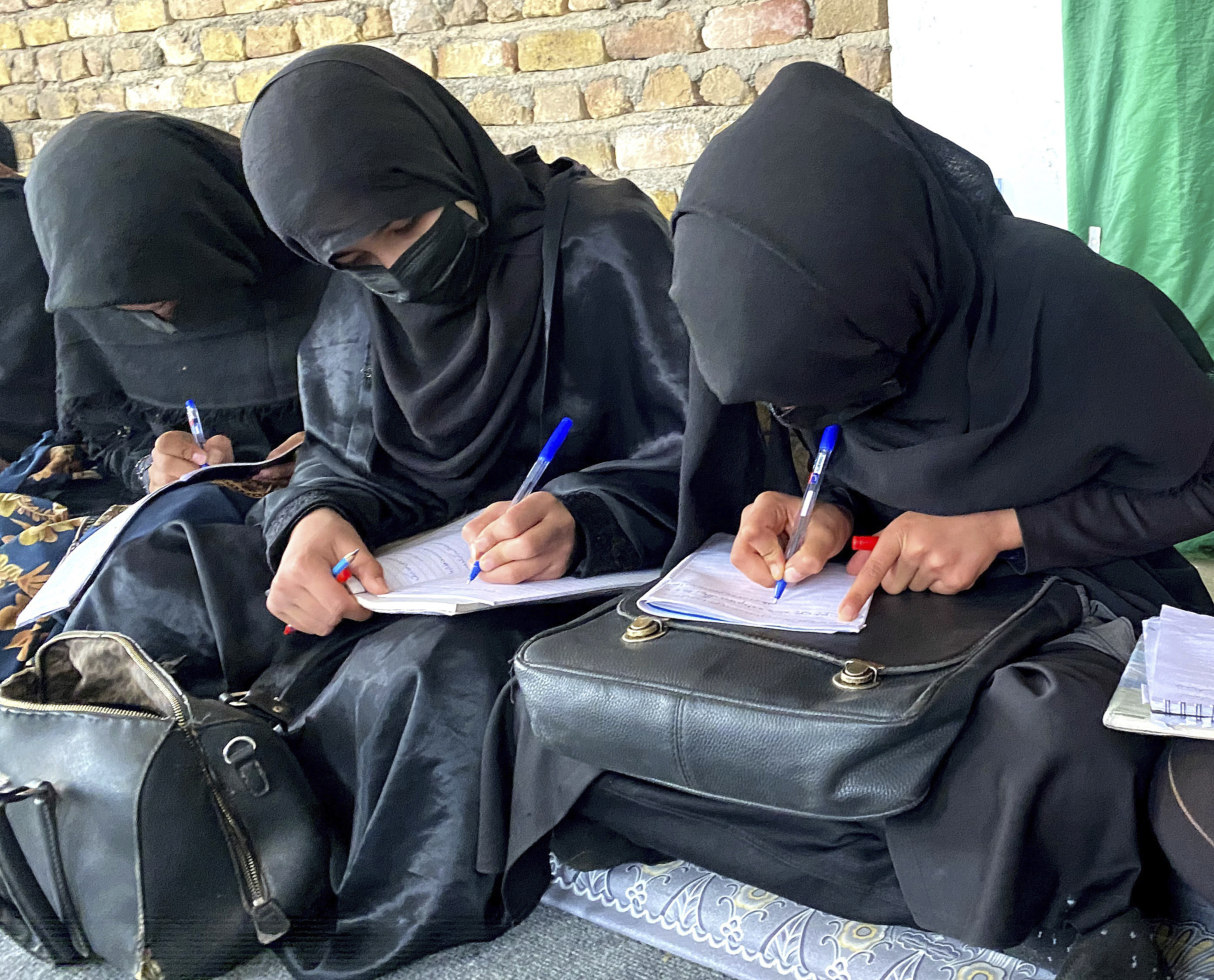
In the hours after the government fell in 2021, with daughters of fifteen and eighteen, she had an hour or two to decide what her life consisted of. “Nothing else came to my mind,” she said, “only the documents of my daughters, their identity documents, their educational documents.” On the road to the airport, she covered her eyes, so as not to see Kabul with the Taliban in it.
She knew exactly what those documents were worth, having spent her adult life demonstrating what their absence costs.
A warrant is likewise a document. Whether the ICC warrant is ever executed no one can say, and the record of such charges offers little encouragement. But it exists now, with four names on it, and such documents can outlast the people who try to make them meaningless. Shaharzad Akbar’s years were returned to her by an examination and a sheet of paper. There is no principled reason the same cannot be done again. What is absent is not the method but the decision.
Shaharzad Akbar’s and Yalda Royan’s testimony is part of the Hoover Afghanistan Research & Relief Team (HART) oral history project.
Dr. Halima Kazem is a visiting fellow at the Hoover Institution and created the Hoover Afghanistan (HART) Oral History Archive. Her book A Feminist History of Afghanistan: Resisting the Erasure of Women is forthcoming from Bloomsbury.
Liberty Amplified features the voices of those who defy autocracy in pursuit of freedom. It is part of the Hoover Institution’s Human Security Project (HSP), led by Lt. Gen. (Ret.) H. R. McMaster, senior fellow at the Hoover Institution and former national security adviser. The project carries out research into how authoritarian regimes sustain power and how pro-democracy groups and their allies can challenge them to advance liberty. HSP is an educational resource and tool for activists both outside and within those countries.