 Powered by
This article is part of Liberty Amplified, a recurring series produced in partnership with the Hoover Institution’s Human Security Project, featuring voices that challenge authoritarianism in pursuit of freedom.
Those who truly care about advancing freedom across the world must work to destroy a powerful weapon in the autocrat’s arsenal: gender-based repression.
Today’s politicians and activists often focus their efforts on other tools of despotism: military might, digital surveillance, geopolitical alliances, domestic patronage. But there is an understudied, underreported, and largely unopposed strategy that has sustained autocracies for centuries and continues to serve them today. Authoritarians across the globe have successfully tightened their grip on power by investing in the systematic persecution of their female citizens.
This phenomenon stretches far and wide. In the Middle East, the Iranian and Afghan regimes have pursued campaigns of gender apartheid, denying women and girls core civil rights like education and freedom of dress. Monarchies in the region impose unequal legal codes on women that restrict everything from their custody rights to their rights within marriage.
In active war zones, anti-democratic combatants use rape as a weapon of war to increase the cost of conflict and terrorize communities. For example, Russia’s illegal invasion of Ukraine, one of the most significant breaches of democratic norms in this century, has been marked by sexual violence. And nonstate, anti-democratic actors like ISIS and Boko Haram have centered both their military strategies and broader political messaging around the subjugation of women.
In Latin America, anti-woman policies and rhetoric are closely associated with far-right, anti-democratic movements. Investigations of Europe’s far-right parties reveal a similar connection. And backsliding democracies across the world have also experienced a rise in legislation and political platforms that degrade the rights of women and girls.
Levers of control
The association is clear. But how exactly does targeting women and girls help strengthen autocrats and anti-democratic leaders? More research is required to uncover the exact mechanisms, but a few ideas seem likely.
First, “divide and conquer” is a time-tested strategy for unelected rulers of all kinds. By institutionalizing the superiority of men over women, anti-democratic leaders empower one subset of the population over another and thus draw attention away from their own popular illegitimacy.
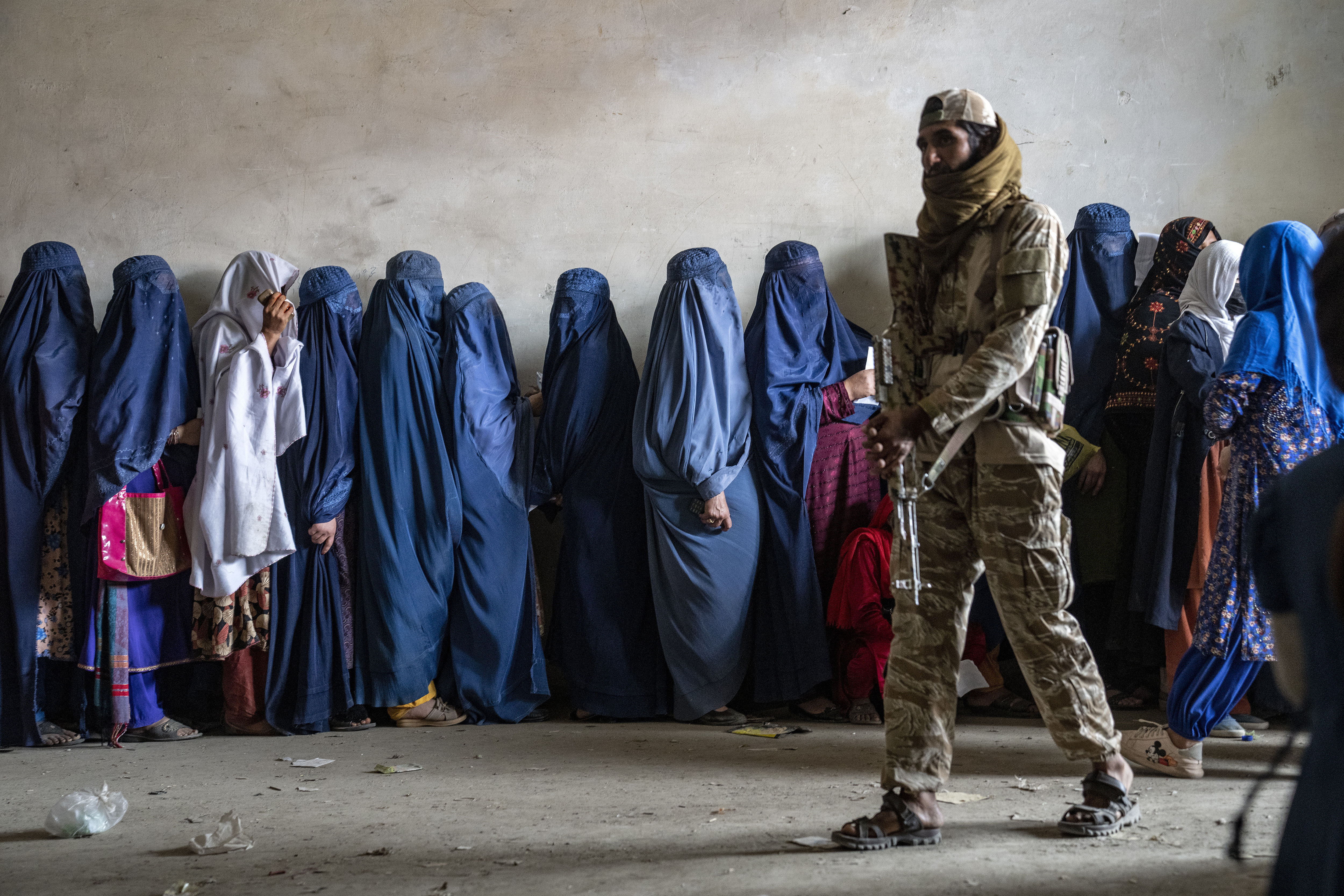
Second, control over women offers constant, visible proof of a regime’s power. When women are subjected to dress codes, strong incentives to stay at home, or restrictions on travel, ownership, or civic power, the landscape of a nation changes. The changed appearances or even absence of women becomes pervasive proof of the regime’s strength. And by legislating against women, the state’s dictates reach directly into the home, further cementing a sense of regime omnipresence and control.
Finally, imposing restrictions on women’s rights (or even engaging in rhetorical attacks against women) can help anti-democratic leaders attract supporters. Especially in today’s globalized environment, more socially conservative factions are searching for a political home. They may be willing to forgive antidemocratic behavior due to alignment on social issues like the status of women. As one writer puts it, anti-feminism can be like a “gateway drug” that helps anti-democratic leaders capture the most conservative elements of society.
Afghanistan: the worst case
As the co-author of a book on women’s rights in Afghanistan, I’ve seen how these dynamics unfold in the most dire conditions. My book Defiant Dreams (written with Sola Mahfouz) covers half a century of Afghan history through the lens of women: the women of the 1970s who experienced relative freedom of education, dress, and more; the women of the early 2000s who navigated a cultural tug of war; and the girls and women today who live under the most restrictive regime in the world for women.
Through the writing process, I came to see how the Taliban’s two ascensions (in the late 1990s and 2021) were enabled by their severe restrictions on women. In both instances, the Taliban offered half the population a sense of control and superiority in intensely difficult economic and security environments.
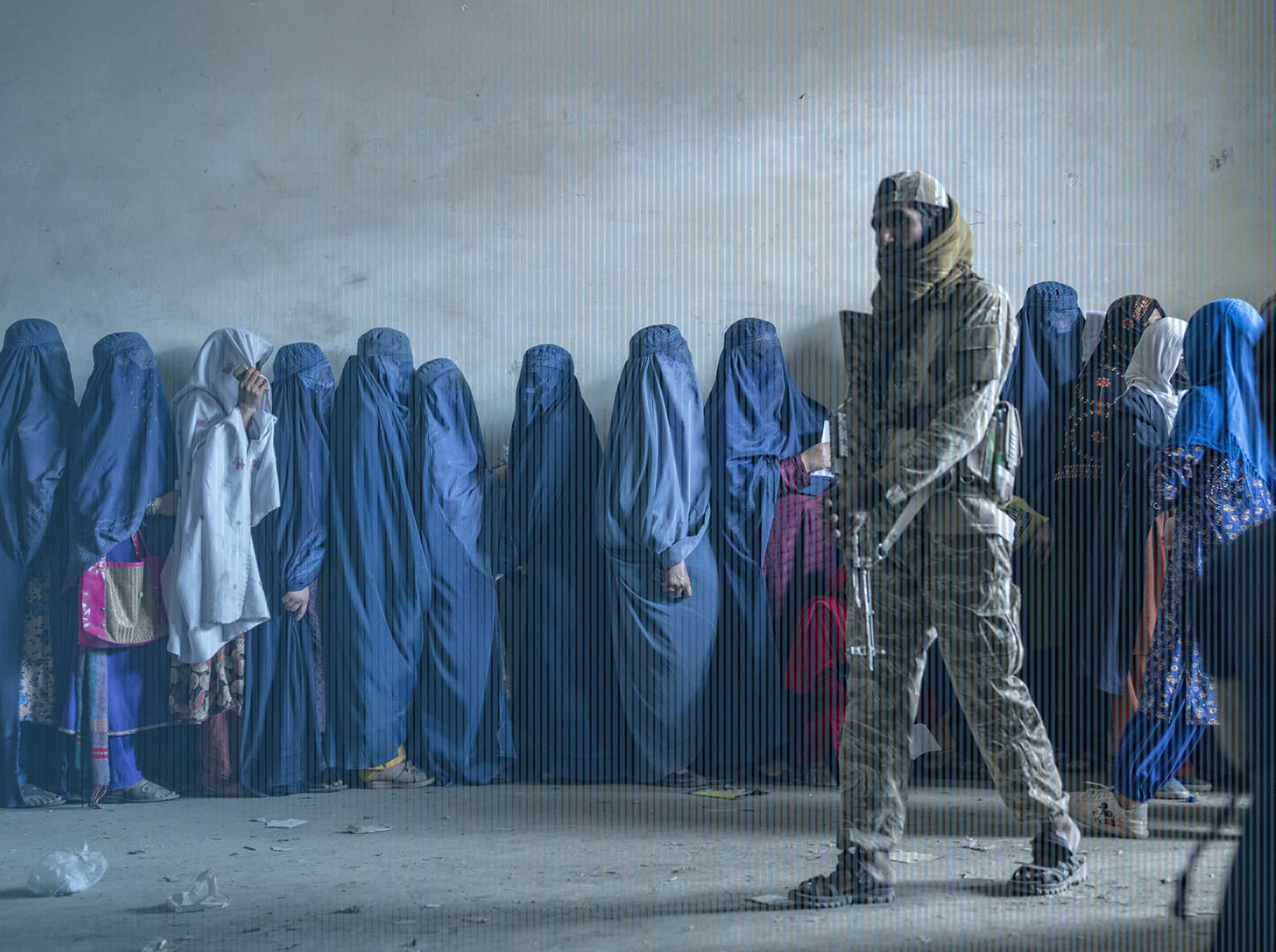
The Taliban’s restrictions also dramatically reshaped the appearance of Afghan society. In the 1990s, the group imposed burqa mandates and publicly stoned and executed women who violated their rules. Today, women in Afghanistan are banned even from speaking in public. They cannot pursue an education, travel freely, or appear outside the home in anything except an all-encompassing covering.
Every Afghan woman has experienced a change in status, and this has become proof of the Taliban’s widespread authority.
In a country where war has been a constant for decades, such visible confirmation that the Taliban have influence everywhere cements the group’s internal legitimacy. Finally, the Taliban have retained power through support from the most conservative Afghans, those whose views on the role of women were always firmly at odds with the US-backed government.
Taliban Afghanistan is the worst-case scenario, a manifestation of the horror that can emerge when authoritarianism melds with large-scale, gender-based repression. It’s easy to dismiss what’s happening in this country as an unsolvable tragedy or an international anomaly. But the strategies underlying the Taliban’s gendered governance are pervasive. To understand and ultimately subvert them, it is imperative we bring them to light.
Iranian courage
Neighboring Iran offers an example of a path forward. In 2022, Iranian women rose up in response to the murder of Mahsa Amini, a young woman taken into custody and killed simply for violating the regime’s strict hijab laws. Masses of women across the country gathered in the streets without their hijab; once a symbol of the regime’s ubiquity, women became a symbol of the resistance. Even as government crackdowns intensified, women burned their headscarves, cut their hair, and marched to the chant “women, life, freedom,” a cry that explicitly tied their rights to their national liberation.
Men, too, joined the movement, and protesters’ demands swelled beyond women’s rights reforms to include calls for economic justice and the fall of the regime.
In all, tens of thousands of Iranians joined Women, Life, Freedom protests across the country. Though the movement did not singlehandedly destroy the Iranian regime, it exposed the government’s susceptibility to popular uprising and set the groundwork for the most recent 2025–6 mass protest movement. Today, these protests and a variety of geopolitical factors have merged. A deadly regional conflict has erupted, in which Iran’s longtime supreme leader has been killed.
What happens next is uncertain. But it will remain true that Iran’s women and the men who allied with them cracked the foundation of the Iranian regime in a way it has been simply unable to come back from.
The courage of Iranian protesters demonstrates that attacking systems of gender oppression can be a first step toward dismantling authoritarianism. While the autocrat’s gender-repression weapon may be strong, it also offers a pathway to defiance. Large-scale, pro-woman movements can galvanize large swaths of the nation. The same restrictions that serve the regime also offer concrete symbols for protesters to resist. And to expose a regime’s reliance on oppressing women is also to expose that regime’s fragility.
Rather than soft or secondary, the fight for women’s rights is central to the fight for democracy and freedom. It’s time that we recognize its power.
Malaina Kapoor is the co-author of Defiant Dreams: The Journey of an Afghan Girl Who Risked Everything for Education (Penguin Random House). A graduate of Stanford University, she currently works in Democratic politics in Pennsylvania. She will attend Harvard Law School in 2027.
Liberty Amplified features the voices of those who defy autocracy in pursuit of freedom. It is part of the Hoover Institution’s Human Security Project (HSP) led by Lt. Gen. (Ret.) H. R. McMaster, senior fellow at the Hoover Institution and former national security adviser. The project carries out research into how authoritarian regimes sustain power and how pro-democracy groups and their allies can challenge them to advance liberty. HSP is an educational resource and tool for activists both outside and within those countries.