 Powered by
The major rationale for increasing US tariffs in the past year to the highest levels in almost a century—since the Smoot-Hawley tariffs in the middle of the Great Depression—was that it would increase US national and economic security. Time will tell whether increased security actually ensues, but history is full of examples in which reductions, not increases, in tariffs have added to US economic prosperity and security.
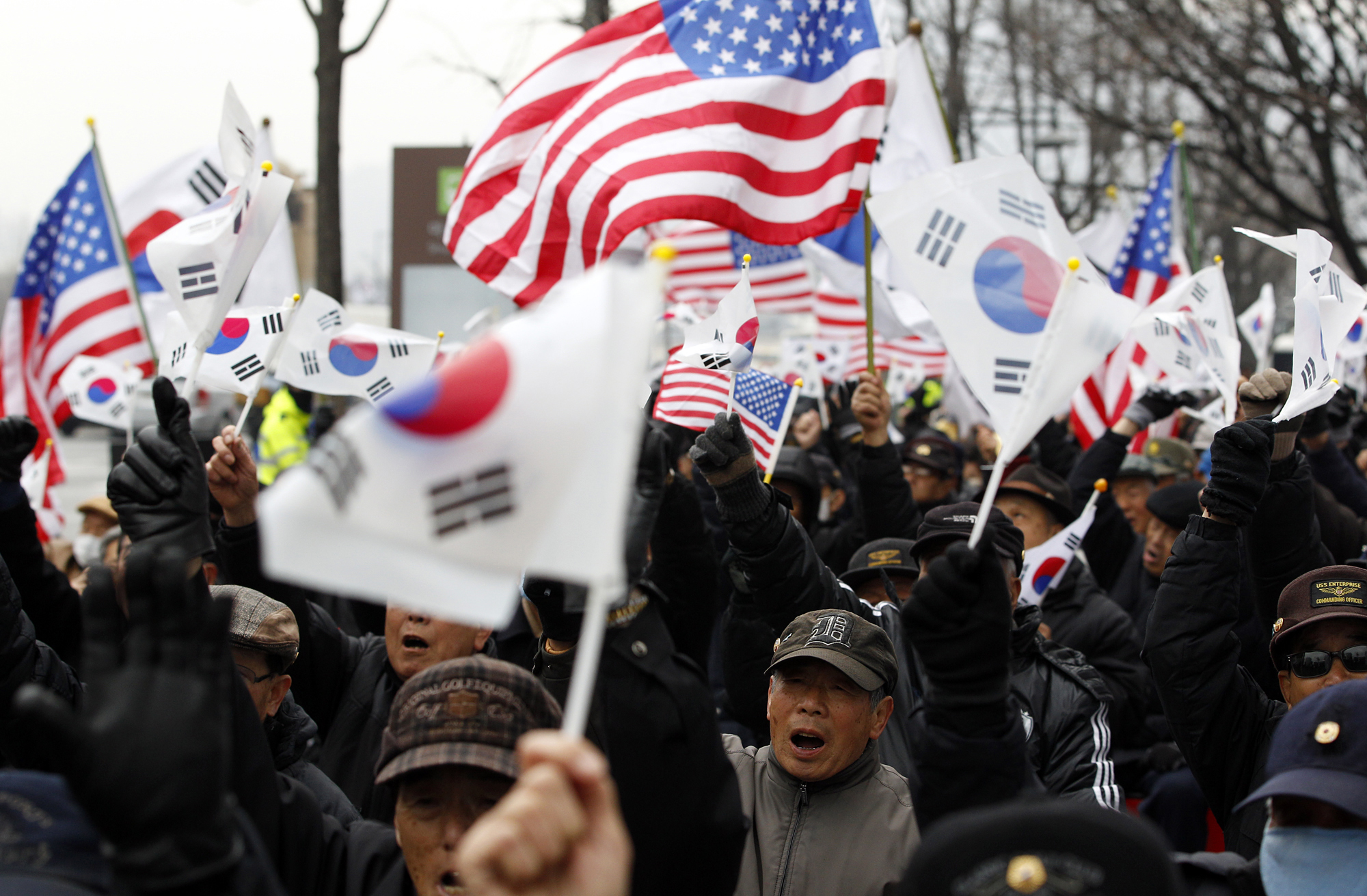
One such example is the US-Korea Free Trade Agreement (FTA), which was signed in 2007 and took effect in early 2012. South Korea’s tariffs on US agricultural and non-agricultural goods declined from about 12 percent to less than 1 percent. Once the FTA took hold, the share of the United States in South Korea’s trade increased from less than 10 percent in 2011 to 15 percent last year.
One motivation on the US side was to expand markets for American agriculture and services. In fact, South Korea’s imports of US agricultural products have more than doubled, rising from an annual average of $4 billion in the decade before the FTA to an average of $8.4 billion from 2012 to 2025. Furthermore, US financial services exports to South Korea increased from an average of $0.72 billion in 2007–11 to $1.92 billion in 2020–24. Finally, US legal service exports to South Korea also more than doubled between these two periods.
How nations benefit from trade
This successful outcome is just one piece of evidence, spanning many countries and centuries, that access to global markets and international trade leads to higher incomes overall.
Many theories and ideas explain the benefits of international trade. Almost all of them boil down to the concept first elucidated in the famous pin factory example of Adam Smith: the division of labor is limited by the extent of the market. International trade expands markets, thus facilitating the division of labor, and, in particular, specialization. In a global market-oriented trading system, countries specialize in the goods they are relatively good at making. Trade also promotes innovation by exposing companies to greater competition, expanding potential markets for new products, and facilitating the diffusion of technologies across borders. This raises consumer welfare in almost all countries.
Quantitative estimates suggest that postwar globalization has increased economic welfare by roughly 10 percent in the United States and as much as 70 percent in South Korea. Arguably, these estimates understate the true gains because they do not include the full dynamic gains.
It is true that national gains from trade are not necessarily equally shared. For example, in the United States, many studies show that US manufacturing workers have suffered owing to increased globalization (and to technological change). However, studies have shown that globalization led to increased employment in service industries, generating overall gains that more than offset these adverse distributional consequences.
There is a second benefit from international trade. To the extent that it increases the GDP of a country, it increases the country’s geopolitical leverage backed by economic strength—i.e., the ability to use global-facing economic policies to enhance a country’s geopolitical interests.
A valuable partnership
The US-South Korea trade relationship goes back much further than their FTA. Trade between the two nations commenced after World War II, when South Korea (hereafter “Korea”) became independent. During the Korean War, fledgling firms—some of them the forerunners to Korea’s chaebol—provided goods and services to the US armed forces. After the war, Korea’s recovery from its physical devastation and human decimation was greatly supported by US foreign aid. Moreover, the US decision to eliminate this aid in the 1960s helped spur Korea to adopt its export-oriented growth policies, a key factor behind its growth “miracle.”
In the early decades of this miracle, the United States and Japan were South Korea’s most important trading partners. The United States continued to be an important partner as South Korea moved up the value chain from wigs to clothing to household appliances to steel, automobiles, and ships, and most recently to semiconductors and smartphones. Thus, Korea, with just 0.6 percent of the world’s population and 1.7 percent of the world’s GDP, and thousands of miles away from the United States, accounts for 4 percent of US imports.
How much would US prosperity suffer if all trade with Korea were cut off? We assess the effects of cutting off all trade with Korea using a workhorse quantitative trade model. These models allow the United States to substitute to other countries for some goods. We find that the US economic welfare would decline by about 0.3 percent. While 0.3 percent may appear modest, it corresponds to roughly $60 billion of annual US personal consumption expenditure at current prices. This is also likely an underestimate because it does not include dynamic forces, mentioned above, like the adverse impacts on US innovation and capital investment, and the resulting spillovers to consumer spending. In addition, it does not include the fact that some products—notably advanced semiconductors—are difficult to replace even in the medium term because production requires highly specialized capital, engineering expertise, and supplier ecosystems.
When these effects are taken into account, we believe that the losses could be closer to 1 percent, which would be greater than the decline in US consumption expenditure in a typical recession and would be more persistent.
Implicit in our discussion above is the theme that US economic security rests on a foundation of an open global market for goods and services subject to minimal restrictions.
Access to the global market raises US incomes and prosperity. Only when the vast majority of its population can enjoy more than just the economic necessities—sustainably, and with an expectation that economic opportunities increase over time—can the United States have economic security in the long run.
Imports build resilience
Access to international markets can help mitigate the effects of adverse shocks. An example of this is the first oil shock in the 1970s. US auto companies had not focused on producing small, fuel-efficient cars at that time, but Japan had. US consumers pivoted to such cars, thus allowing their budgets to go further and simultaneously weakening OPEC’s hold on the United States. Car imports as a share of total US car sales rose from about 6 percent in the mid-1960s to 18 percent in 1975.
In light of the shocks over the past ten years—the US-China tariff war, the COVID-19 pandemic, the Russian invasion of Ukraine, the significantly broader US tariffs enacted in 2025, and the conflicts in the Middle East—there is a growing recognition of the importance of resilience in a country’s short-run and medium-run economic security. By resilience, we broadly mean the ability of an economy to bounce back quickly from adverse shocks. A key feature of this ability is access to the core services and goods needed to keep an economy going.
Even in the presence of a positive economic shock, if US suppliers cannot respond quickly enough, then forces leading to higher inflation and interest rates could be unleashed. In these circumstances, the ability to import helps offset the inflationary forces.
Korea played an important role in the economic resilience of the United States during this period. For example, after the increase in import tariffs on China in 2018, imports from China fell sharply; the share of US imports from China decreased from 22 percent to 14 percent by 2024. Several economies—including those of Mexico, Vietnam, Taiwan, and South Korea—filled this gap and supplied goods that would otherwise have become more expensive or unavailable to US firms and consumers.
During the COVID pandemic, recall that the global economy was hit by multiple supply-chain disruptions even as the demand for consumer electronic goods in the United States and other countries soared in the wake of work-from-home. US consumer spending on durables rose more than 30 percent in the four quarters between 2020Q2 and 2021Q2. In the absence of imports of such goods, inflation during this period would likely have been even higher.
One of the most significant shortages was in semiconductors. US auto sales plummeted by more than 10 percent in 2020, owing in large part to the shortage of semiconductors. However, South Korea’s semiconductor industry stepped up to help alleviate that shortage.
US semiconductor imports increased by almost $16 billion (31 percent) between 2019 and 2021. South Korea provided almost 25 percent of that increase. (“Semiconductors” refers to HS codes 8541, 8542, and the DRAM module segment of 8473.) Moreover, South Korean semiconductor companies, with operations in several East Asian countries, likely contributed to additional US imports of these goods. In the absence of these imports, US economic resilience would have been weaker—both to the semiconductor shortage in particular, and to the pandemic in general.
Looking ahead: the Korean advantage
We expect South Korea to continue to be important for US economic security. It bears emphasizing that over the past decade, global economies have repeatedly faced systemic shocks: trade conflicts, international armed conflicts, and pandemics, as well as increasing geopolitical tensions. It is likely that such shocks will continue and perhaps come more often. In this challenging environment, the resilience of the US economy will be put to the test.
The ability of the US economy to bounce back from a major shock need not rest on its ability to produce every part and component of every good’s supply chain. Even “nearshoring,” in which global supply chains are brought close to home, such as to a country’s neighbors, is not necessarily optimal for US economic security. Rather, in today’s world, in which leading manufacturing companies source parts and components from twenty or more countries, it seems clear that a robust notion of US economic resilience would include a broader set of trading partners than, for example, USMCA partner countries.
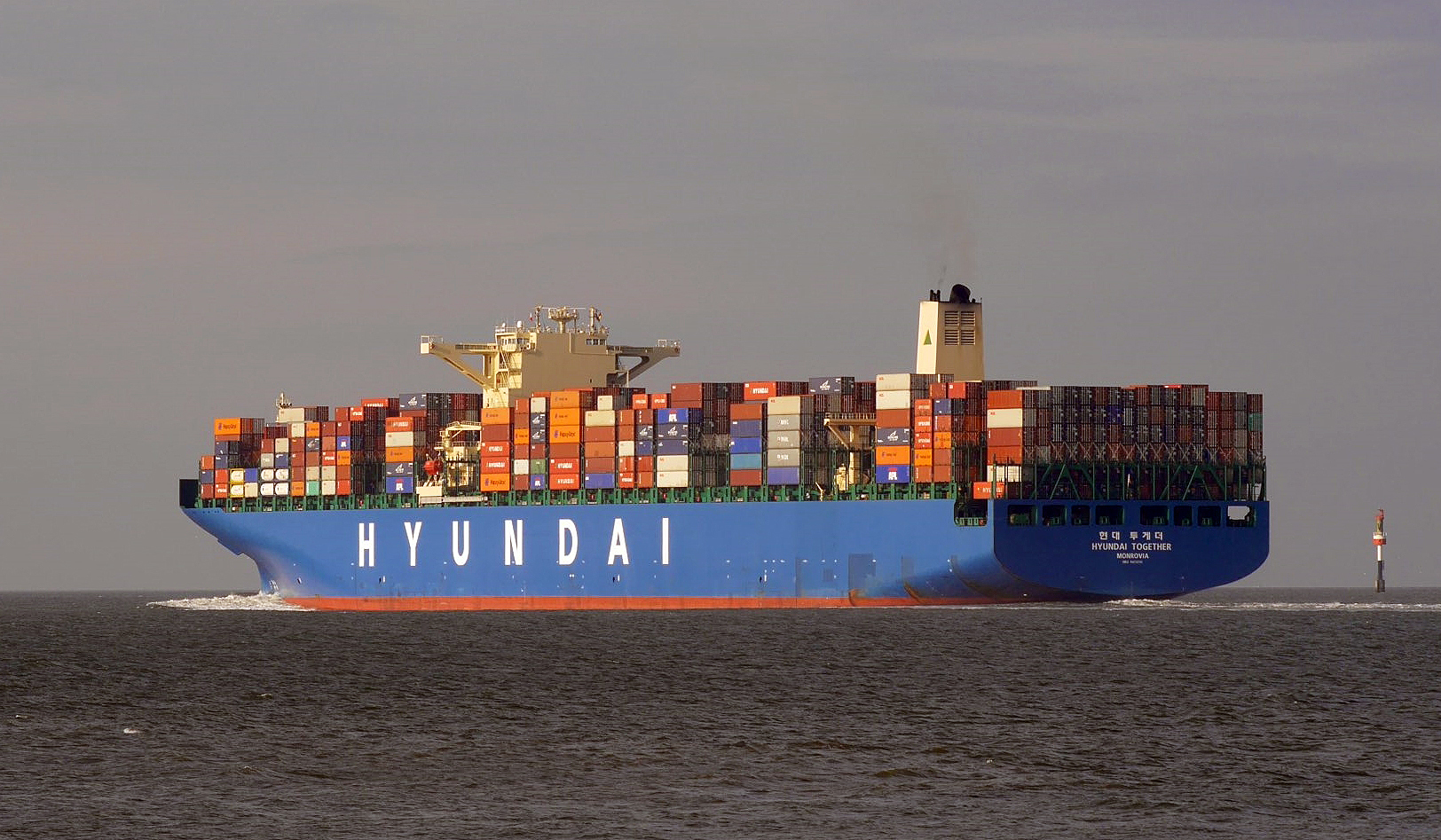
To that end, a country like South Korea possesses capabilities that enhance US economic resiliency. In steel production, South Korea ranks sixth globally. In sensitive and strategic areas such as semiconductors, shipbuilding, and electric vehicle batteries, South Korea is among the top three producers in the world.
Note that the domestic American shipbuilding industry has dwindled to extremely low production levels, presenting a potentially severe vulnerability for both commercial logistics and national defense maritime logistics. Conversely, South Korea maintains one of the largest and most technologically advanced shipbuilding sectors. For example, South Korean shipbuilders have secured 50 percent of global orders for LPG carriers and 70 percent for large LNG carriers since 2023. The United States, rather than attempting to rebuild a domestic supply chain from scratch, can directly enhance its economic security by treating South Korea as its primary maritime industrial partner.
This collaborative framework is already yielding results through foreign direct investment (FDI). Driven by strong historical ties, South Korean outbound FDI into the United States has expanded from $7.4 billion in 2011 to $25.3 billion in 2025. Crucially, 35 percent of all South Korean outbound investment is now being channeled to the United States and is expected to grow in the years ahead.
Rather than keeping production entirely overseas, South Korean market-leading firms are anchoring advanced manufacturing facilities on American soil. High-profile examples include multibillion-dollar electric vehicle (EV) battery mega-sites and advanced semiconductor fabrication facilities in states including Georgia, Texas, and Ohio. These investments do more than just protect vital supply chains from Pacific shipping disruptions; they create long-term, highly skilled manufacturing jobs for American workers.
What distinguishes South Korea from many other US trading partners is the combination of technological sophistication and production scale, while it also maintains a long-standing security alliance with the United States. US economic resiliency can be strengthened by enhancing, rather than restricting, these collaborations.
Conclusion
International trade has significantly enhanced US economic security by driving a higher standard of living and building resilience. The expansion of global markets facilitates a deeper division of labor and specialization, directly resulting in higher per capita income. This growing economic foundation increases America’s overall GDP, providing the vital geoeconomic fuel to serve its broader geopolitical interests.
However, trends in global and US trade over the past fifteen years have deviated from this beneficial path. Since reaching a high-water mark in 2011, US exports and imports as a share of GDP contracted from 31 percent to 25 percent by the end of 2025, a trend that is even more pronounced when excluding USMCA partners Canada and Mexico. This ongoing deglobalization has been at least partly driven by increasing trade barriers, beginning with 2018 tariffs on China and specific commodities such as steel and aluminum, and followed by a broader expansion of tariffs on nations and goods in 2025. These protectionist measures were enacted to safeguard US national and economic security; moreover, restrictive international economic policies to pursue geopolitical objectives have been part of the American policy landscape since at least as far back as the US Embargo Act of 1807. However, policymakers should carefully weigh the structural trade-offs involved. Increasing economic isolation risks weakening the resilience it aims to secure.
Stronger economic ties with countries that are economically and technologically advanced—and which are already deeply integrated into the US economy—could enhance US economic security. This essay has focused on one such country, South Korea, but the themes extend to other economies as well.
Yongsung Chang is a professor of economics at the Seoul National University and a member of the Monetary Policy Board of the Bank of Korea.
Kei-Mu Yi is the M.D. Anderson Professor of Economics at the University of Houston and an economist at the Federal Reserve Bank of Dallas.
The views in this article are those of the authors and do not necessarily reflect the view of the Federal Reserve Bank of Dallas, the Federal Reserve System, or the Bank of Korea. The authors thank Eurim Sung for her excellent research assistance.