 Powered by
There are no easy fixes for what ails the World Trade Organization. China’s accession in 2001, an explosion of digital trade, the rise of economic nationalism, and its own operating customs have created major challenges not foreseen at the WTO’s founding in 1995.
It’s easy to lay blame for the WTO’s sagging fortunes at the feet of President Trump.
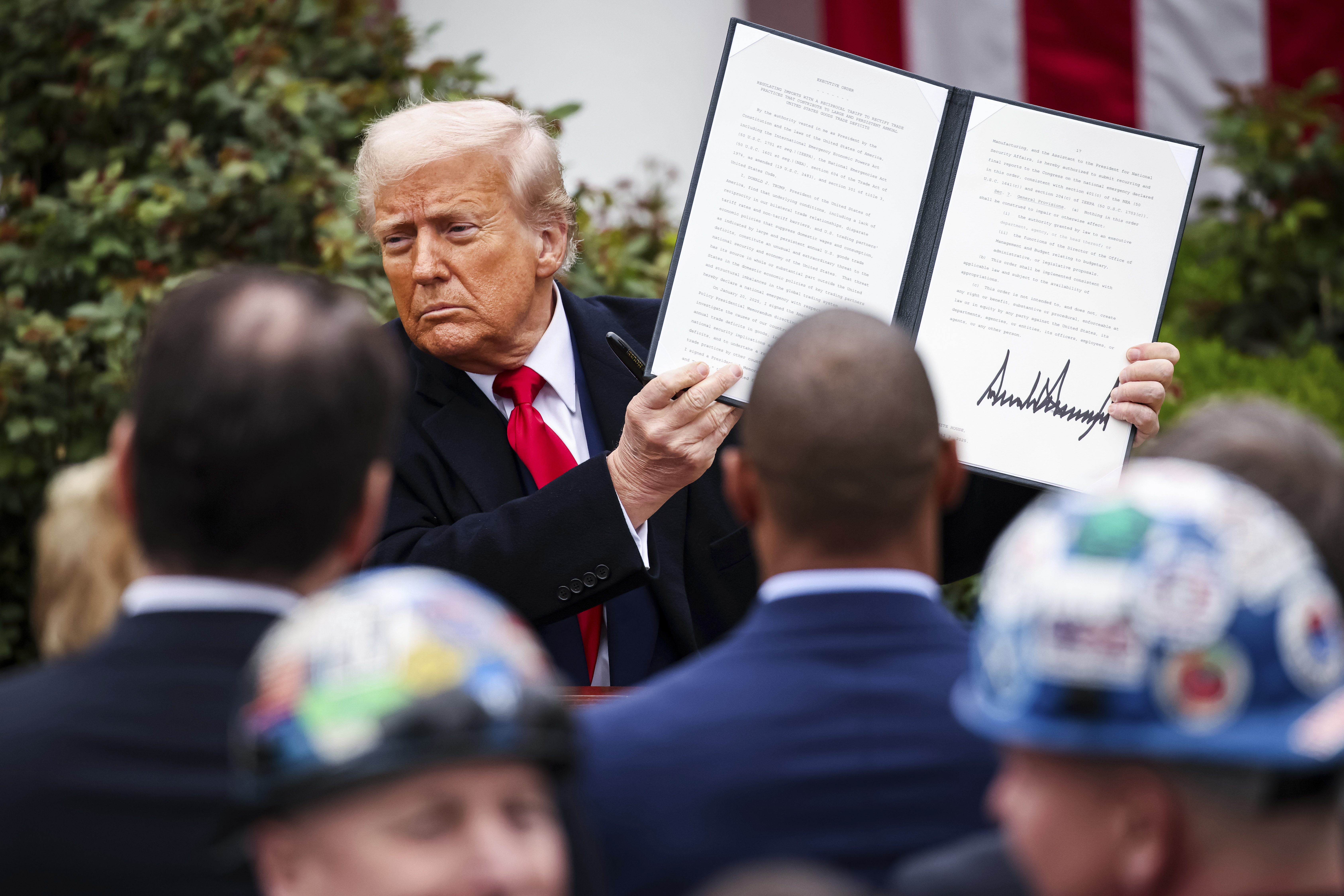
In his first term, he openly questioned US participation in the WTO and unilaterally applied 25 percent duties to imports of steel and 10 percent tariffs on aluminum.
In his second term, Trump’s indiscriminate levying of high tariffs on US trading partners and his administration’s nonchalant dismissal of the non-discrimination principle—known as most favored nation—have shaken the WTO. MFN has often been termed a cornerstone of the multilateral trading system, but according to the Peterson Institute for International Economics, by the end of 2025 only 10.3 percent of US imports entered the country under MFN.
But criticism of the WTO predates Trump by many years. When he was first elected in 2016, US anti-trade sentiment had already snowballed, and Trump faced little domestic opposition when he pulled the United States back from its WTO leadership role and sidelined the organization.
What went wrong?
In 1947, negotiators met in Geneva and then Havana to hammer out the twenty-three-nation compact known as the General Agreement on Tariffs and Trade. Never a formal organization, the GATT incorporated a flexible legal and negotiating structure based on diplomatic rather than legal norms.
Dispute settlement was opaque and rulings were regularly blocked by governments unhappy with the outcome. From 1948 to 1995, dispute settlement proceedings commenced 317 times, but only 136 GATT reports were issued and 96 adopted. Some cases were settled by mutual consent but many more were never adopted because one party—almost always the losing party—blocked the issuance of the report.
Governments were encouraged to resolve their difference in a less litigious, less political manner. A fine idea in theory, but in practice this inability to settle disputes deeply frustrated members.
Coverage of GATT rules was incomplete. Large swathes of the global economy—services, agriculture, and textiles, for example—were not covered by GATT’s rules. Intellectual property could be purloined by foreign operators without consequence.
To address these shortcomings, negotiators embarked upon eight years of negotiations known as the Uruguay Round. These broad-based trade talks succeeded in substantially broadening the agenda and in creating a new organization: the World Trade Organization. The newly minted organization was accorded enhanced powers which generated more definitive outcomes in dispute settlement and brought agriculture, services, and trade-related intellectual property under the umbrella of international trade rules.
The United States and the United Kingdom did most of the heavy lifting in creating the GATT, and the original document reflects their economic and political outlook. The circle of influential countries within GATT expanded, but not greatly. The Marrakesh Agreement establishing the WTO was signed by 123 countries but only a handful really shaped the deal: the United States, the European Community (later Union), Canada, and Japan. A few developing countries, including India and Brazil, were active in the negotiations, but not many.
But after 1995, WTO membership expanded rapidly, and soon developing countries comprised roughly three-quarters of the membership. The old command structure quickly proved unsustainable as these countries grumbled that their needs were going unmet. Under WTO rules, members can self-declare their status as “developing” countries eligible for “special and differential treatment” and thus subject to less-onerous obligations in implementing the agreements. This status has become a bone of contention for many countries, which can accept extending these flexibilities to least-developed countries but are reluctant to do so with China, India, Brazil, and Saudi Arabia.
China became a WTO member in 2001 and quickly became a major force inside the organization. It was soon evident that a global trading system with roots in the market-driven economies of the United States and United Kingdom was ill-equipped to address a juggernaut funded by a government with deep pockets and few qualms about promoting an export-powered economy capable of driving manufacturers in other countries to the wall.
Checks on the WTO’s powers were built into its founding agreements: decision-making by consensus, MFN treatment among trading partners, and an unequivocal mandate that the organization was member-driven. But these checks were a double-edged sword.
Trade deals became unattainable in a system where all members have a say, any country can block results, and all countries benefit from the rights and opportunities negotiated in every agreement.
Unsettling
The WTO’s two-tiered dispute settlement system was unique in that it consisted of a first-stage ruling rendered by a three-person panel of experts and a second appeal stage with verdicts issued by the newly created Appellate Body, which compromised seven full-time jurists serving four-year terms. As the system found its feet, frustration over the GATT’s shortcomings gave way to serious concerns of judicial overreach—of unelected officials creating new rights and obligations that could infringe upon national sovereignty.
The WTO has had sporadic multilateral success—agreeing to scrap agricultural export subsidies in 2015 and a limited agreement on fisheries subsidies in 2022, for instance— but for the most part the multilateral approach has yielded little fruit.
If at first you don’t succeed
Frustrated by the pace of multilateral negotiations, countries sought to achieve by litigation what could not be gained at the negotiating table.
Brazil brought a case against Washington’s cotton subsidies and won. Many countries challenged Washington’s anti-dumping methodology and won. Others successfully brought cases against EU food standards. But these legal victories came at a price: those that lost in dispute settlement were furious that obligations they believed they had never accepted in negotiations were now imposed upon them through other means. These simmering resentments would intensify.
The rigid WTO structure stifled negotiations so gaps and ambiguities in agreements could not be addressed. When the Appellate Body (AB) tried to address such gaps through legal interpretations, critics charged the body had not only created new rights and obligations but also bound future panels to the jurisprudence it had established.
This legal precedent was applied in a number of cases which Washington considered extremely sensitive, including a specific US methodology for determining the margin at which exported products were unfairly priced for sale in the US market. A series of AB rulings also effectively prohibited the use of safeguard measures (temporary respite from surges of imports).
The special case(s) of China
But it is the WTO cases involving China have had the greatest systemic impact. Washington’s disenchantment with the WTO stems in no small part from its belief that WTO rules, and their interpretation by the AB, have tied its hands in addressing unfair Chinese trade practices.
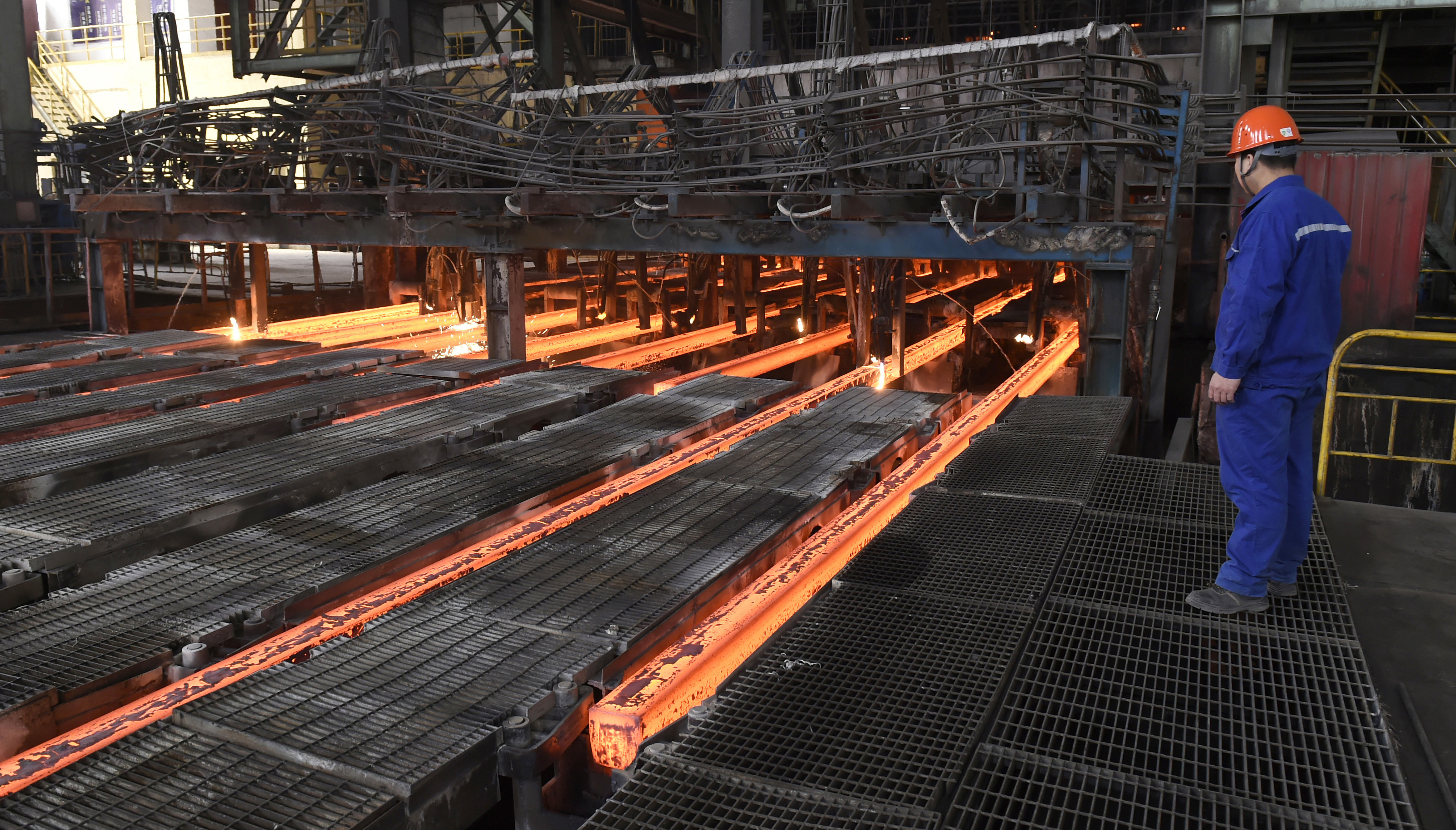
Perhaps the best-known example is the September 2008 case in which Beijing challenged the underlying basis of US anti-dumping and countervailing litigation. Washington argued that Beijing’s support for Chinese companies enabled them to dump their goods on foreign markets at unfair prices. Under the WTO Agreement on Subsidies and Countervailing Measures, a subsidy is deemed to have been extended if “there is a financial contribution by a government or any public body within the territory of a member.”
But the AB ruled that for an entity to be classified as a public body, it needed “to possess, exercise, or be vested with government authority.” This narrow definition undermined other governments’ ability to bring cases targeting the state-owned enterprises through which the Chinese government, and others, funnel state subsidies.
US anger with the AB cut across party lines and successive administrations. In 2019, the Trump administration applied its own kind of Appellate Body reform by blocking appointments to the AB when the term of a sitting jurist expired. By the end of November 2020, the AB was unable to muster the necessary quorum of three members and ceased to function. Washington continues to block these appointments, and today the Appellate Body is no more.
Although most WTO members would like to see the AB reinstated, Washington is unlikely to ever agree.
A group of sixty-one members has chosen a different course, creating the Multi-Party Interim Appeal Arbitration Arrangement (MPIA). Based on Article 25 of the Dispute Settlement Understanding, which covers arbitration. MPIA is not automatic and appeals are invoked on a voluntary, case-by-case basis. As such, MPIA rulings carry less weight than did those issued by the AB. Some key members—notably India, Indonesia, and the United States—are not parties. Even its proponents concede that MPIA is a stopgap solution to be used until a permanent solution can be reached.
The trouble with subsidies
The WTO’s legal architecture also faces difficulties in addressing transnational subsidies.
In an age of complex supply chains, production takes place across many countries. Some inputs may be produced through government-owned or government-supported enterprises. Discounted prices may have been extended for the purchase of land on which factories are built or for the energy that powers them. Perhaps the country where production takes place has offered such discounts to attract investment. Or the investor country could be seeking to circumvent sanctions on its exports by encouraging production in third countries not subject to these sanctions.
This is the nature of manufacturing today, and China is the leading exponent of such networks. But the term transnational subsidies does not appear in the WTO’s agreement on Subsidies and Countervailing Measures (SCM).
A WTO dispute settlement panel ruled in October 2025 that European Union countervailing duties applied on exports of steel produced in Indonesia by Chinese company Tsingshan Stainless Steel violated WTO rules because the subsidies came from China and not Indonesia, the country of export. The panel ruled that the WTO’s SCM provides no recourse to the importing country if the actions taken were not by the exporting country but by another WTO member.
What is “national security”?
Then there is the vexing question of exceptions from WTO rules for reasons of essential national security. Article XXI of the GATT permits a government to set aside trade rules for the “protection of its essential security interests.” The precise meaning is subject to interpretation. Washington maintains it has broad authority to define its interests, while others believe invoking Art XXI is legal only under wartime conditions or if there is trafficking in arms or nuclear materials.
Under GATT, and during the early years of the WTO, national security measures were rarely challenged. In those instances where they were, dispute panels issued diplomatically worded rulings requiring no action of respondent governments. The losing governments were aggrieved, but it was inconceivable that a dispute settlement panel might opine on what constituted the national security interests of a government.
But the newly established dispute settlement system had “teeth,” and in time panels felt empowered to rule even on the most politically sensitive of issues.
The first Trump administration treated the Article XXI national security exemption as a convenient loophole for imposing hefty tariffs on imports of steel and aluminum. Nine WTO members challenged this and all of them prevailed. These rulings provoked predictable outrage in Washington. A slew of other national security cases have been brought to the WTO, including cases involving Russia and Ukraine, Saudi Arabia, the United Arab Emirates, and Qatar.
Today, as armed conflicts proliferate, many governments see rulings on national security as anachronistic and unhelpful. Determining what defines national security is widely seen as a political rather than legal exercise.
Disputes and limited deals
As WTO members thrash about in search of the best route to reforming dispute settlement, they might reflect on the damage wrought by rigid, binding rulings. Such rulings have undermined faith in the system, certainly as a means of reining in China’s powerhouse government-sponsored capitalism. Most countries now deal with China unilaterally or try their best to engage bilaterally.
With so many members now taking matters into their own hands when it comes to dealing with the extraordinary trade practices of some members—notably China, the United States, and Russia—reform may be best achieved by reverting to the less compulsory, more nuanced GATT approach.
Emphasis on arbitration and mediation rather than rigid rulings may weaken enforcement, but with so many rules and rulings now widely disregarded, how much of a setback would this really be?
Convinced of the futility of further multilateral negotiations, governments are accelerating their efforts to strike deals in smaller groups of countries. Purists may balk at these efforts, but plurilateral negotiations have been far more successful than talks involving all members producing agreements on e-commerce, investment facilitation, and domestic regulation in services.
India and South Africa argue that members should focus exclusively on development-related issues and that this should be done in a multilateral context, with all members participating. But most members understand only too well that such a format gives India maximum leverage in negotiations. Following the abject failure of the WTO’s March 2026 Ministerial Conference in Yaoundé, Cameroon, a majority of members understand that smaller group negotiations offer the only path to success. What is not yet clear is the extent to which these talks will be embedded in the WTO’s formal framework.
In Yaoundé, ministers from the sixty-seven members supporting the e-commerce negotiations engineered an audacious and unprecedented maneuver by announcing they would implement the e-commerce agreement despite long-standing technical objections from India which have prevented the accord’s formal adoption into the organization’s rulebook. The workaround was that the deal—a 2024 accord covering recognition of digital trade documents, privacy, and consumer protections—would be implemented on an “interim” basis.
The 129 members supporting the Investment Facilitation for Development agreement—reached in 2023—have taken note of this “interim” procedure. With 165 of 166 WTO members agreeing in Yaoundé to implement the accord, they may soon decide to follow the same route.
How to start
The WTO is in serious trouble, and everyone knows the current construct is unsuitable to meet the demands of WTO members in 2026.
Yet, despite its flaws, the WTO and the multilateral trading system remain useful. Global trade continues to expand. Today 72 percent of world trade still takes place under WTO rules, a substantial tally even if it represents a decline from the 80 percent figure at the beginning of 2025.
The frontal assault from its most powerful member sent the organization reeling, but other WTO members have not followed the United States down the path of unilateralism. The threat of a US departure from the WTO has receded.
There are other encouraging signs. Governments are shifting to more flexible negotiating formats including smaller group negotiations and more flexible application of most favored nation rules.
There is also a growing willingness to push the envelope when considering how fully to embed agreements in the traditional WTO legal structure. Countries that persist in pressing for outcomes known to be unachievable now face the prospect of being bypassed.
Serious negotiations regarding reform of long-cherished multilateralism principles —consensus decision-making, non-discrimination, preference for markets rather than government intervention, special treatment for developing countries—have yet to begin in earnest. For these talks to gain any traction, governments will need to far more realistic and pragmatic.
Limiting the use of vetoes by WTO members to questions of serious national interest must be a central objective.
If governments don’t want to participate in specific initiatives, that is their prerogative, but they should stand aside and let the others proceed.
In a similar vein, blanket exemptions from WTO rules that extend to all developing-country members into perpetuity are not sustainable. Efforts to limit these “special and differential treatment” (SDT) flexibilities face fierce resistance from those that benefit from the status quo. Yet, absent clear-eyed limitations on country eligibility and the scope of issues covered, dissatisfaction with MFN will only grow.
So-called “level playing field” issues—code for China’s subsidies—cannot be seriously addressed because Beijing is unwilling to reshape its economic model. But finger-wagging from Washington and Brussels carries with it more than a hint of hypocrisy. Europe and the United States are themselves not shy in extending government support for favored sectors—agriculture, energy, digital—and will not want their hands tied in the future. Many governments are determined to retool their economies to make them greener and more digitally adept. Poorer countries believe these industrial and environmental subsidies put them at a competitive disadvantage. But countries that have gone down the industrial-policy route are unlikely to turn back regardless of restrictions in current WTO agreements. These sharp differences underscore the difficulty in agreeing on new industrial policy disciplines.
Governments will also have to be patient. The United States, the organization’s most important member, is unlikely to cooperate in serious reform efforts during the remainder of President Trump’s administration. There is no guarantee that the next US administration will be on board either. But these negotiations will take years, and if the WTO is again to be an organization of consequence, work can and must begin now.
Keith M. Rockwell served as a director at the World Trade Organization (WTO) and spokesperson for the organization for more than twenty-five years, retiring in 2022. He is a senior research fellow at the Hinrich Foundation.