 Powered by

Misleading narratives on public policy issues are increasingly enabled by the shortening of attention spans—in my students’ case, a span not much longer than the time it takes their computer screens to refresh. The causes of this attrition include a shift to consuming “information” in short form, such as Instagram reels and TikTok carousels, where the financial rewards encourage sensationalism and extreme views loaded with misinformation in order to “go viral,” and the (politically) left bias of AI summaries. This toxic mix crowds out the nuance and depth necessary to understand many issues.
To be sure, policy analysis must go where and how the consumer—politicians, “elites,” and the public—is reachable. And these trends to short-form pieces can be harnessed to begin better understanding. Yet a sizable subset of the population craves more credible information on a wide array of public policy topics (Boskin and Rivers, 2024). This should alert policy analysts to at the very least supplement their social media posts with recommended access to more complete accounts. Such information would serve those who want to get past five frequently used tricks to garner support.
Popular privilege
First is what I call the tyranny of the popular category (TPC). It is easy to demand more taxes, spending, and regulation for a category that is popular, for example, education or the environment. It takes little effort to demagogue proposed reforms of ineffective and costly programs under popular headline topics when voters are busy leading their own lives, more uninformed than misinformed on public policy issues (Boskin and Rivers, 2024).
Years of increased K–12 education funding and weaker local control, which move forward with little public opposition or even awareness, have not improved education outcomes, for instance.

Another case of TPC: Everyone wants a clean environment, but at what point is a trivially cleaner environment worth vastly more cost? Here we consider the drastic limitation of water from California’s Sacramento-San Joaquin River Delta in the name of preserving the minute delta smelt, a fish that exists only in annual hatchery production. Under conservative estimates of the value of crops not grown for lack of water, the cost per fish saved runs to thousands of dollars.
Tomorrow always comes
Second is presentness bias, which often ignores long-run considerations of costs and benefits and focuses almost entirely on immediate outcomes. This bias becomes especially inimical to sound public policy during strong economic growth, when politicians exploit naïve extrapolation to assume new or expanded programs are readily affordable (in any event, those politicians will be out of office when the bill comes due). It also appears during recessions, amid economic and humanitarian hardships, when programs are set up with little regard to their outliving the need. As President Reagan liked to say, “There is nothing more permanent than a temporary government program.”
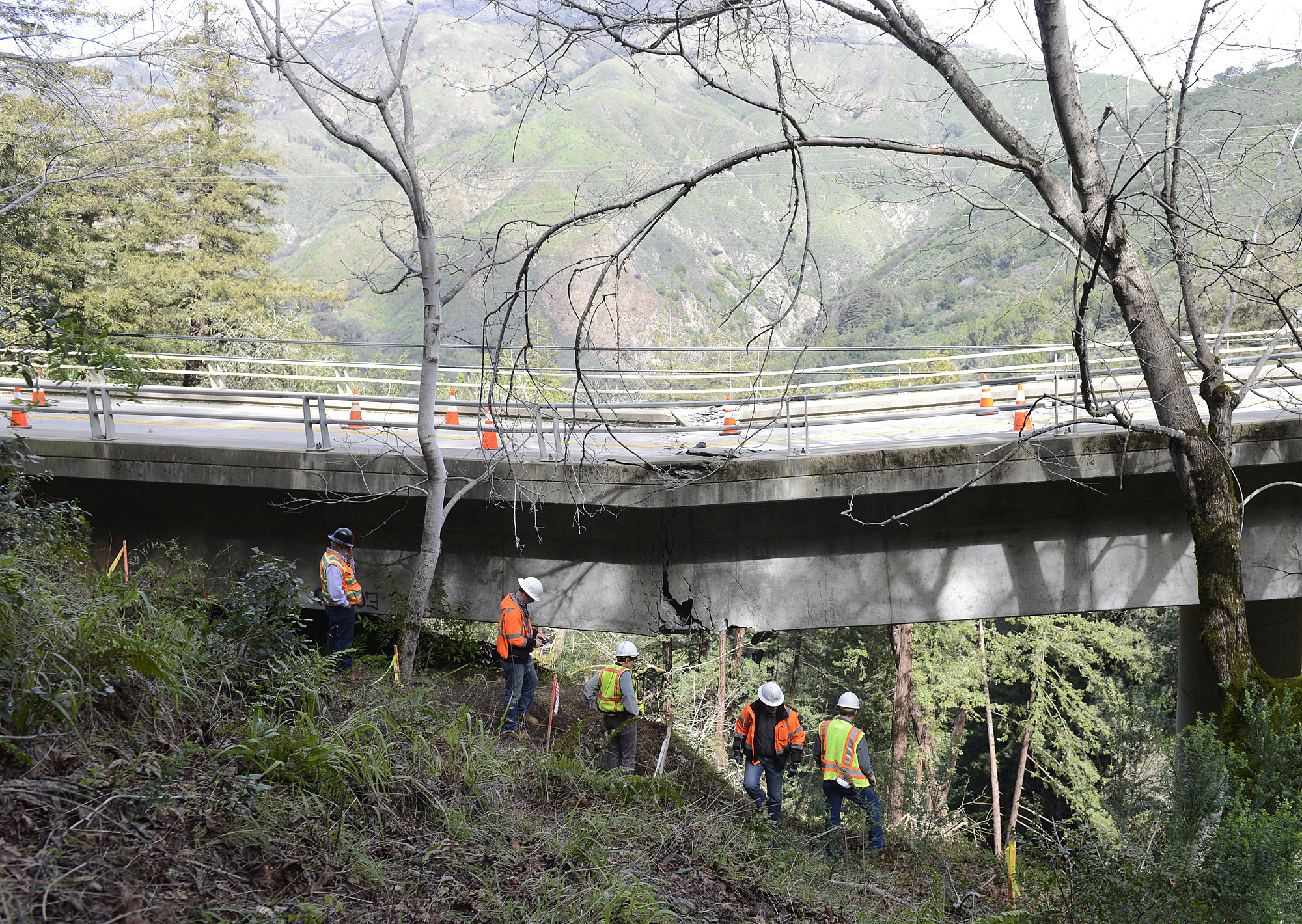
California Governor Gavin Newsom claimed that a $97.5 billion revenue surge as the state emerged from its longest-in-the-nation lockdown in 2022 would enable a vast expansion of welfare-type spending. The state’s legislative analyst labeled the result a “wall of debt” and an unattended “structural budget deficit,” which Newsom will be leaving his successor. The temporary surplus could have been used to: 1) pay down the state’s debt; 2) work off much of the state’s immense deferred maintenance on its roads, ports, and bridges; and/or 3) repay $20 billion the state borrowed from the federal government for COVID-era unemployment insurance (California is the only state that hasn’t done so).
In budgetary distress after the Financial Crisis/Great Recession, California in 2012 enacted a seven-year “temporary” personal income-tax hike. Of course, the state extended the higher taxes through 2030 even as the economy boomed. And now, unions are trying to make it permanent via Proposition 3 on the November ballot. Never was the Gipper more prescient than when he warned against “temporary government programs.”
Ignoring basic principles
Third is the failure to heed basic economic principles, such as opportunity cost, sunk costs, the law of diminishing returns, and the power of economic incentives. It is often assumed that more of a policy presumed to do good will itself do even more good. But at some point, the incremental benefits start to shrink, whereas the incremental costs rise to eventually swamp the added benefits.
During the pandemic, two-thirds of unemployment-insurance recipients received benefits exceeding their job pay. The result? Many jobs left unfilled for too long.
And as every business knows, costs already incurred are sunk—what matters are costs and benefits going forward. There is no better example than California’s—perhaps the nation’s—biggest-ever boondoggle, the so-called high-speed rail project (which is now actually only blended speed). The opportunity cost of wasting $110 billion to $215 billion or more in future spending dwarfs the $16 billion already spent and sunk eighteen years after voters approved the original funding. Yet not a single mile of high-speed track has been laid. Stopping the project now would save the state enough money to solve its perpetual water crisis, eliminate its deferred infrastructure maintenance, and/or expand the state’s capacity to deliver reliable electricity to households and businesses without brownouts and blackouts.
Very superficial
Fourth is the failure to do a complete end-to-end analysis, leaving out important aspects that affect the bottom-line costs and benefits.
The analysis of electric vehicle subsidies almost always focuses only on tailpipe emissions. On that basis, electric cars emit no carbon dioxide, while gas and diesel cars, or even hybrids, do so. But a full-cycle analysis is required. The metal that goes into the cars is produced with considerable emissions. The plastics in the car are made from fossil fuels, as are the butyl rubber tire linings. The rare-earth elements and other components essential for the large batteries in electric vehicles come mostly from dirty, coal-powered Chinese mining and production. Electric vehicles are heavier than gas or diesel equivalents, so they cause greater tire wear, which contributes more to smog than modern internal combustion engines. When the large batteries reach the end of their useful life, disposal has environmental consequences. The electricity to charge electric vehicles is often produced from coal or natural gas.
While the environmental benefits of EVs will improve over time, they are currently overblown. Taxpayers need to consider the whole picture when deciding whether subsidizing these vehicles makes sense.
Burying the failures
Fifth is what I will label the arrogance of government intervention success (AGIS). This stratagem, which focuses solely on the easing of a market failure by a theoretically appealing government “solution,” ignores not-infrequent government policy failures, often caused by poor incentives. As with market failures, policy failures come in several varieties, including waste and fraud, regulatory capture, misguided social engineering, excessive dependency, poor targeting, or simple incompetence to carry out the task at hand.
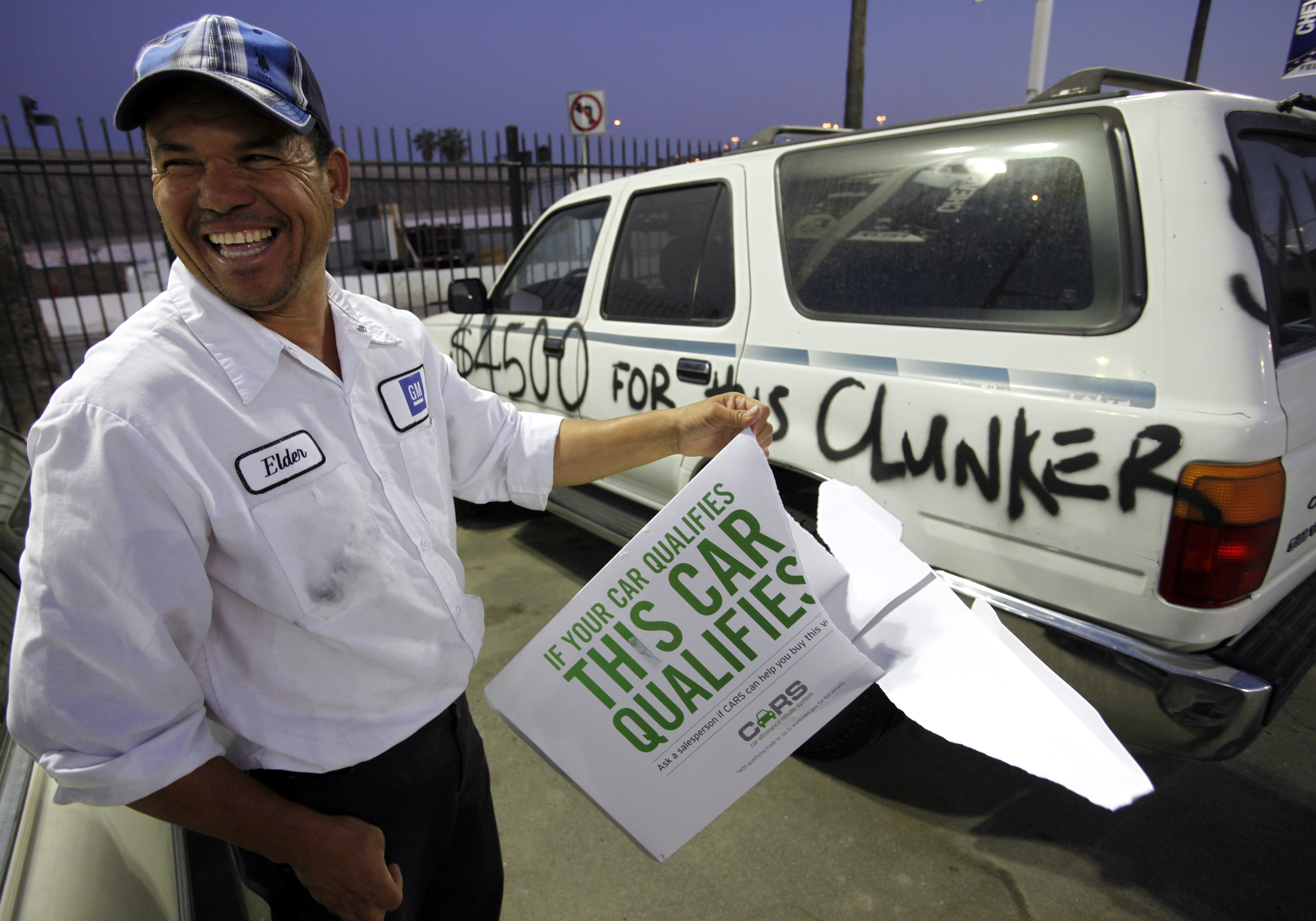
Consider the failed attempts to stimulate the economy with government spending, followed by other ineffective policies (remember “cash for clunkers”?) ladled on top of those allegedly “shovel ready” projects that even President Obama eventually admitted weren’t ready.
The proper comparison puts the imperfect market outcome up against the likely imperfect government intervention to assess the net benefit, positive or negative, from the policy.
The limited numerical, economic, and scientific literacy of much of the population offers many opportunities for politicians and policy analysts to take advantage. One example is California’s expensive climate policies. Our elected leaders claim they will help stop, or at least mitigate, climate change. What percentage of the population knows that the effect of greenhouse gas emissions on climate depends on their global level in the atmosphere, currently about 430 parts per million of atmospheric carbon dioxide? Or that adding up the emissions from each and every country adds about seven-tenths of 1 percent to this concentration annually? And that California’s activities emit about 1 percent of global emissions? So, if—and it’s a big if—California’s policies decreased the state’s emissions by an additional, say, 30 percent above and beyond what the policies already reduce, the result would be a net reduction in carbon dioxide concentrations in the atmosphere of less than one one-hundredth of a part per million?
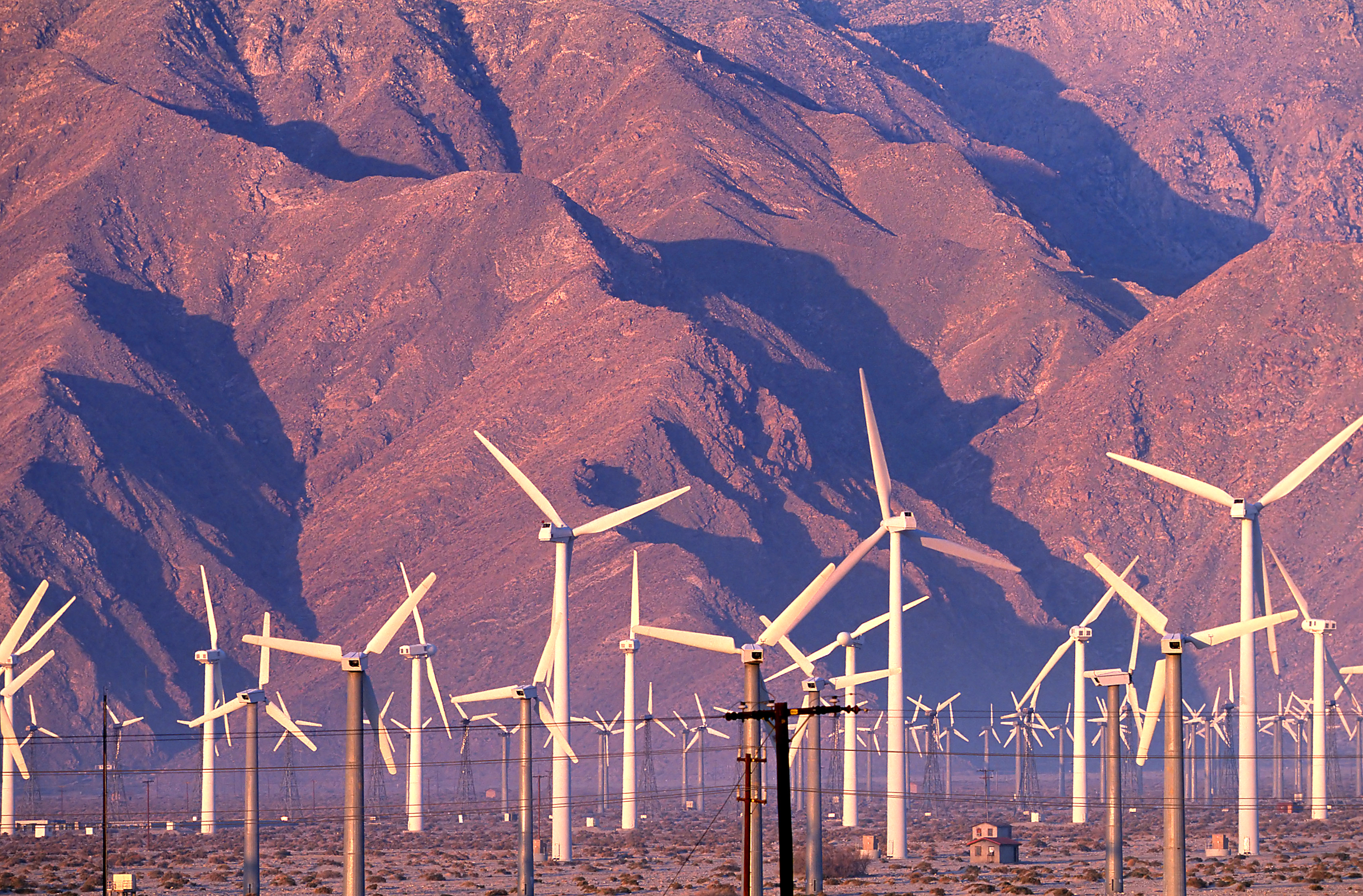
Hence California’s policies, taken strictly by themselves, can have at best only a trivial effect on climate, even over decades, for the large cost Californians pay in higher and less reliable energy and reduced consumer choice. These costly measures might have some justification if they funded R&D that led to breakthroughs that scaled to true environmental significance at reasonable cost without permanent government subsidies, or if they induced large emissions reductions in other jurisdictions. While California does have such effects on a few other states, it has no influence on by far the largest emitter, China, or the third-largest, India (the United States is second).
The costs and risks from likely global warming certainly should be considered seriously in policymaking. But disingenuous pronouncements on what is achievable at what cost have caused a backlash that now inhibits serious consideration of how technology and adaptation, not just emissions mitigation, can lead to cost-effective solutions.
There are many successful government programs worthy of funding, some deserving more, some needing more precise targeting. The military has kept us safe and free since the founding of the republic, whatever one’s views about specific deployments. Environmental regulation has helped produce cleaner air and water, although sometimes sharper focus and market-based solutions rather than command-and-control diktats could achieve these benefits at far less cost. Social Security is a major contributor to the sharp decline in poverty among the elderly, even as the life expectancy of the elderly increased.
President Franklin Delano Roosevelt’s original mission for Social Security was “to secure a measure of protection against poverty-ridden old age.” By that standard it has been quite, if imperfectly, successful. But most of the payments go to non-poor recipients. A reduction in benefits of 20 percent or more will occur in six years or so unless major changes are made to a program designed under vastly different economic and demographic conditions. Yet it has been known for many decades (Boskin, 1986) that Social Security had massive unfunded projected liabilities despite the 1983 reforms.
A successful society needs a government that does its appropriate functions well and is adequately funded. But when the government—federal, state, or local—tries to solve every alleged problem, it becomes too unwieldy, too expensive, and too distracted from its legitimate core functions to do them even adequately. Worse yet, it invites mostly negative unintended consequences while undermining support for its core functions.
Americans deserve better, from politicians and the policy analysts that influence and support them. And the informed citizen would do well to be on guard against these five popular forms of policy distortion.
Michael J. Boskin is the Rose and Milton Friedman Senior Fellow at the Hoover Institution and the Tully M. Friedman Professor of Economics at Stanford University.