 Powered by

In policy analysis, one must balance blue-sky and short-run approaches. We can ask, what is the right answer, unconstrained by the current situation and political reality? We can also ask, what little changes might one make to improve the current mess, given some view of political appeal and constraints?
One needs both. Here, I focus on blue-sky approaches for taxation and spending. Sure, they might not pass in this Congress. But if we do not ask what the promised land looks like, we will surely never get there. Moreover, when momentum for reform comes it comes quickly, and needs a library of clear ideas.
Since my colleagues in the Commons project have done such a splendid job of analyzing how much we tax and spend, I’ll focus on how we tax and spend.
Two principles help. First, how can we avoid the partisan shouting match? One side says, “You’ll bankrupt the government!” The other cries, “You’ll starve the poor!” Most people analyze taxes this way: who pays more, who pays less. Economics offers a way out: Pay attention to incentives! We can make the political pie bigger too, and both can get a lot of what they want.
Second: State the question. Disagreements about answers often come from different implied questions. Stating the question helps us to converge on common answers.
Slaying the tax code monster
For taxes, let’s start with this question: How should the government raise revenue while doing the least economic damage?
The answer is simple: Disincentives come from the marginal rate. If you earn an extra dollar, how much additional consumption can you obtain? So, lower that marginal rate. To make up revenue, broaden the base. Then you get economic magic: lower tax rates, and greater tax revenue.
The US tax code achieves about the opposite. The top marginal rate starts with a federal 42 percent. But another oft-forgotten principle: Disincentives come from all taxes taken together. Add state income tax, 13.5 percent if you live in California. Then 10 percent sales tax, property tax, personal property tax, estate tax, excise taxes, tariffs, your share of corporate taxes, and more. I guesstimate around 70 percent. Greg Mankiw once computed his marginal tax rate at 90 percent.
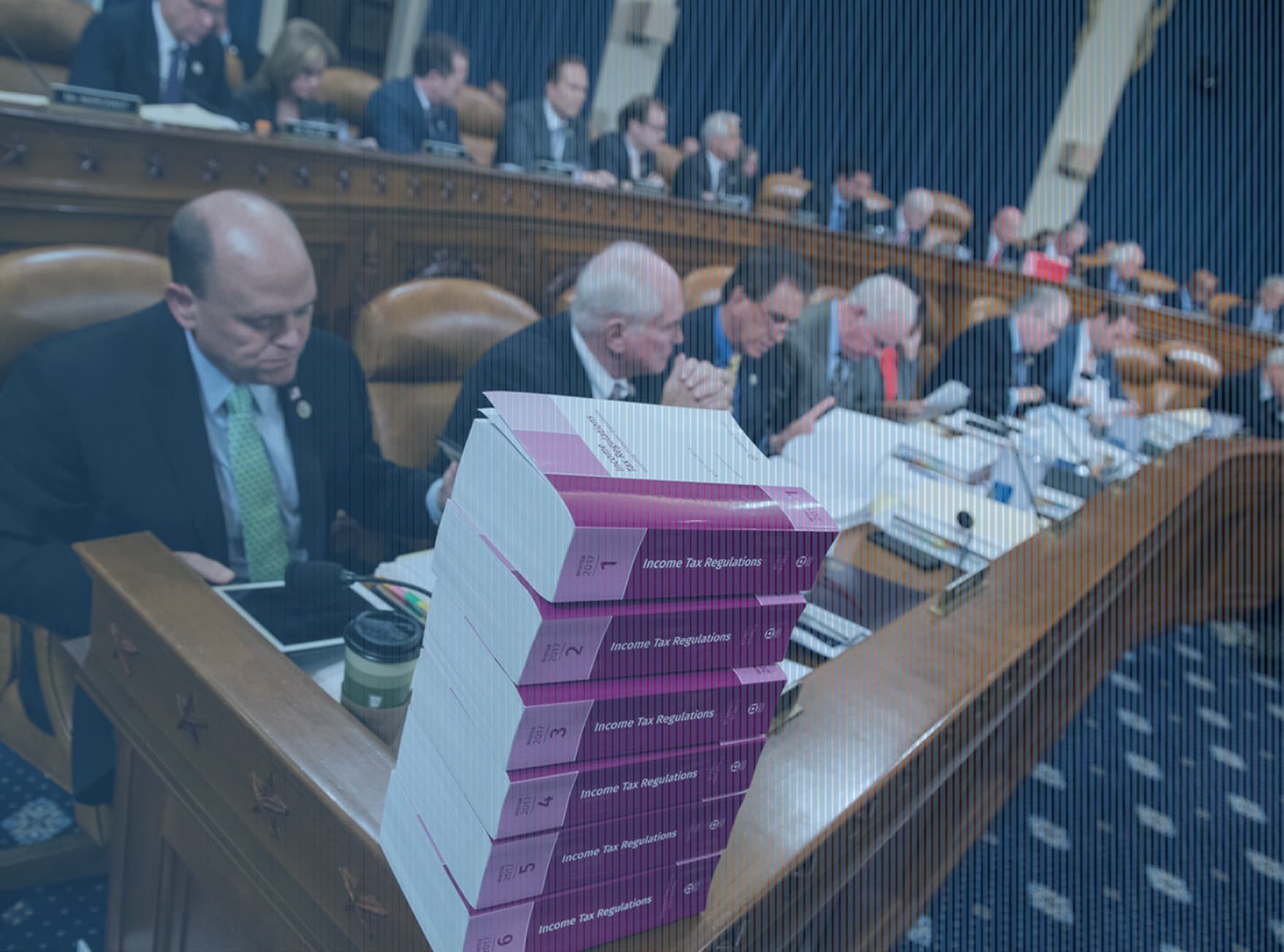
Yet federal revenue is only 17 percent of GDP, and overall government revenue is about 30 percent of GDP. Why? First, the United States has one of the most progressive tax systems in the world, if not the most. If people earning lower incomes pay a rate below 30 percent, people with higher incomes must pay a higher rate. Second, there is a Swiss cheese of complex deductions, exclusions, and special deals. The tax code, regulations, interpretations, and so forth add up to 70,000 pages. And those distort: Wealth management and corporate organization are organized around tax avoidance.
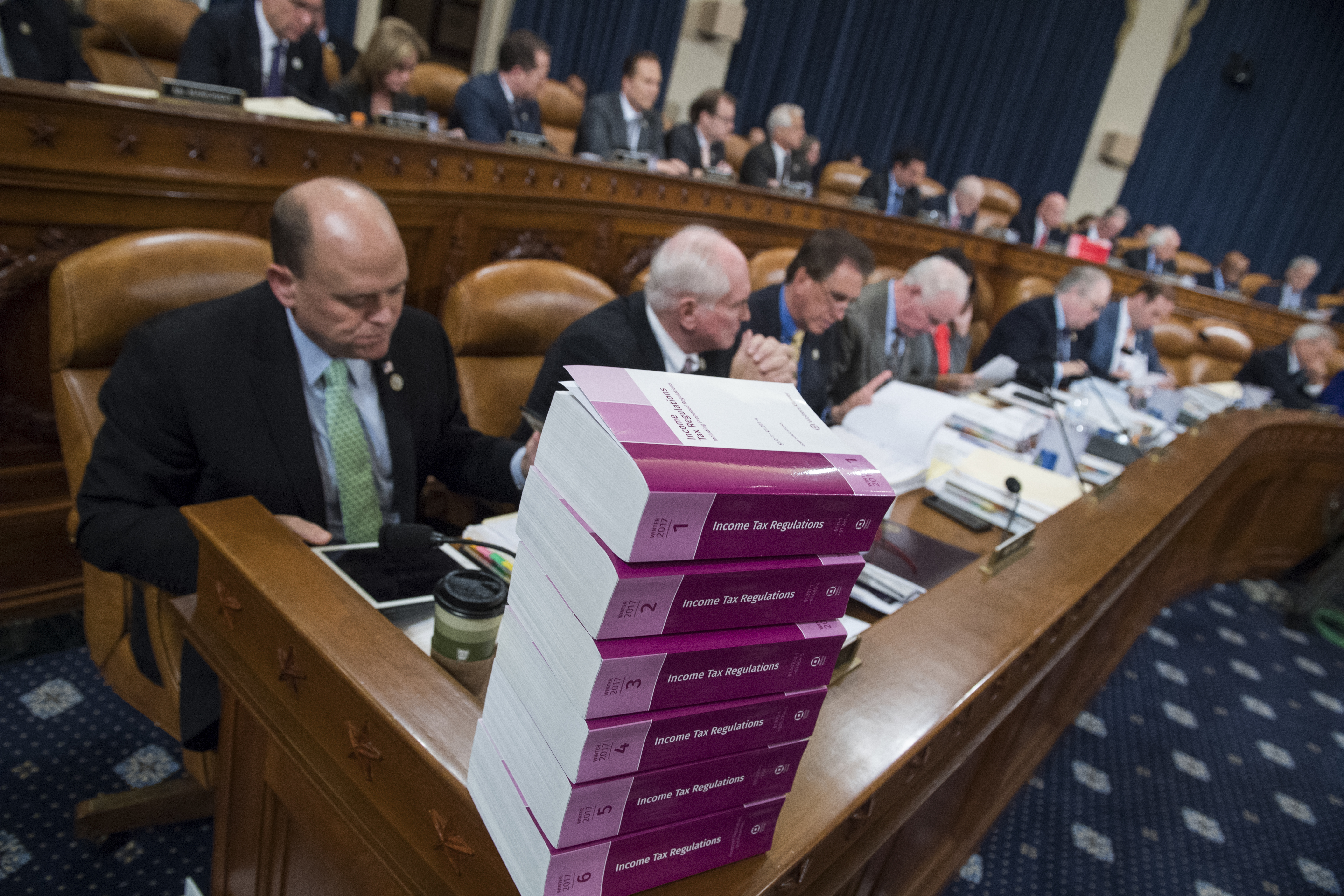
The damage is not just economic. People have a sense that the wealthy with fancy lawyers and lobbyists get away with a lot, a politically corrosive reality. Getting rid of the monstrous, complex, and cronyist tax code in favor of a simple and fair tax system is, in my view, even more important than getting the headline rates right.
So, the answer is simple: Eliminate the income, corporate, estate, excise, tariff, wealth, and all other taxes. Tax consumption instead. (Payroll taxes for social programs are almost the same as a consumption tax, so can remain if one wishes.)
When you tax something, you get less of it. So, tax things that people will buy or produce even if they have to pay taxes. Consumption is fairly unavoidable. By contrast, if you tax the returns to investment, people save less, and you end up with a lot less capital: fewer businesses, less equipment, fewer factories.
More deeply, if people invest and reinvest their income in businesses, directly or indirectly by holding stocks and bonds, and those businesses hire others and make great products for the rest of us, why is this a problem? Wealth and income are ways of providing for future consumption. Be patient. Tax the final consumption, not the work and investment that made it possible.
Income has little economic meaning. Consumption does. A future CEO is “low income” just after graduating college. You’re “high income” the year you sell your house. Corporate income taxes make even less sense. Every dollar of corporate tax is paid by people, either consumers through higher prices, workers through lower wages, or investors through lower returns. Tax the people, not the conduit.
Why do we tax income, anyway? In 1913, when the 16th Amendment gave Congress the constitutional power to collect an income tax, the US government did not have the technology to collect consumption taxes. Now we do. But taxing income was the original sin. If the government taxes labor income, people can incorporate, so the government has to tax corporate income. If the government properly declines to tax interest and capital gains, people can shift labor income to that form. Patch, patch, patch, and the mess results.
The blue-sky answer
Pretty much every blue-sky tax analysis ends up with a broad-based, low marginal-rate tax system emphasizing consumption. Bob Hall and Alvin Rabushka advanced a comprehensive flat tax proposal. Ken Judd, author of an early proof that zero capital taxes are optimal, updates it to “Flat Tax +45.” David Bradford introduced an “X tax” that basically implements a progressive consumption tax. The “destination-based cashflow tax” does the same from the corporate side. Many countries have a large (typically 25 percent) value-added tax (VAT), which is basically a sales tax collected at each stage of production, though on top of—not instead of—payroll, income, and corporate taxes. A “Fair Tax” proposal to replace the federal income tax with a national sales tax was actually introduced in the US Congress. It’s closer to “politically feasible” than you think!
Most tax reforms move toward a consumption tax, though in the habitually clunky way (while preserving the complexity and favoritism) of the current code. To a degree, the government realizes that taxing saving and investment is a bad idea, so the tax code combines high headline rates of investment taxation with a smorgasbord of carve-outs, including 401(k), 526(b), IRA, Roth IRA, and more. Investment expensing for corporations tries to reduce their disincentive to invest. The estate tax combines a 40 percent statutory rate with enough complex ways to avoid it that the wealthy end up paying very little. (The tax code is a lot like airline mile programs and credit card rewards. It taxes the unwary.)
Of these implementations, I slightly prefer a value-added tax, closely followed by a sales tax. The VAT is a bit more self-enforcing.
I think eliminating the income tax rather than trying to reform it is centrally important. How do we get rid of the home interest deduction, the health insurance deduction, energy credits, politicized “nonprofits,” and thousands more? If you try to reform the income tax, you fight with each constituency. Our government seems unable to reform even the basics, like indexing capital gains for inflation. But if you remove the income tax, all go away instantly.
Crucially, the consumption tax must be one rate on everything, and for everyone. No lower tax on tacos than on steaks, on food and medicine than on yachts, for domestic vs. foreign goods. No lower taxes for nonprofits, universities, strategic industries, and so on. No more transferring income by distorting prices.
Granted, optimal tax theory prescribes a different tax on each good. Tax each good in proportion to how little its production and consumption decline after taxes. Tax dialysis machines, which you’ll pay anything for if you need one, not yachts. We tax in about the opposite pattern, for good reasons. Mostly, however, if we open the door to good-specific taxes, the lobbying bonanza for special favors will open up and we’ll be right back where we started. Optimal capital tax theory also prescribes an unannounced one-time, absolutely-never-again wealth tax, justifying it by saying the investment has already been made. A lot of academic literature focuses on this possibility, and the proposed California wealth tax imitates it. In my view, the “one time” and “never again” parts make this completely impractical.
You may object, won’t that consumption tax need a high rate? Well, yes. If the government spends 40 percent of GDP, in the end the average tax rate must be 40 percent. And the less some people and activities pay, the more the rest must pay. But whatever the rate, that’s what you’re paying now. Putting it in one place is healthier, as we can see it.
You may object that a value-added tax or similar consumption tax will too easily raise a lot of revenue, especially if it is imposed on top of current taxes, and that Congress will respond by spending even more. Starve the beast. This is an interesting political-economy view, with some merit. However, our current huge debt and deficits have had very little restraining effect on spending as it is. The starving beast seems to just borrow. This view posits that our government operates always at the revenue-maximizing point of the Laffer curve given the structure of the tax code. In other words, the government sets tax rates just at the point that any higher rate will so reduce economic activity that it produces less revenue. It posits that the government is incapable of any restraint.
While I am sympathetic, most economists find that tax rates, especially on middle-income voters, are substantially lower than that amount. Most of all, however, I do not believe it is right to shade my economic answer to the question, how to structure taxes to raise revenue with least economic damage, and to hide a better option, in order to secretly steer the government toward my preferences for lower spending. People who do that sort of thing—and many do—soon lose credibility. And if our political and constitutional order is so broken that it is incapable of taxing and spending less than the maximum it can squeeze out of the economy, we have far worse problems than the nature of the tax code.
Focus on the whole system
You may object that a consumption tax is “regressive.” Everyone pays the same share of their consumption. I answer, wait: Now you’re asking a different question. We were raising revenue for the government. Now you’re asking how to transfer income.
Well, again, if we wish to answer that question, we must look at the whole system, not each element in isolation. If a flat tax funds Bernie Sanders’ spending, the whole government can be as progressive as you like. Also, if you believe the trope that rich people don’t pay income taxes, then you have to admit they will pay more with a consumption tax. You’ll get them at the yacht dealer, not the tax accountant’s office.
But if we must, a consumption tax can be progressive. Most proposals to shift the income tax system to a consumption tax maintain the income tax’s progressivity—along with its Swiss cheese. A VAT or sales tax can also be progressive. For instance, if everyone gets a card that pays the first $10,000 of VAT or sales taxes.
However, you cannot escape basic math. For every person who pays a lower rate, someone else must pay a higher rate, and thereby worsen the economy. (The damage of taxation is roughly proportional to the square of the tax rate.)
Despite clear economic advice against it, wealth taxes are again politically popular, even among Nobel Prize winners, many of whom wrote contradictory academic articles. As Hoover senior fellow Josh Rauh persuasively computes, wealth taxes won’t raise much if any revenue. They necessarily shift the economy from productive capital to consumption, just as everyone wants to raise investment, whether in AI, green tech, chips, or ship building.
Why pursue a wealth tax? When you drill just a little deeper, again, its proponents ask a different question. It’s not about raising revenue. They believe that billionaires have too much political power, and that by taxing away billionaires’ wealth they can reappropriate some of that power. Well, if that’s the question, all sorts of answers appear. I would start by recommending a more limited government, whose power is thereby less attractive to wealthy private and corporate interests. And I might point out that France today adds to the long experience that confiscatory wealth taxation and redistribution do not guarantee social and political harmony.
You may object that you want to support housing, green energy, sports stadiums, and so on. Or, that their constituencies will block any tax reform that removes these preferences. Well, now you’re asking a different question again: How should the government subsidize? And I offer the obvious answer: Write them checks. Annually appropriated, in the budget process, voted on. If you want to subsidize charitable contributions, home mortgages, and health insurance for Palo Alto millionaires via a 55 percent match from taxpayers, fine, cut them a check—out in the open where voters can see it, not hidden in tax code. (Tax deductions are remarkably regressive!)
Similarly, spend wisely. If we focus less on the amount of spending but rather on its gross inefficiency, we can achieve better results at less cost. Again, pay attention to the whole system, and pay attention to the incentives.
Streamline and control social spending
Americans with low incomes face some of the highest all-in marginal tax rates. Each means-tested program or credit may have only a 30 percent phaseout, but they add up to 100 percent or more marginal tax rate from $0-60,000, with many cliffs.
Earn an extra dollar, and you can lose food (SNAP, WIC); Social Security disability benefits; earned-income and child tax credits; TANF and CalWORKs cash; section 8 rent vouchers or affordable rentals; health insurance, Medicaid or ObamaCare subsidies; Pell grants and other financial aid; all the way to low-income bus passes and library cards. (Estimates vary a lot, in part because many people participate in far fewer programs than they are eligible for.) The sharp decline in labor-force participation among people with low incomes is a natural result.
So, put social programs all in one place, where people can get the help they need, but we can make sure nobody faces more than, say a 50 percent marginal tax rate. (Paul Ryan is advocating this in a RISE program).
Much of our social spending now goes to fund nonprofits, with much less oversight than if the government did the spending. That’s how you spend $100,000 per homeless person per year, and only get more homeless. Bring back actual government employees. Even funding the DMV is a better bet than giving money to a driving safety advocacy organization. And federal money handed to states for Medicare, schools, and so forth creates little incentive for the states to spend wisely.
What about health care?
Finally, a note on health spending, perhaps the maximally inefficient rathole of our government. (Well, next to the California high-speed train, but health spending is a lot bigger.) What’s the question? Is it to provide health care for poor and homeless? There is no reason that your and my health care and insurance needs to be so screwed up to achieve that goal.
A system with essentially no economic regulation, and brutally competitive markets, will work fine, and that includes pre-existing conditions and information asymmetry. For the poor, elderly, and so forth, here’s a $10,000 voucher—or whatever our democratic system decides it wishes to spend. Buy yourself some health insurance.
I think the question that motivates our current health mess is how to provide some charity care without it showing up on the budget. The government forces doctors and hospitals to provide care below cost to some, but allows them a protected monopoly to make up the difference on you and me. As in the rest of this essay, my root recommendation is political transparency. Don’t hide a subsidy in the tax code or with a regulation. Charge taxes, spend money, on budget. Taxing and spending are damaging, yes, but visible and politically accountable taxing and spending are far better than the same thing hiding in economic regulation and complex tax deductions and credits.
There is a chance for good policy analysis to have a great impact. Few in the political and policy arena think about the incentives and the system as a whole. They think about who gains and who loses, with each policy in isolation. Most start with an answer and look for the question. Stating the question and thinking about the best answer is far more productive. Doing so, the United States can raise more revenue with less economic damage, and help more people at lower cost.
John H. Cochrane is the Rose-Marie and Jack Anderson Senior Fellow at the Hoover Institution. He is also a senior fellow at the Stanford Institute for Economic Policy Research (SIEPR), Professor of Finance and Economics (by courtesy) at Stanford Graduate School of Business, a research associate at the National Bureau of Economic Research, and an adjunct scholar at the CATO Institute. He writes the Grumpy Economist Substack and posts The Grumpy Economist Weekly Rant on Freedom Frequency. He is also one of the GoodFellows, a Hoover video podcast.