 Powered by
“Come on out, you old rat!”
We tend to think that America was born on July 4, 1776, with the lofty ideals set forth in the Declaration of Independence. But the country’s real birth began earlier, on battlefields where ordinary Americans were already fighting and dying for a new nation.
The first engagements took place at Lexington and Concord in April 1775 when British soldiers were ordered to destroy colonial military supplies stored in Concord. Local militia (read: everyday farmers and craftsmen) put their lives on the line for freedom. Yet despite their bravery, many colonists, including several in the Continental Congress, wanted to portray the fighting as self-defense, something they hoped the Crown might eventually forgive.
This would all change on May 10, 1775, when a small force of American patriots surrounded Fort Ticonderoga in New York. Fort Ticonderoga was no minor outpost. During the French and Indian War, its defenses helped repel a much larger British force. By 1775, it remained a strategically important fortress stocked with heavy artillery. The Americans had no right to set their sights on such a prize. And yet, here they were.
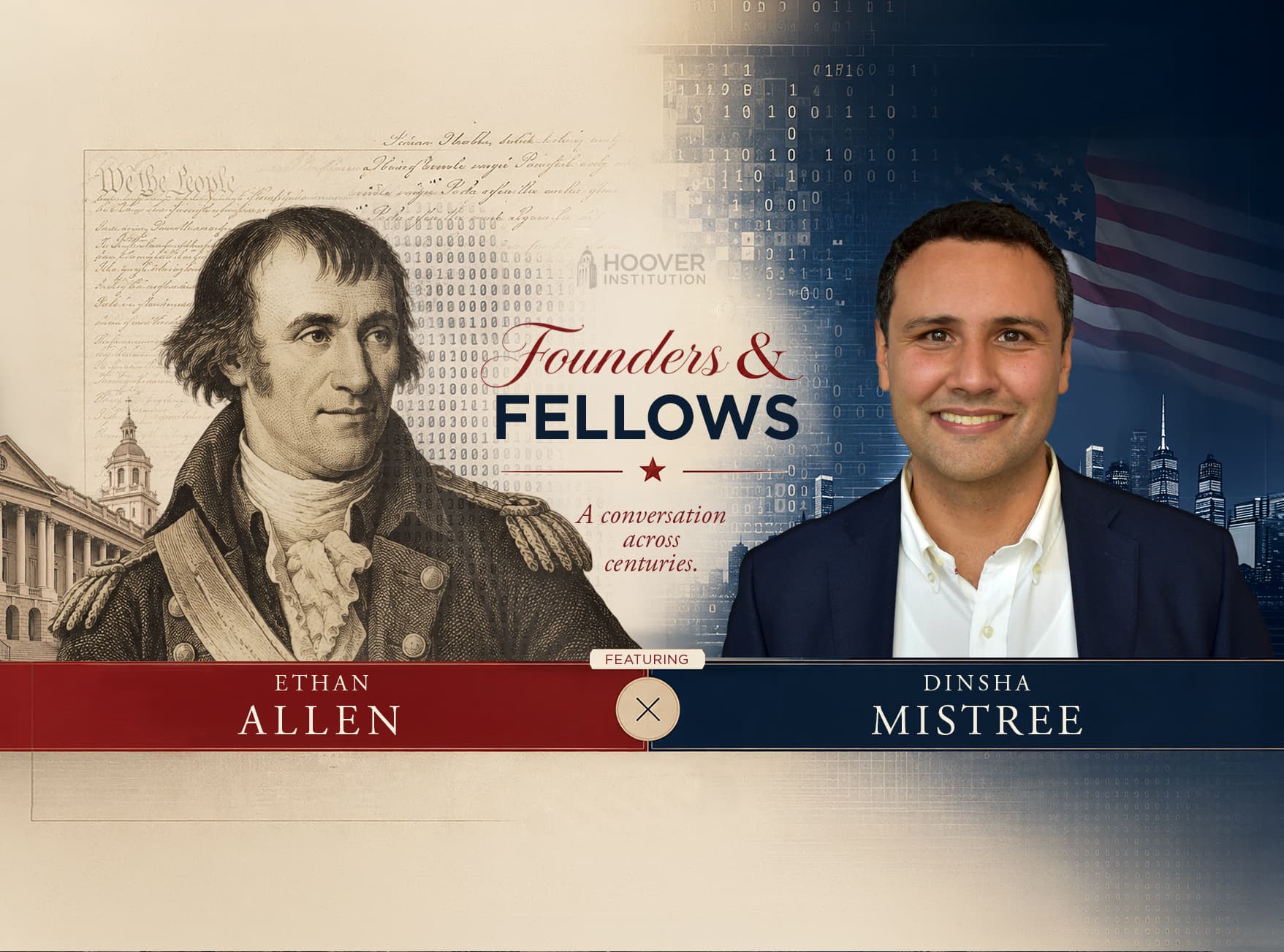
One of the American commanders, Ethan Allen, was not a soldier by training. A Connecticut farmer, he had moved north to the New Hampshire Grants, the territory that would become Vermont, where settlers were locked in a bitter border dispute with New York. Allen organized the Green Mountain Boys, a militia that ran off New York surveyors and sheriffs, resulting in New York’s governor putting a bounty on his head. By 1775, Allen was already well practiced at defying authority.
Just before dawn, Allen and his Green Mountain Boys, joined by a rival claimant to command named Benedict Arnold, crossed Lake Champlain and surprised a lone sentry, whose musket misfired. Once inside, they found a small garrison of mostly sleeping soldiers. Allen supposedly greeted the British commander, Captain William Delaplace, with the colorful demand that opens this essay. Delaplace had no choice but to surrender.
Allen’s outfit had somehow seized the most formidable fortress in the northern colonies. The capture of Fort Ticonderoga is widely regarded as the first offensive action in American military history.
In his own version of events, published in 1779, Allen never called for an old rat to emerge. Instead, when asked by what authority he had entered the fort, Allen recalled a more dignified reply: “In the name of the Great Jehovah and the Continental Congress!” Other recollections, recorded years later, offer something closer to the line that opens this essay. Allen, it turns out, was as good at telling a story as he was at making one.
The Continental Congress, for its part, had authorized nothing. In a striking coincidence, the Second Continental Congress convened for the first time that afternoon and would not receive word about the capture of Fort Ticonderoga for another week. Allen’s offensive presented Congress with an awkward reality: the colonies were no longer merely defending themselves from British aggression. Americans were taking the offensive. A few weeks later, Congress would authorize further offensive action, this time directed at Canada.
Despite not receiving a commission, Allen volunteered to accompany the regiment involved in the invasion of Quebec. As the regiment advanced toward Montreal, he recruited a group of Americans and anti-British Canadians. Once again displaying a characteristic moxie, Allen and his small detachment attempted without authorization to capture Montreal in the Battle of Longue-Pointe. This time his initiative cost him, and he was taken prisoner. On learning of Allen’s capture, American General Philip Schuyler wrote, “I always dreaded his impatience and imprudence.”
While Allen sat in a British prison, the fort he had seized was paying dividends. That winter, Boston bookseller Henry Knox hauled some sixty tons of Ticonderoga’s cannon roughly three hundred miles over frozen lakes and the snowbound Berkshires. In March 1776, George Washington mounted the guns on Dorchester Heights, forcing the British to evacuate Boston. Allen’s unauthorized raid supplied the Continental Army with artillery it desperately needed.
Captivity did not tame him. The British shipped Allen to England in irons and considered hanging him as a traitor. He spent more than two years as a prisoner of war before being released in an exchange. After meeting George Washington at Valley Forge, Allen was brevetted a colonel in the Continental Army and received a hero’s welcome when he returned to his home in the Vermont Republic. Although he did not play any other notable role in the American Revolution, he became active in local Vermont politics and is today remembered as one of the founders of the state.
So, what can we learn from Ethan Allen? He was impatient, imprudent, and fiercely independent. Yet by the time the delegates in Philadelphia were ready to sign the Declaration of Independence, Ticonderoga had fallen, its cannon had driven the British from Boston, and the question of whether Americans would fight had already been answered.
As important as our founding documents and institutions may be, America has always been a country of action. At our best, we are a people at the frontier, not waiting for orders or approvals, and every so often pounding on the door and telling the old rat to come out.
Dinsha (Farrokh Allen) Mistree is a research fellow at the Hoover Institution. According to family lore, he is also a descendant of Ethan Allen on his mother’s side.