 Powered by
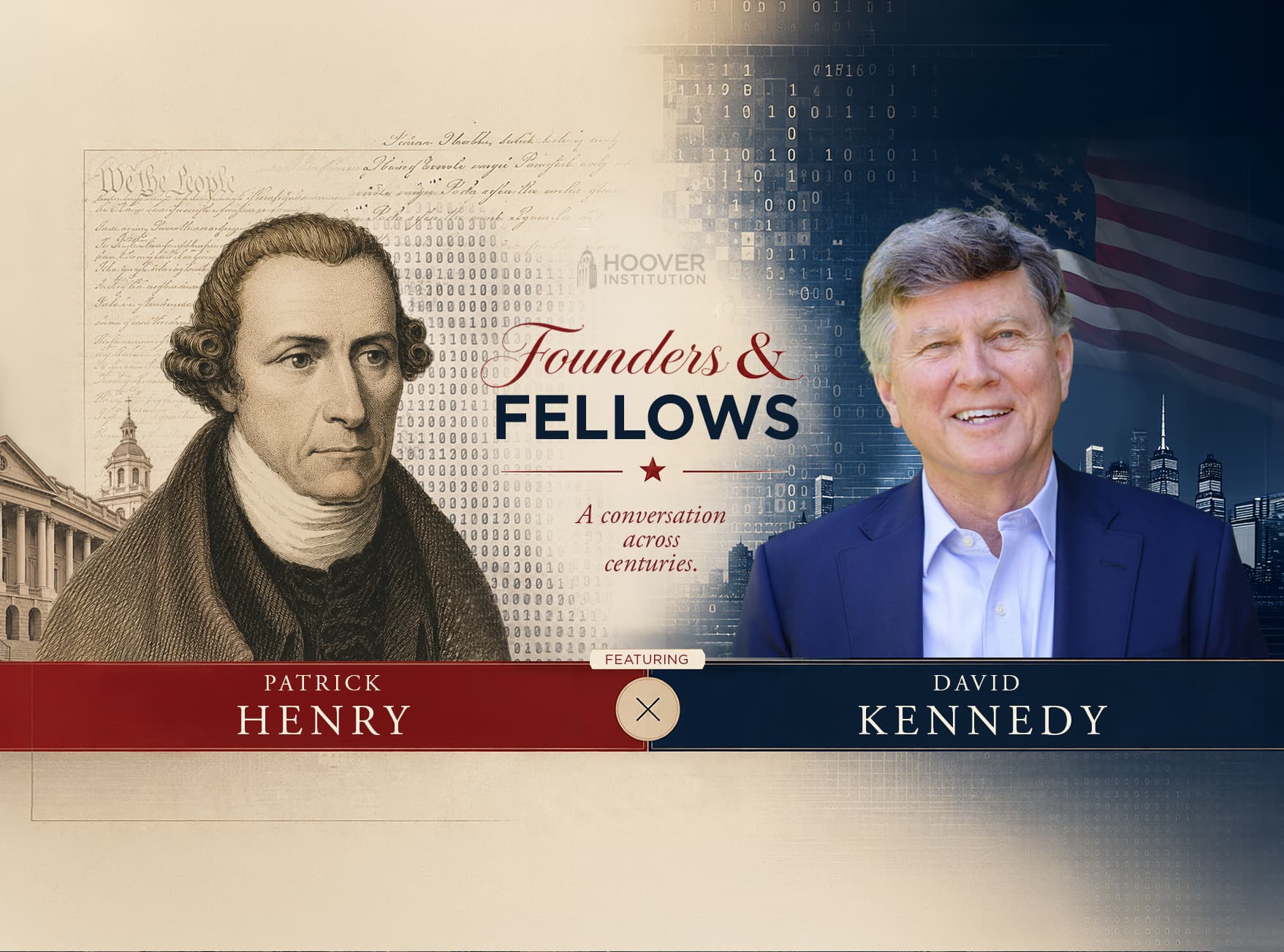
Among the countless passages of exemplary English speech that my Jesuit high school instructors compelled me to recite from memory was the peroration of Patrick Henry’s notoriously fiery address to the Second Virginia Convention in Richmond on March 23,1775. Referring to the mounting resistance to British rule in New England, he proclaimed:
Gentlemen may cry, Peace, Peace—but there is no peace. The war is actually begun! The next gale that sweeps from the north will bring to our ears the clash of resounding arms! Our brethren are already in the field! Why stand we here idle? What is it that gentlemen wish? What would they have? Is life so dear, or peace so sweet, as to be purchased at the price of chains and slavery? Forbid it, Almighty God! I know not what course others may take; but as for me, give me liberty or give me death![1]
Strong stuff from master orator Henry then and from the mouth of this teenage wannabe thespian later.
But what about that word “liberty”? My callow and rambunctious adolescent brain understood it to mean personal freedom, the kind of autonomy that latter-day libertarians assert as an unalienable individual right.
I’ve come to believe that my youthful understanding was not entirely wrong, but it was seriously incomplete, arguably even mistaken in its fundamentals. Properly understood, Henry’s concept of liberty indeed embraced at least a qualified sense of individual prerogatives, of the sort that Thomas Jefferson enshrined in the Declaration of Independence. But for him the essential, foundational concept of liberty was a collective attribute, the sacred right of organic communities—or, more precisely, majorities in such communities—to govern themselves without outside interference, and sometimes even to subordinate individual welfare to the will of the larger community. An eighth-generation Virginian, he was ferociously protective of the liberty of the Old Dominion—conspicuously, but not only, or even predominantly—with respect to slavery.
Henry’s path to the famous “liberty speech” is instructive. As early as 1763 the twenty-seven-year-old lawyer faced accusations of treason for attacking the royal veto of a colonial Virginia statute concerning the payment of clergymen’s salaries. He denounced the pious parsons who had sought the king’s intervention on their behalf as “rapacious Harpies” and “enemies of the community.”[2] Note the condemnation of the selfish preachers and the defense of local rights alike.
Two years later Henry launched an even bolder assault on royal rule in the colonies when he broadly condemned the hated Stamp Act:
Caesar had his Brutus—Charles the First, his Cromwell—and George the Third”—(“Treason!” cried the Speaker— “Treason, treason!” echoed from every part of the house). Henry faltered not for an instant, but rising to a loftier attitude, concluded thus—“may profit by their example. If this be treason, make the most of it.[3]
Thomas Jefferson recalled that speech “such as I have never heard from any other man. He appeared to me to speak as Homer wrote.”[4]
Henry possessed prodigious gifts as wordsmith and speaker. His employment of those assets in promoting his sense of liberty was nothing if not consistent. After playing a leading role in pursuit of independence, he declined to participate in the constitutional convention in Philadelphia in the summer of 1787 because he “smelled a rat.” Thereafter he stood out among the anti-federalists opposed to ratification of the new constitution’s creation of “a great consolidated government. . . . What right had they to say We the People . . . instead of We the States? [The Constitution] squints towards monarchy. . . . Your president may easily become king.”[5]
Not least among Henry’s fears was that a sanctimonious northern majority might one day force the southern states to abolish slavery. Here he both anticipated the republic’s later trial by fire and revealed the tension between his own moral sentiments and his dominant political philosophy. “As much as I deplore slavery,” Patrick said, “I see that prudence forbids its abolition.”[6]
Henry later attacked Alexander Hamilton as dangerously usurping local authority when he proposed federal assumption of debt incurred by the states during the Revolutionary War. Perhaps most tellingly, he went so far as to condemn his erstwhile ally James Madison’s proposed Bill of Rights as “amendments which shall affect personal liberty alone” and which “will tend to injure rather than serve the cause of liberty.”[7]
It would be an error to discount Patrick Henry’s triumphs and travails as obsolete arcana from the founding era. Alexander Hamilton may have struggled to reconcile the competing claims of order and freedom. Henry’s concerns were different. He focused on the competition between state and federal power, the relation of each to individual rights, and the eternally vexed question of where sovereignty ultimately lies. As our ongoing arguments about the nature of our distinctively federal system testify, those matters are of no less urgency today than they were more than two centuries ago.
[1] Text as reconstructed some 40 years later by Henry’s biographer William Wirt.
[2] Emphasis added. The case is known as “The Parson’s Cause.”
[3] https://encyclopediavirginia.org/1658hpr-9260362296ba000/
[4] Jon Kukla, Patrick Henry, Champion of Liberty (Simon and Schuster 2017), 72.
[5] Kukla, 329 Ronald Reagan echoed that sentiment in his 1981 Inaugural Address: “The Federal Government did not create the States; the States created the Federal Government.”
[6] Kukla, 362
[7] Kukla, 355
David M. Kennedy is a distinguished visiting fellow at the Hoover Institution, the Donald J. McLachlan Professor of History Emeritus at Stanford University, and the founding director of Stanford’s Bill Lane Center for the American West. He was awarded the Pulitzer Prize in History for Freedom from Fear: The American People in Depression and War, 1929–1945.