 Powered by
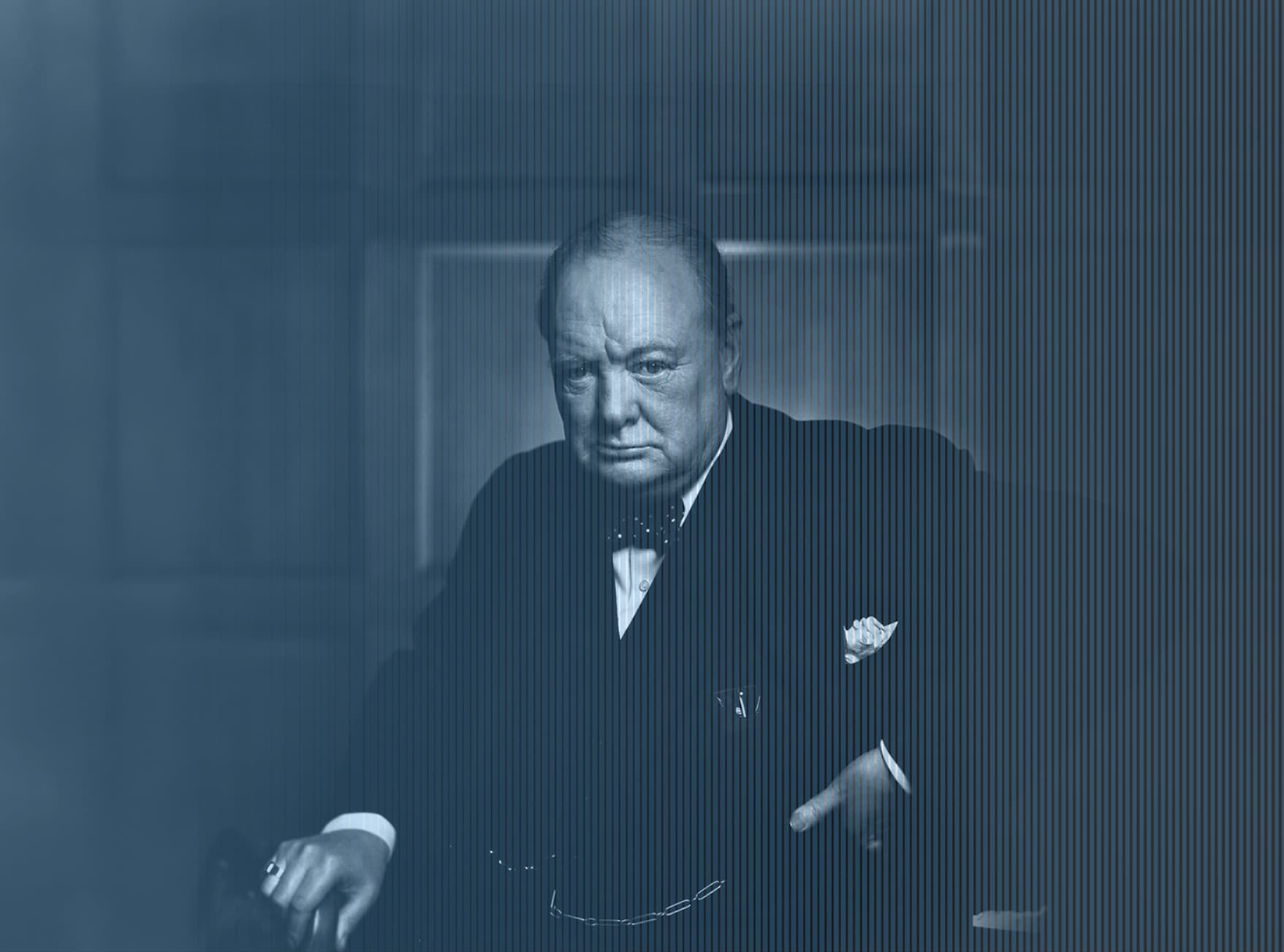
Winston Churchill’s speeches stand as amongst the greatest examples of powerful, eloquent rhetoric, with those most frequently cited and celebrated being the ones he delivered during World War Two. Churchill assumed the premiership in May 1940 at a time of great uncertainty and danger for the United Kingdom. His speeches during this time are remembered as warnings that Nazism meant the destruction of liberty. He vowed that Britain would continue the fight after the Fall of France in June 1940, and portrayed the preservation of democracy as a fundamental aim of the war.
When one reads through the corpus of Churchill’s wartime speeches, however, one discovers that Churchill did not motivate the British people by the mere abstract concepts of freedom or liberty; he instead presented these ideas as things that had to be actively defended through strategic patience, sacrifice, and moral clarity, while he provided the decisive leadership.
The frequency with which Churchill used the words “freedom” and “liberty” is revealing. In his speeches during 1940–1, the words appeared almost two hundred times. They were nevertheless less prominent than one might have expected given his later reputation as the great defender of the free world. Instead, his rhetoric more often emphasized duty, honor, courage, endurance, sacrifice, and national survival.
This did not suggest that Churchill considered freedom unimportant. Rather, it suggested that he understood that freedom could not be defended through rhetoric alone. It was the goal of the struggle, certainly, but sacrifice, perseverance, and determination were the means through which that goal could be defended.
The theme of strategic patience was demonstrated many times throughout his speeches. Churchill recognized that the war would be extremely long and hard fought. Churchill understood that the Allies’ goals of defeating Nazism and the preserving Western democracy and liberty could not be accomplished quickly, especially as Adolf Hitler did not declare war on the hitherto neutral United States until December 1941.
Churchill decided to be fully transparent with the British people, highlighting the virtue of strategic patience. In his speech “A Long Road to Tread,” delivered at the Mansion House, London, on November 9, 1940, soon after victory in the Battle of Britain, he stated, “The outside world . . . believes that Britain will survive. But between immediate survival and lasting victory there is a long road to tread. In treading it, we shall show the world the perseverance and steadfastness of the British race and the glorious resilience and flexibility of our ancient institutions.”
By distinguishing between “immediate survival” and “lasting victory,” Churchill was acknowledging that winning the war would be a prolonged process rather than the result of a single military effort. The Battle of Britain had secured Britain’s immediate survival, but he warned against confusing survival with victory. His reference to “a long road to tread” encouraged the British public to accept that defeating Nazi Germany would require sustained effort, endurance, and perseverance, perhaps over many years. At the same time, he connected this patience to confidence in Britain’s political institutions, arguing that their “resilience and flexibility” would allow them to withstand the pressures of a prolonged conflict. Strategic patience, in this sense, meant maintaining the will to fight on, while recognizing that ultimate victory would require time.
Another recurring theme was the value of sacrifice. In a bloody war such as the one Britain was then enduring, it was clear that many would lose loved ones for the greater cause.
In his great speech of May 13, 1940, the first he delivered as prime minister, Churchill stated, “I have nothing to offer but blood, toil, tears, and sweat.” He went on to acknowledge, “We have before us many, many long months of struggle and of suffering,” and defined his policy as “to wage war . . . with all our might and with all the strength that God can give us.” He was definitively clear that no matter what would come to pass, his objective was “Victory. Victory at all costs . . . however long and hard the road may be.”
Churchill’s emphasis on sacrifice reflected his belief that in order to achieve total victory and freedom from Nazism, the country would require immense personal sacrifices from the British people. He rejected any illusion that the Nazis would be defeated without significant suffering from the Allied countries. Yet Churchill presented this sacrifice as a purposeful one, a price to preserve liberty. His speeches illuminated how he viewed self-sacrifice as absolutely essential to the survival of the British nation. By connecting the ideas of freedom and sacrifice, rather as Pericles had in his Funeral Oration in Athens in 431 BC, Churchill ensured that his listeners recognized liberty not just as a passive abstract idea, but also as something that required great self-sacrifice and hardship if it was to be saved.
An additional theme Churchill presented in his speeches was that of moral clarity. A speech that exemplified this concept was his “A Hideous State of Alarm and Menace” broadcast of March 30, 1940, delivered while he was still first lord of the Admiralty. In it, he described the predicament of those neutral countries that were being forced to help supply Germany’s war effort. Because of this official state of neutrality, Allied intervention would seem like aggression, but Churchill joked, “When we are asked to take as a matter of course interpretations of neutrality which give all the advantages to the aggressor and inflict all the disadvantages upon the defenders of freedom, I recall a saying of the late Lord Balfour: ‘This is a singularly ill-contrived world, but not so ill-contrived as that.’ ”
Churchill was clarifying the moral grounds of the war. In international relations, it was easy for issues to be distilled into legal technicalities that protected wrongdoers. It is still very much the case today. Churchill was telling the country not to lose sight of their moral obligation to defend Western civilization against the evils of Nazi Germany, which trumped the letter of international law and human rights. By quoting Arthur Balfour, he was demonstrating his refusal to accept such interpretations of legalities as legitimate.
Instead, Churchill was refocusing on the moral imperative to defeat the Nazis, and concentrating on the larger moral stakes of the conflict itself. If such legalistic technicalities were to be followed, the defense of freedom might have been stalled or delayed. His argument reflected moral clarity because he reduced a complicated diplomatic problem to a fundamental question of right and wrong: whether the rules of neutrality should protect an aggressor or those defending themselves against aggression.
In his speeches, Churchill consistently used collective language, delineating the struggle as a national endeavor to raise morale. “Come then,” he said, “let us go forward together with our united strength.” By framing the war this way and speaking with certainty, Churchill transformed his speeches from oratory into pragmatic calls to action. He was not only informing the British people about the situation but also telling them what they had to do, the very quintessence of leadership. It took as its template Pericles’ leadership of Athens in the Peloponnesian War and Georges Clemenceau’s of France in World War One. Churchill’s refusal to equivocate gave his audience a clear sense of purpose at a moment when uncertainty and fear could easily have undermined national resolve.
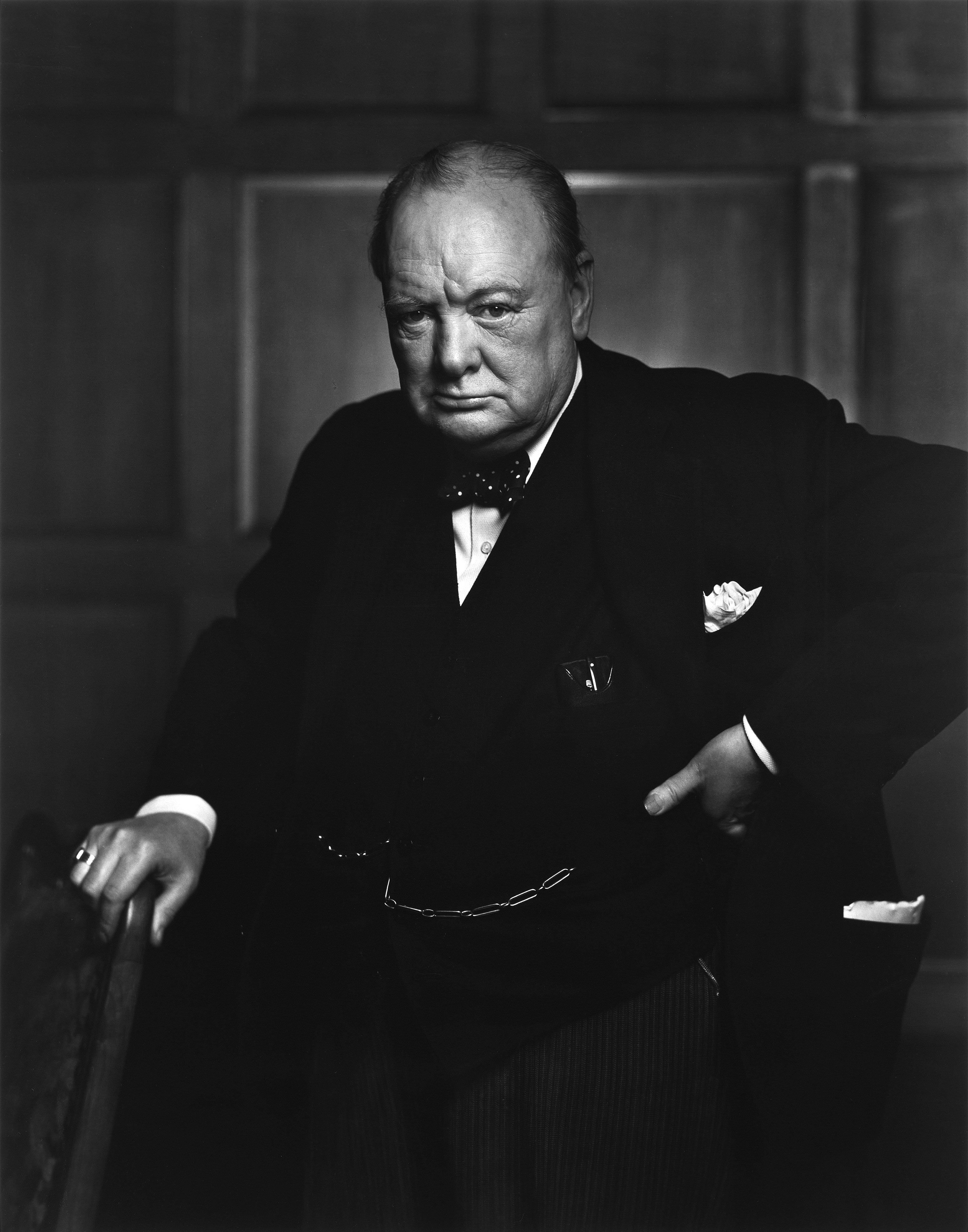
When one considers the great leaders of the modern West, Churchill appears almost always at or near the top of the list, despite his pygmy modern “revisionist” detractors from the extreme left and right. His leadership and decisiveness were manifest in his speeches, which represent the granite rocks against which his detractors are washed away.
He communicated a broad understanding of what was necessary to preserve the institutions and values of Western democracy. He therefore offered a broader lesson about the defense of freedom: liberty survived not simply because people wanted and valued it but because they were willing to endure hardship, recognize threats clearly, act decisively, and remain committed to their principles even when victory appeared distant. For Churchill, the defense of freedom was ultimately a sustained act of national will. It has many important lessons for us today.
Andrew Roberts is the Bonnie and Tom McCloskey Distinguished Visiting Fellow at the Hoover Institution and the author of Churchill: Walking with Destiny (Penguin, 2018). In November 2022, he was elevated to the House of Lords as The Lord Roberts of Belgravia.