 Powered by
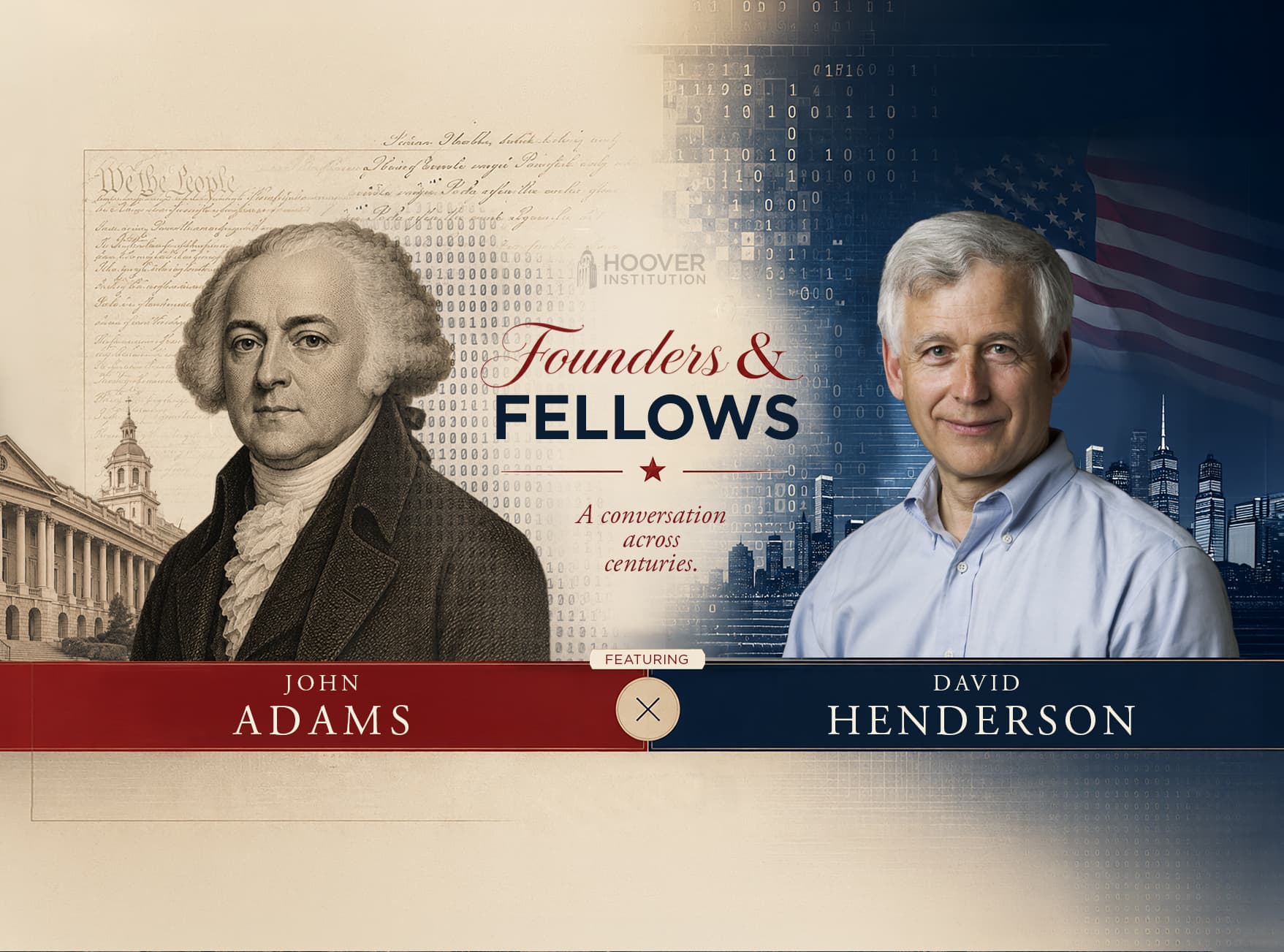
Who is my favorite founding father? That’s a tough question because the more I examine the history of the founding fathers, the more faults I find. I was going to write about George Mason because he was such an outspoken opponent of slavery. The problem is that he was one of the largest slaveholders in northern Virginia. The modern line is that you should not only talk the talk but also walk the walk. Mason clearly didn’t do the latter. Moreover, freeing his slaves would have been relatively easy upon his death. But in his will, he left his slaves to others rather than freeing them.
That brings me to my next candidate: John Adams. I choose him advisedly because he, like all of the founders, was a mixture of good and bad. Maybe, upon reflection over the next few months or years, I’ll decide that I don’t have a favorite. But here goes.
Adams was not only opposed to slavery but also opposed enough that he didn’t own slaves. Those are two major points in his favor.
There’s at least one other major accomplishment in John Adams’s life that gets him points with me: his willingness to defend in court some British soldiers who shot and killed five of Adams’s fellow citizens of Massachusetts.
On March 5, 1770, in what came to be called the Boston Massacre, a mob of angry citizens threw clubs, stones, and snowballs at armed British soldiers. Some of the soldiers, presumably feeling threatened, fired into the crowd, killing five colonists. The soldiers had trouble finding a lawyer to defend them. John Adams, a lawyer, stepped up. He believed in the right to a fair trial and to an attorney.
At the trial, Adams argued that the soldiers were defending themselves. Six of the soldiers were acquitted of murder and two were convicted of manslaughter. I’m not arguing that the six should have been acquitted. Rather, I’m giving Adams credit for his principled stand.
During his closing argument at trial, Adams uttered a line that is still quoted today, even if people are unaware of the origin: “Facts are stubborn things; and whatever may be our wishes, our inclinations, or the dictates of our passions, they cannot alter the state of facts and evidence.”
Had I read only about his defending the British soldiers and known nothing else, I would have predicted that John Adams’s political career would be over. I would have predicted wrong. Only months after the trial, Adams ran for, and won, a seat in the Massachusetts House of Representatives.
Of course, we now know him as one of the most important of the founders. He was a member of the Committee of Five that the Continental Congress appointed to draft the Declaration of Independence. The committee included Thomas Jefferson. Adams, recognizing Jefferson’s writing ability, persuaded Jefferson to write the draft. Adams then worked to get the votes needed to adopt the Declaration.
In my view, those were the high points in John Adams’s career and his activity as a founding father. His presidency was the low point.
Even though John Adams opposed slavery, as president he had a staff that included a few slaves hired from slaveholders. His second cousin Sam Adams, by contrast, actually freed a slave girl who was given to him.
During his presidency, Congress passed, and John Adams signed, the four Alien and Sedition Acts. The first of the four acts, the Naturalization Act, which Adams signed on June 18, 1798, increased the residency requirement for American citizenship from five years to fourteen years. The purpose of this appears to have been to delay voting rights for new immigrants. New immigrants disproportionately supported Jefferson’s Democratic-Republican party.
One of the acts, the Sedition Act, made false, scandalous, or malicious writing against the US government, Congress, or the president into a crime. The act was used to jail journalists and politicians who criticized Adams.
Economic historian Jeffrey R. Hummel has pointed out to me, though, that there’s more to the story that somewhat offsets my negative view of President Adams. The reason the Alien and Sedition Acts were passed was that the United States was then involved in a naval war with France instigated by the Federalists but opposed by Jefferson and the Republicans. It is called the Quasi-War, because there was no declaration of war. (In the twentieth and twenty-first centuries, by the way, the United States has been in a lot of quasi-wars.) But to his credit, Adams negotiated a peace settlement at the end of his term despite the opposition of Alexander Hamilton and of hard-core Federalists within his cabinet.
How should we think of John Adams and, for that matter, many of the other founding fathers? As a mixture of good and bad. I’m not an ethical relativist. I don’t say, for example, that slavery is bad today but was less bad 250 years ago. It was just as bad then. Interestingly, even some of the slaveowners, including George Mason, as I already mentioned, thought slavery was bad.
What the Adams case shows, and, for that matter, the cases of slaveholders George Washington, Thomas Jefferson, and George Mason show, is that someone can be principled, effective, and courageous and still have deep flaws.
There are two ways to view that fact. The glass-half-empty way is to throw up one’s hands and feel pessimistic about the fact that even those who are often regarded as heroes had feet of clay. The glass-half-full way is to appreciate that even people who did very bad things also did very good things like signing the Declaration of Independence and carrying out a successful revolution that resulted in a country that, four score and nine years later, had ended slavery. I’m inclined to the latter.
David R. Henderson is a research fellow at the Hoover Institution and an emeritus professor of economics at the Naval Postgraduate School in Monterey, California.