 Powered by
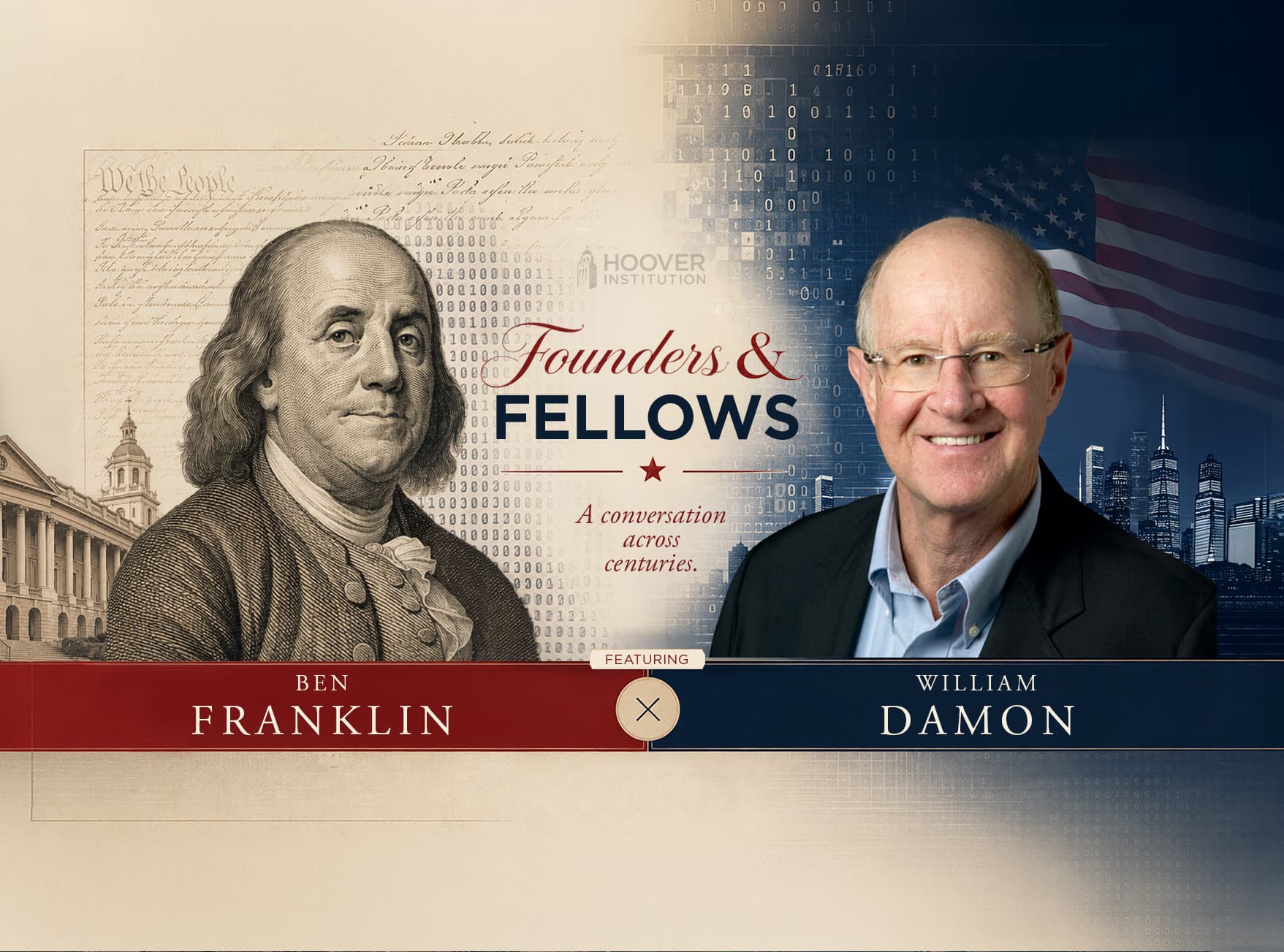
Benjamin Franklin is widely known as an “American polymath”: this, in fact, is the first line in his Wikipedia entry, which goes on to note his multiple areas of expertise as “writer, scientist, inventor, statesman, diplomat, printer, publisher, and political philosopher.”
I will add one finer term of tribute: Ben Franklin was the original American genius.
Genius is a serious accolade when used to mean something more than “really, really smart.” One good definition is Schopenhauer’s: “Talent hits a target no one else can hit; genius hits a target no one else can see.” Ben Franklin elevated American life by envisioning new social, moral, economic, and political arrangements that liberated the constraining world of his time. Along with his landmark historical achievements, he conducted groundbreaking scientific explorations into the nature of electricity, and he invented beneficial devices such as bifocals, storage batteries, urinary catheters, and the lightning rod.
American life still thrives on Ben Franklin’s farsighted vision, which remains freshly valid today, in both general and particular ways.
Franklin’s creative gifts showed up early. At the age of sixteen, while apprenticing in his older brother’s publishing shop, Ben dreamed up a fictional “Silence Dogood” who slipped letters under the shop’s door at night. The letters (fourteen in all) were a big hit when his brother published them in the shop’s weekly post. They told fanciful stories of how the widow “Silence” coped with the ups and downs of life in rural colonial Massachusetts. Most revealingly, they presented young Ben’s early views on the matters of moral virtue that would preoccupy him for the rest of his life (“I am an Enemy to Vice, and a Friend to Virtue,” Silence proclaimed). The Silence Dogood letters foretold Ben’s emerging genius as a writer and uniquely pragmatic moral philosopher. In the words of biographer Walter Isaacson, they stand out as “a triumph of the imagination.”
When Ben’s brother, who had never allowed Ben the privilege of writing for the shop’s news post, got wind of Silence’s true identity, he brought Ben’s budding literary adventures to a stop. This cease-and-desist command gave Ben a chance to exercise another of his lifelong dispositions: a fierce desire for independence. Shortly after his jealous brother angrily shut down Ben’s writing, Ben ran away from his apprenticeship. This was a violation of custom and, technically, the law at the time, so Ben got far away—to Philadelphia, London, and then back to Philly by age twenty. That was when Ben’s creative genius fully took hold, starting with the innovative weekly friendship club that he called the “Junto.”
The Junto was “a club of mutual improvement” for young Philadelphians who, like Ben were doubly ambitious—seeking advancements in both their careers and their “virtues.” The Junto required open-minded discussions, reflective essays, and a spirit of mutual support (which now would be known as “networking”). Beyond propelling the careers of talented young men, the Junto brought essential benefits to the not-yet-developed city of Philadelphia. The seeds of the city’s first public library were donated books by Junto members. Other Junto initiatives included volunteer firefighters, night watchmen, and a public hospital.
In his autobiography, Ben wrote fondly about the Junto’s forty-year-span. Looking back, he wrote how the Junto had been “so useful” and “afforded such satisfaction to its members” that he could see similar associations spreading throughout American society.
Indeed, numerous voluntary associations have been modeled after the Junto over the almost 250 years since Ben wrote about it in his autobiography. One recent example is a “Ben Franklin Circles” initiative that arose from a collaboration among the Hoover Institution, the 92nd Street Y in New York, and Citizen University. Some of the Circles discuss virtues and self-improvement. Others discuss present-day social, economic, and community matters. I organized a Circle that had a lively four-year run until key members moved away. At the time, I also observed a college-student version of a Junto that was generating great enthusiasm and commitment among its members. In whatever form or duration, the Junto idea clearly is freshly applicable to social life today.
From his Junto’s discussions over time, Ben distilled a set of twelve virtues he considered essential for a successful life. These are a collection of moral and practical strengths, ranging from fairness and truthfulness on the moral side to frugality and cleanliness on the practical side. Ben worked on mastering these twelve virtues, one by one, regularly recording his progress.
Eventually, after a Quaker friend told him that he was “thought proud,” Ben added humility as a thirteenth. In his autobiography, with his characteristic combination of honesty and wry humor, Ben noted that “I cannot boast of much success in acquiring the reality of this virtue, but I had a good deal with respect to the appearance of it.”
Ben’s enormously popular writings, from his Poor Richard’s Almanacks to his “Way to Wealth,” conveyed wise prescriptions for rules of everyday behavior with a sparkling common touch. Reading his advice today feels like a welcome breath of fresh air.
Ben had no qualms about seeking prosperity as long as this was done in an ethical manner. He had a truly “whole person” vision, stressing the importance of physical health, moral virtue, material wealth, civic duty, intellectual learning, and a non-sectarian spirituality. His advice was the opposite of idealistic bromides: it was hard-headed, always couched in humor and wit. For example:
Sloth, like rust, consumes faster than labor wears, while the used key is always bright.
Lost time is never found again.
Laziness travels so slowly that poverty soon overtakes him.
If you would have a faithful servant, and one that you like, serve yourself.
It is easy to see why Ben Franklin was one of the most popular authors in Colonial America. His vast readership made him wealthy and eminent, which he was to put to good use when the time came to challenge Britain’s oppressive rulership over the Colonies.
In midlife, Ben turned his genius to advocacy and diplomacy in the cause of the Revolution. At a key juncture in 1772, he raised the ire of Americans by disclosing private letters that revealed harsh British intentions toward the Colonies. In his special satirical style, he wrote sly essays ridiculing the British mode of rule. His unique social gifts were critical to enlisting the support of France, which made possible the improbable American victory over the formidable British power. There were just about as many French troops fighting at the decisive battle of Yorktown as Americans. Without Ben’s diplomacy, the French soldiers almost certainly would not have been there.
Anyone who might have been surprised to see Ben’s cordial gifts employed in the Colonies’ fierce revolutionary cause could have looked back to Ben’s writing at age sixteen, in the guise of his fictional alter-ego, Silence Dogood. At that early age, Ben proclaimed himself to be “a mortal Enemy to arbitrary Government and unlimited Power. I am naturally very jealous for the Rights and Liberties of my Country; and the least appearance of an Encroachment on those invaluable Privileges is apt to make my Blood boil exceedingly.”
In his role as president of Pennsylvania’s Supreme Executive (virtual governor at that time), Ben hosted the Constitutional Convention in 1787. It is hard to know what his exact contribution to the proceedings might have been, but it’s clear that Ben’s views on the essential role of civic virtues in creating and maintaining a democratic republic have provided a unique moral compass for our society ever since.
Ben Franklin’s patriotic genius had deep roots that, over the course of his long life, flowered into a cornucopia of works that transformed his local, national, and international worlds in ways no one in his time could have foreseen.
William Damon is a senior fellow (by courtesy) at the Hoover Institution and a professor of education at Stanford University. His recent books include Failing Liberty 101 (Hoover Institution Press) and The Path to Purpose: How Young People Find Their Calling in Life (Free Press).