 Powered by
There are moments in a leader’s life when courage means advancing into the unknown to achieve an objective. There are other moments when courage means taking a stand that may impede progress of the group.
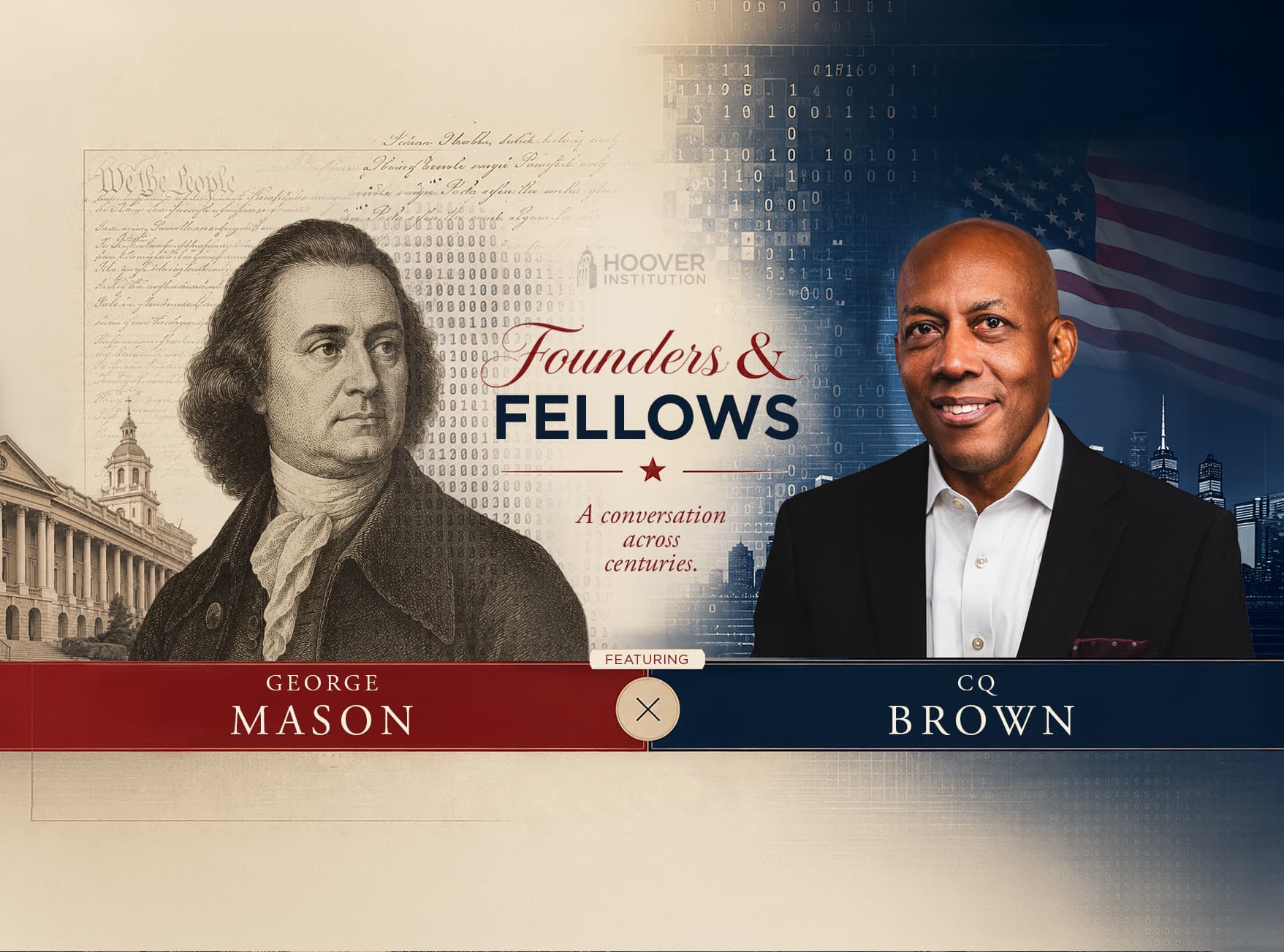
George Mason faced such a moment in 1787.
After four months of debate in Philadelphia, thirty-nine delegates signed the newly drafted Constitution. Mason did not. He could not endorse the final document because he believed it granted the government great power without sufficiently protecting the rights of the people.
Mason’s decision resonates with me because it illustrates a form of moral courage that is often less visible than physical courage. Physical courage may be immediate and externally recognized. Moral courage can develop more slowly and be less noticeable. It asks a person to risk relationships, reputation, and standing not for personal benefit, but for something greater than oneself.
Mason was not rejecting the American experiment. He was challenging it to live up to its purpose.
Eleven years earlier, Mason had taken the lead in drafting the Virginia Declaration of Rights. Its assertion that people possess inherent rights—including life, liberty, property, happiness, and safety—helped shape Thomas Jefferson’s Declaration of Independence and later influenced the Bill of Rights. Mason also declared that political power comes from the people and that government exists for their common benefit, protection, and security.
These principles were not abstractions to him. They were the standards by which a new government should be judged.
At the Constitutional Convention, Mason supported many elements of the emerging framework. Yet, as the proceedings drew to a close, he proposed that the Constitution include a declaration of rights. The delegates rejected the idea. In the objections he recorded after the convention, Mason began with a direct warning: “There is no Declaration of Rights.” Because federal law would be supreme, he argued, state declarations could not adequately protect the people from national power.
It would have been easier for Mason to sign. The Constitution was the product of extraordinary compromise, and several delegates endorsed it despite reservations. Mason also stood among some of the most respected leaders of his generation, including his fellow Virginian and neighbor George Washington. Refusing to sign risked being viewed as an obstructionist at a moment when unity seemed essential.
Mason’s dissent contributed to the continuing pressure for explicit protections of individual liberty. During the ratification debates, several states proposed amendments, and those demands helped compel James Madison to introduce what became the Bill of Rights in the First Congress. Mason lost the immediate argument in Philadelphia, but many of the protections he sought were added four years later.
That sequence remains relevant to the American experiment. The nation’s founding was not a single moment of perfect insight. It was an argument—sometimes principled, sometimes self-interested, and always incomplete—about how freedom could be secured under an effective government. Mason reminds us that institutions can be strengthened by those willing to identify their shortcomings. Loyalty to an organization or nation does not require silence. At times, loyalty requires the candor to say that a proposed course falls short of the principles it is intended to serve.
That lesson applies far beyond constitutional conventions. In military service, government, and private institutions, leaders often face pressure to support a consensus once it has formed. The desire to be a team player is powerful and usually constructive. But responsible leadership requires more than agreement. It requires us to ask whether the process has considered the risks and downstream impacts, whether facts and assumptions have been validated, and whether the decision and approach remain consistent with the organization’s values.
Dissent alone is not courage. It can be performative, self-serving, or poorly informed. Mason’s example is meaningful because he had participated in the difficult work. He understood the proposed Constitution in detail, offered alternatives, and explained his objections. His objections expressed what he was for—individual rights. His dissent was not an escape from responsibility. It was an exercise of responsibility.
Yet Mason’s legacy also contains a profound contradiction. He wrote that all men were born equally free and independent, criticized the slave trade, and objected to constitutional provisions that protected it. At the same time, he enslaved more than one hundred people at Gunston Hall and did not extend to them the liberty he defended in principle.
This failure cannot be treated as a footnote. It exposes both Mason’s limitations and one of the central failures of the founding generation. He could recognize the injustice of slavery and remain unwilling to surrender the system from which he and his family benefited. His moral courage was real, but it was also incomplete.
That contradiction is part of Mason’s continuing relevance. The American experiment has always had a gap between its stated ideals and the experiences of many of its people. The answer is not to discard those ideals because their authors failed to practice them fully. Nor should we excuse the authors because their words later served greater purposes.
We should allow the contradiction to challenge us.
Mason teaches that leaders must be willing to hold institutions accountable to their principles. His life also teaches that we must apply those principles to ourselves as well. It is easier to identify flaws in a constitution, an organization, or a society than to confront the measures from which we personally benefit.
Two hundred and fifty years after the Declaration of Independence, George Mason still speaks to the American experiment. He tells us that dissent can be an act of loyalty to principle, that rights must be protected before they are threatened, and that no governing framework should be considered beyond improvement.
But his shortcomings add a final warning: moral courage cannot stop at the boundary of our own comfort or self-interest. The American experiment advances when each generation not only defends the nation’s principles but also widens the circle of those who fully share in their promise.
Mason’s refusal to sign did not end the constitutional debate; it helped keep it alive. If we are to remain faithful to our objectives and values, we must carry that conversation forward—with humility, candor, and the courage to challenge ourselves and one another when our actions fall short.
CQ Brown Jr. is the Susan McCaw Distinguished Visiting Fellow at the Hoover Institution. He served as 21st chairman of the Joint Chiefs of Staff (2023–25) and previously as the 22nd chief of staff of the US Air Force (2020–23).