 Powered by
This article is part of Liberty Amplified, a recurring series produced in partnership with the Hoover Institution’s Human Security Project, featuring voices that challenge authoritarianism in pursuit of freedom.
On April 29, 1968, Lin Zhao, an outspoken Christian critic of Maoist China, was executed at the age of thirty-five. She had endured years of solitary confinement that she described in her prison writings as “the most terrifying and bloody hell within hell” and “a death a thousand times more painful than death itself.”
In 2019, half a century later, I was teaching in Hong Kong amid an unprecedented social movement. In a documentary that I showed my students, Lin Zhao’s close friend Ni Jingxiong described her final moments: “She was dragged from a prison hospital bed.” The classroom was dead silent. That same film featured a letter Lin Zhao had written to Ni when she was still enthusiastically participating in the Communist Revolution: “In my heart there is only one red star. I know that I am here, while he (Mao) is in Beijing or Moscow. Whenever I think of him, I felt so excited.”
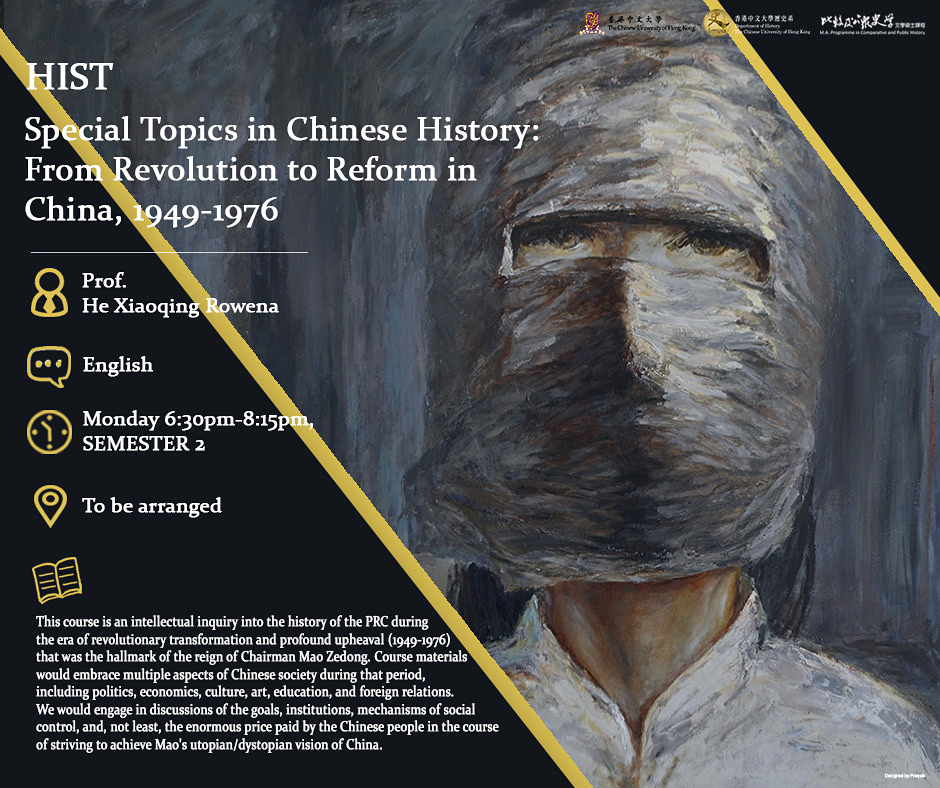
That was my first course taught in Hong Kong. It was titled “Ordinary Voices, Extraordinary Stories: History and Memory in Documentaries and Biographies,” and I used Lin Zhao’s image for several course posters. In the syllabus I wrote: “An important element of this course will be the critical examination of the contemporary relevance of China’s past, the challenges of the ongoing contest between state-imposed interpretations of history and the independent pursuit of historical knowledge, and its implications for China’s future and its relationship with the rest of the world.” We studied not only the history of politics, but also the politics of history—the “hidden transcripts,” as James C. Scott called them.
A “criminal verdict” dated April 19, 1968, charged that Lin Zhao—whose letter had once praised her “red star” in Beijing—had “viciously slandered our Party and the great leader Chairman Mao” and was to be executed immediately. We do not know if Lin Zhao was even informed of her death sentence. Her family was not given the chance to see her in the final ten days of this talented writer’s young life. (Lin Zhao’s father, a former county magistrate during the Republican era, educated in Britain and the author of a graduate thesis on constitutions, had committed suicide in 1960, a month after her arrest.)
My students were particularly shocked to learn that her family found out about her execution only when authorities showed up two days later to collect five cents—the cost of the bullet used to kill her. This detail was first revealed by the official People’s Daily in an article published January 27, 1981, the year she was posthumously rehabilitated.
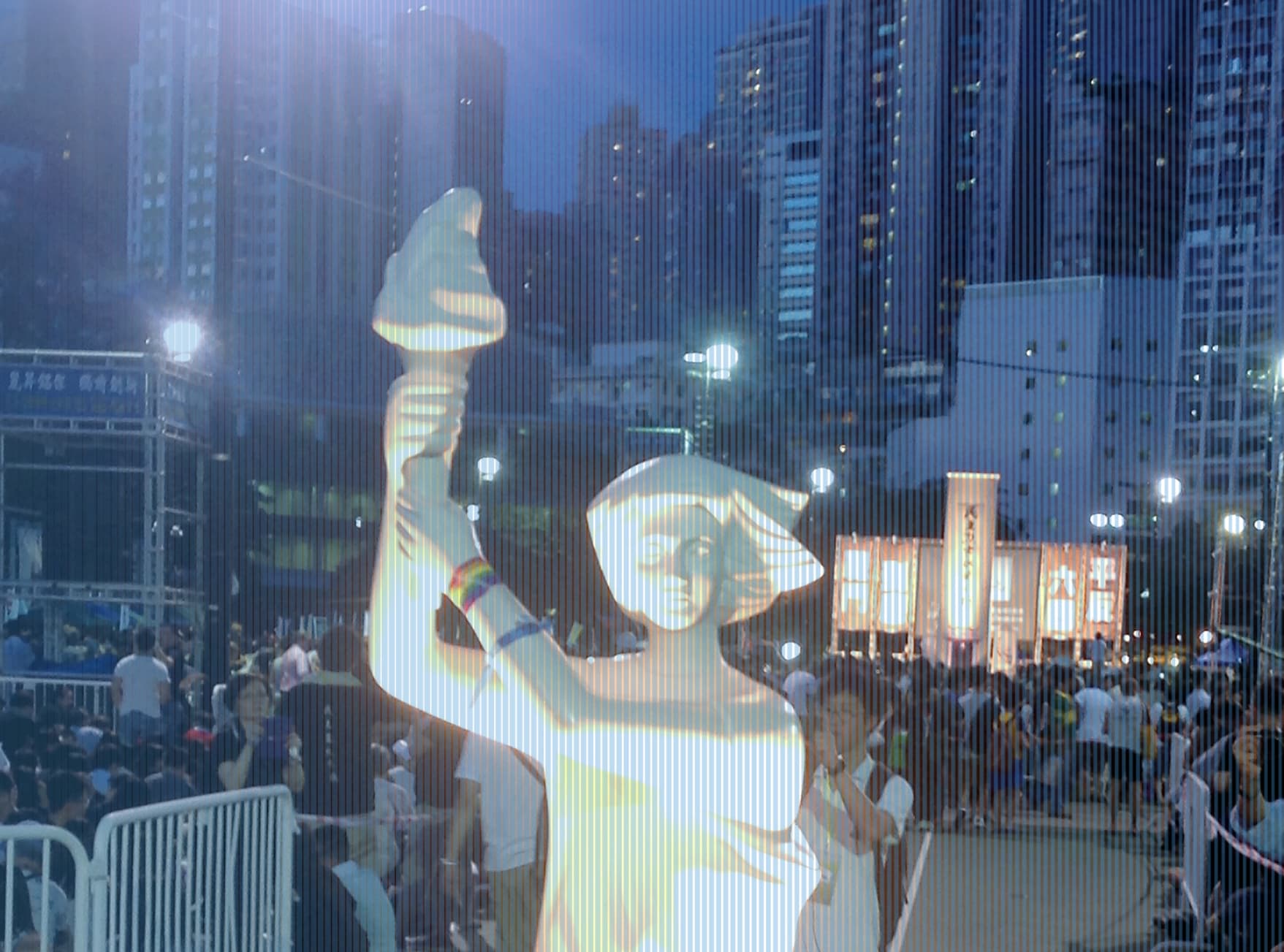
That year saw the start of the Reform era, when the Communist Party promised changes including political reform and people started to hope again—hope that would peak with the Tiananmen Movement. The 1989 military crackdown was a brutal reminder that the party’s priority was always, and remains, the preservation of its own power. Today, it is again dangerous to talk about Lin Zhao.
Telling her story
The two documentaries on Lin Zhao included in my syllabus were produced by Hu Jie, who brought her life to light in his 2004 documentary In Search of Lin Zhao’s Soul. Students were struck by a detail in the film showing Lin Zhao signing a letter to Ni with a drawing of a smiling cat. Later in prison, she wrote a letter more than 140,000 words long to the People’s Daily, the Communist Party’s official mouthpiece, sealing each sentence with her own blood.
Hu Jie’s other documentary, Spark (2019), featured interviews with former members of an underground magazine run by a college student group to which Lin Zhao belonged. The group published reflective writings after witnessing the man-made famine (1958–62) caused by Mao’s policies. The founder of Spark, Zhang Chunyuan, also was executed, in 1970.
Lin Zhao and her peers were punished for their loyal criticism. History would show that the Great Famine they wrote about claimed between 36 million to 42 million lives. Amid mass starvation affecting a population equivalent to California’s, China continued to export 2.72 million tons of grain in 1960—the famine’s worst year, according to Yang Jisheng, author of Tombstone: The Great Chinese Famine, 1958–1962. Even as cannibalism occurred within China’s borders, the government shipped 10,000 tons of rice to Guinea and 15,000 tons of wheat to Albania as foreign aid.
Hu Jie’s work about this dark era was a collective labor of love. Documenting the forbidden past would have been impossible without the efforts of many: the individuals who kept part of Lin Zhao’s prison writings and returned them to the family; her ex-boyfriend, who didn’t know about her death while confined in Xinjiang’s labor camps and who later hand-copied her prison writings; and her younger sister, who fought for Lin Zhao’s official rehabilitation.
Hu Jie paid a price for his work. He was often said to have quit his job after learning Lin Zhao’s story—an understatement lost in translation. He left not merely for time to create the film, but because he knew that making such a documentary would potentially mean becoming a target of lifelong surveillance, loss of professional opportunities, and worse. My students frequently mentioned a scene in which an interviewee received a phone call from his children and the interview had to stop. Even decades after the famine, fear was in the air.
A battle with official amnesia
When I first watched Hu Jie’s documentary, I was working on my dissertation on the Tiananmen exiles, which later became my first book. I lived with the worry that one day I would not be able to return home. The world was mesmerized by the power and money of a “Rising China,” a model of authoritarianism combined with state capitalism. At times, especially when I could not return to my grandmother’s sickbed in her final years, I couldn’t help but feel the unbearable heaviness of remembering. Grandmother was the one who picked me up from daycare when my parents were both sent away during the Cultural Revolution. She was a little girl’s only hope for home. The human cost of resisting state-imposed amnesia and manipulation of memory is always high.
In April 2019, during the week commemorating Lin Zhao’s execution, I screened with Hu Jie his documentary at the Institute for Advanced Study at Princeton, where Einstein found intellectual refuge after fleeing Nazi Germany. Three months later, before leaving my IAS dorm for Newark airport to begin my new academic position in Hong Kong, I signed a power of attorney, as did many human rights lawyers in China. In it, I declared that I would not give up my right to legal counsel outside China or to assistance from the governments of the United States and Canada in the event of arrest or disappearance in Hong Kong. “I will never commit suicide in Hong Kong or China,” I wrote. “If the government of the People’s Republic of China announces that I have committed suicide, it is a lie and prima facie evidence that I have been tortured and/or killed.”
And then in November 2019, my teaching was sharply interrupted when the university campus became a battleground. On November 12 alone, police reported firing 1,576 rounds of teargas, 1,312 rubber bullets, 380 beanbag rounds, and 126 sponge-tipped rounds. With roads closed, I walked for hours carrying instant noodles and water back to campus for my students. When the students told me they were ready to die for democracy, I begged them to think of those young faces: Lin Zhao, as well as the Tiananmen students of 1989. “We must live on for tomorrow,” I told them. Shortly after, when the news of COVID-19 reached Hong Kong, students drew parallels in their presentations between the news coverup and the official Communist Party lies during the Great Famine. They simply did not believe the official announcements about the pandemic.
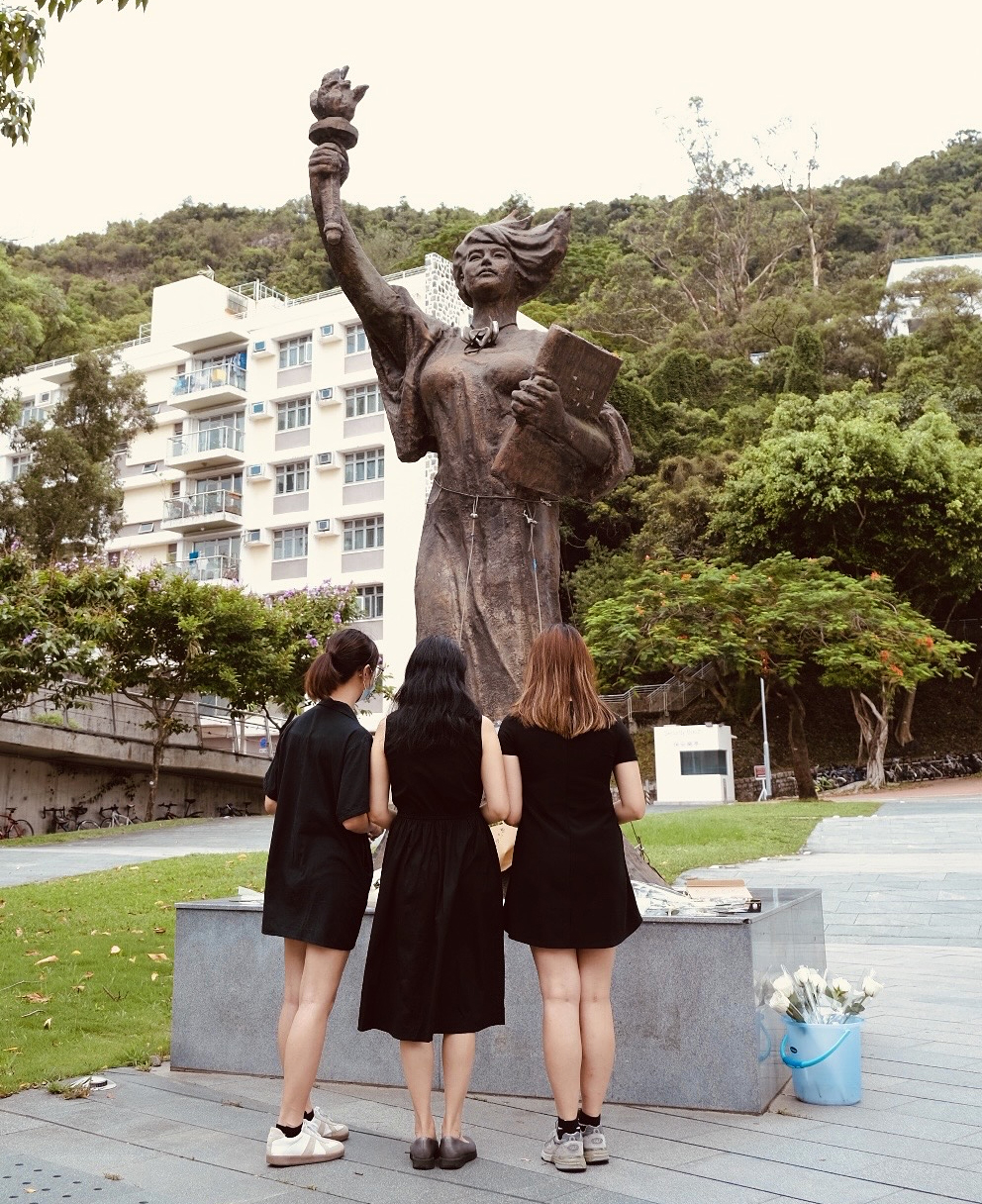
In the summer of 2022, in my office at the Chinese University of Hong Kong (CUHK), students were divided into groups to erase files and shred student papers—including many on Lin Zhao. I had kept the tradition of preserving student name tags and papers with my written comments. After the imposition of the National Security Law in 2020, I promised my students that I would defend academic freedom in my teaching until the final moment came. That final moment had arrived. The students did such a thorough job of erasure that when I began writing this article, I had to contact my former students for the papers they had written on Lin Zhao.
In 2023, the Communist authorities in Hong Kong denied me a work visa. My position as an associate professor of history at CUHK was terminated with “immediate effect.” Copies of my book Tiananmen Exiles were removed from the public library system and the CCP-controlled newspaper Wenhui Pao published a vicious op-ed crucifying me as an “academic scoundrel” sent by the American government to poison the minds of Hong Kong students. I could not even return to collect my personal belongings. One month after I was banned, the vice president of CUHK was fired; two months later, the university president too was forced to resign.
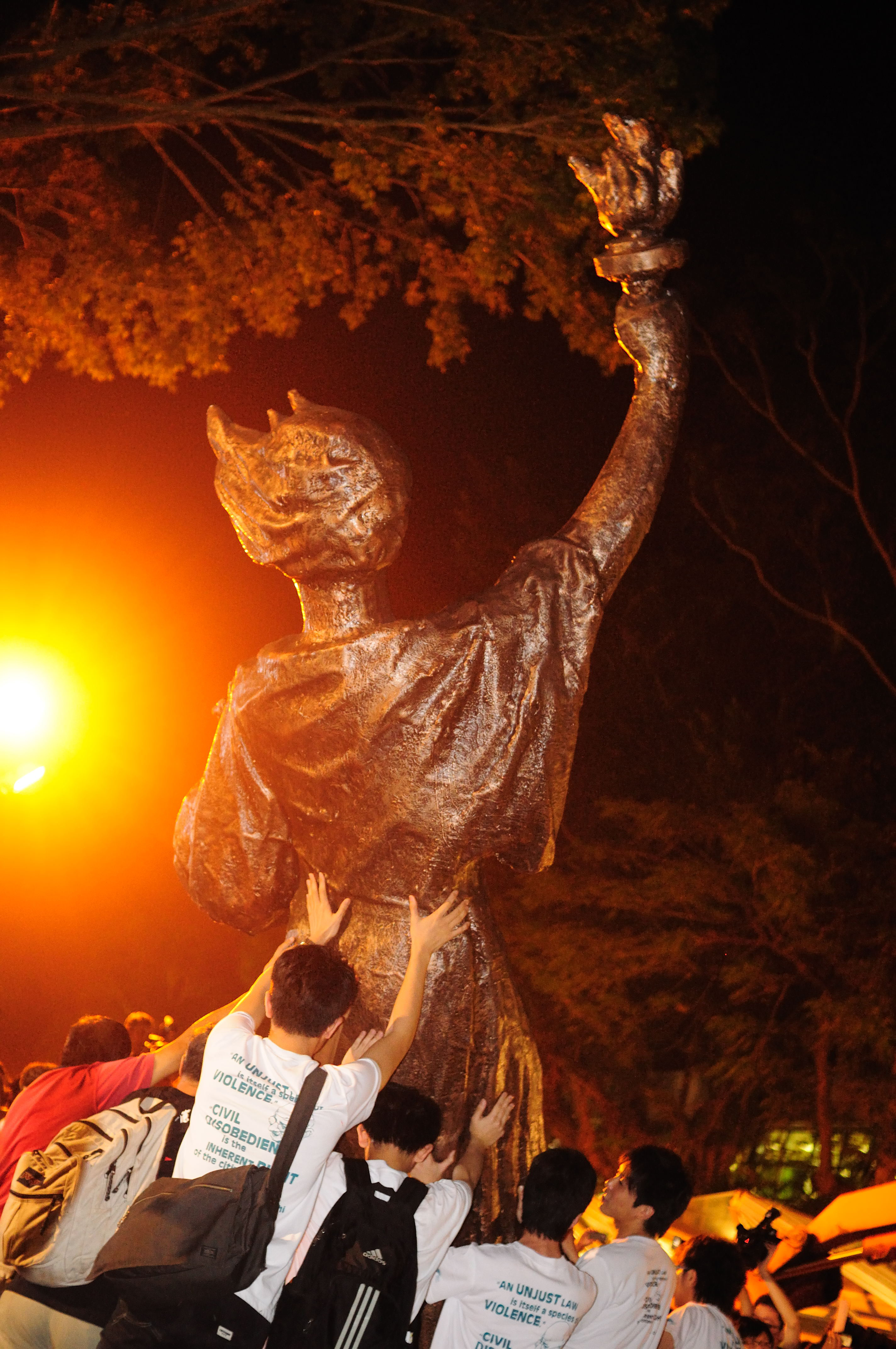
“Professor He, we have done our best.” Two days before the end of 2025, I received this note with a crying emoji from my former students in Hong Kong, along with an announcement that the Student Union of New Asia College (NASU) at CUHK had to dissolve under political pressure, ending its history of sixty-two years. The New Asia College, from which CUHK grew, was founded by historians and scholars who fled after the Communist Party took over China in 1949. The tradition of the college, boldly stated in a banner mounted outside NASU during Hong Kong’s 2019 movement: “New Asia is Anti-Communism.” We had entered yet another dark time in history.
Faith for the future
When Lin Zhao was dragged from the prison hospital bed for execution fifty-eight years ago, the Communist Party must have believed she would be silenced forever. Yet here we are, collectively trying to remember her on this special anniversary. Her words from the cell of solitary confinement—written with faith that “future generations,” a phrase she used to title her writings, would one day read them—are preserved by the Hoover Institution Library and Archives, and they still speak to everyone seeking freedom.
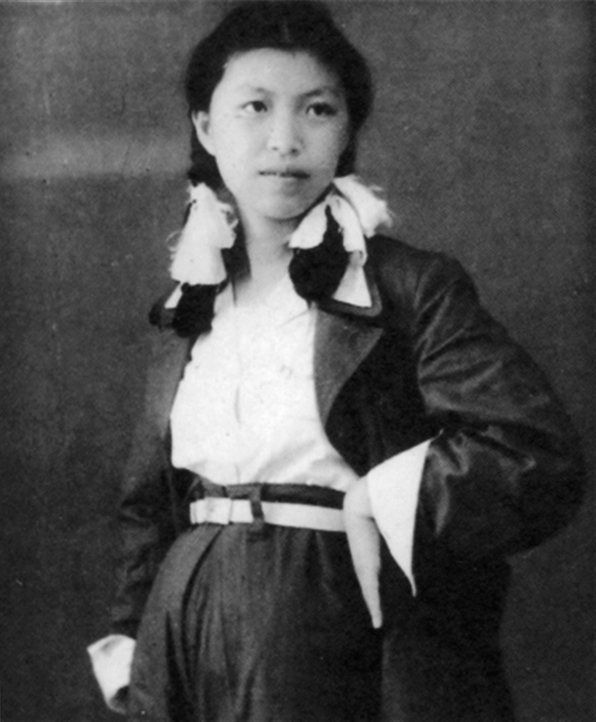
Late last year, more memorabilia of her life were added to the Lin Zhao papers, including a few strands of her hair in a keepsake box. The day this memento arrived at Hoover, I had the impulse to go to the airport to receive her. It is not an ending after all, but another beginning. If we want light, we must conquer darkness.
Rowena He is a research fellow at the Hoover Institution and author of Tiananmen Exiles: Voices of the Struggle for Democracy in China. A modern China historian, she is a three-time recipient of the Harvard University Certificate of Teaching Excellence. Her op-eds have appeared in the Washington Post, The Nation, the Guardian, the Globe and Mail, and the Wall Street Journal.
Liberty Amplified features the voices of those who defy autocracy in pursuit of freedom. It is part of the Hoover Institution’s Human Security Project (HSP) led by Lt. Gen. (Ret.) H. R. McMaster, senior fellow at the Hoover Institution and former national security adviser. The project carries out research into how authoritarian regimes sustain power and how pro-democracy groups and their allies can challenge them to advance liberty. HSP is an educational resource and tool for activists both outside and within those countries.