 Powered by

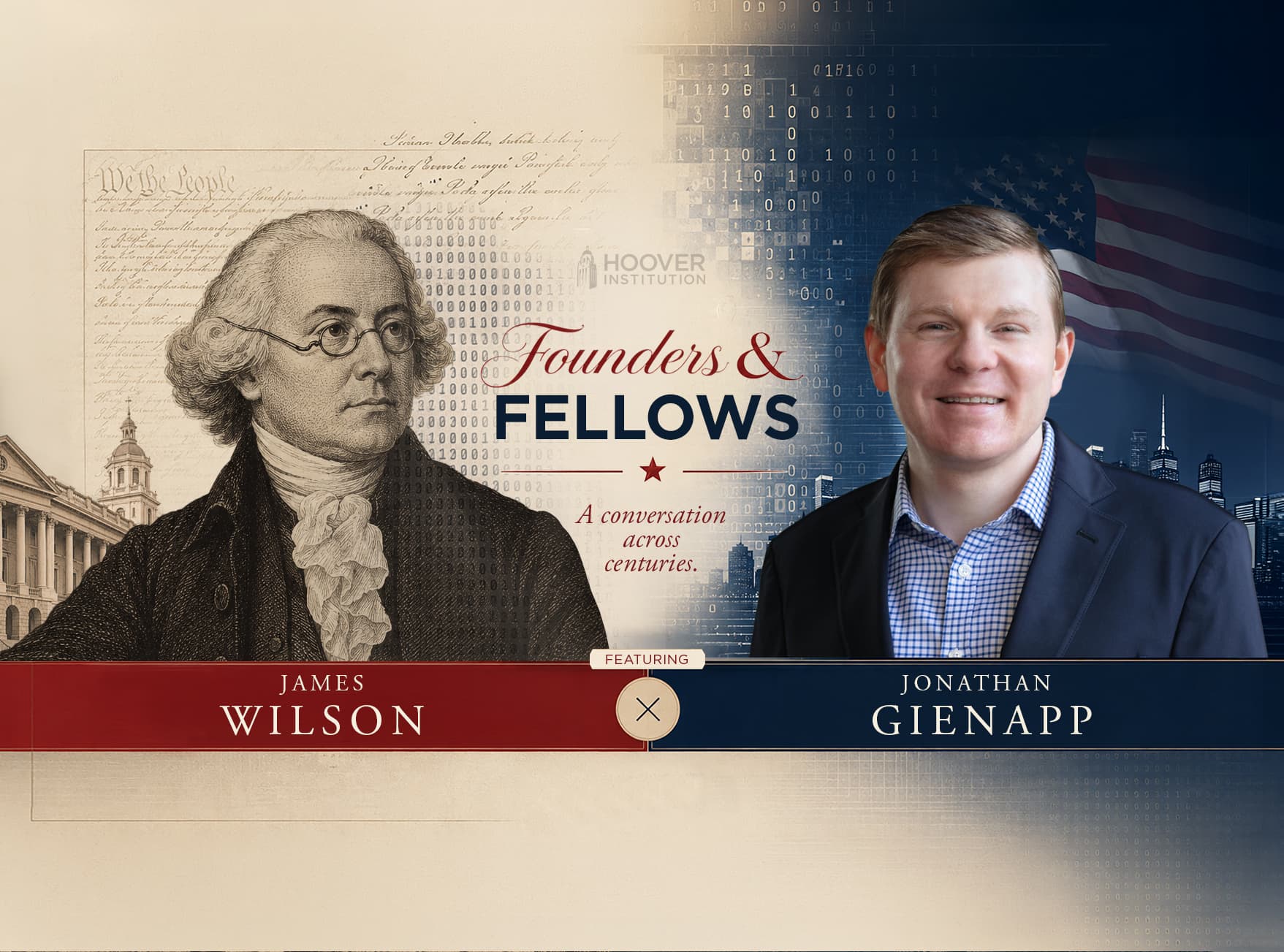
James Wilson is not a household name. But as much as anybody of his generation, Wilson gave voice to what he took be the central idea announced in the Declaration of Independence: that Americans were “one people” who had formed a single indivisible nation.
One of just six individuals to sign both the Declaration and the Constitution, Wilson helped create the nation and its enduring institutions. Arguably none of the other delegates to the 1787 Constitutional Convention had a greater influence on the document that remains fundamental to Americans to this day.
Both through the debates on the Convention floor and behind the scenes as a key member of the most important drafting committee, Wilson helped shape all three branches of government and the system of federalism that distributed power between the national and state governments. He advocated for a national popular vote to select the president and, as a fallback, proposed what became the Electoral College. In his home state of Pennsylvania, he was the Constitution’s leading defender, helping to ensure its ratification while generating many of the most influential arguments in its favor.
Widely regarded in his time as the most learned lawyer in a nation full of them, he served as one of the first justices on the US Supreme Court from 1789 to 1798.
Like other prominent members of the American Revolutionary generation, James Wilson was an immigrant. He was born on a farm in eastern Scotland in 1742. Intelligent and ambitious, he quickly transcended his humble origins, earning a scholarship to the University of St. Andrews at age fifteen. With limited opportunities available in Scotland, Wilson followed many of his countrymen and immigrated to America in 1765.
His Scottish upbringing nonetheless forever shaped his outlook and attitudes. During his schooling, he had been deeply influenced by the thinkers of the Scottish Enlightenment, such as Thomas Reid, Francis Hutcheson, and Adam Smith, who stressed humans’ benevolent nature and intuitive capacities. These theorists claimed that people were inherently social by nature, and that they were equipped with a moral sense that enabled them to instinctively apprehend the virtue of human actions. They could intuit self-evident truths about the world through their common sense and experience.
Unlike many of his American peers, Wilson maintained an almost sentimental confidence in ordinary people’s capacities—to tell right from wrong, to render judgments, and, ultimately, to engage in democratic self-government. While other revolutionary leaders were skeptical of popular rule, Wilson was an ardent champion of popular sovereignty.
Wilson had the foresight to anticipate American independence before most could even contemplate it. Having established his reputation as a leading defender of the American patriot cause, he was appointed to represent Pennsylvania in the Continental Congress. Throughout his service, he remained a spirited critic of parliamentary authority over America, but he struggled to reconcile himself to independence, perhaps influenced by John Dickinson, his former mentor and fellow member of the Pennsylvania delegation who held out hope for reconciliation with Great Britain until the very end.
Wilson counseled patience and preached the virtues of continued political connection with the mother country. “Before We are prepared to build the new House,” he cautioned, “why should We pull down the old one, and expose ourselves to all the Inclemencies of the Season.” Only in June 1776, as support for independence was mounting, did he tentatively follow suit.
Wilson defended his foot-dragging by painting himself as a servant of the people who had elected him. (Pennsylvania’s assembly had prohibited its delegates from voting for independence without their permission, and Wilson heeded that order.) He was sufficiently embarrassed about his public reputation, though, that he drafted a public memorial in which he claimed that while he had personally supported independence, he had formally opposed it for so long in Congress on the sacred belief that only the people themselves could make such a weighty decision.
But Wilson’s public image remained damaged. Most Pennsylvania radicals viewed him with suspicion, especially after he opposed Pennsylvania’s constitution drafted later that year. Then, in 1779, after Wilson defended a set of Philadelphia loyalists who were tried for treason, an angry crowd attacked his house.
Wilson would never fully live down his reputation as an out-of-touch elitist. Some of that was his own doing, as he could be arrogant and tone deaf. But much of it stemmed from his perceived ambivalence toward American independence.
Yet the great irony is that despite Wilson’s initial reluctance to support independence, for the next two decades, the Declaration of Independence likely meant more to Wilson than to any other American. It became the cornerstone of his constitutional vision and the vehicle through which he channeled his enthusiasm for popular sovereignty and his attendant belief in human sociability and solidarity.
At the Constitutional Convention, Wilson brandished his personal copy of the Declaration to emphasize—as Abraham Lincoln later would in the face of secession and civil war—that the American colonies had declared independence not separately but collectively. The United States, in short, formed a single, indivisible union.
To cement this vision, Wilson likely helped draft the Constitution’s opening words, “We the People of the United States,” summarizing his understanding of what the Declaration had wrought.
Wilson faded after the Revolutionary era. He fell prey to financial speculation and became mired in debt. Rather than shaping the early Supreme Court as many predicted, his tenure was quickly cut short when he died on the run from his creditors in 1798, with only his wife by his side. But he bestowed a legacy worth remembering: that of one nation, and one single people.
Jonathan Gienapp is a research fellow at the Hoover Institution and professor of history and law at Stanford University. He is the author of The Second Creation: Fixing the American Constitution in the Founding Era (Belknap Press at Harvard University Press, 2018) and Against Constitutional Originalism: A Historical Critique (Yale University Press, 2024).