 Powered by
Despite recent strains, the transatlantic relationship boasts the world’s most integrated economic system. As Dan Hamilton and Joseph Quinlan estimate in the latest edition of their authoritative annual survey, the $9.8 trillion transatlantic economy today employs around 16 million American and European workers. Every day in 2025, more than $6.4 billion in goods and services crisscrossed the Atlantic. Moreover, last year over half of the foreign direct investment (FDI) in the United States was European, while US firms accounted for over half the FDI in Europe over the same twelve-month period.
To be sure, the European economy is relatively stagnant compared to its US counterpart. Europe is dominated by legacy companies more adept at fine-tuning existing technologies than at innovating new ones. On average, the forty largest and most liquid companies trading on the German stock exchange, the DAX 40, are over a century old.
Even so, Europe’s economy remains of signal importance to the global balance of power. The continent boasts world-leading research universities like ETH Zurich, TUM Munich, and Cambridge, and cutting-edge companies like ASML, Infineon, and ARM Holdings. The American future may be in Asia, but its present is still in Europe.
Because Europe remains vital to the prosperity and security of the United States, it is important for policymakers in Washington to grapple with the following five trends that will shape the continent for the foreseeable future.
Trend #1: heightened Russian aggression
Russia poses the greatest present threat to the European order, and Russia’s top foreign policy priority is to subordinate Ukraine. Moscow’s strategy for achieving that goal is to separate Ukraine from its Western partners and drive Kyiv into a one-on-one matchup in which Russia can bring its superior size and weight to bear. Tactically, Russia often pursues this aim on a trial-and-response basis, testing various means of aggression before stepping back to study the West’s posture and response to its machinations.
Russian President Vladimir Putin has kept enough of his advanced capabilities in reserve to make credible threats against a Europe that is still in the process of rearming and uncertain about the extent of support it can expect from Washington. However, Putin is almost certainly wary of a broader war with the North Atlantic Treaty Organization (NATO) while the bulk of his conventional forces are tied down in Ukraine. To pressure the West to limit its support for Ukraine, therefore, Putin will operate on both ends of the escalation ladder, leaning especially on nuclear saber-rattling and hybrid warfare.
On the upper rungs of the escalation ladder, Putin has inverted the traditional nuclear-weapons paradigm, turning a historically defensive deterrent into a tool for offensive threats. Since the start of Russia’s full-scale invasion of Ukraine in 2022, Russia has engaged in nuclear saber-rattling repeatedly, either to deter the West from supporting Ukraine or compel it to wind down its assistance for Kyiv.
In March 2023, for example, Putin announced that Russia would station tactical nuclear weapons in Belarus, while Belarusian crews received training on Russia’s 9K720 Iskander short-range ballistic missile system. In May, Russia for the first time integrated Belarusian units into highly publicized joint nuclear exercises. Moscow has also altered its official doctrine to lower the threshold for nuclear use, has revoked its ratification of the Comprehensive Nuclear-Test-Ban Treaty, has conducted highly publicized nuclear drills, and has on multiple occasions fired the nuclear-capable Oreshnik intermediate-range ballistic missile into Ukraine. Russia has also boasted of successfully testing a nuclear-powered and nuclear-capable Burevestnik cruise missile and Poseidon torpedo.
At the lower end of the escalation ladder, Russia has significantly increased the pace and scope of its hybrid attacks since the start of its full-scale invasion. These attacks have ranged from active measures like election meddling and severing deep-sea cables to electronic operations like Global Positioning System (GPS) jamming and criminal acts like arson. Moscow has also repeatedly violated the airspace of NATO’s eastern flank, most notably with Russian fighter jets entering Estonian skies for a dozen minutes last September and a Russian drone hitting an apartment block in the Romanian city of Galaţi just last month. Since June—and especially since the attack on Leipzig airport—the pace and brazenness of these hybrid attacks have intensified sharply, setting off alarms across Western capitals. The Kremlin intends to make clear that the longer the war in Ukraine continues, the more the likelihood of European fatalities rises. Moscow hopes that Europe will press Ukraine to shut down the war on Russia’s terms—or at least circumscribe its assistance to Kyiv.
The rapid pace of innovation in new forms of unmanned vehicles, especially unmanned aerial vehicles (UAVs), may upend Russia’s calculus. In Ukraine, persistent intelligence, surveillance, and reconnaissance (ISR) measures have created vast grey zones, stretching miles across the front lines, in which large-scale troop movement has become all but impossible. Moreover, Ukraine has fielded an impressive array of strike systems that attack Russian military logistics and energy infrastructure daily. Ukraine is even able to hit Moscow and St. Petersburg with these systems. As a result, Ukraine may yet be able to force Russia into a cease-fire before it is itself ground down.
Putin’s willingness to negotiate should not lead American policymakers to mistake tactical flexibility for a change of heart.
Putin maintains an unbending hostility toward Ukraine and the West, which he reiterates at regular intervals. For the foreseeable future, Russia will not moderate its aggressive stance toward Europe.
Trend #2: the decline of Russian power
Putin has expended an enormous measure of Russian power in Ukraine. For its part, Ukraine has succeeded in substantially degrading Russia’s ground forces, including its elite airborne and naval infantry units, and has destroyed vast quantities of high-end equipment. Today, Russia is making only incremental progress toward occupying the remaining areas of the Donbas region of Ukraine. If present trends continue, Russia will not succeed in occupying those areas by the end of this year or possibly even next.
Ukraine’s tenacity and sacrifice have given Western policymakers a chance to rally to the country’s aid. Now, after three years of cumulative Western sanctions and Ukrainian long-range strikes against Russia’s energy infrastructure, the Russian economy is on the cusp of crisis. Officials in Moscow have publicly revised their expectations for Russia’s economic performance downward, while this year the country’s budget deficit will likely surpass the liquid assets remaining in its National Wealth Fund. Outside Moscow, most of Russia’s regional authorities also face ballooning deficits.
Cut off from international capital markets, Russia has turned to domestic bond offerings to plug this fiscal gap. Yet these efforts are shell games—state-backed actors purchasing bonds using liquidity provided by the Russian Central Bank. In effect, Russia is printing money. It remains to be seen whether Putin is willing to cut benefits or raise taxes at the levels required to finance his military operations into the future.
Even if Ukraine emerges from the war vulnerable and traumatized, moreover, Russia will be unable to reassert its prewar influence easily. As one ambassador in residence in Kyiv from a European country put it to me in the spring, “Russia has lost Ukraine for one hundred years.”
In fact, Russia’s influence is deteriorating across its periphery. In Europe, Sweden and Finland have joined NATO, adding two highly capable militaries to the alliance. Moldova is choosing a European path. In the Caucasus, more subtle forms of strategic estrangement have occurred. In 2023, Azerbaijan took control of Nagorno-Karabakh in an operation that showcased the rise of Türkiye’s power and the decline of Moscow’s influence. In response, Armenian Prime Minister Nikol Pashinyan froze his country’s participation in Russia’s Collective Security Treaty Organization (CSTO). In May, Pashinyan instead hosted a gathering of the European Political Community in Yerevan, building on Armenia’s tightening relations with the European Union and France in particular.
Azerbaijan’s relations with Russia have also cooled. After Russia’s shootdown of Azerbaijan Airlines Flight 8243 in December 2024, Moscow stonewalled when Baku looked for conciliatory gestures. Then, actions of the Russian Federal Security Service (FSB) in Yekaterinburg in June 2025 led to the deaths of several Azerbaijanis. Azerbaijan is evolving to become a key supplier of natural gas to Europe and a key facilitator of the middle corridor. The country’s fraternal relations with Türkiye, summarized as Tek millet, iki devlet—one nation, two states—far surpass its ties with Russia.
Today, the United States has an opportunity to accelerate Russia’s estrangement through the Trump Route for International Peace and Prosperity (TRIPP) and the substantial American investment being mobilized around it. Both US Vice President J. D. Vance and Secretary of State Marco Rubio have visited Yerevan this year, with Vance also traveling to Baku.
A related opportunity exists in Central Asia, where Kazakhstan’s “multivector” hedging is an attempt to diversify its strategic options beyond its bureaucratic, geographic, historical, and economic links with Russia. Kazakhstan’s president, Kassym-Jomart Tokayev, has declined to recognize Russian claims on Ukrainian territory, and has taken steps to enforce Western sanctions against the Kremlin. In November, President Trump hosted a historic C5+1 Summit at the White House, reinforcing the September 2023 New York Declaration that encourages closer ties with Washington among the Central Asian republics.
Russia’s relative weakness is most pronounced in the Far East, where fewer than ten million Russians face one hundred million Chinese along a 2,500-mile border. While the EU agreed to loan Ukraine 90 billion euros this year—unlikely ever to be repaid—China continues to delay even finalizing the megaproject Power of Siberia-2 natural gas pipeline, which is crucial for Russia’s economic future.
The Sino-Russian “no-limits friendship” apparently does have financial limits, and China is now clearly the senior actor setting the terms of the relationship.
A new class of military veterans born out of the war in Ukraine is rising in Russia, just as the country’s influence throughout its periphery wanes. In the coming years this group will compete for power with the intelligence services and with the children of the last generation of Soviet apparatchiks. Like interwar Germans, these veterans will commingle with hard-liners to sell resentment to the country’s citizens, and will likely cast their nation as having been betrayed rather than stopped in Ukraine. The Russia of tomorrow will resemble a rabid, aged bulldog whose declining health manifests itself in fits of outward aggression.
Trend #3: the rise of Northern Europe
From the creation of the European Coal and Steel Community in the 1950s to the founding of the European Union at Maastricht in the 1990s, American policymakers have long centered the relationship between France and Germany in their strategic thinking on Europe. By now, the image of a Franco-German engine driving European integration is a well-worn cliché. Many use this paradigm to distinguish the founding states of modern-day Western Europe from those Eastern European countries that suffered under communism. Indeed, the Rumsfeldian distinction between an “old” and “new” Europe still shapes many mental maps of Europe today.
France and Germany still comprise the primum mobile of the continent. Within hours of taking his oath of office in May 2025, German Chancellor Friedrich Merz traveled to Paris to announce with French President Emmanuel Macron the creation of a joint defense and security council. At a joint German-French cabinet meeting in Toulon last August, Merz delivered his opening remarks in fluent French. These acts, and the regular Franco-German consultations that surround them, reflect more than mere nostalgia, but the fruits of a continuing partnership.
Three decades after the fall of the Iron Curtain, however, the east-west dichotomy of the Cold War may be giving way to a new distinction—one between north and south. On matters of policy, and on issues of political economy, foreign policy, and international trade, north-south may be becoming the new east-west.
Since the sovereign debt crisis of the last decade, the nations of the continent’s Mediterranean South have advocated for the mutualization of European debt. The Northern European members of the EU, on the other hand, have hewn more closely to the strictures of the Growth and Stability Pact, and have consistently voiced their skepticism over any debt-mutualization schemes.
Before the exigencies of the coronavirus pandemic pushed Germany to assent to the EU’s recovery instrument, which allowed for some limited issuance of joint debt, Berlin was part of a grouping of countries known as the “Frugal Five,” nations whose relatively low debt-to-GDP ratios have long given them room to maneuver in moments of crisis. One such crisis arrived with Russia’s full-scale invasion of Ukraine. From the Scandinavian countries to the Netherlands, the Baltic states, and Poland, Northern Europe has taken the lead in supporting Ukraine in its fight for survival.
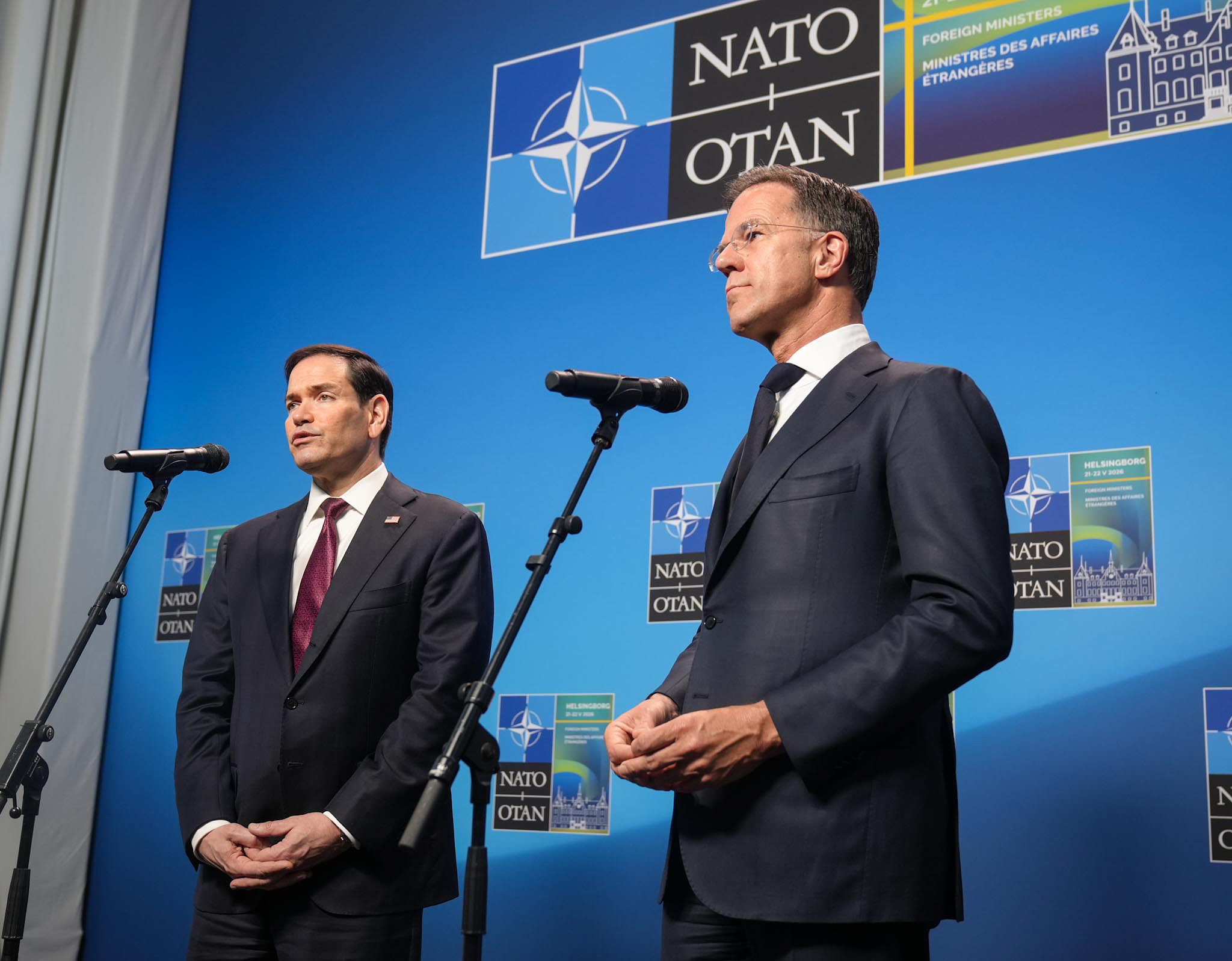
It is no secret, for example, that the widely heralded Czech ammunition initiative, which sources and supplies Ukraine with weapons from around the world, relied on the generosity of Northern Europe. So, too, has NATO Secretary General Mark Rutte’s Prioritized Ukraine Requirements List (PURL) mechanism for procuring US-made ballistic missiles for Ukraine.
The nations of Northern Europe have exercised this generosity in the service of a common geopolitical vision. In Europe, public wariness of Russia increases as one journeys north at least as much as it does as one travels east. Today, if the primary focus of Europe’s Mediterranean nations is how to stem Arab and African irregular migration, the major challenge in the North and Baltic Seas is Russian irregular warfare. Sweden and Finland’s accession to NATO has only facilitated the strategic convergence of the littoral states of Northern Europe.
A new set of challenges is reorganizing Europe. Yet while north-south is in the process of supplanting east-west, one dynamic remains just as it was during the Cold War: Germany, once again, is the pivot point through which the continent’s diverging geographies run.
Indeed, while it is easy to become overwhelmed by the dizzying number of political fora in Europe today—from the Council of the Baltic Sea States, the Benelux 3, the Weimar Triangle, and the Nordic-Baltic 8 to the Bucharest 9, the Visegrad 4, the Mediterranean 9, and the Austerlitz 3—the very proliferation of these groupings illustrates that no one country aside from the United States has the economy, population, and geographic position to assume the leadership of Europe. More likely, a coalition of Northern European countries that includes the United Kingdom with the pivot state of Germany at their center will decide the geopolitical future of Europe.
Trend #4: the return of national rivalries
Since the end of the Second World War, the United States has drained the poison of national rivalries out of Europe, while providing the continent with the bulk of its military power. As the United States pulls down its forces to address contingencies elsewhere, however, long-dormant rivalries are likely to resurface with greater regularity and salience.
As Germany continues to build what Merz has promised will “become Europe’s strongest conventional army,” France is moving under the guise of strategic autonomy to subsume German rearmament under French leadership. Paris’s insistence on dominating the Future Combat Air System (FCAS) collaboration with Berlin is illustrative. The most direct and obvious expression of this effort, however, was Macron’s speech in March at Île Longue, where he announced the establishment of a bilateral nuclear steering group with Berlin. Similarly, the United Kingdom also included mention of nuclear consultations with Berlin in its July 2025 Kensington Treaty with Germany.
Even before Germany began this buildup, Polish leaders of the Law and Justice Party and President Karol Nawrocki viewed Germany with skepticism bordering on hostility. While many Central and Eastern European states are glad to see Germany increase its spending to counter Russian aggression—see Lithuania’s regular praise of the German brigade—Mitteleuropa also harbors a healthy skepticism that Berlin will ever prove willing to fire on Russian troops. In their darkest moments, these leaders may even envision a future in which Germany accommodates Russian power at their expense.
The heady days of 1990s-style liberalism, when a popular nationalist like Austria’s Jörg Haider was denounced as an outlier or dismissed as a rogue, are over. Today, Europe is equal parts nationalist and liberal, with new leaders revisiting historical feuds or embracing national differences in ways that would have been unthinkable only thirty years ago. Ukrainian President Volodymyr Zelenskyy’s decision last month to name an elite military unit after the Ukrainian Insurgent Army, which fought in the 1940s, sparked a crisis in Polish-Ukrainian relations. Political crises and separatist flirtations are also increasing in Bosnia and Herzegovina, while recent exigencies in northern Kosovo serve to remind of broader tensions in the Western Balkans.
As the United States attempts to hand off leadership in Europe, it is likely to foster rising tensions rather than deeper unity. Historical rivalries, frozen for decades by American involvement, will thaw and reassert themselves, making European cooperation more difficult.
Trend #5: China’s economic subversion of Europe
Against this backdrop, Europe also faces a major test from the People’s Republic of China (PRC), which uses economic stratagems and subversions to weaken the continent.
The PRC has constructed an export-led manufacturing economy that prioritizes control of global supply chains and dominance in key strategic sectors over market economics. In fact, the PRC has stoked production in major export sectors and depressed domestic consumption through a raft of dubious methods: state subsidies, intellectual-property theft, regulatory interventions, nontariff trade barriers, and currency manipulation. Since 2022, it has also benefited from cheap Russian energy.
Europe is now subject to the same China shock that the United States first experienced in the early 2000s, as the Sino-European economic relationship has grown dramatically out of balance. As the European Commission points out, “In the period 2015-2025, the deficit increased over fivefold in volume, while more than doubling in value.” Last year, the PRC’s trade surplus in goods with the EU hit €360 billion.
Moreover, as Sander Tordoir and Brad Setser wrote for the Center for European Reform recently, “Nowhere is that shock more consequential than in Germany. Its manufacturers in core industries—cars, machinery, chemicals, and aircraft—are being simultaneously squeezed out of China and other foreign markets, and at home.” The PRC is destroying Germany’s export demand, with Berlin’s vaunted automobile industry emblematic of a broader economic malaise. In 2025, sales of Porsche, Audi, and Mercedes-Benz in China declined 26 percent, 5 percent, and 19 percent, respectively. Strong periodic employment data notwithstanding, German industry sheds approximately 10,000 jobs per month.
The breakdown of the largest industry in Europe’s largest economy would trigger social upheaval in the heart of the continent, with all the risks to regional stability that normally accompany de-industrialization. Just past the one-year mark of its assumption of power, Germany’s coalition government is one of the most unpopular in the country’s history. While Merz’s personal approval ratings have hit historic lows, he and his coalition partner, the Social Democratic Party (SPD), have suffered crushing electoral defeats in one regional election after another.
Of course, Berlin is not blind to the China shock it is enduring. But the PRC leverages its relationship with Germany’s multinationals like Volkswagen and BASF to protect its predatory model. The weaker German industry grows, the less strength it has to refuse the PRC’s poisoned chalice.
Although the PRC’s support for Russia in Ukraine has cost it its Eastern European vector, Beijing has built another route into the heart of Europe through Greece, Serbia, and Hungary. The PRC also makes appeals for greater cooperation to leaders susceptible to such entreaties for ideological, economic, or political reasons, like Spain’s Pedro Sánchez, Serbia’s Aleksandar Vučić, or French President Emmanuel Macron.
US economic policy toward Europe should be guided by a clear strategic imperative: mitigating European dependencies on China that expose allies to coercion. This could include the creation of a trade and investment zone reserved for US partners and allies, provided it does not devolve into lowest-common-denominator regulatory regimes that undermine US innovation in critical areas such as AI.
There are three, and only three, economic centers in the world today: North America, Europe, and East Asia. Just as Russia seeks to isolate Ukraine from the West, so, too, China seeks to separate Europe from the United States. If it can neutralize Europe as a factor in Sino-American competition, Beijing’s chances of supplanting Washington on the world stage increase significantly. Beijing has grasped this reality. The United States must do the same—or risk losing the contest.
Peter Rough is a senior fellow and director of the Center on Europe and Eurasia, which he founded in December 2022, at Hudson Institute. He writes and comments on US foreign policy and regularly briefs official delegations, news media, public intellectuals, academics, and business leaders from around the world.