 Powered by

Europe remains a core region for US foreign policy. Because of extensive commercial relations, a geographic location essential to US power projection into Eurasia, and a common civilizational heritage, an internally stable, economically wealthy, and secure Europe has been and continues to be in American interest. To achieve these ends, for almost a century the United States has pursued a two-prong strategy of helping Europeans deter external threats (focusing on Moscow) while encouraging greater economic integration among our allies. And by the 1990s such a strategy of deterrence and integration proved to be very successful with Europe united, the Soviet empire defeated, and an optimistic transatlantic alliance.
But now the situation has changed. The United States faces domestic realities, from serious fiscal problems to a divided society, that are very different from those of the second half of the twentieth century. The world is in the midst of a massive rearrangement with several powers, particularly Russia and China, seeking either a revision or an extensive, revolutionary alteration of the international order. Europe faces a large conventional war on its eastern plains and an unstable and porous southern frontier; both present serious security threats and create deep domestic frictions. At the same time, the United States faces well-armed, and in the case of China economically powerful, rivals that demand attention and resources in widely disparate geographic theaters. Both the United States and Europe are also facing serious economic problems due to deindustrialization and grave fiscal imbalances.
Unsurprisingly, while preserving a wealthy and secure Europe remains an overall objective of US strategy, the particular ways in which it is pursued are being debated in American politics. And rightly so. Neither the geopolitical conditions nor American power are suited for an unchanging strategy based on concepts developed more than a half century ago.
We are thus at an inflection point, raising five questions that frame American choices in relations to Europe.
They are:
1. Do we support further European economic and political integration, or do we place more emphasis on national political will and capabilities?
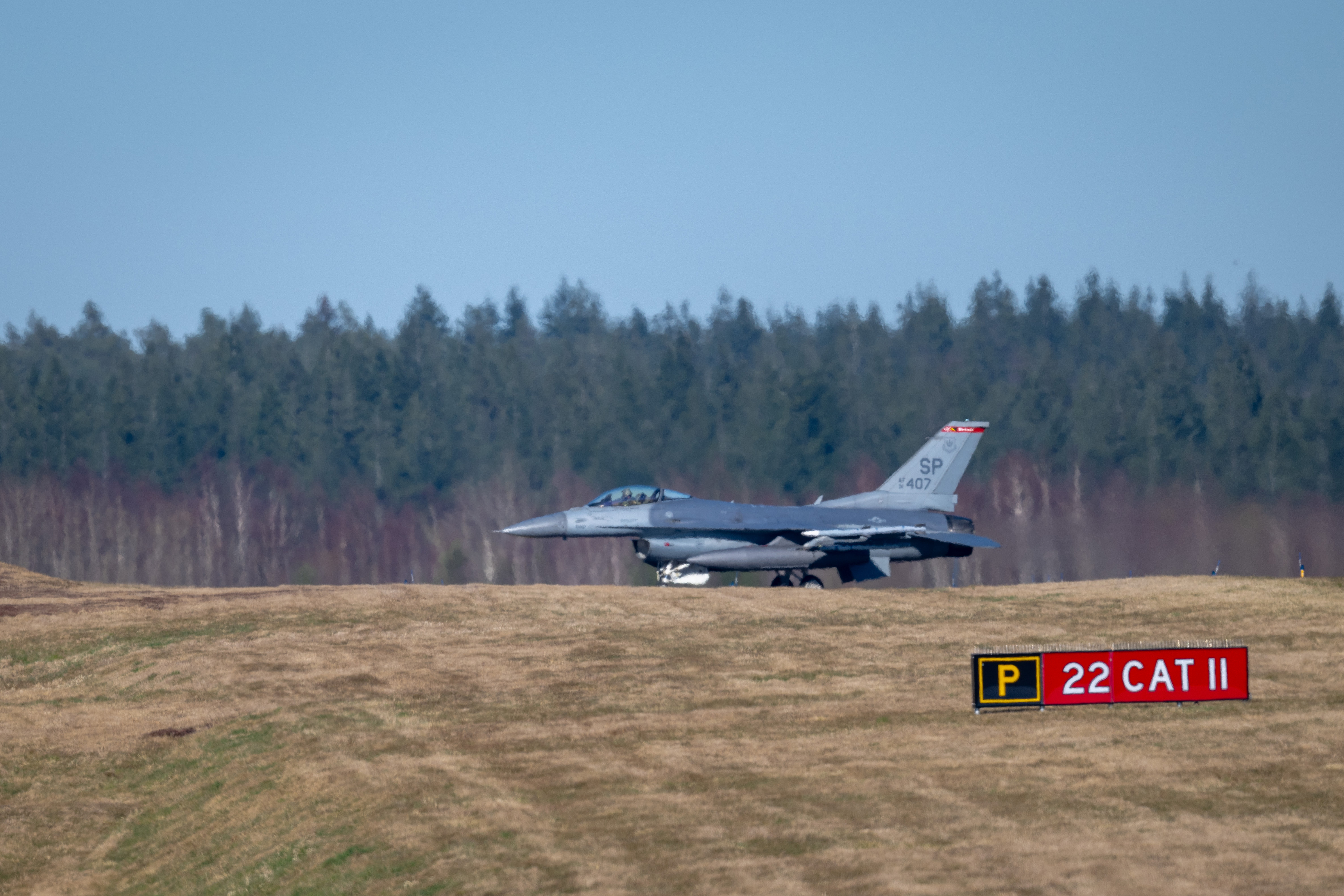
2. Do we maintain our military posture and basing or do we adjust it and move it eastward?
3. Do we continue to bet on the UK and a Franco-German axis or do we seek new core
partners among the Nordic and Central and Eastern European allies?
4. Do we continue to be involved in European domestic politics, or do we let Europeans figure out their own internal bargains?
5. Do we accept a greater autonomy of European military capabilities, or do we preserve American dominance in defense procurements on the continent?
These are not the only choices we face, and some others may be even more dramatic (e.g., do we completely withdraw our military capabilities from Europe? Do we suspend support for NATO? Do we punish EU-skeptical countries?). But some of these stark questions are floating around more for political effect and rhetorical excess than as fodder for serious analytical debates.
The purpose of listing these questions is not to settle on one answer. In some cases, there may be a middle way that mitigates the tradeoffs between the two extremes. But the list structures the choices that the United States, facing simultaneously multiple enemies across the Eurasian landmass, has in the next years in Europe.
1. Do we continue to support further European economic and political integration or do we place more emphasis on national political will and capabilities?
Since the end of World War II, the United States has supported and encouraged European integration as a vehicle for economic growth and political harmony. It was a way of stabilizing Western Europe, preventing another conflict among former enemies, and strengthening the new allies against the common Soviet enemy. A common European market diminished barriers to trade and brought former enemies into a tight web of economic interactions, beginning with the 1951 European Coal and Steel Community. The successive iterations, resulting finally in the European Union, were beneficial as they lowered internal barriers to trade, enhanced labor mobility, and contributed to a Western European economic boom from the 1950s through the 1970s. The overall effect was to strengthen European allies relative to the Soviet empire while limiting the domestic appeal of revolutionary communist groups.
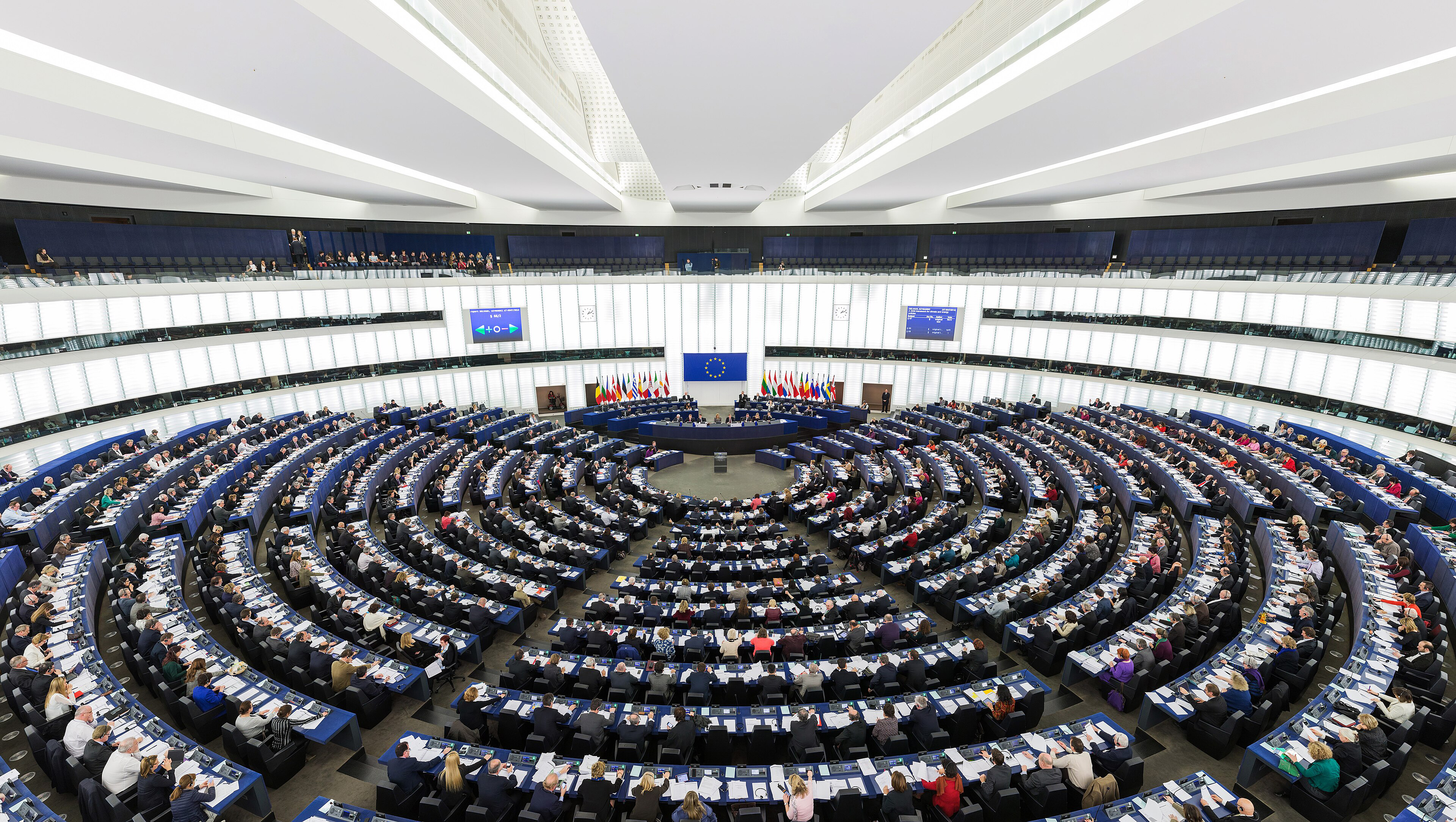
In more recent years, Washington’s support for European integration continued and at times came at the expense of the sovereign autonomy of individual European states, when, for instance, the Obama administration sided with the EU’s pressure on Hungary and, later, Poland over migration decisions or alleged rule-of-law concerns. But originally there were solid strategic reasons for the American support of integration.
Yet, an ever-expanding European Union is not an automatic strategic good. It has always been a means, not an end. In fact, EU regulatory and industrial policies have at times conflicted with US commercial interests, especially in technology and defense procurement. Moreover, the clear and present military threat from Russia has found no serious counter in the EU: only individual nations have the legitimacy and will to increase rapidly and extensively the necessary defense spending (risking to run afoul of EU fiscal rules). Nations, not multilateral institutions, go to war. They are the primary drivers of security response and of an increase in defense budgets. The United States has to prioritize European allies’ capacity to act independently on economic and security matters in alignment with NATO, not EU, objectives.
The United States wants strong allies that do not require propping up with massive and constant American expenditure of resources. But it doesn’t want to see an autonomous unified power in Europe that naturally, out of a sheer self-confidence in its size and strength, would oppose American interests.
The question, then, concerns the level of American support (or opposition) to further European efforts to centralize political and economic decision-making in Brussels. It may be that contrary to the past decades of US foreign policy, continued European integration is no longer beneficial to American interests and does not address the continent’s security environment.
2. Do we maintain our military posture and basing or do we adjust it and move it eastward?
US military posture in Europe had two primary drivers: deterrence of enemies and assurance of allies. During the Cold War, the front line cut through Europe from the North Sea to the Adriatic, creating the geographic requirements for placing American bases from Germany to Italy. Proximity to the front line increased deterrence, while the physical presence of large numbers of American soldiers assured nervous allies that the transatlantic alliance was more than just a promise. With the end of the Cold War, these bases, especially in Germany, turned into logistical hubs for airlift, command and control, and medical support, allowing the United States to project power out of theater to the Middle East. US troop levels in Europe fell from roughly 300,000–350,000 personnel during the late Cold War to around 80,000 before Russia’s 2022 invasion of Ukraine, after which deployments temporarily rose above 100,000. But the American military footprint in Europe remains centered in old Western Europe (Germany, UK, Italy).
The logistical benefits of the existing basing structure in Europe are clear. But the original purposes of deterrence and assurance are not fulfilled by the current location of bases.
Russia has demonstrated a great risk tolerance for large-scale military operations and has ramped up its threats to NATO’s eastern flank. The rapid and substantial rearming efforts of Nordic and some Central European countries are a testament of their nervousness. And the absence, beyond a rotational presence, of US assets and bases in the region puts in question the credibility of the American deterrent. The Eastern flank is where the threat is most pressing (as it had been in Germany in past decades) and the interests most aligned with US objectives of deterring Russia. Hence, there are solid reasons to adjust the geographic lattice of US bases in Europe to reflect the current realities—in brief, to move out of Germany into Poland and elsewhere on the eastern flank.
The question is, thus, whether we should move from a reinforcement-based deterrence model (with US forces mostly based away from the front line, ready to reinforce a breach and to provide logistical support) back to a tripwire forward-deterrence model (with US forces positioned near the front line with Russia, serving as a tangible sign of commitment to the alliance).
3. Do we continue to bet on the UK and a Franco-German axis, or do we seek new core partners among the Nordic and Central and Eastern European allies?
The primary allies upon which the United States based its European strategy over the past eighty years have been the United Kingdom and Germany. For geographic, political and economic reasons, these have been the pillars of the transatlantic alliance: interests aligned and military capabilities provided by these allies were substantial. American reliance on these European powers continued in the post–Cold War era. Under some recent US administrations, such as Barack Obama’s, Germany was seen as the power to which Washington could subcontract Europe’s political and security management, including its posture toward Russia. It is plausible even now, in the age of renewed Russian military aggression, to bet on Germany as the main European agent of rearmament because of its economic heft and thus as the anchor of US influence on the continent.
The alternative choice is to privilege US relations with Europe’s north and eastward. Countries in this region from the Baltic to the Black Sea have the greatest incentives to rearm in an effective way in order to deter, and defeat if necessary, a Russian imperial push. Poland is spending 4.7 percent of its GDP on defense and is one of NATO’s fastest-growing military powers. It is purchasing from European, US, and Korean sources, prioritizing quick delivery and fielding. Transatlantic interests align here now and the military capabilities and national will to deter and defend are increasing.

The question, therefore, is whether the United States should continue privileging legacy strategic partnerships with major Western European powers, or instead adjust its economic, political, and diplomatic posture toward the increasingly important states of Central and Northern Europe.
4. Do we continue to be involved in European domestic politics, or do we let Europeans figure out their own internal bargains?
The internal political stability of European allies has always been a core American interest. Domestic fragmentation can weaken economic welfare, reduce strategic cohesion, and create openings for hostile foreign powers to influence outcomes. Above all, it is also a direct alliance risk: internal divisions, with the rise of anti-American factions, can translate into a transatlantic friction and even a split.
During the Cold War, Washington was not a passive observer of European domestic politics. The threat posed by various Communist parties and several violent terrorist groups (e.g., Red Brigades in Italy, Red Army Faction in Germany) supported by Moscow was taken seriously by local governments and Washington. And the United States intervened regularly in the internal politics of several European countries, including France, Italy, and Germany, to prevent a government takeover by local communist parties.
Active involvement in Europe’s internal political dynamics continued in the post–Cold War era but with less strategic discipline. American officials have often waded into very contentious and partisan domestic debates. President Obama, for instance, campaigned against Brexit in the UK, and US government officials often supported progressive groups and niche cultural viewpoints in domestic debates. Elements within the Trump movement expressed sympathy for former leader Viktor Orbán in Hungary and some European nationalist parties, including Alternative for Germany (AfD). Both American political parties see their support for (often opposite) positions as strengthening America’s role and influence over Europe’s strategic direction.
Complete non-interference in European domestic dynamics would cede influence over the internal trajectory of key allies at a time when domestic political outcomes directly affect NATO cohesion, defense spending, and attitudes toward Russia and China.
The counter is that, first, these domestic interventions are not always effective and in fact often backfire (Obama in the UK, Trump in Hungary). The side opposed by Washington often carries strong popular legitimacy exactly because of American insertion. Second, these interventions arise out of a deep division inside the United States and are extensions of American domestic political debates abroad, rather than a reflection of a coherent strategy as during the Cold War. There are few benefits of intervening in domestic partisan debates in Europe. On the contrary, Washington’s support for a particular partisan view and political faction in Europe swings left and right, fraying the overall strategic position of the United States on the continent because it ties it to individual politicians and parties, which are necessarily temporary in an electoral system. Washington should support strong and friendly allies regardless of the political party in charge and of its ideological preference.
The question, then, is whether active intervention in European domestic politics is a legacy approach from the Cold War and should be replaced by a hands-off approach taking into consideration only the strategic posture of European states and not their domestic political arrangements.
5. Do we accept a greater autonomy of European military capabilities, or do we preserve American dominance in defense procurements on the continent?
Europeans are rearming, still tentatively in some cases, but expenditures are rising. By the end of this year, according to NATO report, all allies will meet or exceed the 2 percent GDP target agreed at the 2014 Wales Summit. Military procurement will increase considerably especially when Germany, the largest European economy, ramps up its defense budget. The question for the United States is whether to encourage European arms industry or incentivize continued reliance on American weapons and assets.
In 2021–25, Europeans imported 58 percent of their weapons from the United States, down from the previous few years (68 percent) but still a high level explained by the security threat posed by Russia and the dire state of European industry. But several countries such as France, as well as the EU, are pushing to “buy European.” Some EU instruments, such as the European Defense Fund (EDF), restrict funding to Europe-based companies with the clear goal of enhancing indigenous production and industrial capacities in Europe. Moreover, there are growing temptations to seek “strategic autonomy,” a long-held concept associated with French strategic thinking that advocates a diminished dependence on the United States. Such autonomy translates also into an increased European industrial production of armaments. If Washington wants Europe to be militarily capable, it may opt to encourage indigenous industrial production to replace, at least in part, American-sourced weapons and platforms. Europe’s industrial decline, which translates into less capacity to produce arms at scale, weakens American allies.
But the other option is to encourage Europeans to buy US-made products, from high-end platforms (fighter planes) to low-end weapons (drones, artillery). The argument in favor is that buying American preserves interoperability, avoids wasteful duplication, and, above all, maintains a key link between the United States and its European allies. European reliance on US arms is a good form of dependence: it strengthens the alliance. Moreover, it carries an important domestic political benefit because it makes a US commitment to Europe economically appealing to the American electorate if our allies use their larger defense budgets to enhance the US industrial base.
This essay does not seek to answer these questions. Rather, its purpose is to clarify, often in stark ways, the choices facing the United States. This is a moment of a major realignment and requires serious thought on how to adapt US foreign policy to an era of growing security threats from aggressive rivals. Reflexively clinging to legacy positions because they had succeeded in the past is not necessarily a recipe for success in the future.
Jakub Grygiel is a professor of politics at the Catholic University of America and a national security visiting fellow at the Hoover Institution. He participates in Hoover’s Working Group on the Role of Military History in Contemporary Conflict. He is also a senior adviser at the Marathon Initiative. In 2017–18, he served as a senior adviser in the Office of Policy Planning at the Department of State.