 Powered by
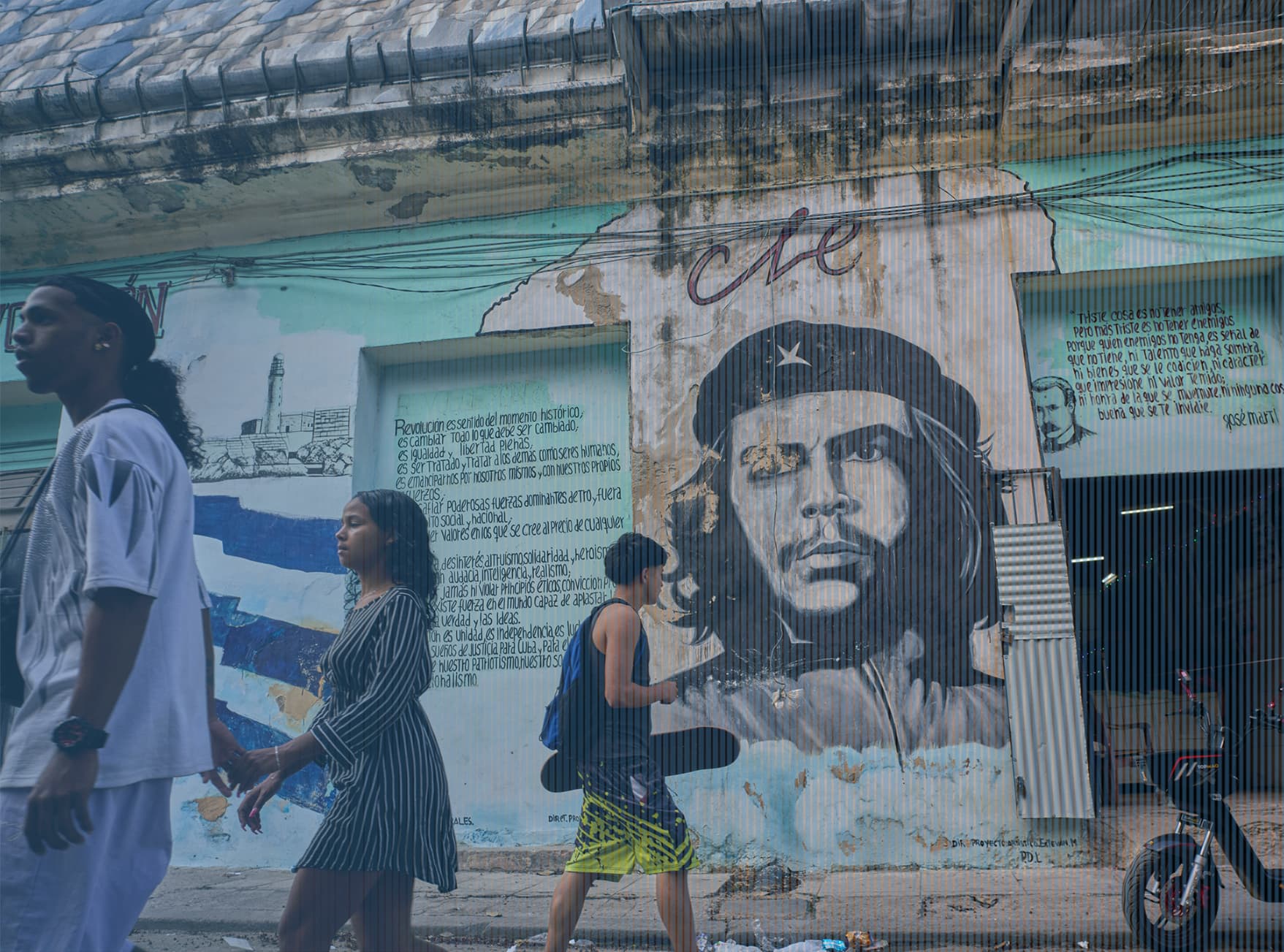
The late George Shultz frequently said that “foreign policy starts in your own neighborhood.” After years as an inattentive neighbor, the United States now heeds the advice of this legendary Hoover statesman and no longer treats the Western Hemisphere as an afterthought. The Trump administration has executed a strategic pivot to the region at an opportune time. Regional political trends favor a substantial realignment toward the United States, and the hemisphere contains vital resources for national security, economic growth, and technological development. Yet grave security threats fester, and financial problems remain.
America and its hemispheric partners will encounter three key strategic challenges over a twelve- to eighteen-month horizon. These economic and security issues span the terrain of North America, the Caribbean Basin, and South America.
The most critical choice concerns the relationship between the United States and Mexico. Washington and Mexico City will determine how and to what extent bilateral ties will deepen amid an escalating war against narcoterrorists and the renegotiation of the US-Mexico-Canada Agreement (USMCA).
The second choice regards regime change in Cuba. President Trump vows “Cuba is next” on his authoritarian target list, but the United States must decide how to negotiate the Castro regime’s journey into the dustbin of history.
The third consequential choice relates to America’s strategic competition with China in the hemisphere. The United States must choose how to provide Latin American partners with a viable alternative to Chinese Communist Party (CCP) investment.
The analysis below examines each of these critical choices and identifies potential pathways for action, both plausible and aspirational.
Mexico and a North American partnership
Mexico is crucial to America’s future. The United States and Mexico share a 2,000-mile border, deep historical and cultural ties, and millions of personal and familial bonds. Mexico has also become America’s largest trading partner through the USMCA. Interconnected supply chains and energy systems underpin a formidable manufacturing alliance, feeding the world’s largest economy. Texas and Mexico form an annual $280 billion-plus economic and energy corridor. Implacable drug cartels, however, plague both countries, driving addiction and crime north of the border while fueling corruption, institutional decay, and violence to the south. Taken together, such interdependency determines North America’s fate.
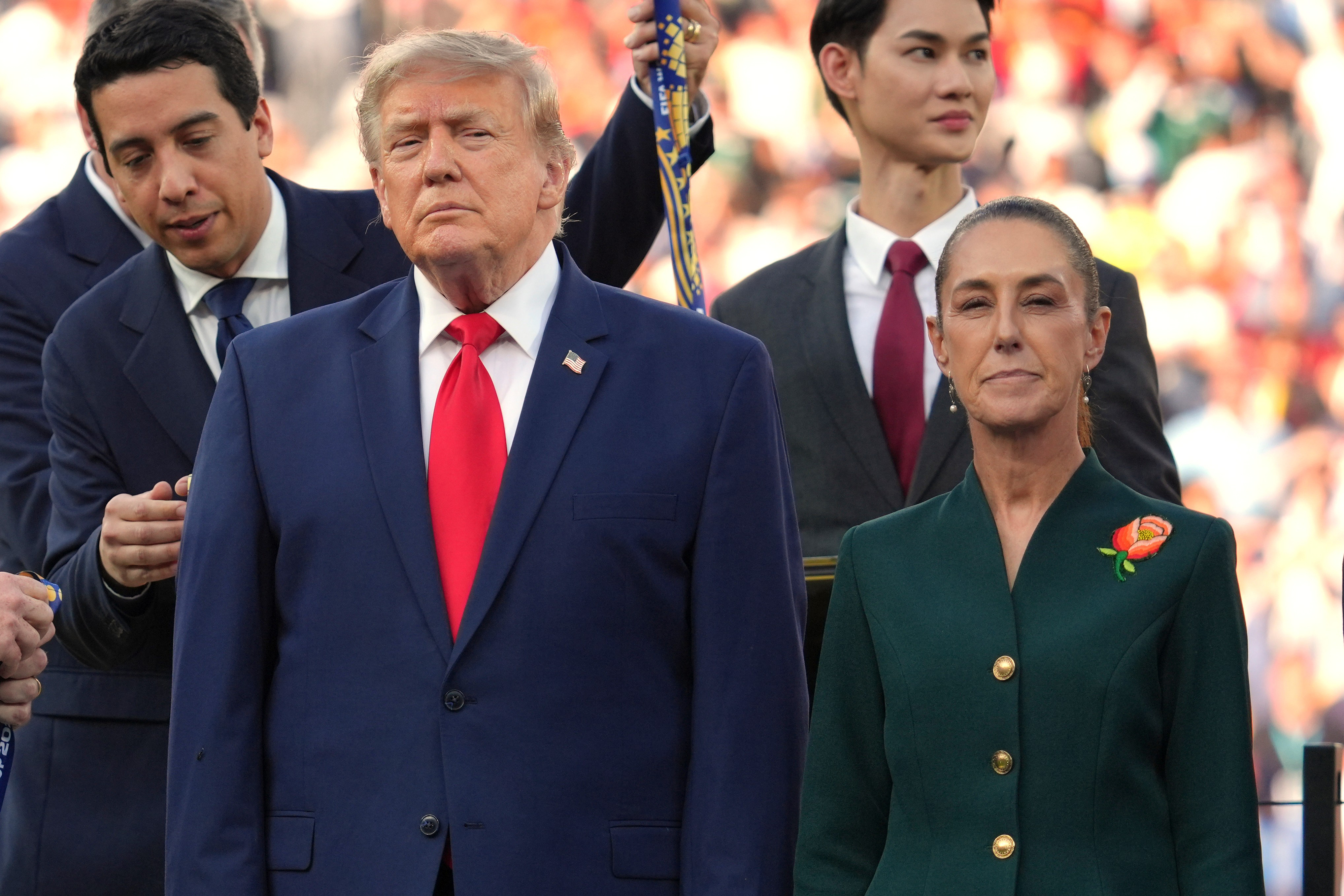
Indeed, the US-Mexico relationship serves as the cornerstone of hemispheric order. A stable and collaborative Mexico enables America to more effectively work with its partners to counter China, combat transnational crime, and hasten hemispheric integration of capital and critical resource flows. Conversely, a fractured and failing Mexico risks significant economic disruption, migratory pressures, and increased transnational crime, which could cascade into disorder across the hemisphere, thereby undermining US global power projection.
US-Mexican interdependence is at once powerful and fragile. Ad hoc cooperation and reactive policies will not suffice for managing cross-border relations. Washington and Mexico City face an inescapable decision on how deeply and on what terms America will engage Mexico on security and economic integration. The Sheinbaum and Trump administrations will choose whether to preserve the status quo on anti-cartel efforts and the USMCA or formalize an enduring security initiative, coupled with a major political-economic agenda. The former offers the path of least political resistance, while the latter would address the perennial issues arising from the drug war, great-power competition, and Mexican governance.
The current dynamics between the Trump and Sheinbaum administrations suggest a narrow window for either an ambitious plan or improvised, incremental changes to the bilateral relationship.
The administration of Mexican President Claudia Sheinbaum has demonstrated a greater willingness to coordinate on anti-cartel campaigns, including heightened intelligence sharing, drug seizures, high-level extraditions, and joint operations to eliminate cartel bosses. The Mérida Initiative and Bicentennial Framework have given way to the US-Mexico Security Implementation Group. Sheinbaum and the ruling National Regeneration Movement (Morena), however, have limited certain forms of collaboration, such as unilateral US military actions on Mexican territory and expansive anti-corruption campaigns, which they say infringe on national sovereignty. Washington desires stronger anti-cartel measures, but Mexico City prefers a gradual escalation that saves Morena figures from prison.
Meanwhile, the 2026 joint USMCA review introduced some uncertainty into the bilateral relationship. The Trump administration opted against a sixteen-year extension of the USMCA. The free trade agreement has entered a mandatory yearly joint review process until its sunset date of 2036, unless the countries extend the pact another sixteen years. The Trump administration wants revisions that would strengthen the American economic position and domestic industry while reducing Chinese imports, demanding concessions from Mexican counterparts. The Sheinbaum administration seeks to preserve the agreement and expand its benefits for regional supply chains and investment, attempting to separate cartel issues from trade negotiations. Talks are underway, with the next round scheduled for September in Washington.
Over the next two years, the US-Mexico relationship may follow two available pathways.
The first involves a bold but unlikely comprehensive approach. The Trump and Sheinbaum administrations could use momentum from the USMCA yearly review process to expand the agreement and the emerging security initiative into a unified political-economic security union. In exchange for American investment and commerce, Mexico would undertake the necessary institutional reforms to dismantle and degrade cartels. The United States would condition long-term, lucrative trade privileges on a fundamental restructuring of Mexican institutions, including the judiciary and law enforcement, to enforce anti-corruption measures and complement the cartel crackdown.
What would emerge could be a geoeconomic fortress, including a formal North American Customs Union, which would accelerate nearshoring and use harmonized external tariffs and automated cross-border customs enforcement to create an impenetrable bloc against China. The reinvigorated North American partnership, moreover, could lead to the degradation and dismantling of the Sinaloa and Jalisco New Generation cartels, improving Mexico’s internal security and reducing crime throughout the hemisphere and beyond. The union could also establish a stronger platform for common action with Canada and other regional partners over the next decade. Such a comprehensive agenda would present Sheinbaum with the chance for a total societal reset, which could achieve the economic goals under her Plan México, but would likely require the United States to accept continuous Morena rule.
The comprehensive approach to a North American partnership would demand an unprecedented surrender of trade and regulatory sovereignty, which could trigger resistance from Morena as well as American skeptics of free trade on both sides of the aisle. Worse still, if security benchmarks are not achieved, and if Mexican reforms stall, the North American partnership could be paralyzed, exposing Washington to undesirable economic and political consequences.
More plausibly, the Trump administration could continue the high-pressure, conditional cooperation campaign to maintain the status quo, the outcome of which could cut two ways: transactional progress or breakdown.
Here, Washington would use the USMCA annual review process to push for tighter rules of origin, export control alignment, and measures to protect US manufacturing, to which Mexico would concede. The Trump administration could then make expanded economic benefits for Mexico conditional on security metrics and anti-corruption efforts. Washington could also intensify the prosecution of corrupt Mexican officials, securing new indictments to encourage the Sheinbaum administration to purge crooked Morena officials. Simultaneously, the Trump administration would urge the Sheinbaum government to escalate its own action against cartels, including the direct involvement of US forces.
The conditional, incremental approach would confer several immediate benefits. The Trump and Sheinbaum administrations would have maximal policy flexibility, which would allow them to navigate domestic politics. The United States would maintain economic leverage to incentivize an escalated campaign against the cartels, resulting in the arrest of high-value targets and the destruction of criminal networks. Mexican leaders would undertake reforms at a slower pace.
On the downside, difficulties could hinder the anti-cartel campaign. The campaign could repeat the pattern of earlier initiatives, during which the kingpin strategy achieved short-term tactical gains but the Mexican state did not bolster local and municipal institutions. Mexico’s underlying governance issues would remain unaddressed, and the necessary state-capacity building would stand unfinished. Publicity from apprehending cartel bosses would conceal the continuing institutional decay.
At worst, the Trump administration’s coercion could result in the Sheinbaum government developing an outright hostile stance. Such a counterproductive outcome would increase supply-chain disruptions, migration surges, criminal activity, drug trafficking, and Chinese malign influence, transforming America’s southern border into a permanent zone of instability and liability.
Either situation would endanger the North American economic and security commons. The US-Mexico relationship would persist in a cycle of enforcement and crisis, which would redound to the benefit of China and the cartels.
Caribbean regime change
For sixty-seven years, Cuba has been an American enemy and source of instability in the Western Hemisphere. A state sponsor of terrorism a mere ninety miles off Florida’s shores, the communist island has become a beachhead for China, Russia, and Iran. Cuba hosts several large signals-intelligence facilities for the CCP and Russia. Havana also supports American adversaries throughout the hemisphere with defense, intelligence, and internal security.
The Trump administration seeks to reorder the hemisphere by removing the region’s most destabilizing actors. The United States conducted Operation Absolute Resolve, a dramatic raid that captured Venezuelan dictator Nicolás Maduro and shattered authoritarianism in the Caribbean Basin. Under Washington’s direction, the interim government of Delcy Rodríguez now presides over a three-stage democratic restoration in Caracas: stabilization, recovery, and transition.
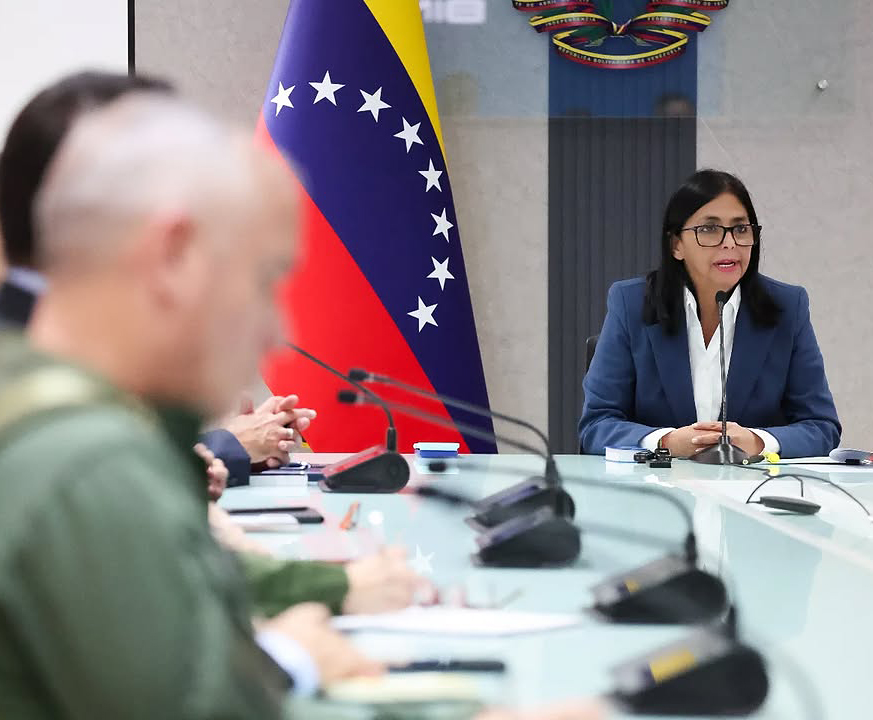
The Venezuelan decapitation and delegation doctrine propels similar designs for Cuba. But if managing the US-Mexico relationship proves complex, facilitating regime change in Cuba will be the hardest choice confronting decision-makers.
Although Cubans built the Chavista dictatorship, the Cuban state is not analogous to Venezuela’s. Raúl Castro, the ninety-five-year-old revolutionary leader, and his family hold power, not President Miguel Díaz-Canel. The one-party state lacks a strong, organized opposition. Nor does Cuba, unlike Venezuela, possess vast reserves of crude oil to sell and fill its coffers. Instead, the island has a service economy, dominated by the vast military-run conglomerate Grupo de Administración Empresarial S.A. (GAESA).
Furthermore, a complicated set of laws and politics governs US-Cuban relations. Before Congress can end the embargo, the Helms-Burton Act mandates that Cuba release political prisoners, hold free elections, establish an independent judiciary, and provide US nationals with compensation for confiscated property. Equally thorny, the Cuban exile community and Republican politicians stand against US officials working with the Castro family and any measures short of full enforcement of Helms-Burton.
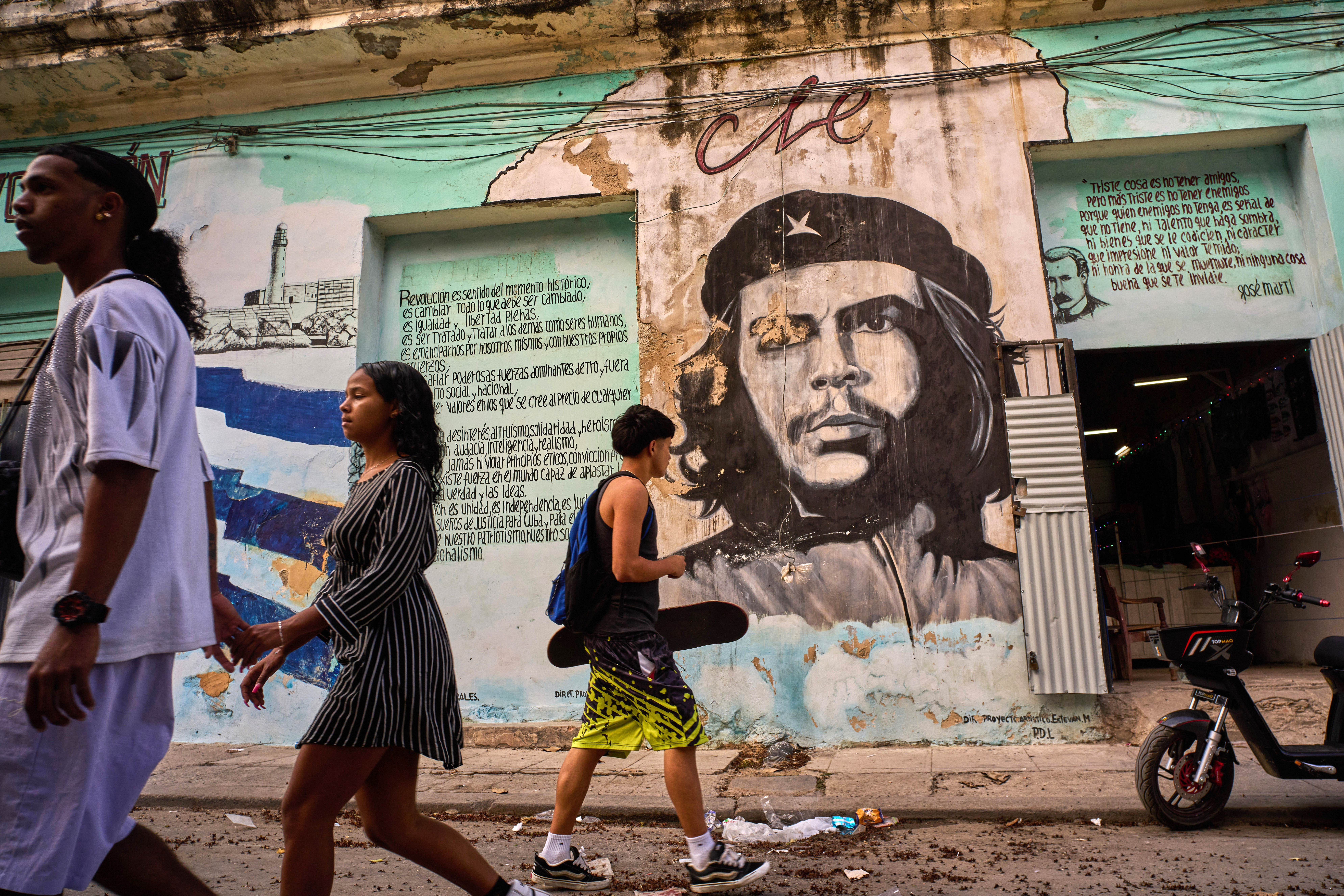
In a maximum-pressure campaign, the Trump administration is deploying an anaconda strategy to strangle Cuba financially, legally, politically, and militarily. Trump has imposed tariffs, expansive sanctions to cripple the regime’s enterprises, including new secondary sanctions to deter foreign firms, and an oil blockade. The US Department of Justice has indicted Raúl Castro for the 1996 downing of two Brothers to the Rescue planes. The United States has also conducted surveillance flights, developed military options, and war-gamed the collapse of communism in Havana.
The revolutionary island, for its part, suffers from a humanitarian crisis, compounded by its dilapidated energy grid and its collapsing, state-planned economy. But the economic privation has not stopped the Castro regime from preparing for any potential US military action. Cuba has been amassing Russian and Iranian drones as a means of defense.
As pressure mounts, US officials engage with Cuba’s Ministry of the Interior and armed forces, as well as negotiate with members of the Castro family, including Raúl’s son, Alejandro Castro Espín (whom the US recently sanctioned), and his grandson, Raúl Guillermo Rodríguez Castro. Both CIA Director John Ratcliffe and the commander of US Southern Command, General Francis L. Donovan, have visited Cuba to meet with their counterparts.
The Trump administration grasps that American power may finally topple the Castro regime, but the Castroist system has outlasted twelve previous US presidents. Indeed, the Castro regime approved an ostensibly major economic reform package to increase foreign investment and expand the private sector in a desperate bid to buy time and stave off Trump’s regime-change designs.
Now, Washington must determine how to coerce the Castro regime into transforming the Cuban government and economy. The United States will either use its maximum-pressure campaign to force the regime’s collapse to satisfy Helms-Burton and domestic stakeholders, or negotiate a managed, top-down transition with the Castro family to guarantee stability at the cost of wholesale change.
The Trump administration will not abandon its plan. Accordingly, US-Cuban relations may follow two courses.
Force: US officials could reject the Castro backchannel’s proposed compromises and enforce the dissolution of Cuba’s one-party state. In doing so, the United States would deploy its armed forces to apprehend Raúl Castro, eliminate signals-intelligence facilities, destroy military installations, and occupy the island if needed. In the aftermath, the United States would impose democracy and a liberalized economy.
Diplomacy: The United States could extend a grand bargain to the Castro regime. Washington would leverage indictments, sanctions, and possible military intervention to ensure an orderly transition from socialism into a market economy alongside gradual political liberalization. In exchange for legal immunity, limited sanctions relief, and foreign investment, the Castro regime would implement a phased opening and the verified expulsion of extra-hemispheric powers. In particular, Cuba would receive American money for the verified removal of signals-intelligence facilities.
Whether the United States engineers a total collapse or negotiates a transition, both choices carry similarly high stakes for success and failure.
Both paths would remove a longtime regional adversary and a Caribbean outpost for China, Russia, and Iran. Both courses of action would also begin integrating the Cuban economy into the American market and would open it for more foreign direct investment. Yet if a forced regime change turns into chaos or if a negotiated transition falters, an enduring security crisis and humanitarian catastrophe would sit off the Florida coast.
Political backlash from the Cuban exile community would grow inside the United States. The 125,000 refugees of the 1980 Mariel boatlift would pale in comparison to the resulting migration wave. Criminal networks and extra-hemispheric powers could exploit the ensuing disorder. Washington would either have to undertake an expensive stabilization project or be resigned to a variation of the Castro regime ruling a permanently broken island.
Competing with China
The Trump administration believes the Monroe Doctrine matters. The November 2025 National Security Strategy outlines a “Trump Corollary,” declaring that the administration “will deny non-Hemispheric competitors the ability to position forces or other threatening capabilities, or to own or control strategically vital assets, in our Hemisphere.” The administration’s aim is to curtail the malign influence of China and outcompete the CCP in the Western Hemisphere. Such a forward-leaning posture will necessitate a concerted economic strategy in the hemisphere, particularly in South America.
China’s strategic foothold in the Western Hemisphere dwarfs that of past adversaries, especially its financial dimension. Twenty-two countries in the hemisphere belong to the Belt and Road Initiative (BRI). Beijing has become South America’s largest trading partner. The CCP has captured controlling stakes in ports, logistics hubs, digital networks, infrastructure, and energy and mining operations across the region.
The situation appears dire, but the United States has the tools to compete. The US International Development Finance Corporation (DFC) can use debt, equity, and insurance to de-risk projects, involve American capital, and set friendly technology and governance standards. This year, Congress expanded the DFC’s global cap to $205 billion and its mandate to permit investment in high-income countries. Now, DFC-supported public-private partnerships can more effectively ensure America and its Latin American partners control energy flows, critical minerals, rare earths, and supply chains, rolling back dual-use infrastructure in the hemisphere.
Latin America’s geological endowment offers opportunities in oil, gas, and mining. Over the next five years, for instance, Argentina, Brazil, Guyana, and Venezuela will produce half of the world’s new crude oil. South America also contains enormous reserves of rare earths, lithium, and copper.

Economic competition with China is a straightforward choice but no less consequential than the Mexican and Cuban cases. Without supplying Latin American partners with a viable alternative, the United States could be displaced as the preferred economic partner and lose access to critical resources in the coming decade.
Resolved to roll back China’s influence in the hemisphere, the Trump administration must now determine how to put the Trump Corollary into action. How can the United States harness the power of American wealth to reduce the CCP’s stakes in strategic assets while increasing Latin American ownership and US investment? Given the Trump administration’s ambitions, America and its partners have two avenues of economic engagement, each with varying levels of trade-offs.
The first course could follow the Trump administration’s exercise of hard-nosed economic statecraft and some novel strategic thinking.
If proactive, the United States would deploy its $205 billion DFC war chest to diversify regional supply chains, develop refining capabilities, and execute leveraged buyouts of BRI holdings. US ambassadors would take the initiative to identify business opportunities, and the US government would coordinate with the private sector to pursue them.
If diplomatically daring, US officials would enlist European and Asian partners to win tenders and incorporate American financing, subcontractors, and technology into projects.
If visionary, the United States would bid to create transformative economic corridors, connecting critical resources located in the remote Amazonian and Andean regions to Atlantic ports through infrastructure buildouts.
The aggressive pursuit of the Trump Corollary could build a resilient economic commons in the hemisphere based on transparent deals, host-country ownership, and higher environmental and labor standards. Latin American countries would experience economic growth, and the United States would secure critical resources through friendly supply chains. CCP ownership of dual-use infrastructure and the Chinese share of critical minerals and rare earths would decline.
Such an enterprising approach would demand large commitments of both taxpayer-backed funding and private capital. Americans would have considerable financial exposure. The projects could fail or move at a slower pace than partners prefer. Latin American countries might prefer Chinese financing terms after all, further straining relations with the United States. Beijing, of course, would retaliate economically and politically against America and its partners.
Following the second course, the United States could minimize the scope of its investments, opting to compete selectively in the hemisphere without launching a high-cost, extensive campaign to completely and immediately displace China. The Trump administration could concentrate on the most crucial projects, such as major Atlantic ports, oil and gas production, pipelines, and lithium and copper mining. The result would not be a slew of signature infrastructure projects that transport critical resources from the interior to the sea, thereby significantly revitalizing the region. Rather, the targeted approach would generate a modest mixture of vital projects that serve US national security and partner-country economic interests.
A selective approach from the Trump administration and hemispheric partners would be more cost-effective, methodical, and sustainable. It would still call for common action with European and Asian partners, as well as generate long-term incentives for Latin American countries to ally with the United States. It would reduce reliance on and vulnerability to adversarial supply chains without overextension. US investment and engagement would be greater than they were during the past decade, but they would not guarantee access to the strategic resources needed in the next decade.
North American integration, Cuban regime change, and competition with China represent the most urgent strategic challenges confronting decision-makers in the Western Hemisphere. Critical choices regarding these issues will shape whether America and its partners can sustain a secure, prosperous hemisphere. Our decisions will test whether we can forge, as George Shultz put it, a successful foreign policy that starts in our own neighborhood.
Joseph Ledford is a Hoover Fellow and the assistant director of the Hoover History Lab at the Hoover Institution, where he also serves as the vice chair of the Applied History Working Group.