 Powered by

The World Trade Organization is widely described as a system in terminal decline. The evidence seems easy to assemble. The Doha Round failed years ago. The dispute-settlement system no longer functions as originally intended. The United States has turned sharply toward unilateral tariffs and more openly transactional trade policy. China has combined deep integration into the world economy with extensive state intervention. Europe has projected climate and other regulatory goals outward through measures with significant cross-border effects. And the fastest-moving parts of the global economy—digital trade, data flows, and artificial intelligence—remain only partially covered by the WTO rulebook.
So, is this the moment for a requiem?
Not yet.
The WTO is under real strain. Even so, the system works better than the current mood suggests. Most world trade still takes place under multilateral disciplines. Even after a 9-percentage-point drop following the recent shift in US trade policy, 72 percent of world merchandise trade still occurs on a most-favored-nation basis within the WTO framework. An additional 16 percent receives additional tariff reductions under preferential trade agreements that build on that framework. Only about 12 percent falls outside those disciplines and can plausibly be described as power-based rather than rules-based. The United States matters enormously, but it still accounts for only about 14 percent of global import demand. Even a sharp US turn does not by itself determine the fate of the whole system.
This matters because expectations shape conduct. Once governments conclude that the multilateral trading system no longer operates, restraint becomes harder to sustain. Compliance weakens. Political support for cooperation erodes. A false narrative of collapse can become self-fulfilling. The biggest mistake today is not to assume that the WTO is healthy. It is to assume that its disappearance would not matter much.
A sturdy system
The economic logic behind the system remains sound. Trade agreements are not meant to govern every policy with cross-border effects. Their purpose is narrower: to prevent governments from using tariffs and other trade-relevant measures to worsen their trading partners’ market access, and to preserve the bargains they have struck once tariffs are constrained.
The strength of the old GATT system was that it addressed this problem with a limited but powerful architecture. Reciprocity turned liberalization into an exchange rather than a unilateral concession. Most-favored-nation treatment ensured that concessions granted to one member were extended to all, limiting the sort of discriminatory spirals that fragment markets and invite retaliation. That combination worked especially well for tariffs on goods. It reduced uncertainty, restrained escalation, and gave firms a stable framework within which to invest and reorganize production.
Judged by the tasks it was designed to perform, the system delivered substantial value. Since the WTO’s creation in 1995, global trade expanded dramatically, and the deeper integration of developing economies into world markets helped lift hundreds of millions of people out of poverty, especially in Asia. The system also proved resilient during episodes such as the global financial crisis and the COVID-19 pandemic. For smaller and medium-sized economies in particular, rules that limit arbitrary discrimination by larger players were a major part of that value.
The same logic benefited large economies as well. The United States, for example, gained from a system that stabilized foreign market access and reduced the scope for arbitrary policy shifts abroad. American firms benefited through more secure export opportunities, better protection for the value of the foreign investments through which US firms serve overseas markets, and less risk that foreign regulations and standards would harden against them. The WTO also gave Washington a platform from which to advance rules in areas such as services, digital trade, and intellectual property, where US firms are especially competitive.
Even a large economy can benefit from tying its own hands when doing so binds others as well.
That logic carried over less well once cooperation moved beyond tariffs and other border measures. Today’s conflicts look different. They are less about tariffs at the border and more about subsidies, security, climate, regulation, data, and technology. These issues are harder not only politically but economically. Reciprocity is more difficult to define. National preferences diverge more sharply. And because the relevant instruments are often domestic rather than border-based, binding rules become more intrusive. In such areas, the task is usually less about deep harmonization for its own sake than about preserving market access and predictability under conditions of greater regulatory diversity.
Fault lines
Three newer fault lines stand out: China’s rise, sustainability-related regulatory spillovers, and digitalization. Yet the system also remains weighed down by an older unresolved problem: the development bargain left behind by the Doha Round.
China’s rise is the first. In one sense, China’s integration into the global trading system was among the WTO’s greatest successes. It contributed to extraordinary growth, poverty reduction, and convergence. At the same time, China’s scale and institutional model exposed limits in the system’s design. Rules written for a world in which state intervention was more limited struggle to address industrial subsidies, preferential finance, and state-backed firms operating at China’s scale.
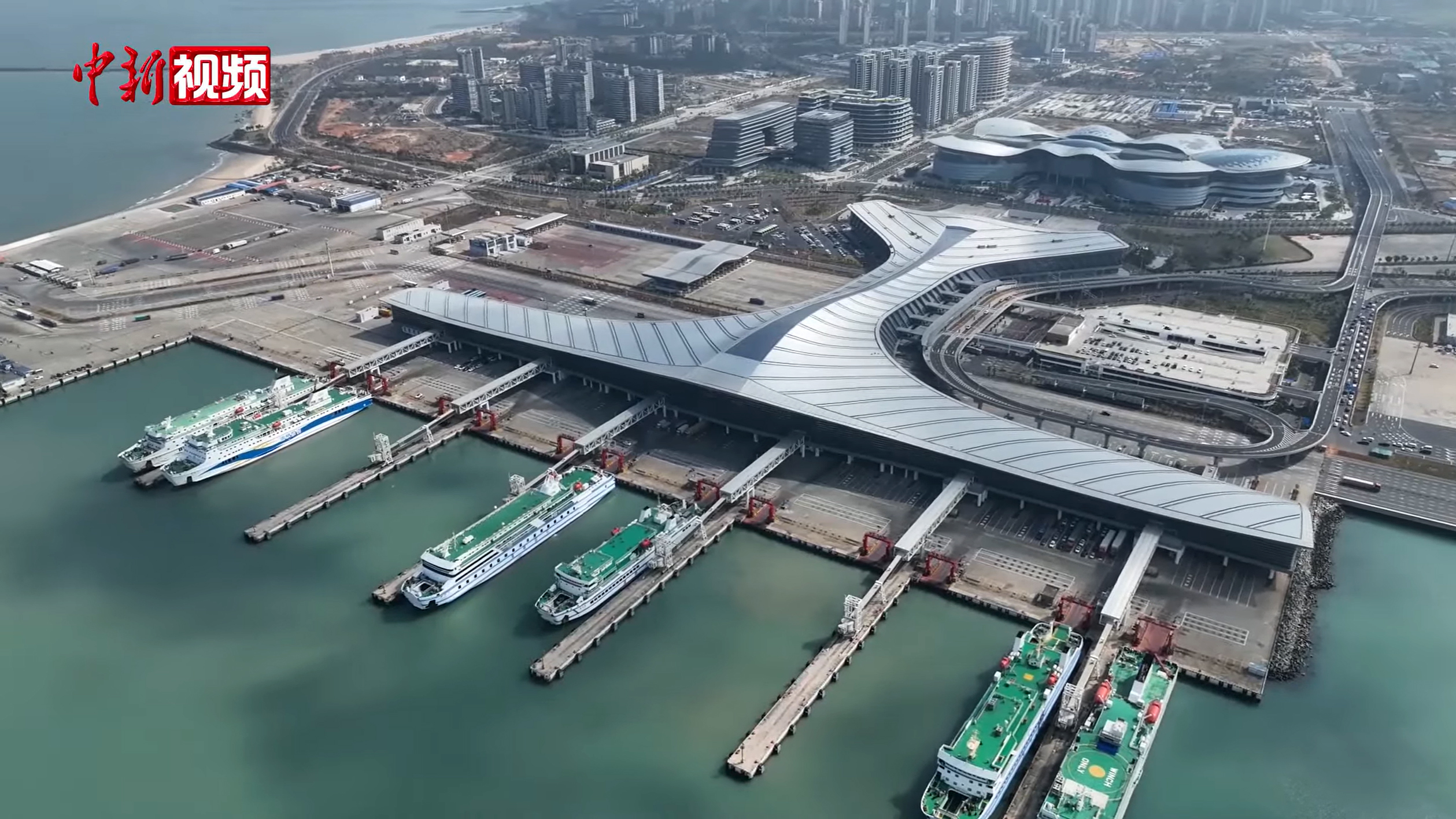
The challenge here is less one of compliance than of coverage. Once trade, technology, and investment are increasingly viewed through a national security lens, the limits of a rulebook designed for a more narrowly commercial era become even harder to ignore.
A second source of strain lies in sustainability and regulatory spillovers. Climate policy, due-diligence requirements, deforestation measures, labor standards, and related initiatives are legitimate political objectives. The problem arises from the way they are increasingly pursued: through domestic regulations with major cross-border effects. The European Union’s Carbon Border Adjustment Mechanism is one example. Deforestation and supply-chain due-diligence rules are another.
The old contrast between protectionism and free trade no longer gets to the heart of the matter. What now matters is the tension between unilateral regulation and multilateral coordination. A system built mainly to discipline border measures was never designed to adjudicate among competing regulatory objectives of this kind.
Digitalization is a third source of strain. The most dynamic part of the global economy is now shaped less by tariffs than by domestic regulation governing data, privacy, cybersecurity, platforms, and AI. The WTO’s long-standing moratorium on customs duties on electronic transmissions preserved a useful baseline of predictability, but only along one margin. The harder questions lie elsewhere: data localization, cross-border data flows, the conditions under which digital services can be supplied across borders, and the risk that regulatory divergence fragments digital markets. The main barriers in digital trade increasingly arise not at the border but inside domestic regulatory systems, where preferences diverge sharply and multilateral rules remain thin.
A final source of strain is older: the unresolved legacy of the Doha Round. Doha was launched as a development round, but its collapse left behind more than an unfinished negotiation. It also left unresolved disputes over agriculture and special and differential treatment—the flexibilities granted to developing economies—and, more fundamentally, over how to balance such flexibilities with the binding commitments needed to generate new market-access gains.
That tension matters because the multilateral system has historically generated new gains through negotiated commitments, not through open-ended exemptions. Flexibility may sometimes be warranted. By itself, however, flexibility does not create new bargains. When development remains politically central while bargaining space keeps shrinking, paralysis is hardly surprising.
Disciplined and plurilateral
For all these reasons, “resurrection” is not quite the right metaphor. There is no earlier version of the WTO to which the world can simply return. What is realistic is selective renewal: adapting the system’s substance and its processes so that it can once again convert shared interests into workable outcomes.
Substantively, the direction is fairly clear. The WTO needs better disciplines on state-driven competition and clearer guardrails for security-related trade measures, all while preserving most-favored-nation treatment. It needs more pragmatic ways of handling sustainability-related regulatory spillovers, with an emphasis on market-access compatibility, transparency, and procedural coordination rather than intrusive harmonization. It needs a more focused digital trade agenda aimed at preserving market access and predictability under regulatory diversity while limiting the most trade-restrictive forms of fragmentation. And it needs to confront the unresolved development bargain by rebalancing flexibility and commitment, while also leveraging opportunities for reciprocal liberalization among developing countries, where tariffs often remain relatively high and trade is expanding rapidly.
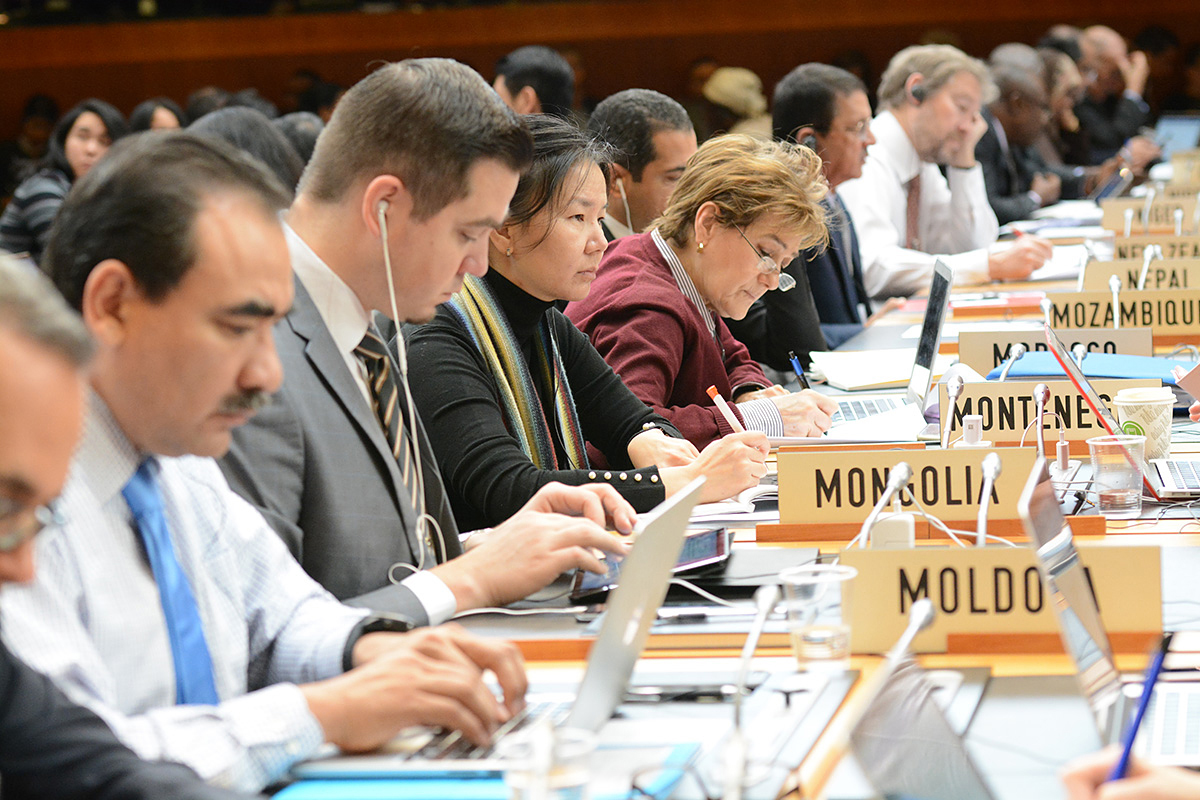
The same realism is needed on process. Much of the WTO’s legitimacy rests on its unusually inclusive structure. Unlike institutions that allocate formal authority through weighted voting or permanent privileges, the WTO treats its members as formally equal. That matters, especially for smaller and less powerful economies. At the same time, inclusiveness cannot mean that every member has a veto over all cooperation. Members that decline to join a particular initiative should not be bound by it. They should not, however, be able to prevent others from moving ahead.
In a large and heterogeneous membership, variable geometry is no threat to multilateralism. Increasingly, it is what makes multilateralism workable. Open plurilateral agreements, critical-mass arrangements, and clear pathways for later accession are often the only realistic way to keep cooperation moving while anchoring it inside the WTO framework.
Recent events reinforce the point. The WTO’s 14th Ministerial Conference, held in Yaoundé in March 2026, should make us more pessimistic about near-term prospects for comprehensive renewal through the traditional route.
The conference produced some decisions and some progress, but not the broader institutional breakthrough that many had hoped for. Above all, members could not agree on a concrete agenda for addressing the system’s most important unresolved problems, nor could they preserve the long-standing moratorium on customs duties on electronic transmissions. That lapse matters. The moratorium had served as a modest but meaningful baseline commitment to predictability in digital trade. Its expiration is difficult to read as a sign of institutional momentum.
Yet MC14 also pointed to a practical way forward. The clearest bright spot was the decision by sixty-six members, representing roughly 70 percent of global trade, to adopt a pathway for bringing a plurilateral E-Commerce Agreement into force through interim arrangements. This is not the old model of universal multilateralism. Nor is it simply fragmentation. It is a form of WTO renewal from the outside in: willing members move first, implement rules among themselves, and leave the door open to later integration into the WTO framework.
That, in turn, is the broader lesson of MC14. The choice is no longer between full multilateral agreement and no agreement at all. The more relevant choice is between open plurilateralism tethered to the WTO and rule-making that migrates elsewhere. If the WTO cannot create workable paths for coalitions of willing members, those coalitions will increasingly bypass it.
The sensible response is therefore to discipline plurilateral initiatives properly rather than reject them as deviations from “real” multilateralism. They should be open to accession, transparent in design, and structured so that non-participants are not burdened by obligations they never accepted. Used well, plurilateralism can preserve the multilateral system by creating avenues for cooperation where universal agreement is no longer available. Used badly, it can accelerate fragmentation into competing clubs.
All of this places middle powers at the center of the system’s future. For much of the postwar period, the multilateral trading system relied—explicitly or implicitly—on a small number of large economies to underwrite its core disciplines. That political economy no longer holds. Great powers still matter enormously, but their participation in cooperation has become more selective and more tightly tied to narrower strategic interests.
Stability will therefore depend more heavily on economies that are deeply integrated into global trade, highly exposed to fragmentation, and unable to impose outcomes unilaterally. For them, a functioning rules-based trading system is a basic component of economic security.
Their role has to be understood more pragmatically than in the past. Middle powers cannot restore the old WTO through rhetorical appeals to consensus. What they can do is steward renewal under less-favorable political conditions. They can anchor variable geometry within the WTO rather than outside it. They can sponsor open plurilateral agreements in areas where consensus among the full membership is unattainable. They can defend core principles—especially reciprocity, most-favored-nation treatment, and binding commitments—against gradual erosion through selective bilateral bargaining. And they can invest in the WTO’s deliberative machinery, where practical cooperation on subsidies, sustainability, and digital trade is most likely to advance.
This matters for the United States as well. The real question for American policymakers is not whether the WTO constrains US freedom of action. At the margin, of course it does. The more important question is whether a world of weaker multilateral disciplines, more bilateral coercion, and more fragmented markets serves US interests better.
A system in which new rule-making increasingly occurs through open plurilateral pathways inside the WTO is less elegant than the old multilateral ideal. It is still far preferable to a world in which rule-making simply leaves the institution altogether.
Renewal and realism
So, the answer to the question posed in this essay is neither requiem nor resurrection. A requiem goes too far because the WTO still structures most global trade and still delivers economically meaningful restraint. A resurrection promises too much because MC14 showed, once again, how difficult comprehensive reform has become. The more plausible future is selective renewal: preserve the multilateral core where it still works, accept that new cooperation will often begin among subsets of willing members, and make open plurilateralism function as a disciplined, positive-sum form of cooperation within the WTO framework.
For middle powers, the alternative is costly self-insurance: duplicated supply chains, fragmented markets, and greater exposure to the coercive use of market power by others.
Collective stewardship offers a different path. It does not promise a return to the WTO of the 1990s. What it does offer is a way to slow the drift from rules-based outcomes to power-based ones. In that sense, MC14 did not show that the WTO has no future. It showed that the future of the WTO will depend less on grand multilateral bargains than on whether members can make this more pragmatic model work—open plurilateral cooperation on disciplined, positive-sum terms within the WTO framework, with broader multilateralization where that becomes possible.
Ralph Ossa was chief economist of the World Trade Organization from January 2023 until June 2025. He holds a UBS Foundation Professorship in Economics at the University of Zurich. This essay is based on Ralph Ossa, “The Multilateral Trading System: Resilience, Erosion, and the Role of Middle Powers,” UBS Center Public Paper #16, May 2026, published by the UBS Center for Economics in Society at the University of Zurich.